


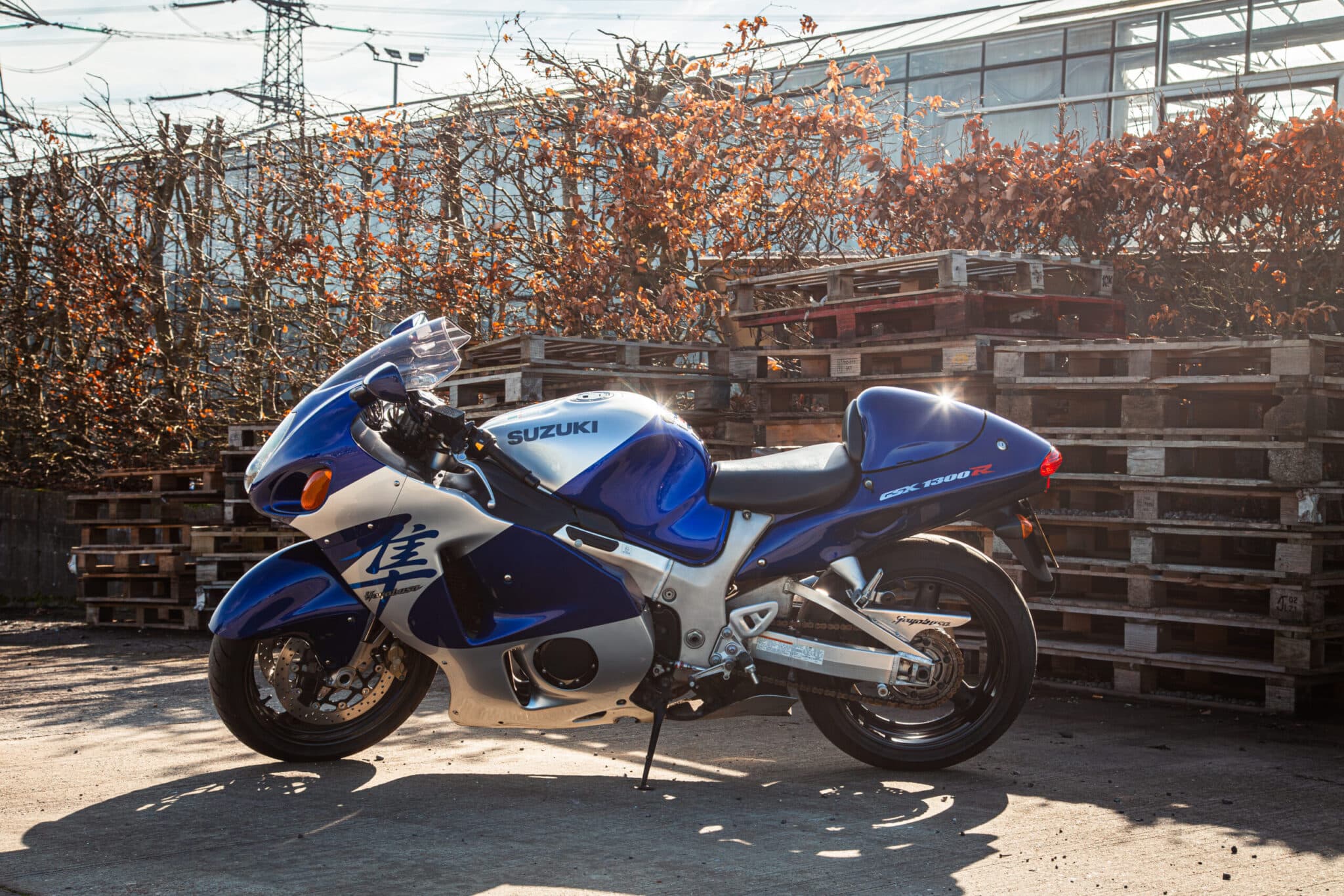
Registered in 2000, our Hayabusa is one of the early UK bikes, built right at the beginning of the model’s now legendary run. Back then, the Hayabusa wasn’t just fast; it pretty much redefined what fast meant.
Built to Beat the Blackbird
In the late 1990s, Honda made the world’s fastest production motorcycle in the form of the CBR1100XX Super Blackbird. The Blackbird was insanely fast and was capable of getting very close to 180 mph. Suzuki didn’t want to accept that the Blackbird was unbeatable, though, so along came the Hayabusa.
One of my favourite things about the story of the Hayabusa is that Suzuki was not at all subtle in their competitiveness with Honda. The name “Hayabusa” is Japanese for peregrine falcon, the fastest bird on earth, and one that just so happens to prey on blackbirds!
Apart from the obvious name competition, Suzuki approached the Hayabusa very differently. While the Blackbird was sleek and understated, the Hayabusa was unapologetically radical. Its now-iconic shape wasn’t just for show; it was the result of extensive wind tunnel testing. Every curve was there to reduce drag and improve stability at speeds that most bikes of the time couldn’t even get close to.
The Hayabusa’s 1299cc engine delivered more than just power, though. It had a depth of torque and a relentless surge of acceleration that made it feel almost effortless at speed. This wasn’t a nippy superbike that was ridden to show off to your mates; it was a high-speed weapon designed to dominate real-world riding as much as outright top speed, and that’s exactly what it did.
When the Hayabusa arrived in 1999, it didn’t just overtake the Blackbird; it flew straight past it and left it a long way behind. With a top speed of nearly 200 mph, it immediately became the world’s fastest production motorcycle. Not long after, manufacturers agreed to an unofficial top speed limit of 186 mph. This gentleman’s agreement still exists today. When you look at it like that, the Hayabusa didn’t just beat the Blackbird; it quite literally ended the top speed war!
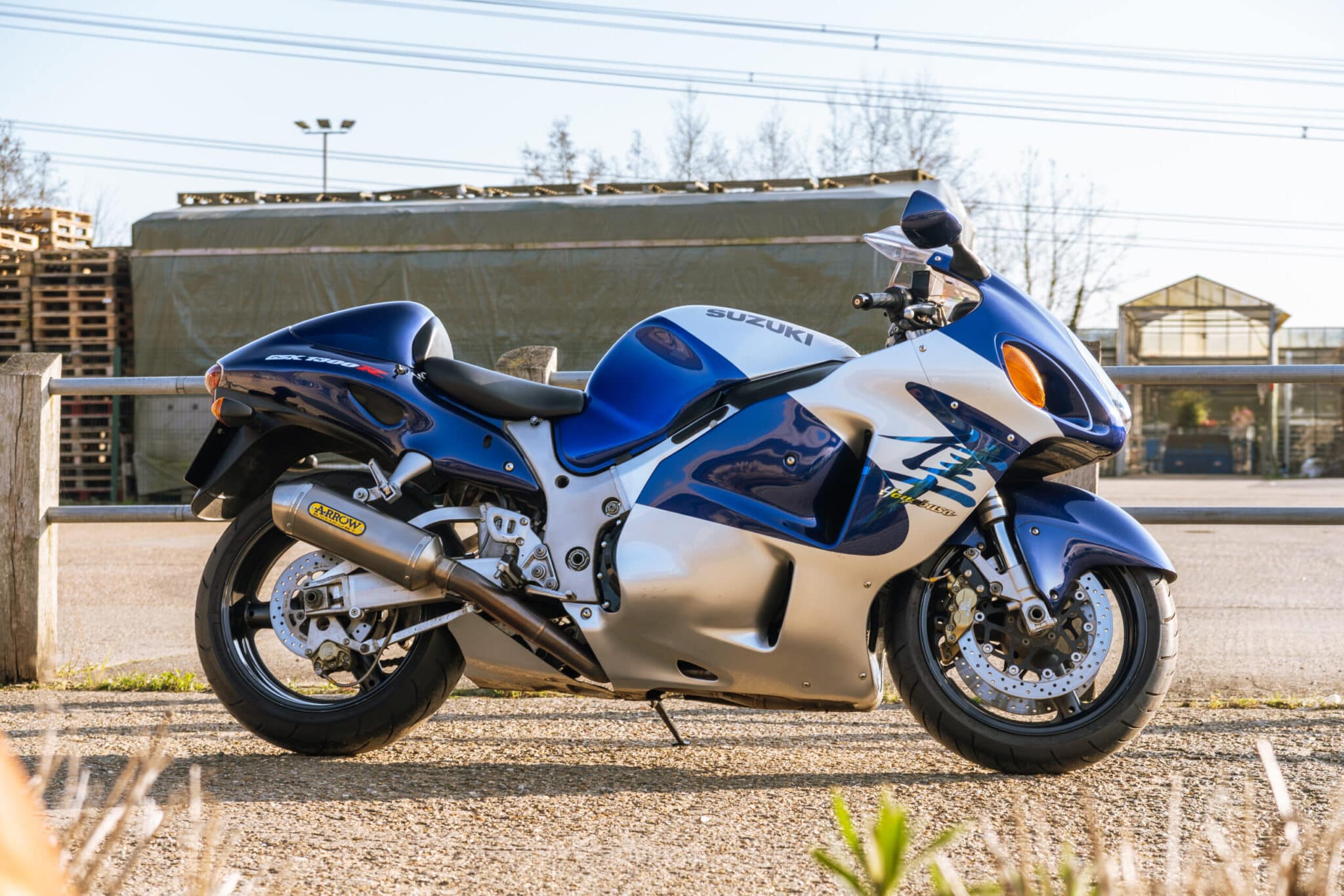
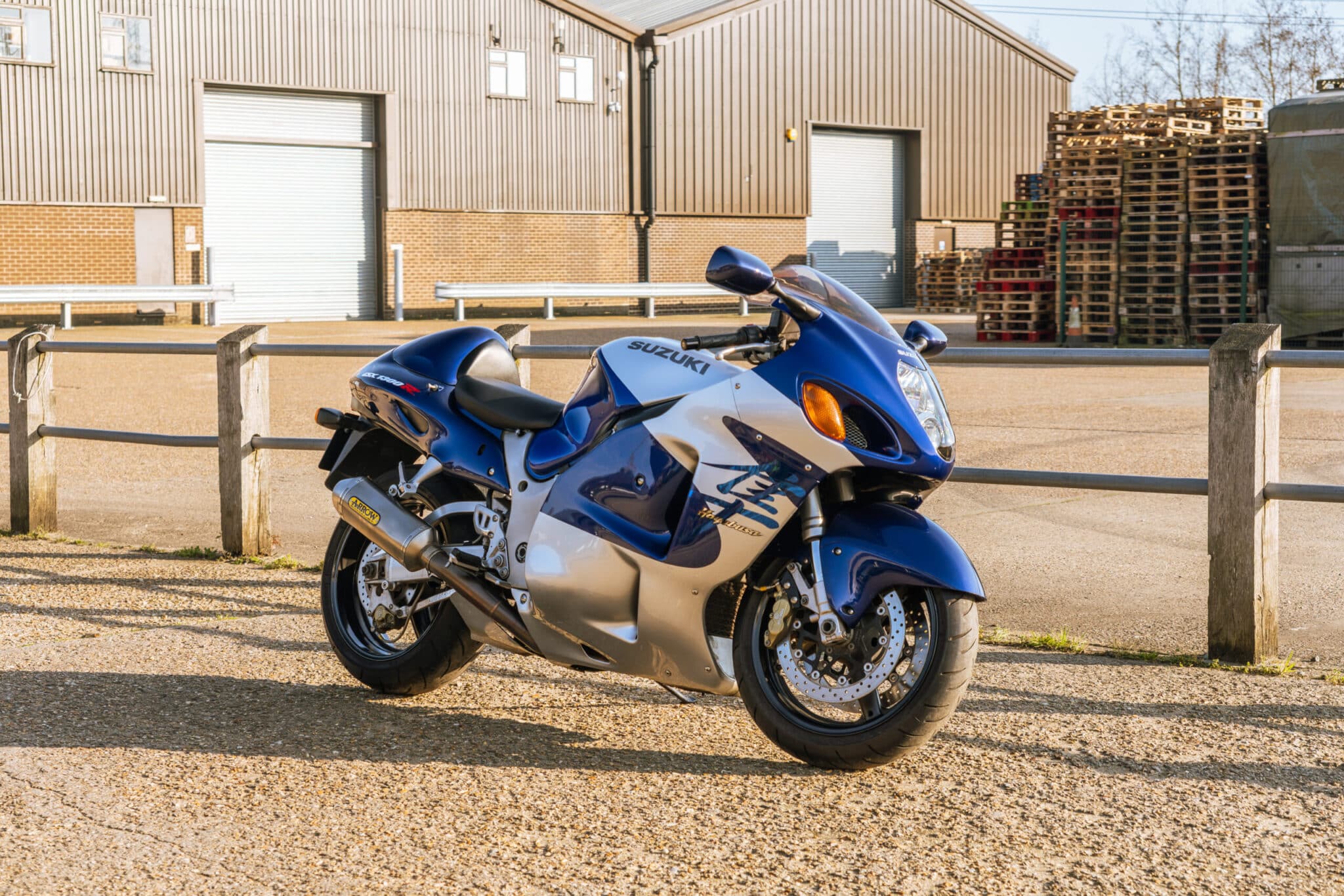
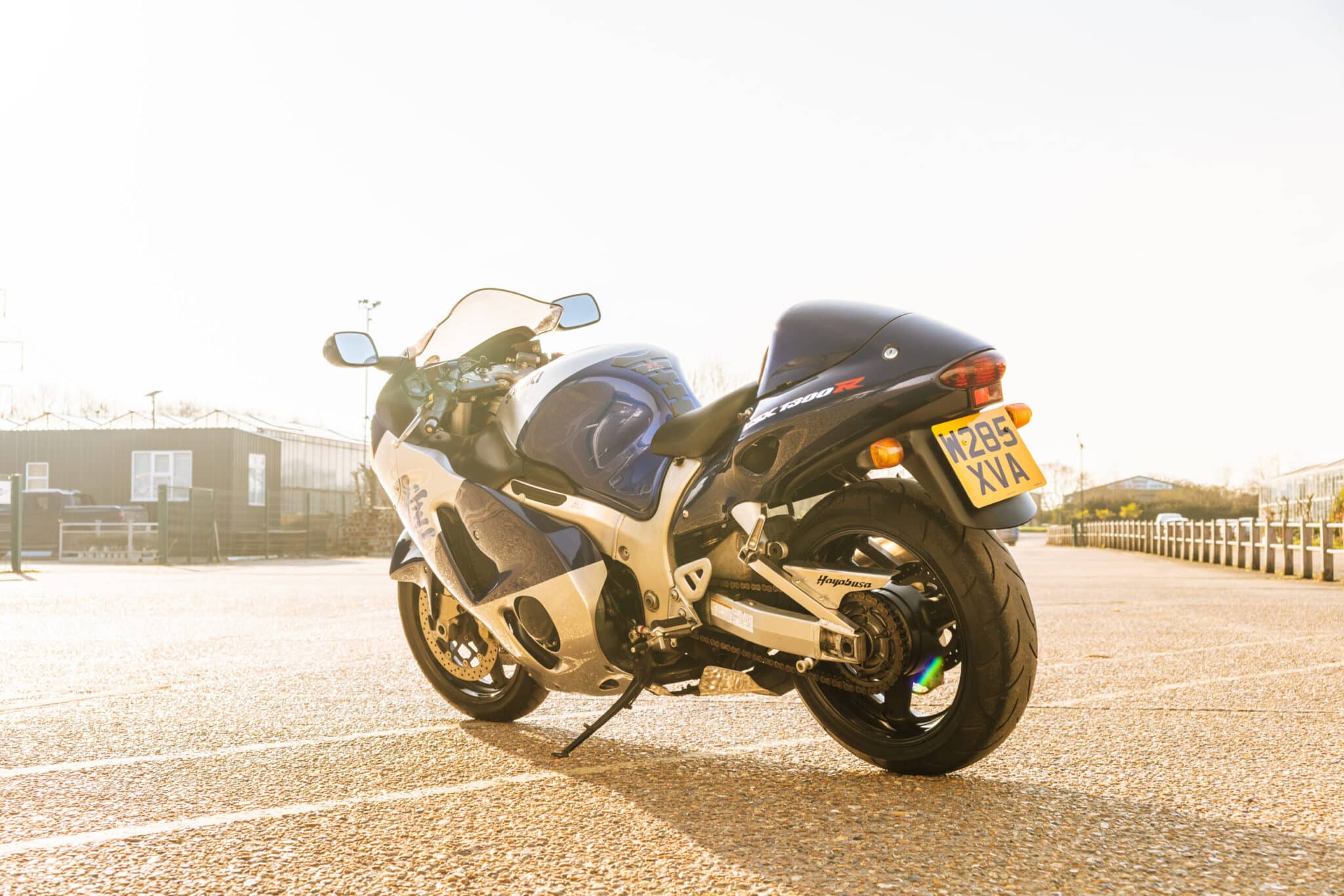
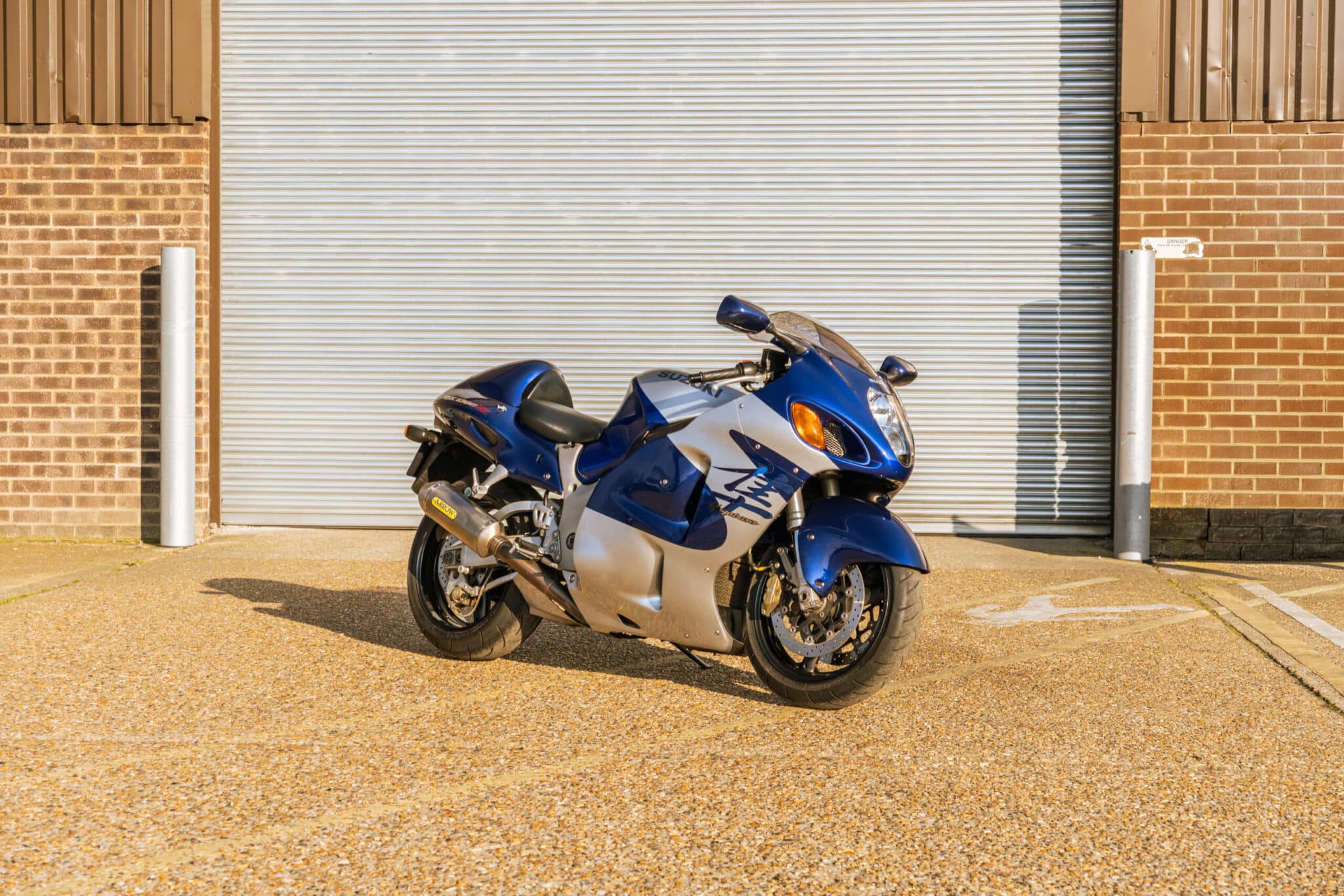
Our 2000 Suzuki Hayabusa
It is this story that is part of what makes early bikes like this one so special.
From a provenance point of view, our Hayabusa is a genuine early-production Japanese-built bike. In 2018, at just under 12,000 miles, the bike visited MSS Performance, suffering from poor running on the dyno, loose spark plugs, faulty coil sticks, and blocked injectors. In simple terms, back then, it was a bike that had been used, but not necessarily well-maintained.
However, the work that was then undertaken wasn’t a simple repair job; the bike was put through a big transformation.
A Dynojet Power Commander V was installed, along with a quick shifter, and the bike underwent a full dyno session and remap. When the bike left MSS Performance, it was producing strong, consistent power with a much healthier torque curve and was properly set up.
By 2023, the mileage had increased to just over 22,000, and it was back in a workshop. This time for fork seals and servicing at Colchester Kawasaki. This might seem like a relatively small detail, but an important one nonetheless, as it shows continued use, not neglect. A bike that’s been ridden, maintained, and kept on the road.
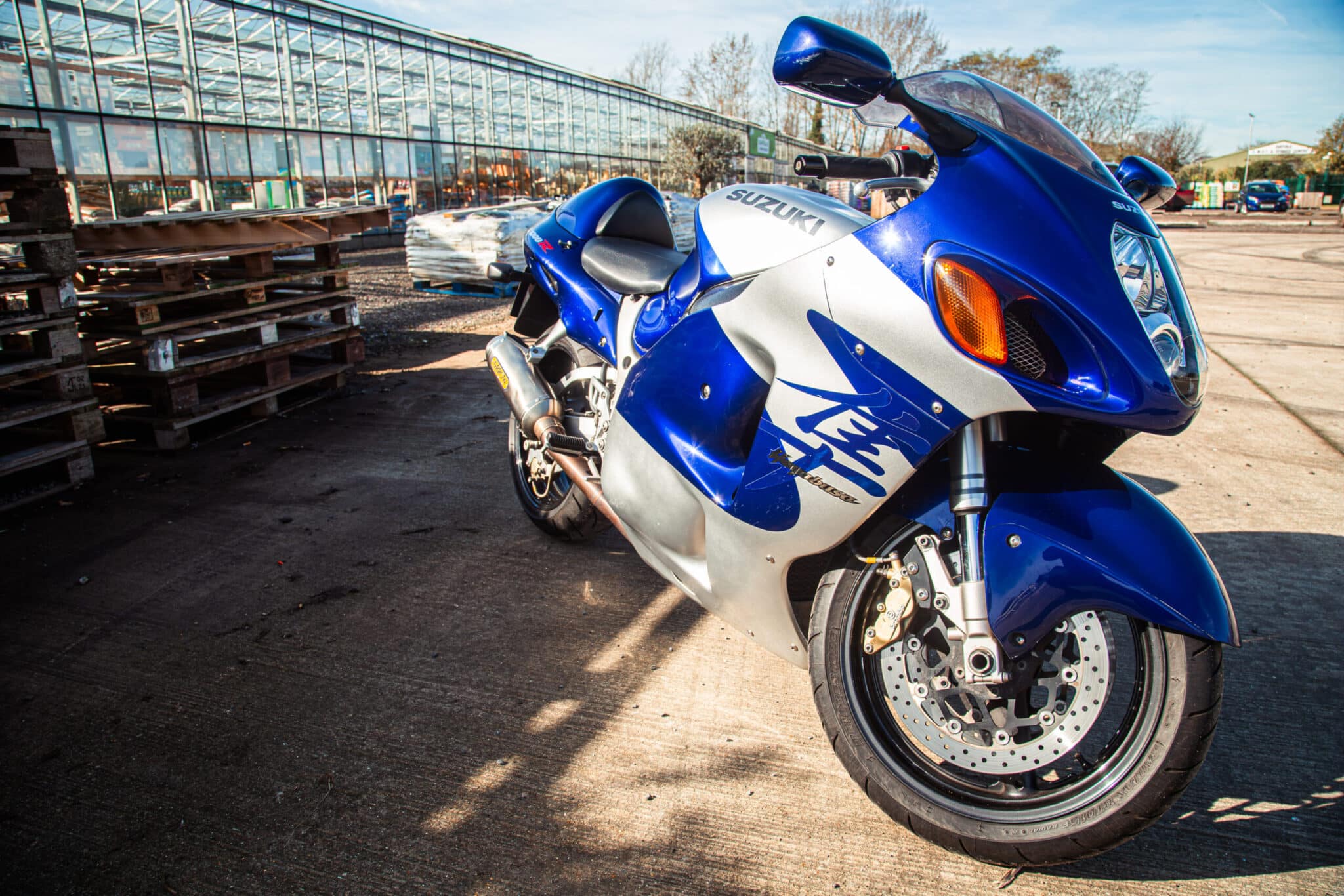
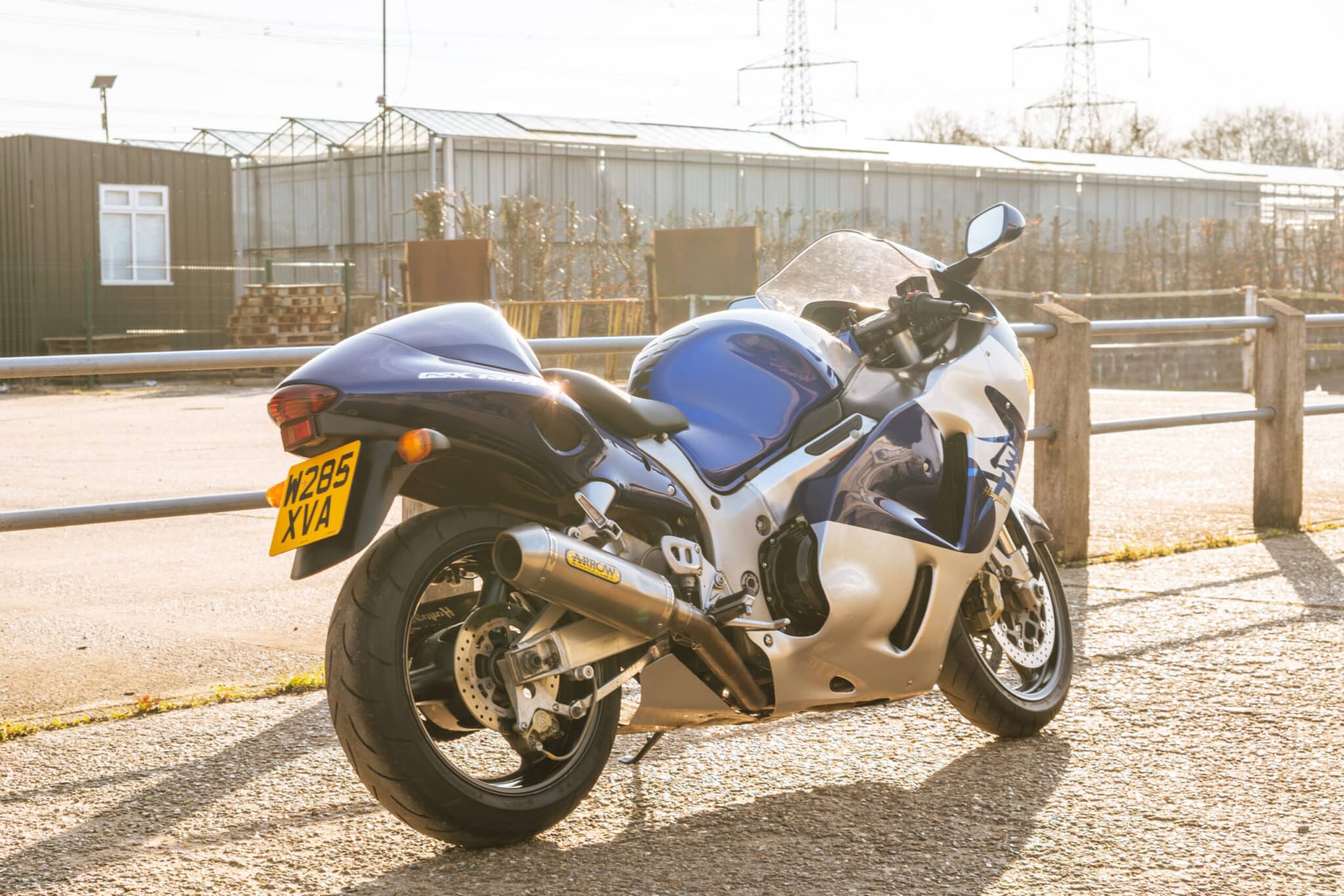
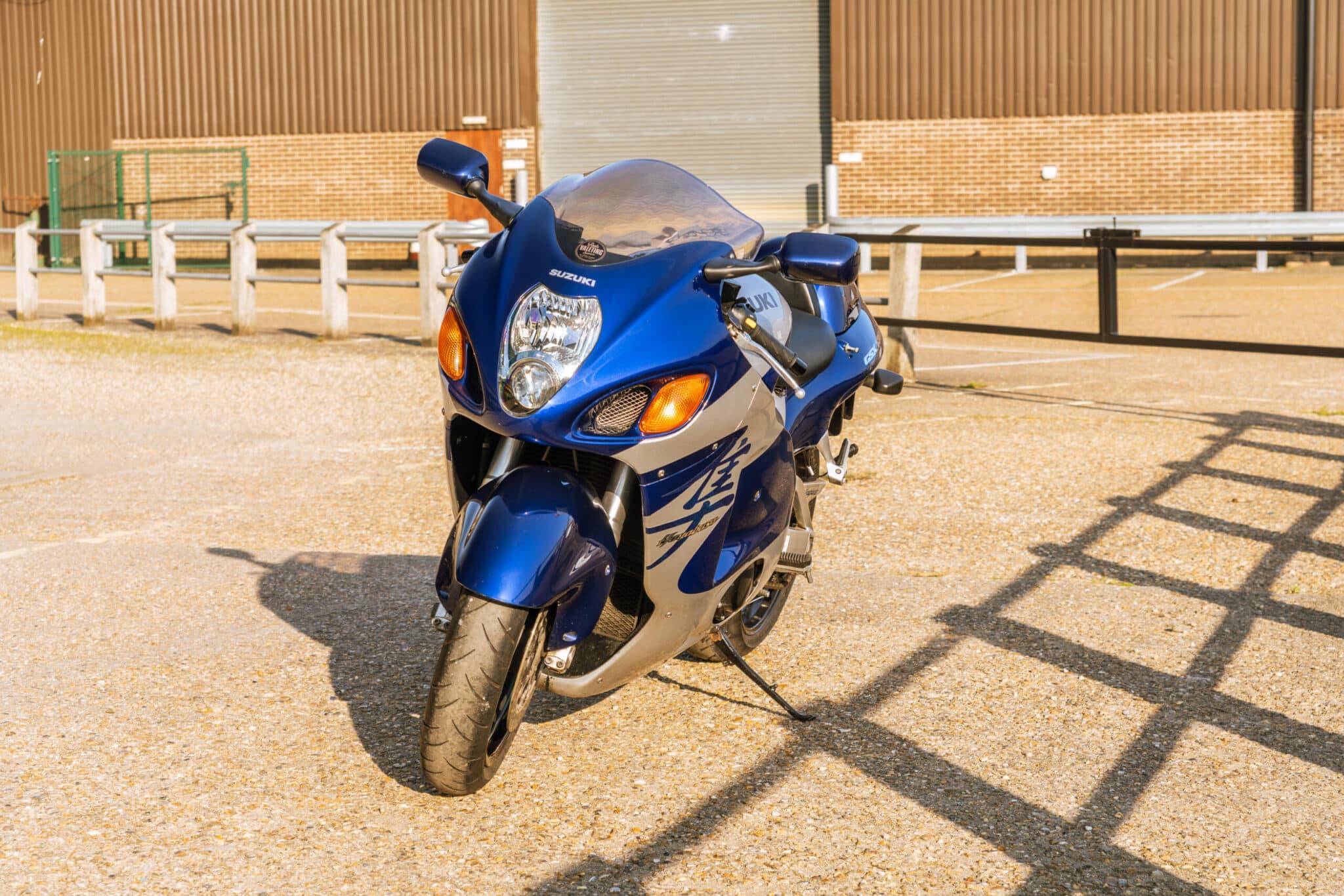
Visually, it still presents as a classic Hayabusa. The easily identifiable silhouette is there along with the original colour scheme, making it obvious what this bike is. However, it also has an Arrow exhaust that replaces the standard system.
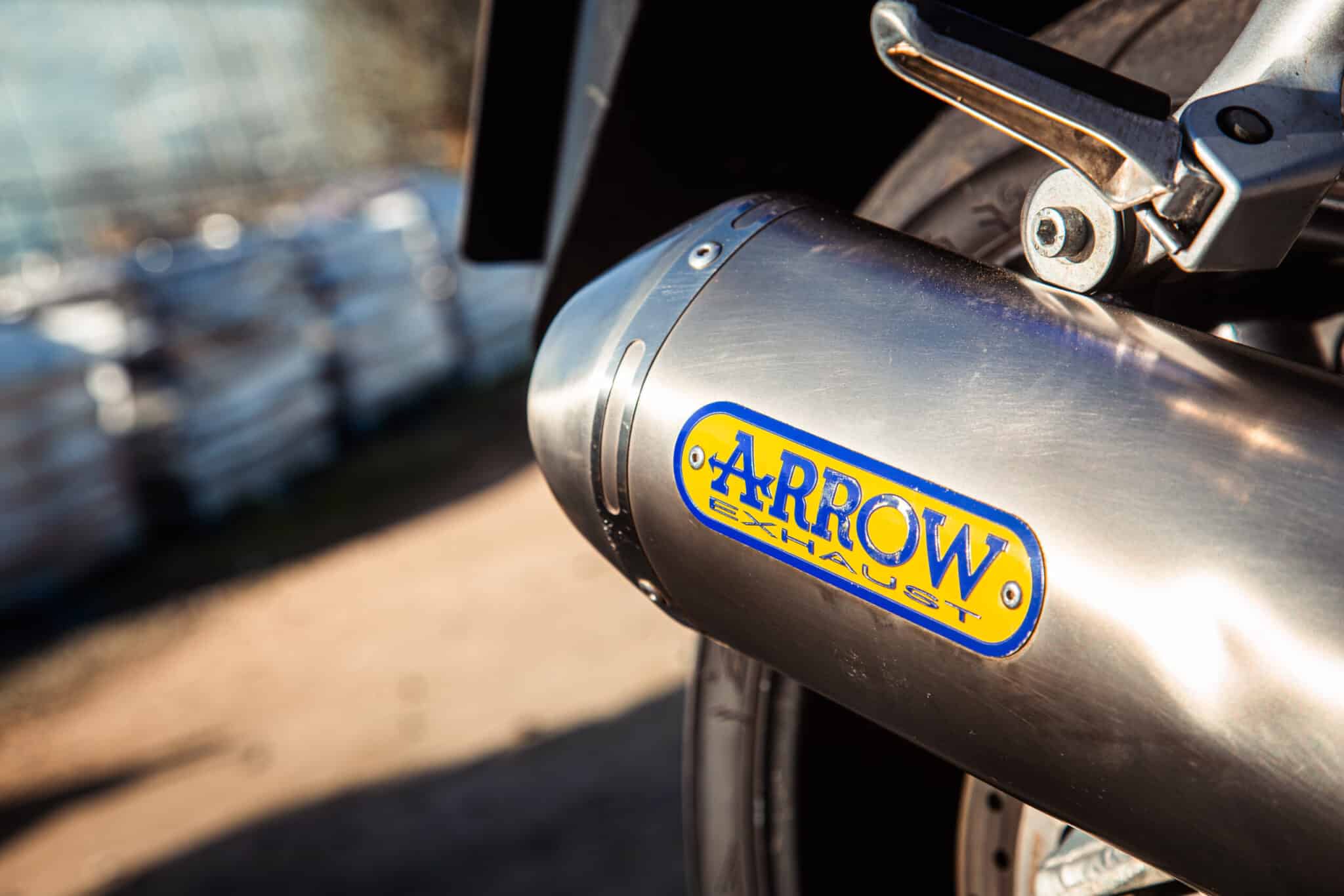
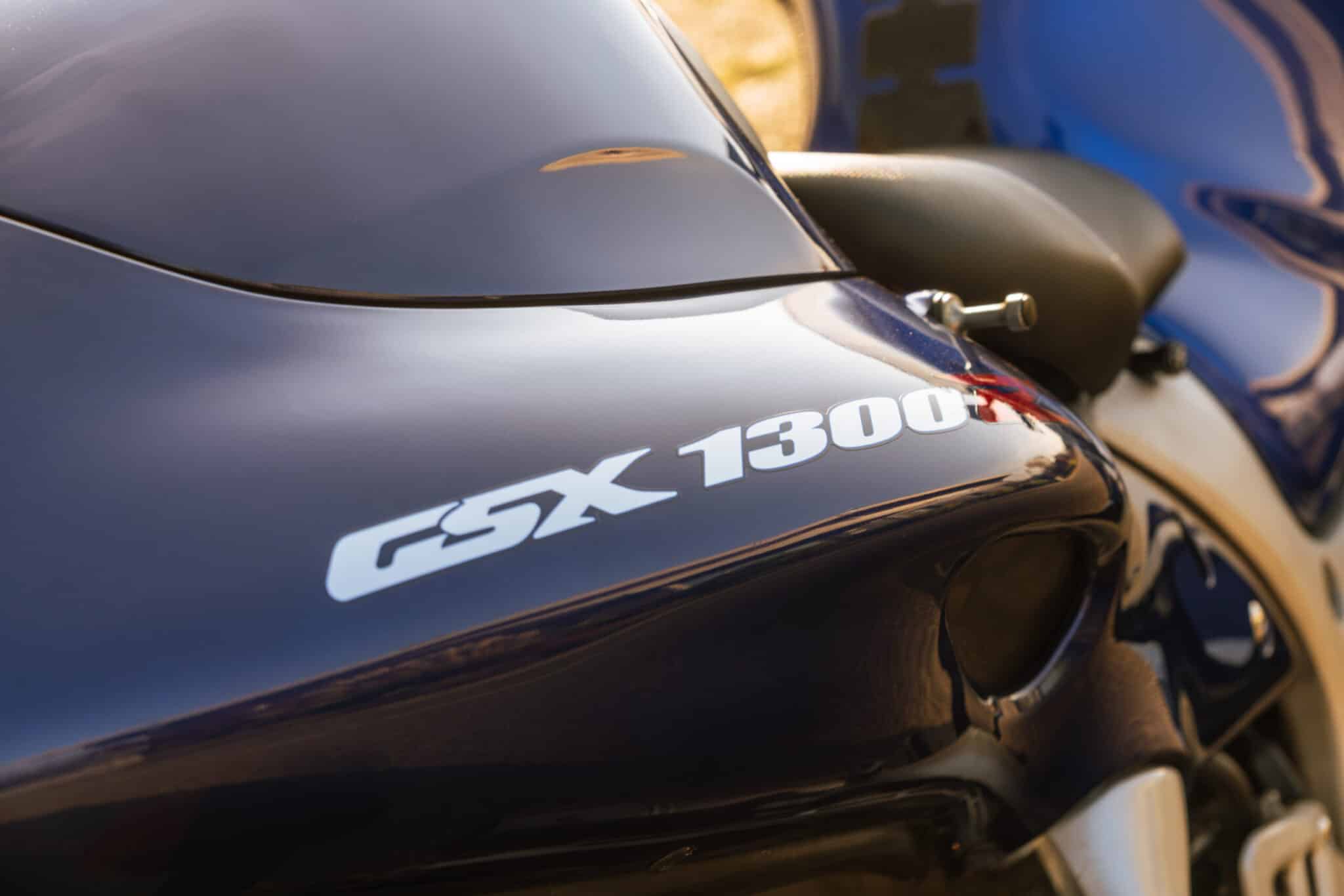
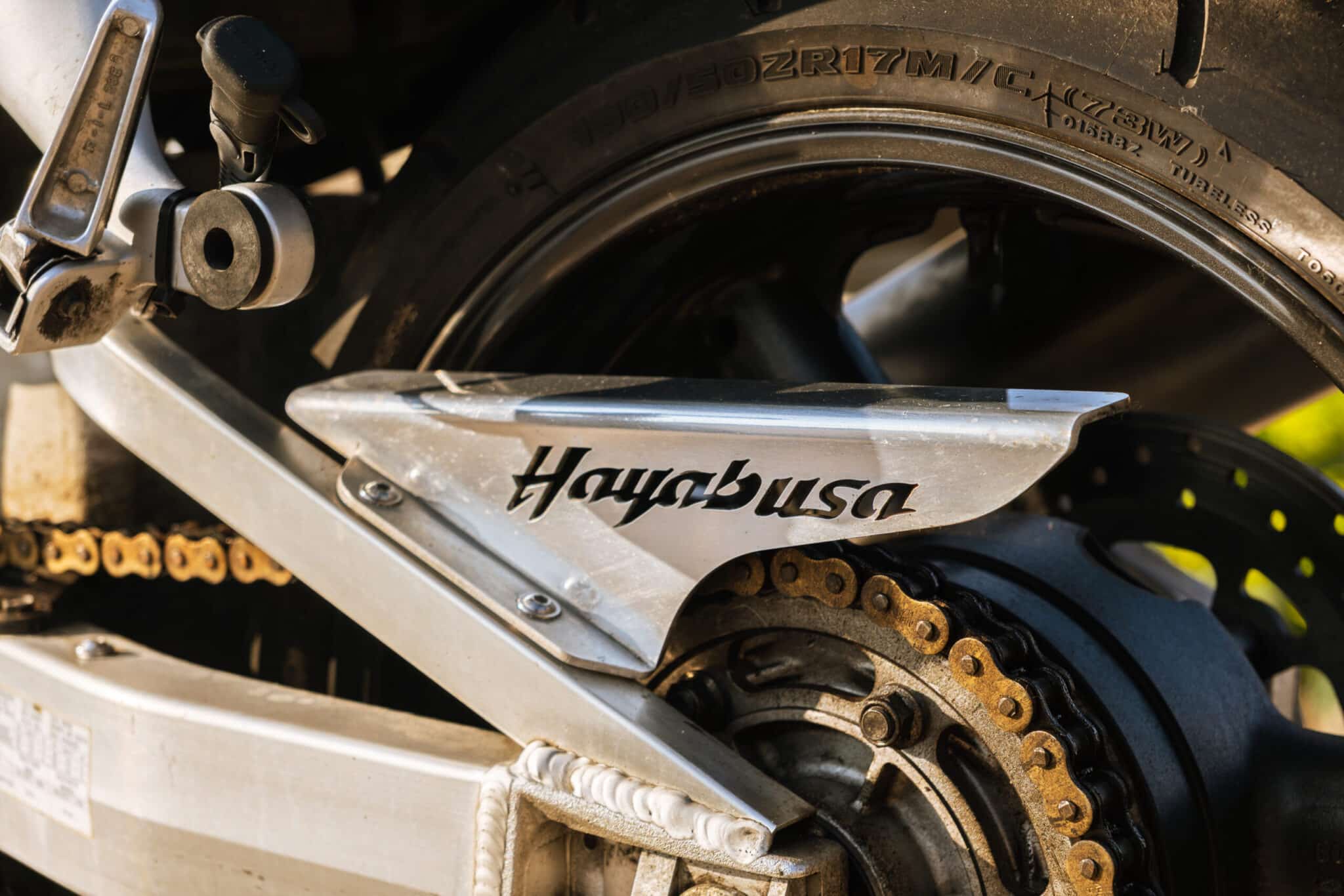
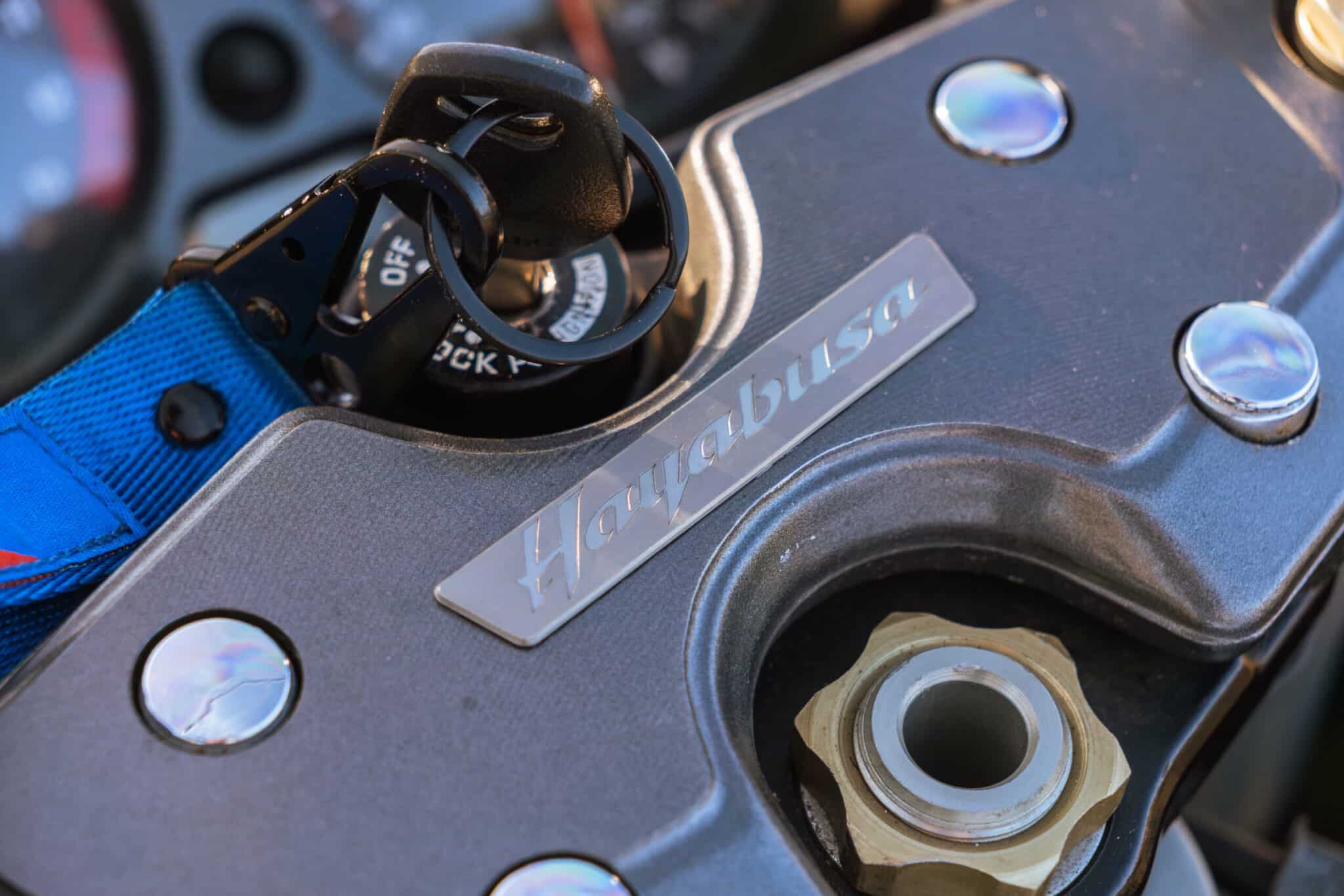
2000 Suzuki Hayabusa
Our Hayabusa isn’t perfectly preserved, but I think that makes it even more special. This is a well-used, well-documented Hayabusa that shows how these bikes were actually enjoyed. It’s been tuned, ridden, and maintained. It’s had its problems, and those problems have been fixed properly. Ultimately, it has a story to tell.
In today’s market, originality often comes at a premium. But it’s bikes like this that are for people who want to ride, not just admire.
Win our 2000 Suzuki Hayabusa for £3
Leave a Reply
You must be logged in to post a comment.