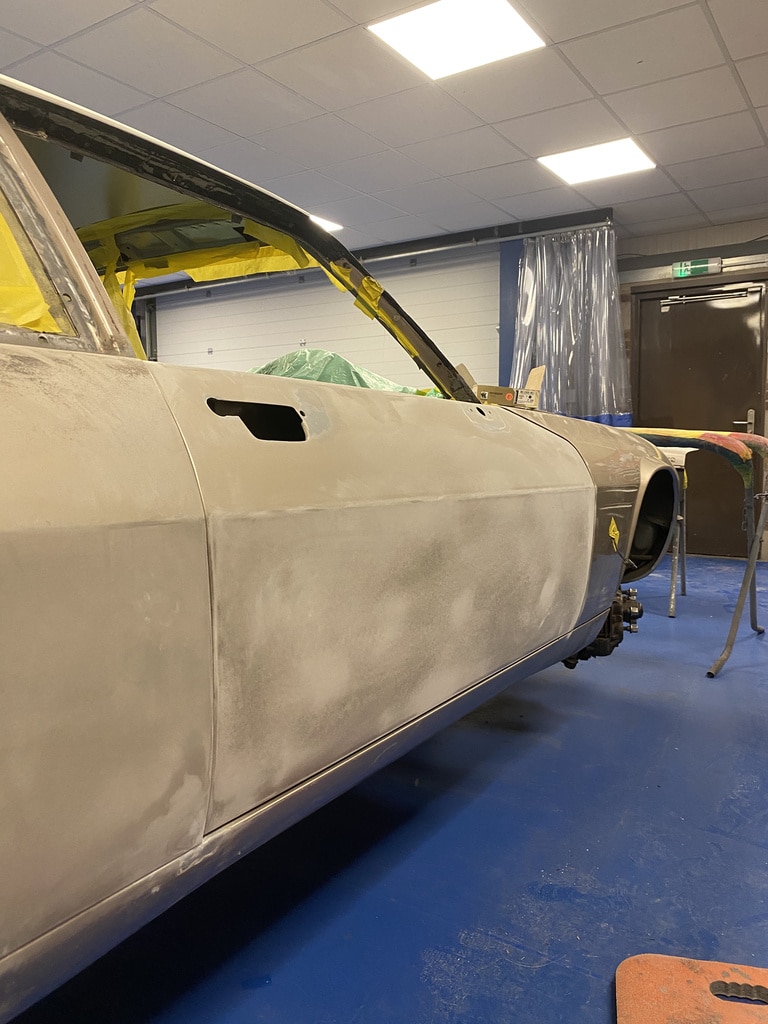
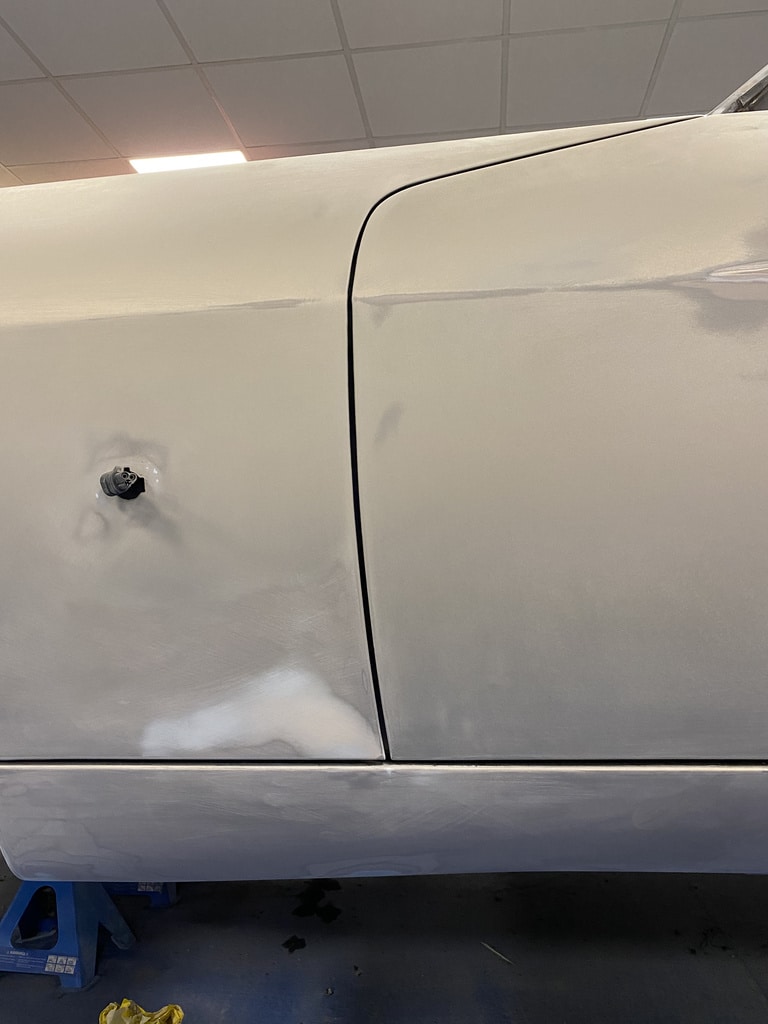
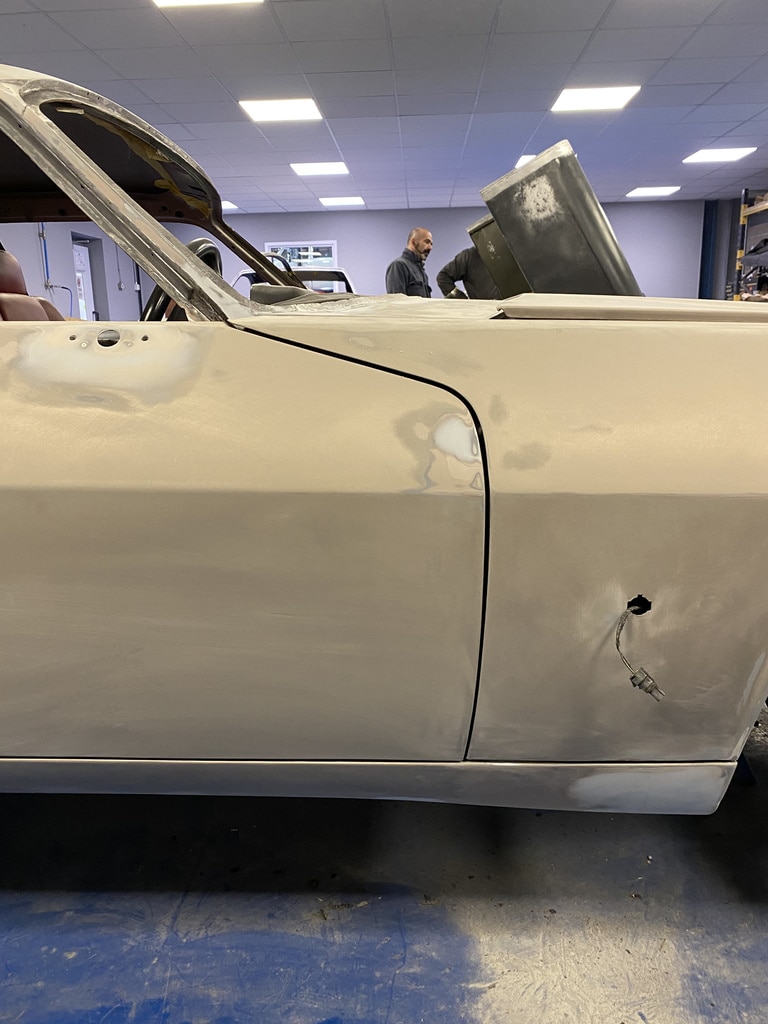
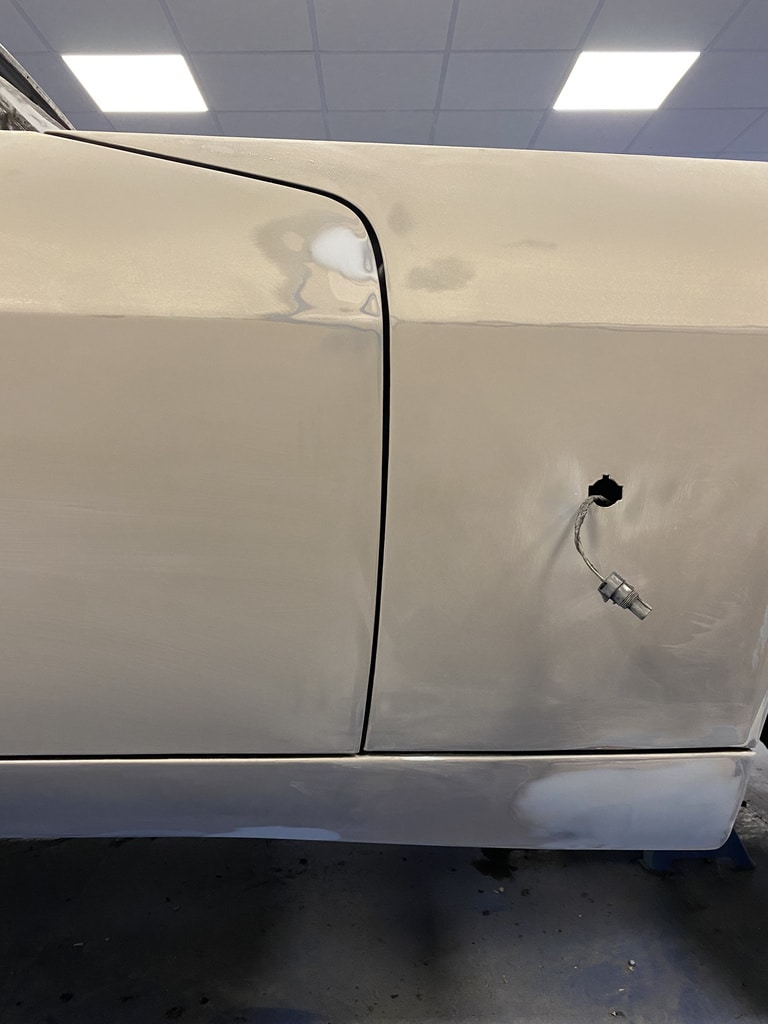
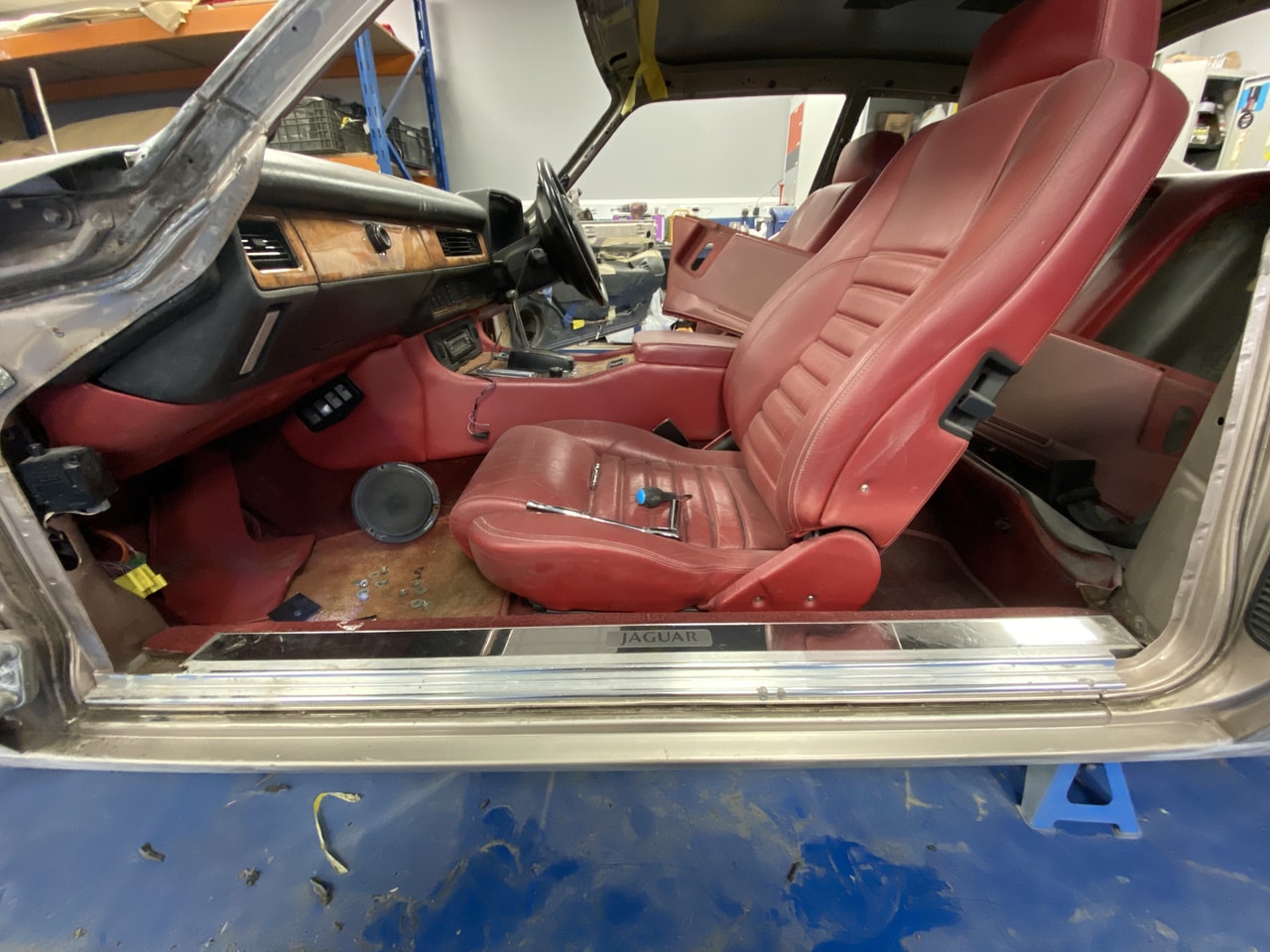
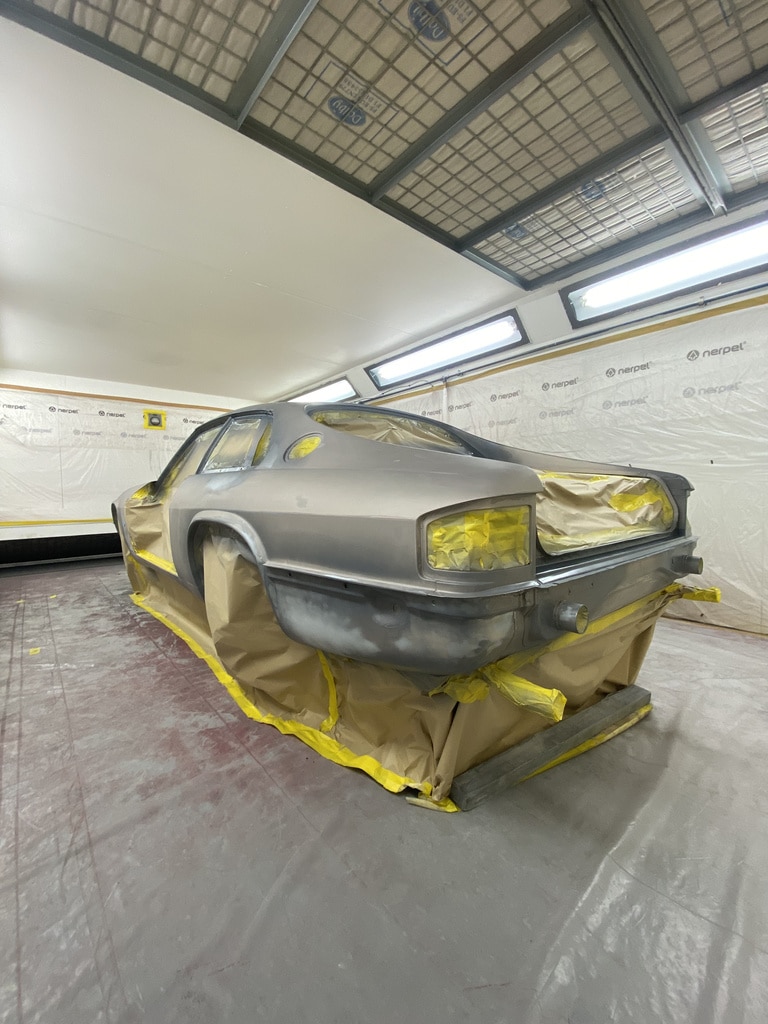
Our paint and body team are making moves towards the aesthetic comeback on the 1991 Jaguar XJS V12. Our paint and body technician Adam has been working alongside of our fabrication team going around the preparing, sanding and levelling the areas needed before the car is repainted in its stunning Gold paintwork.
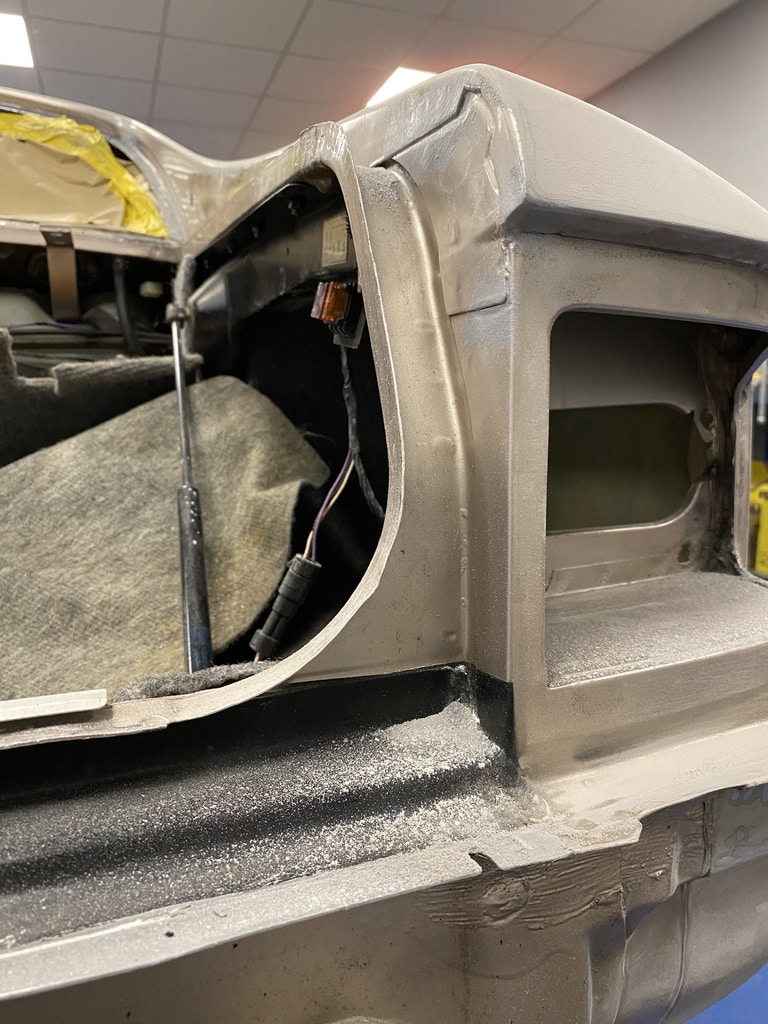
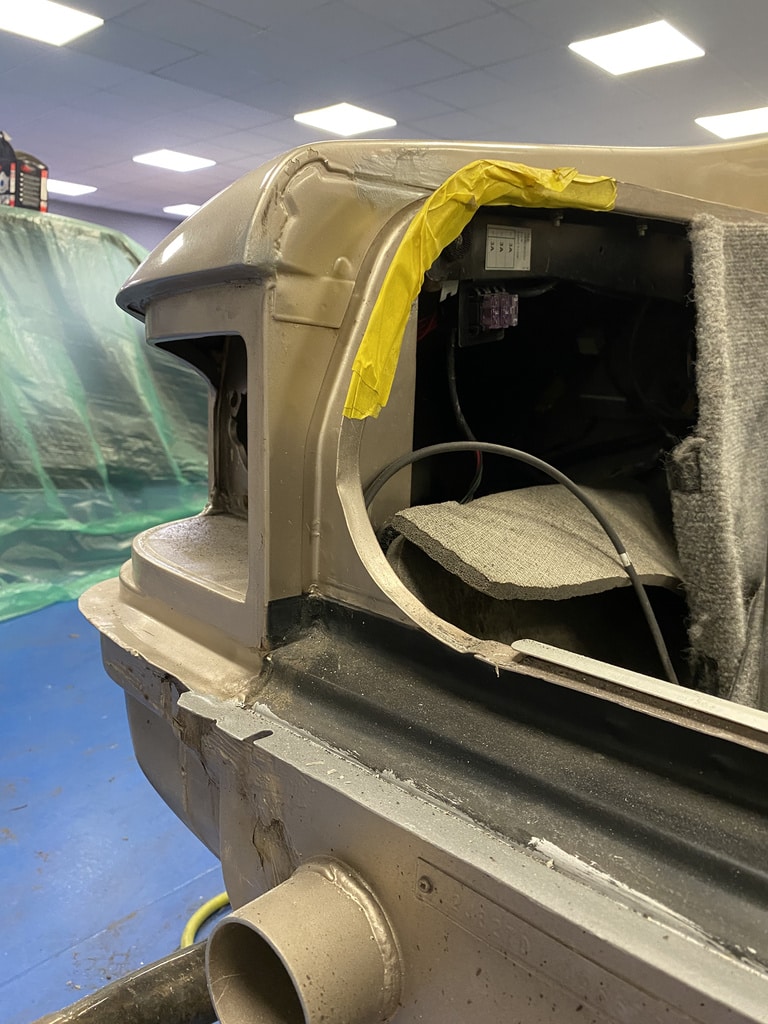
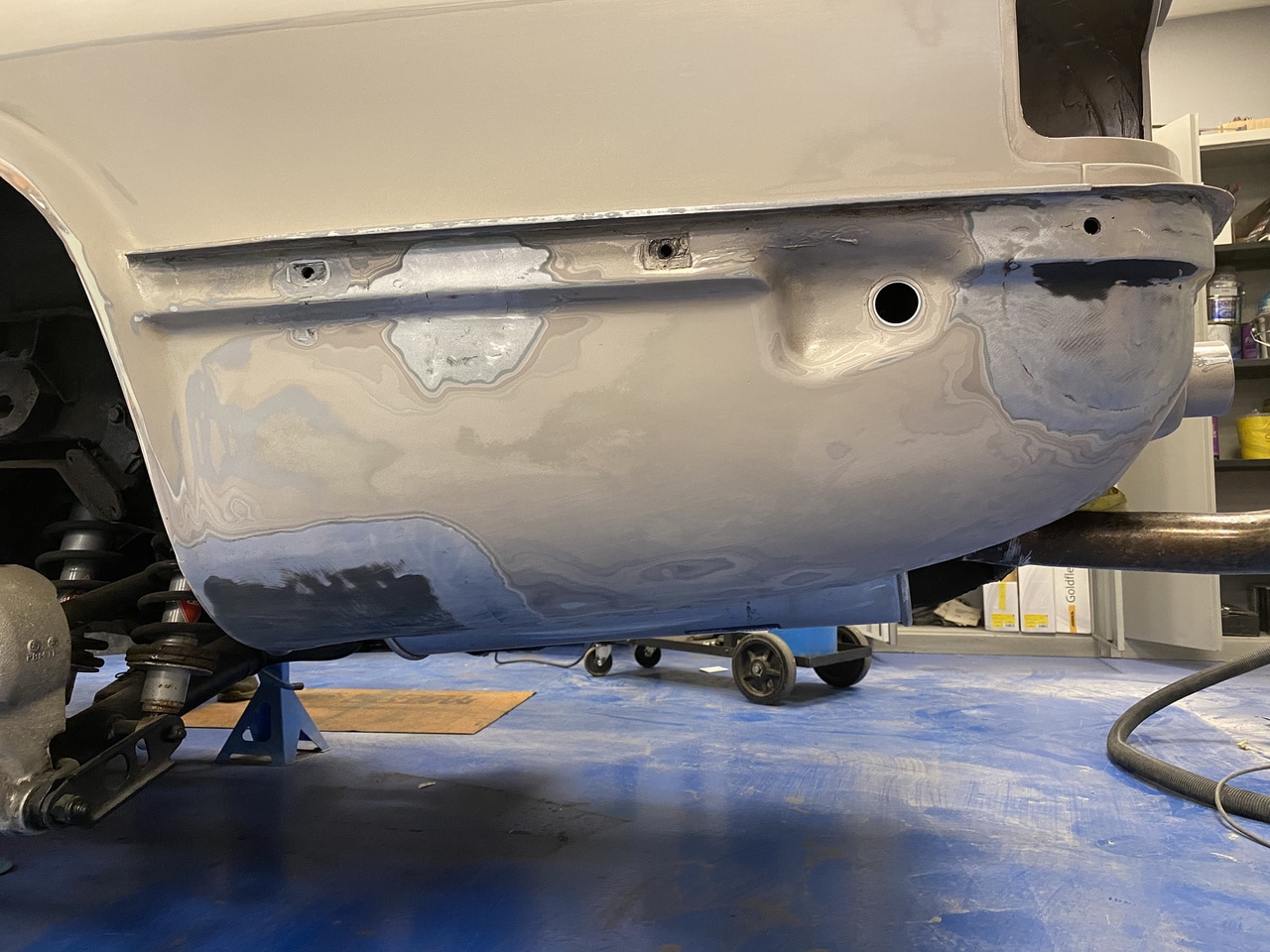
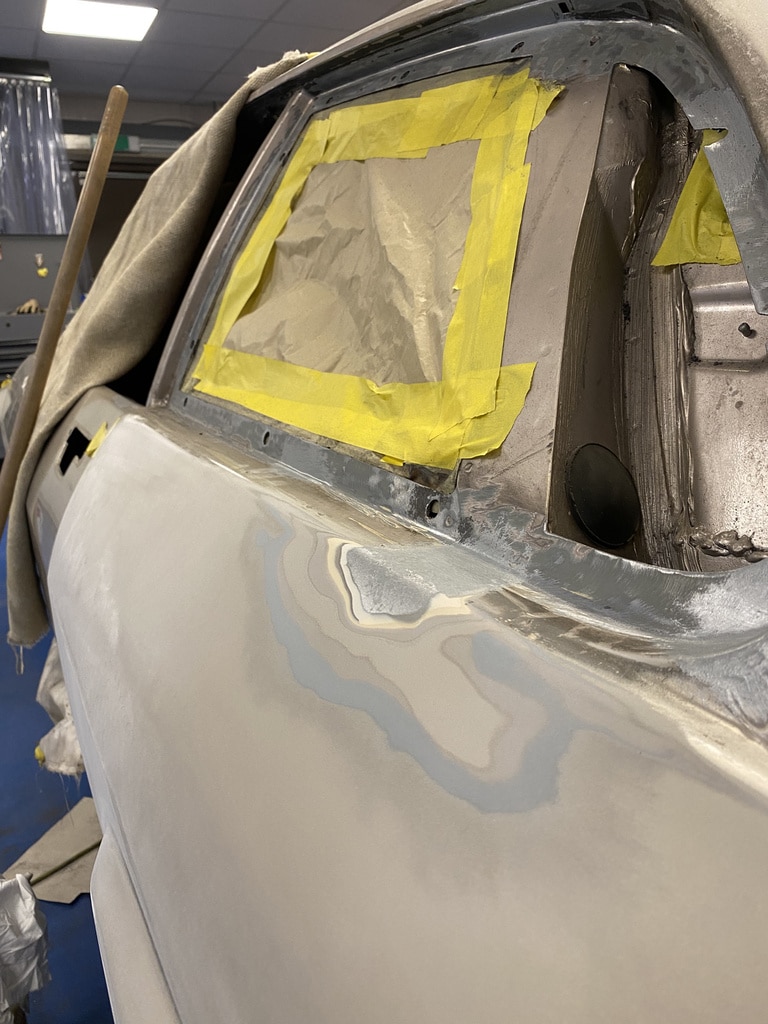
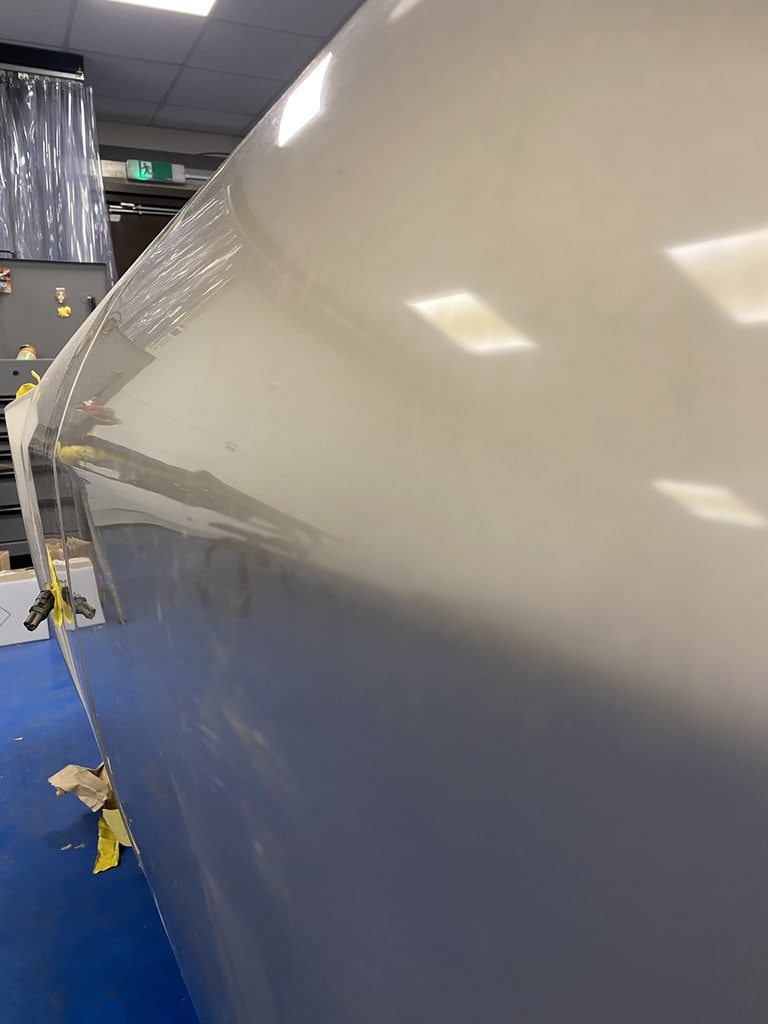
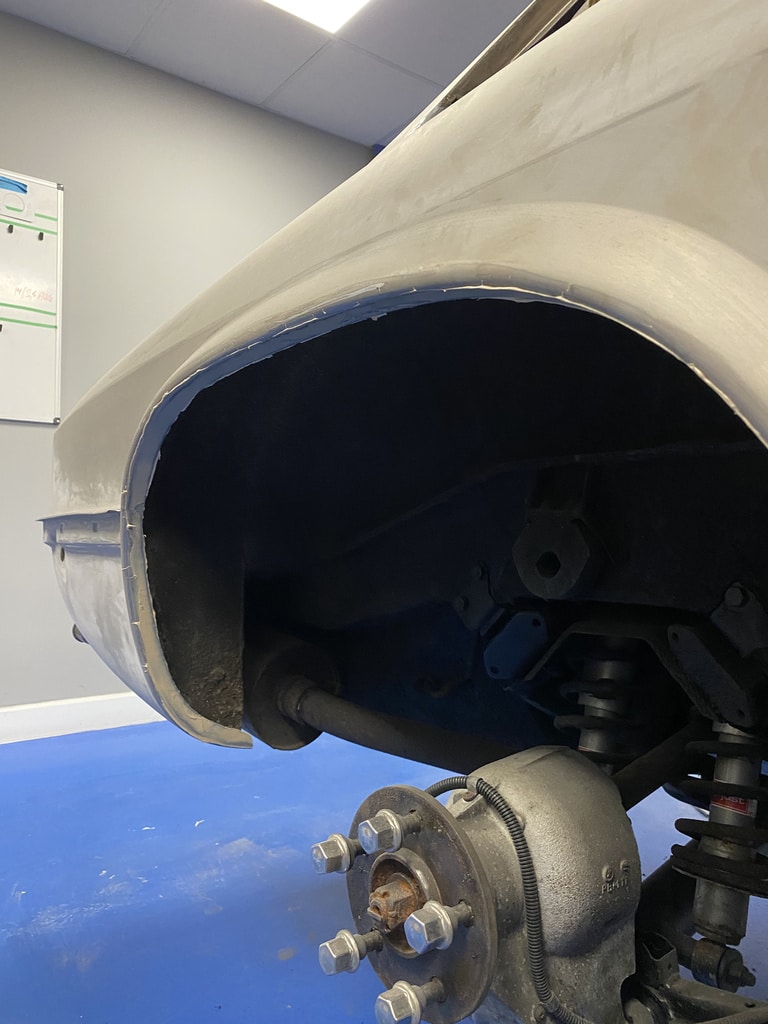
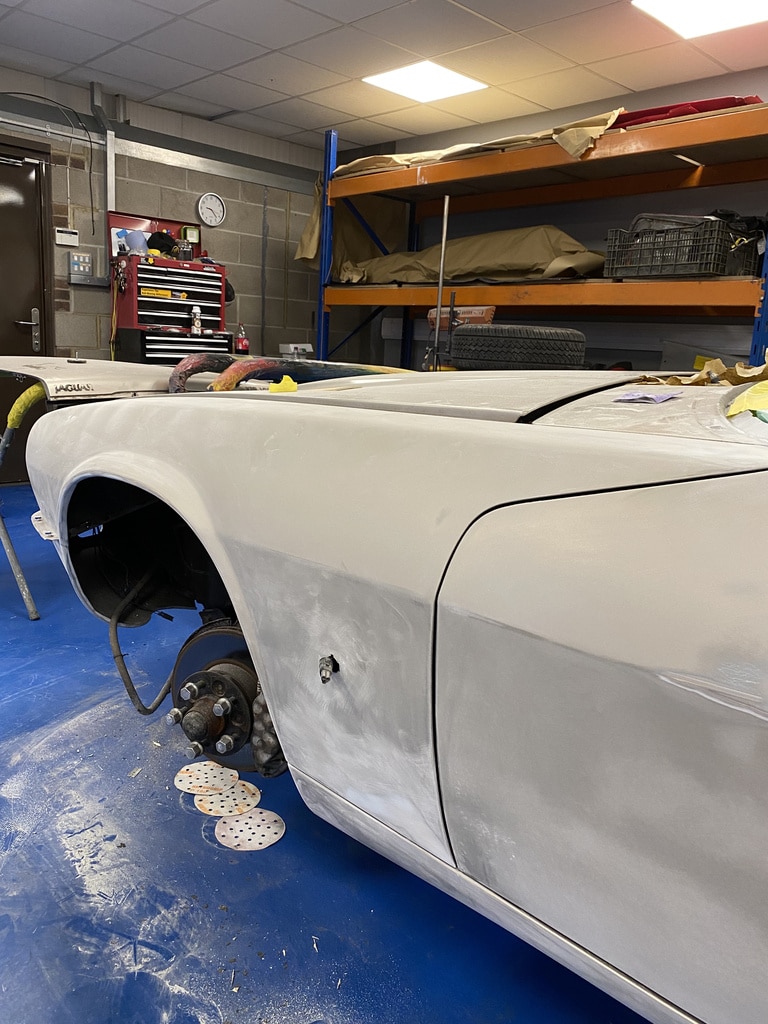
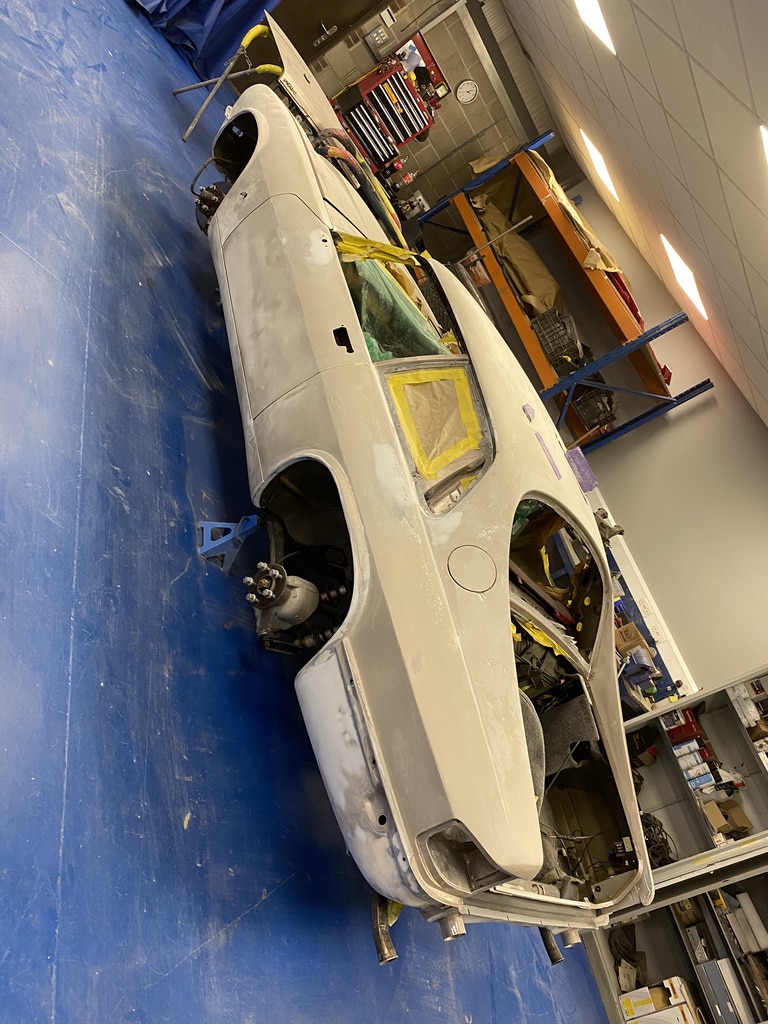
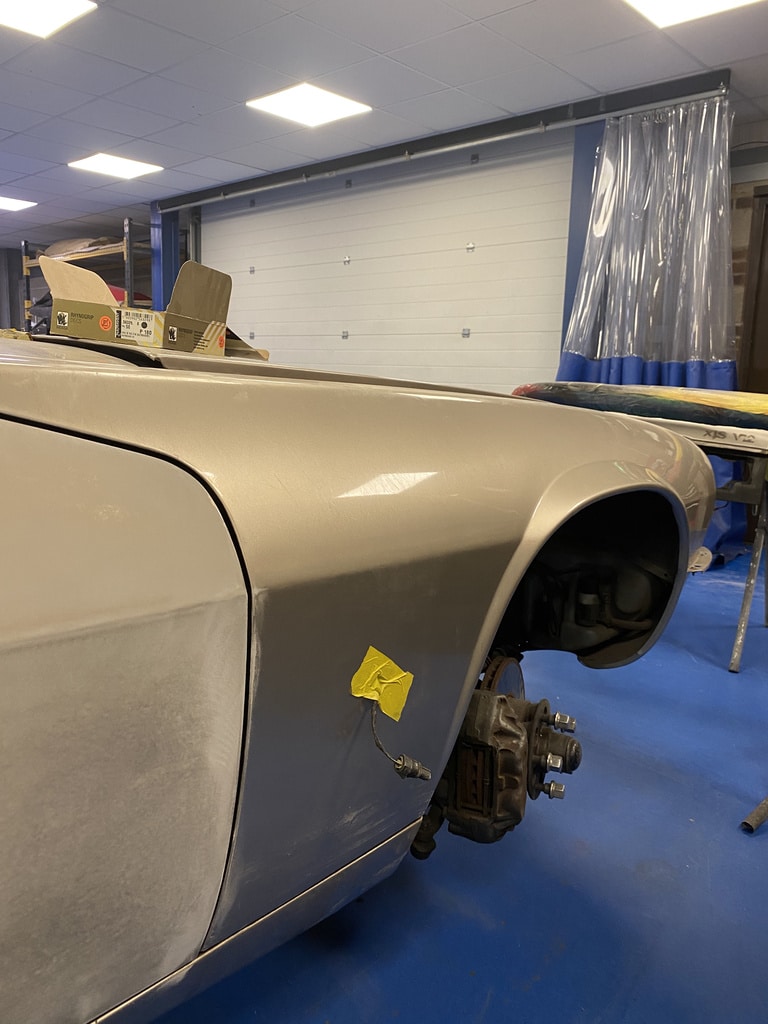
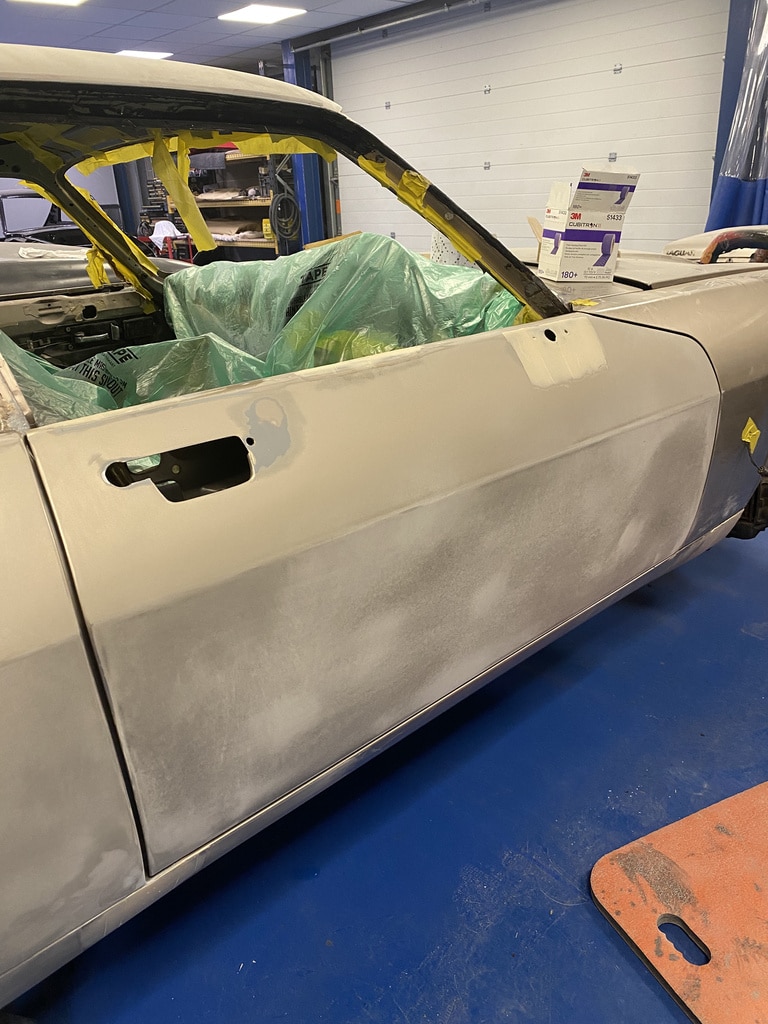
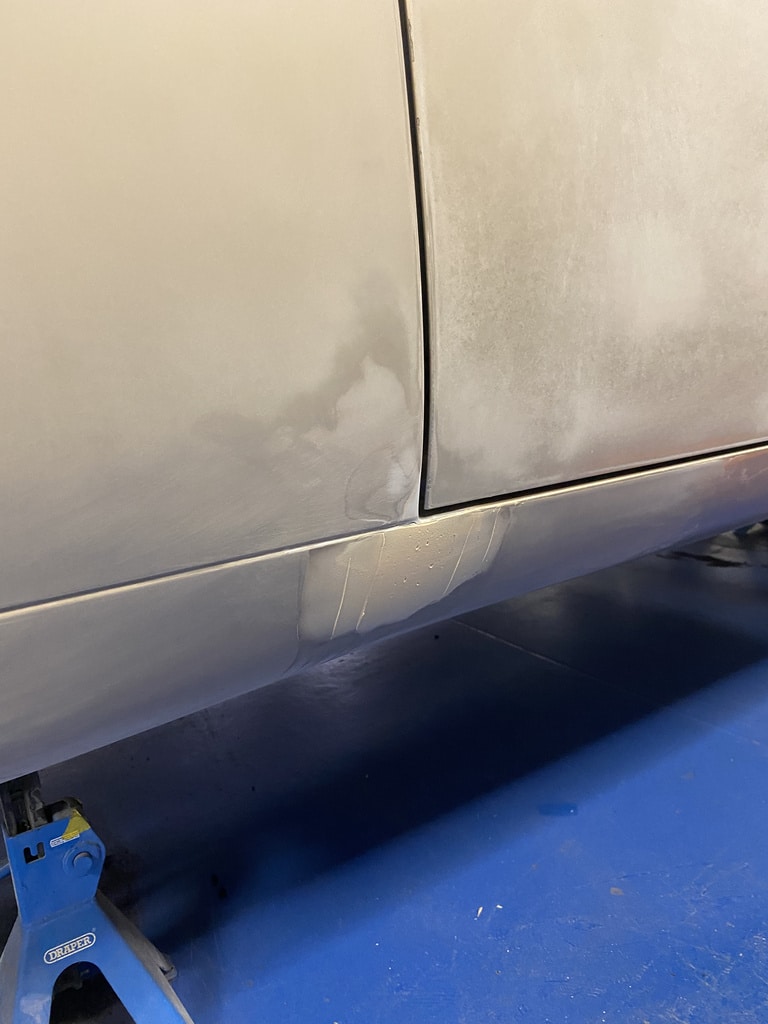
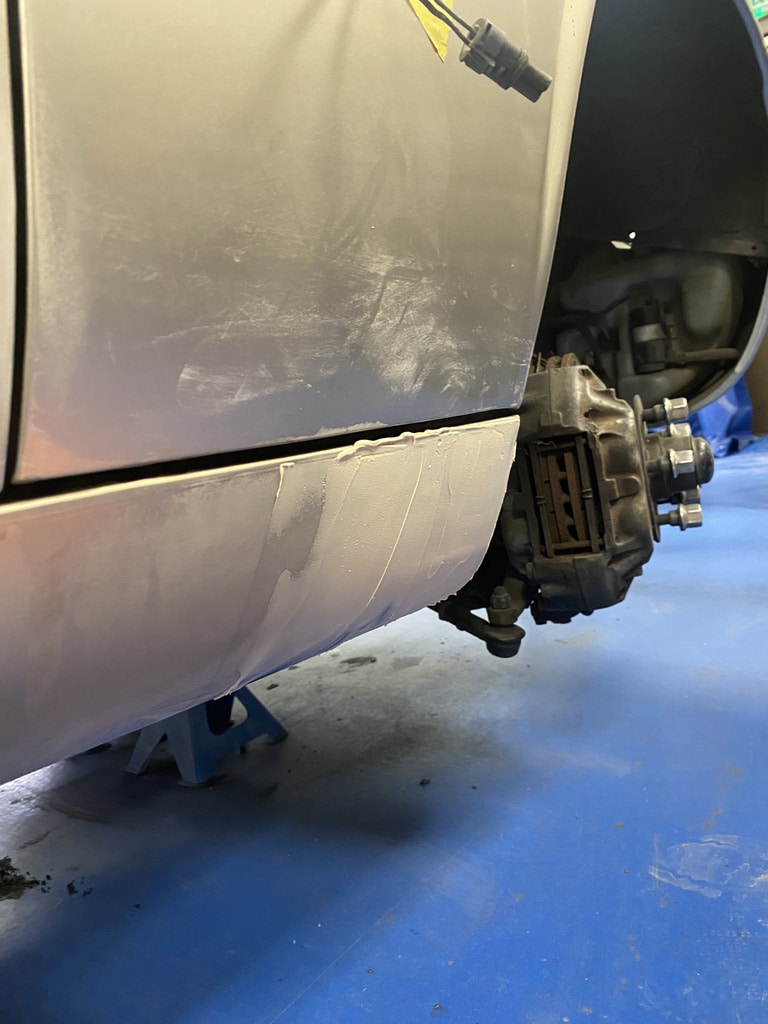
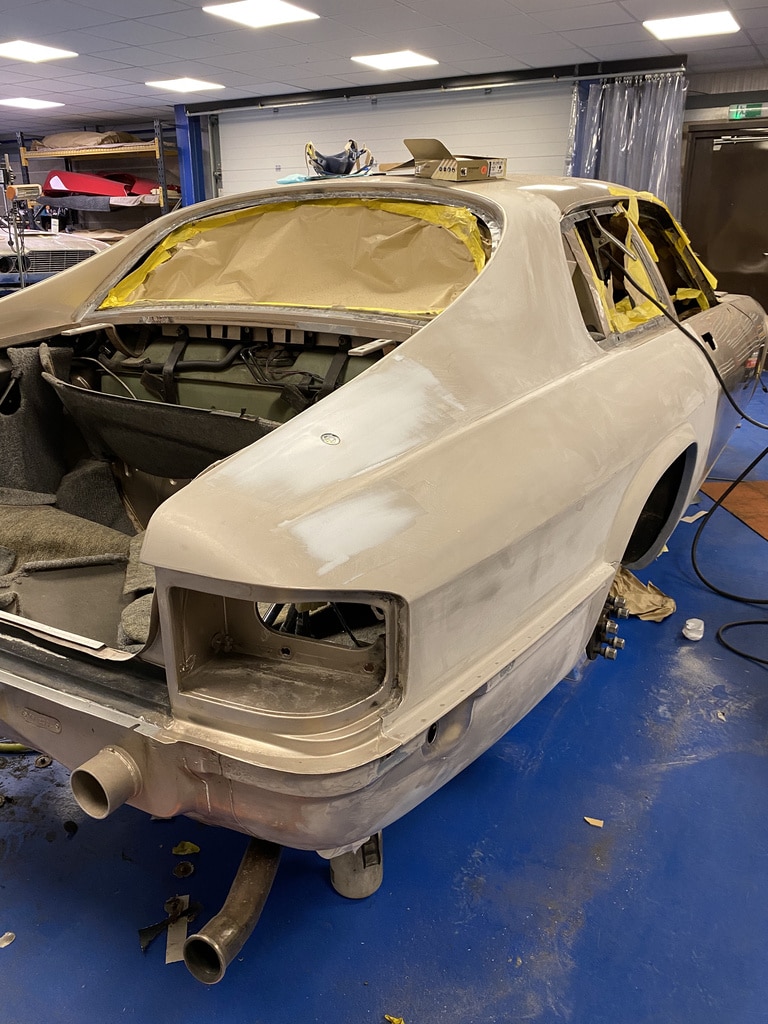
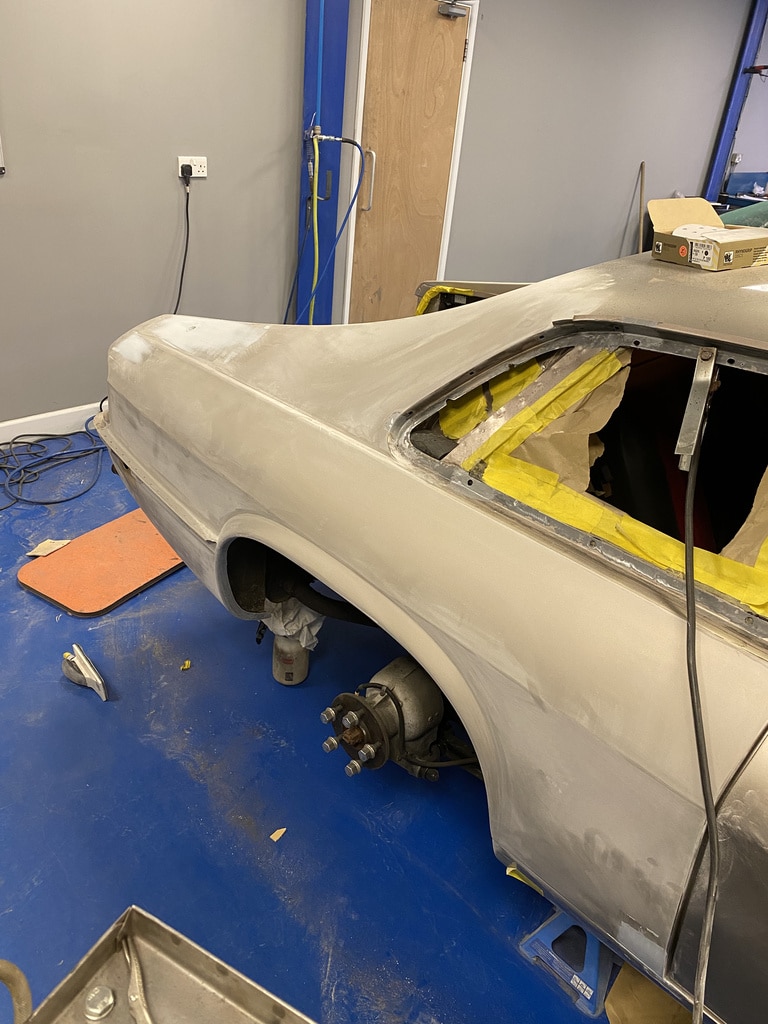
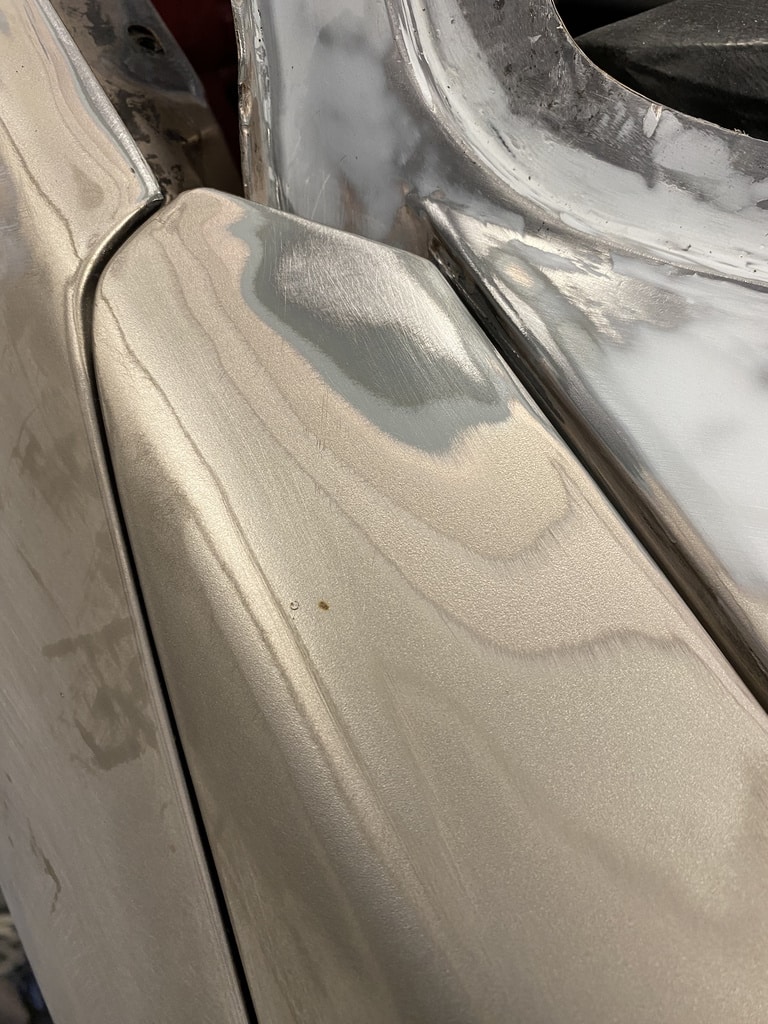
To gain better access to the front area, the team carefully removed the valance and front splitter – to better be able to repair the rust in the cars front wheel arches.
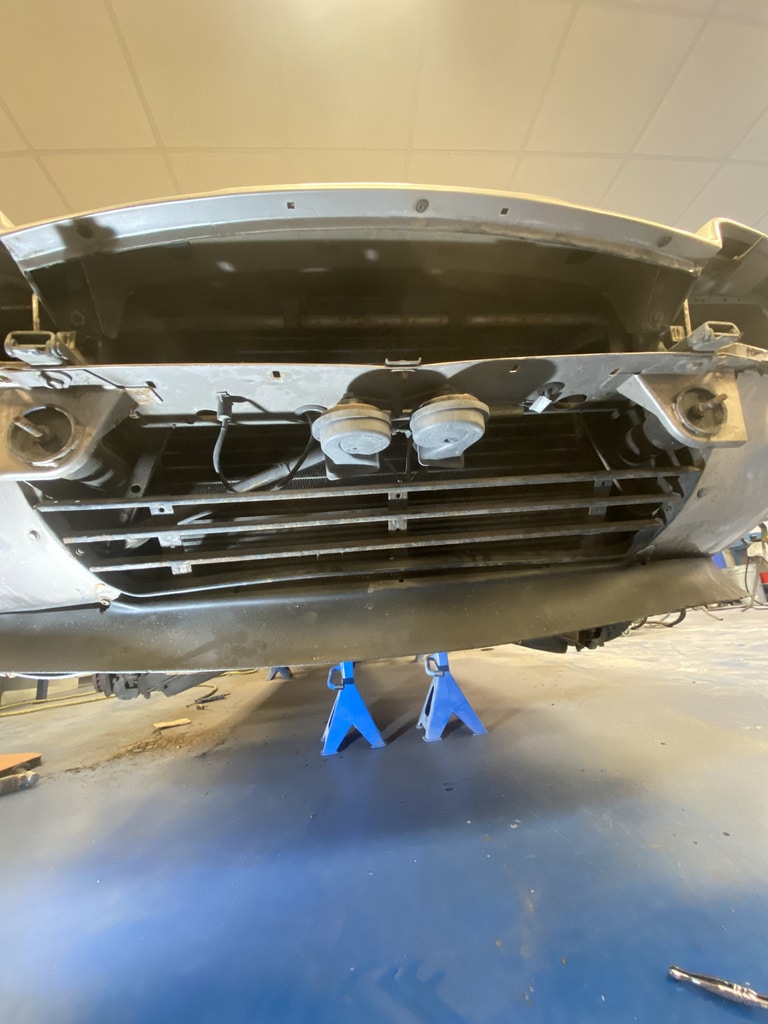
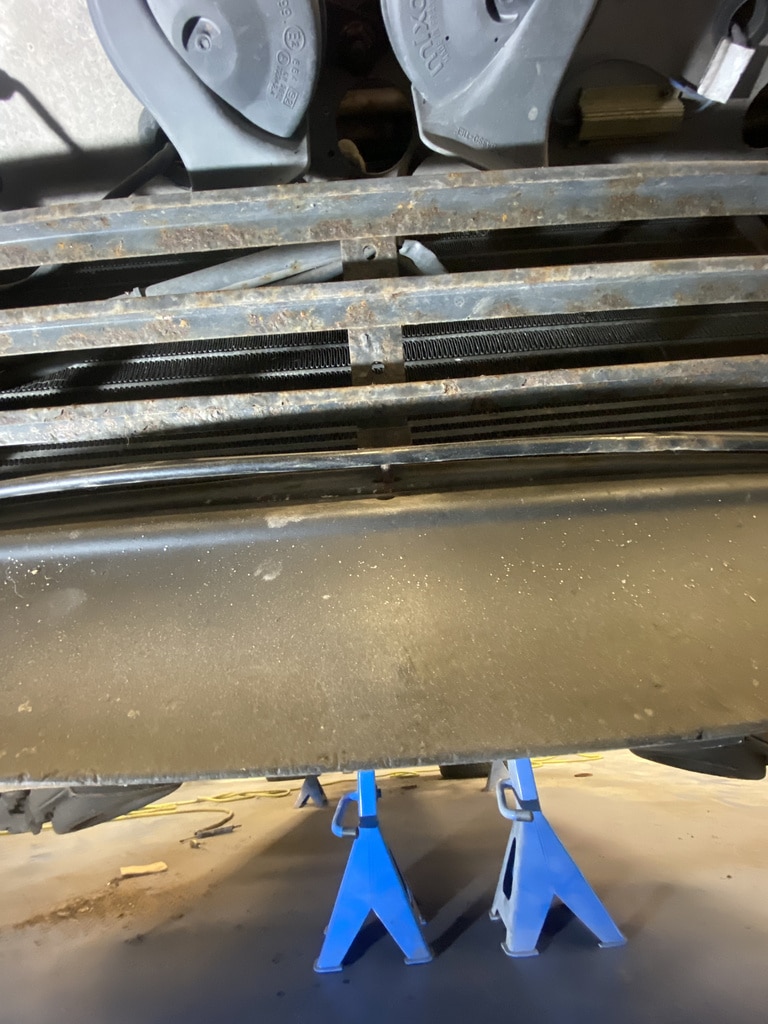
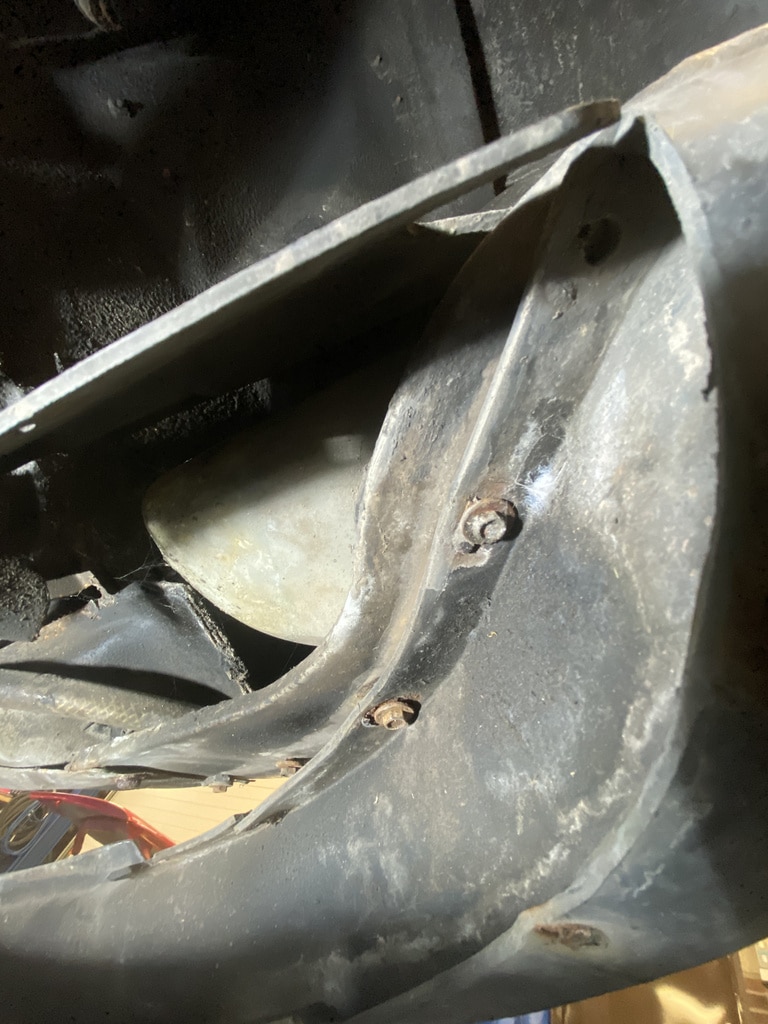
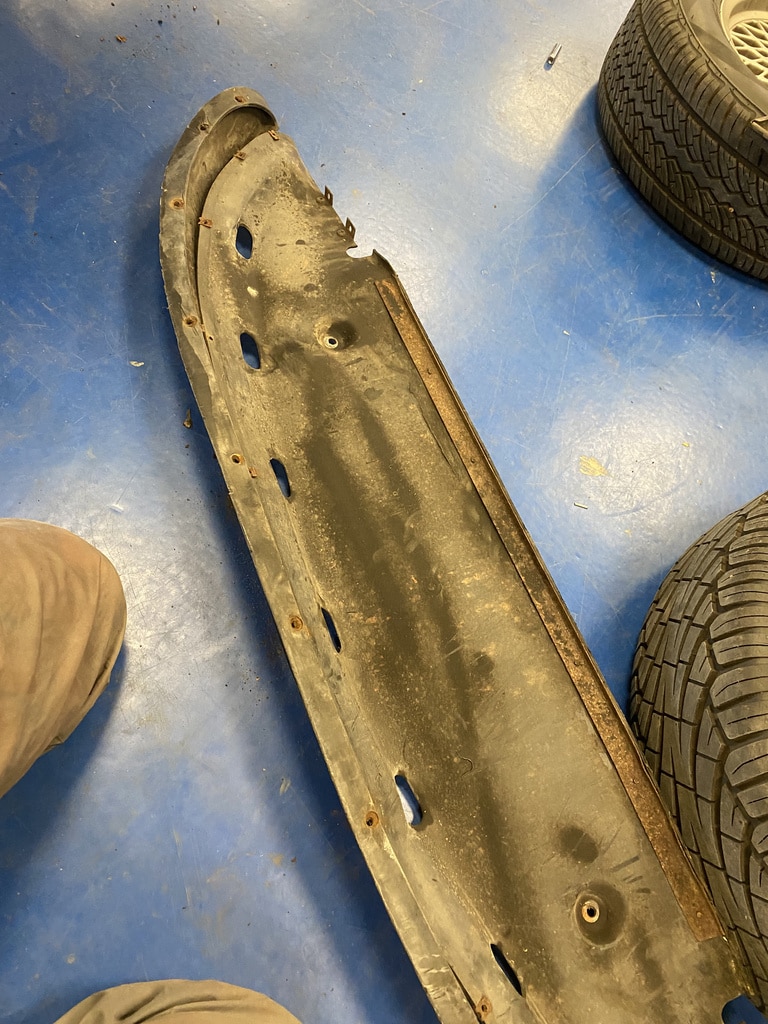
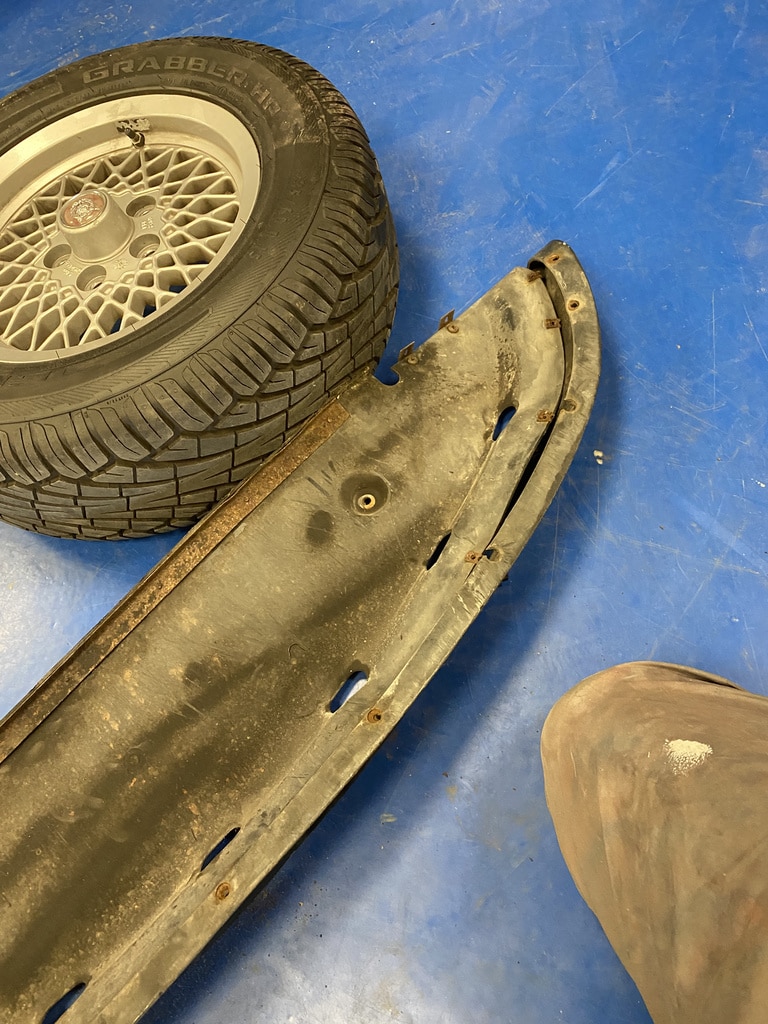
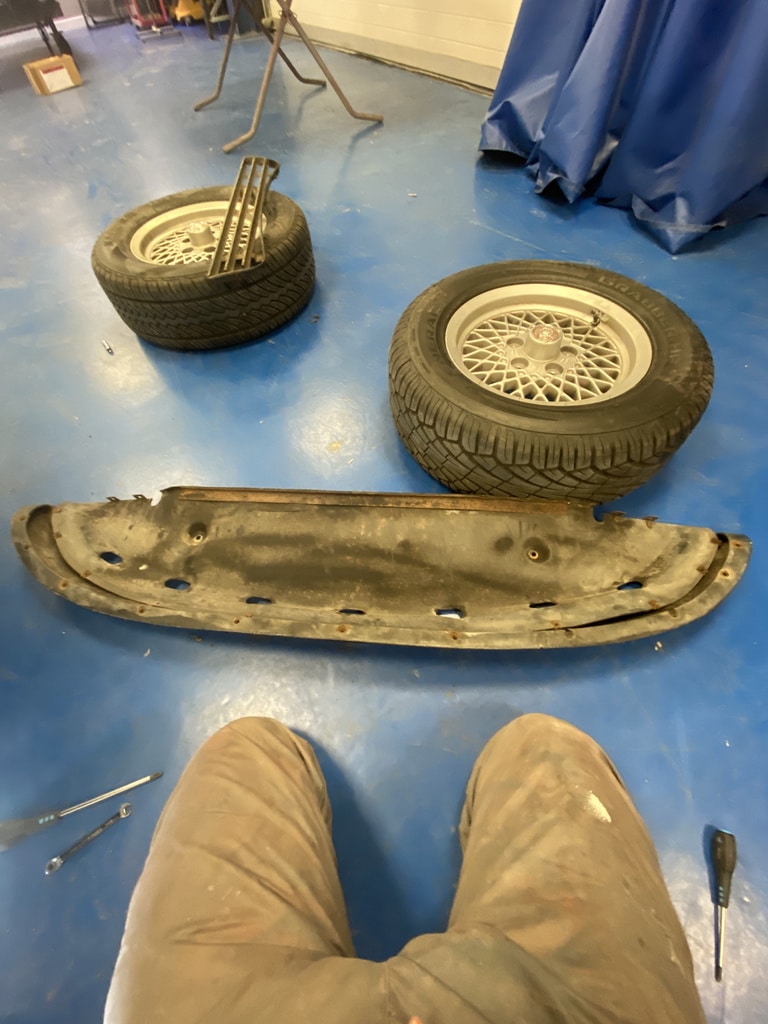
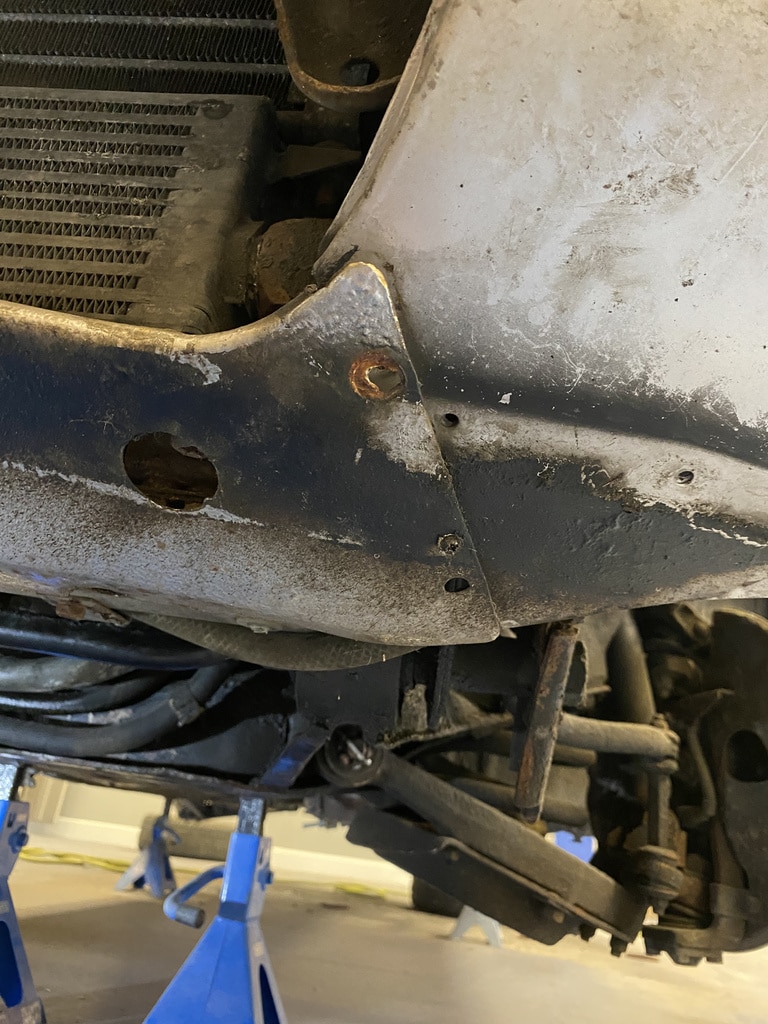
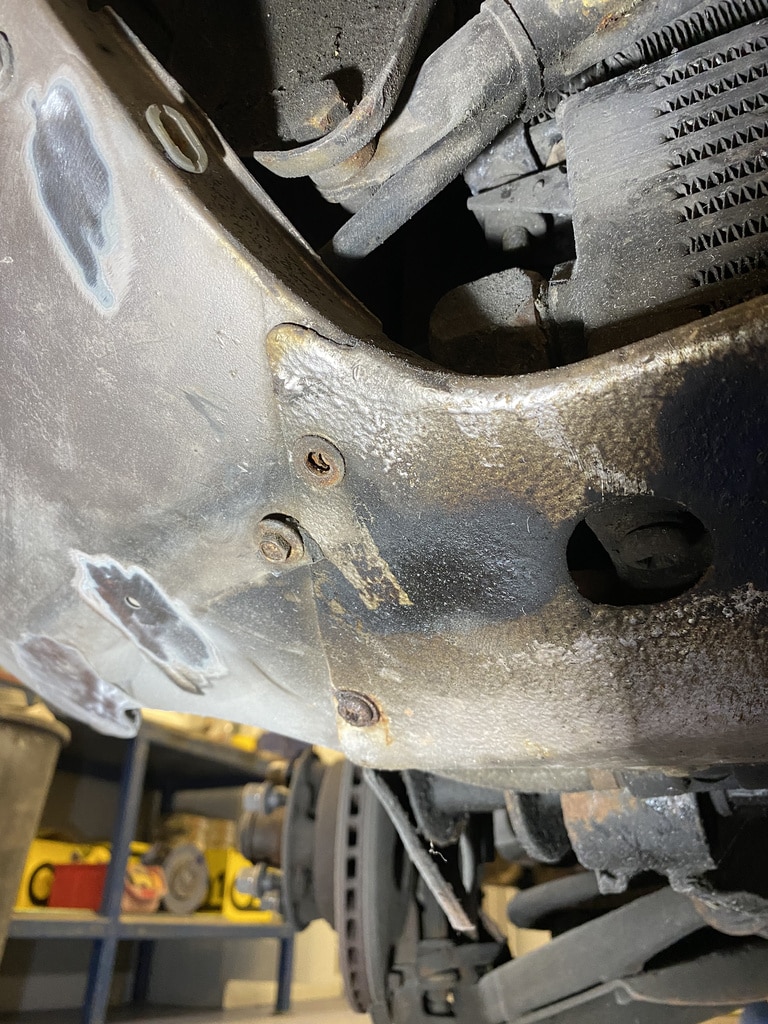
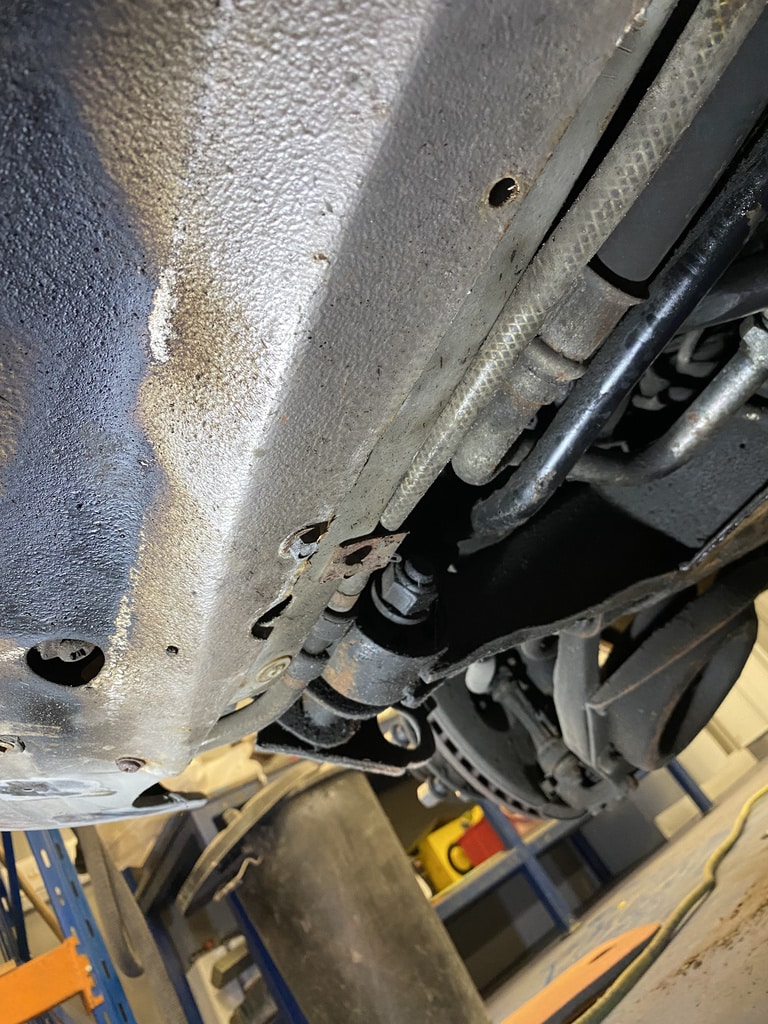
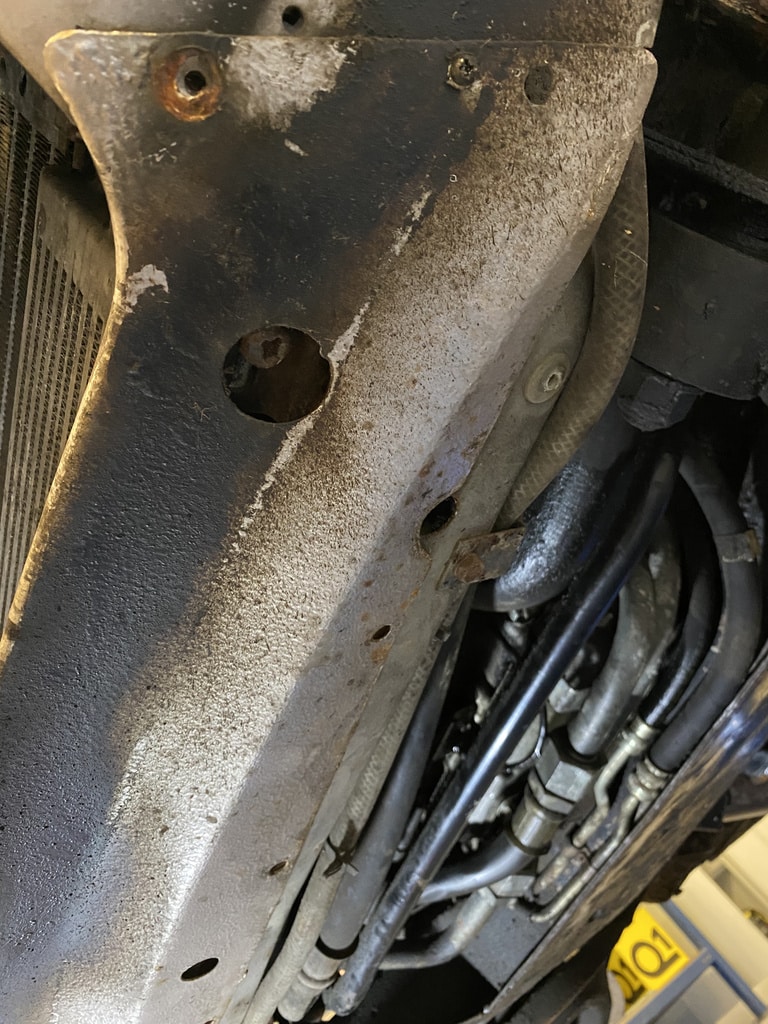
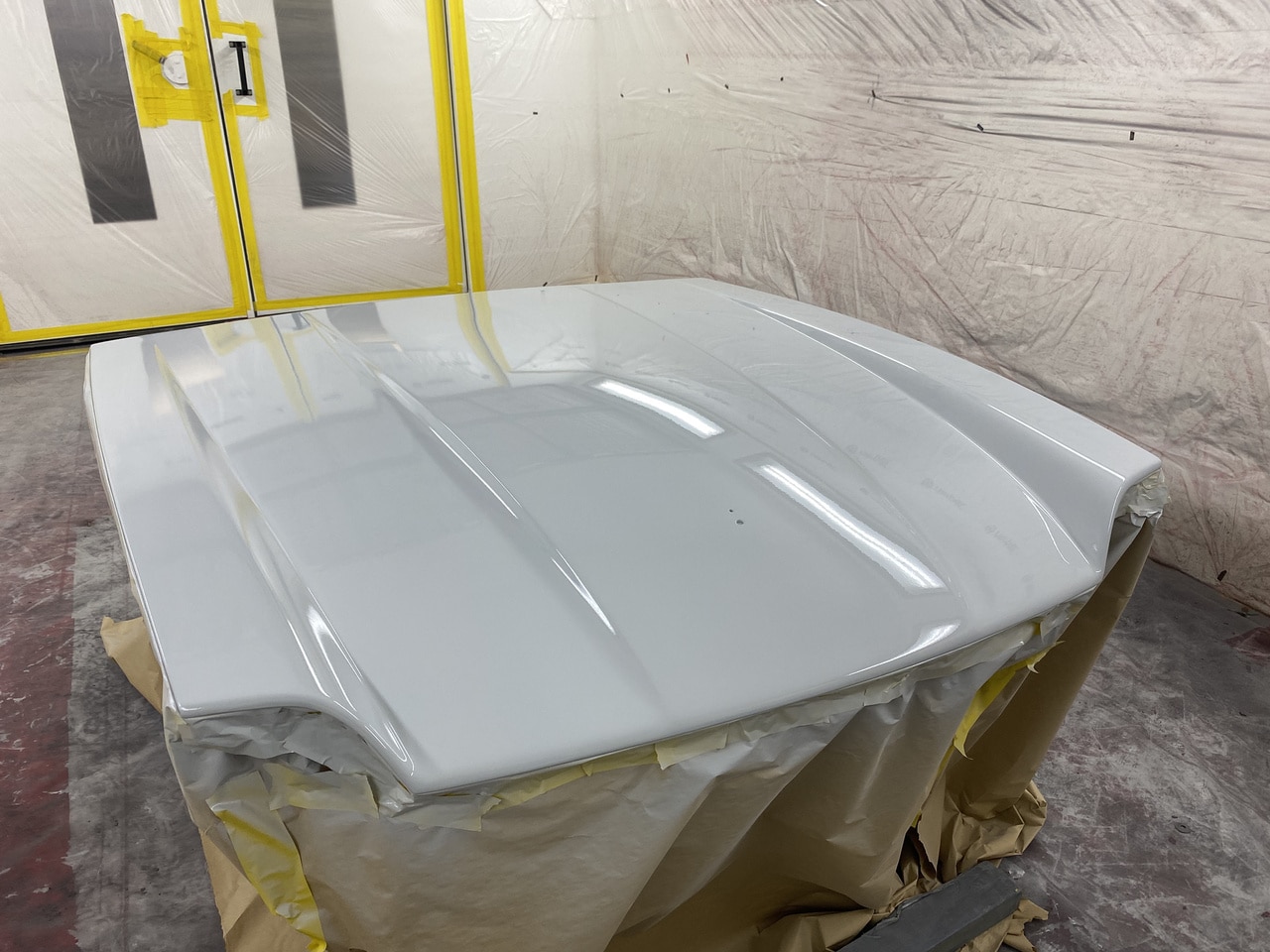
As the paint and body team worked their way around the car, the fabrication team were finishing off the last few areas such as the bonnet of the classic GT car as well as a few small repairs in the upper door jams.
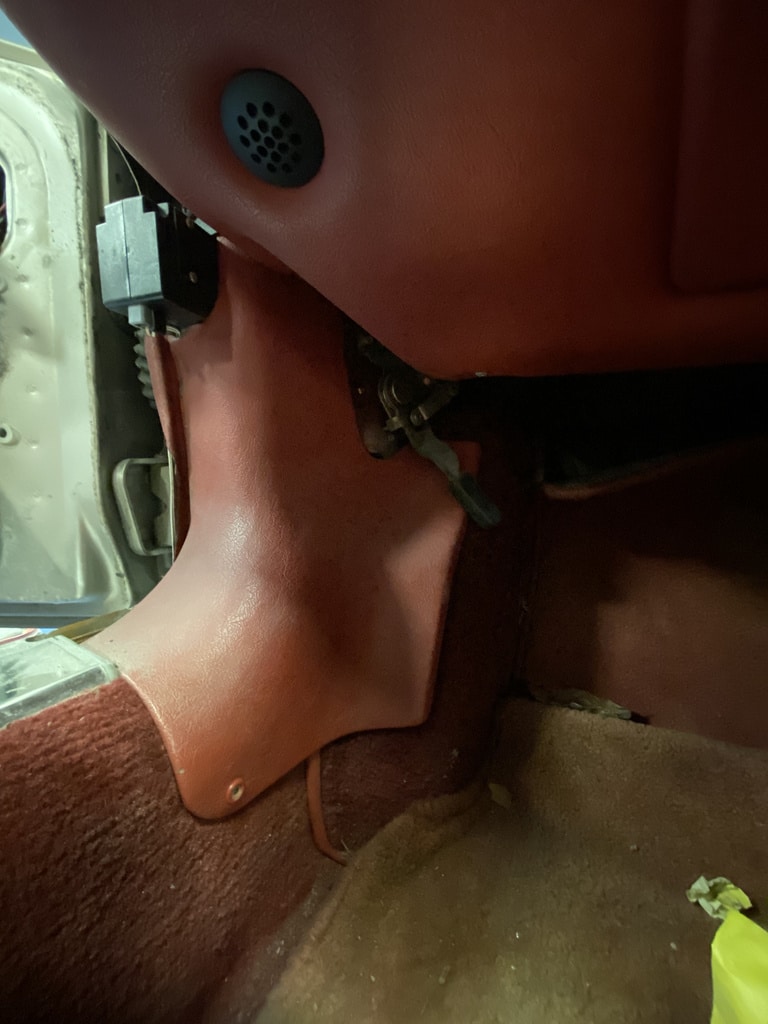
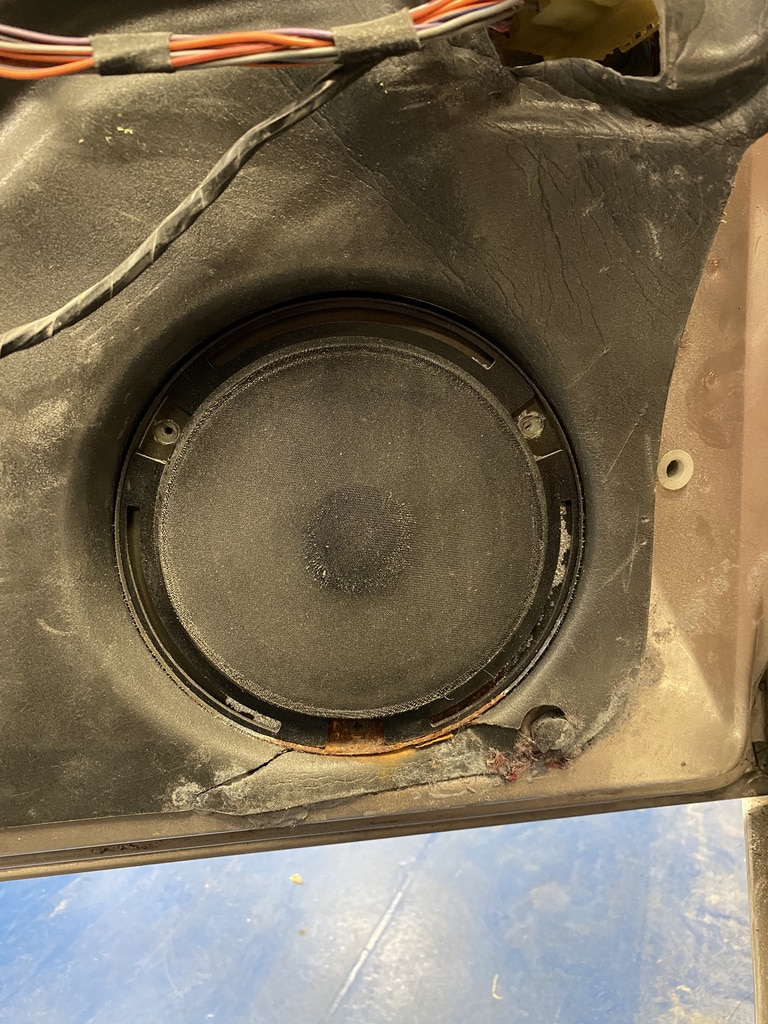
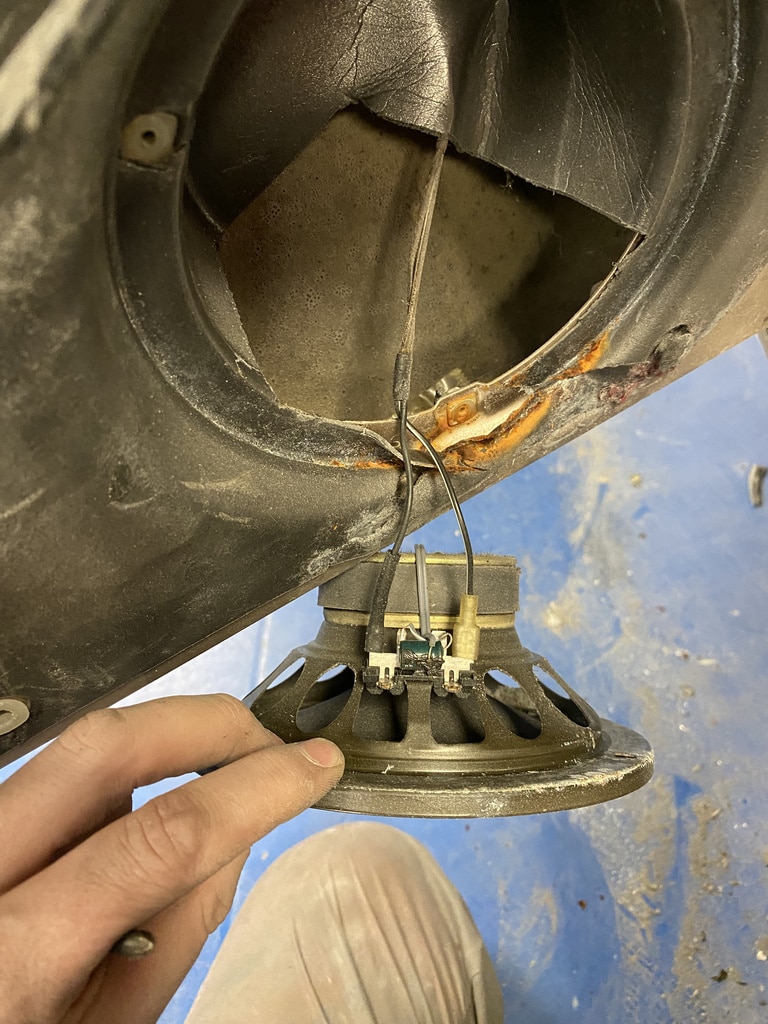
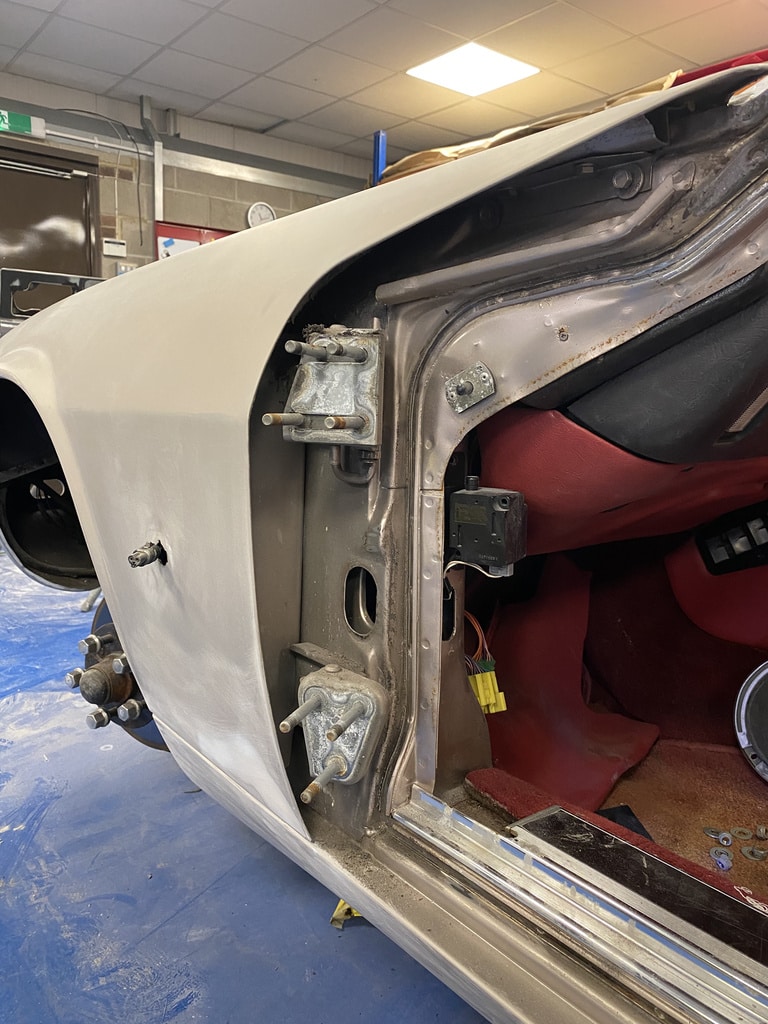
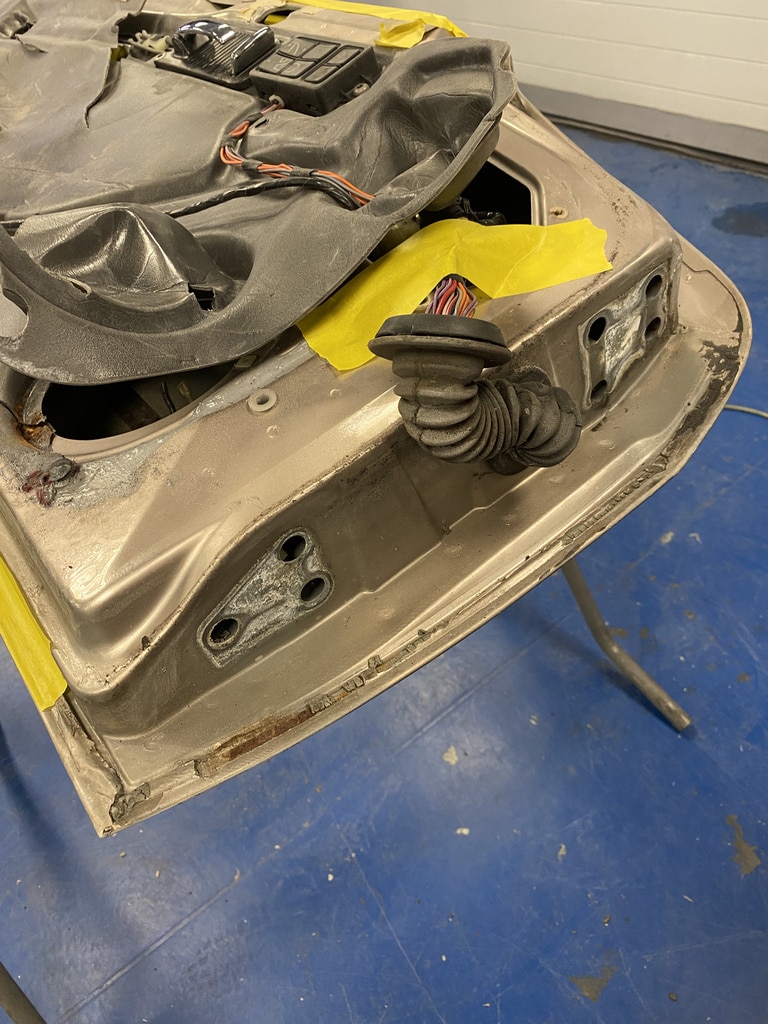
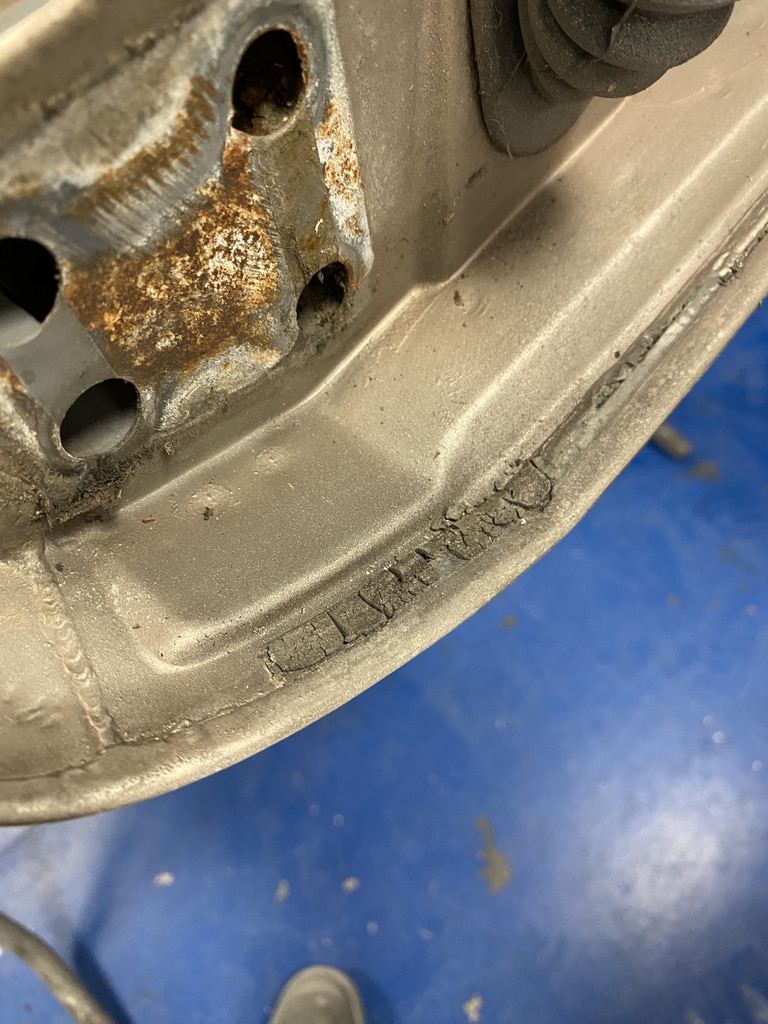
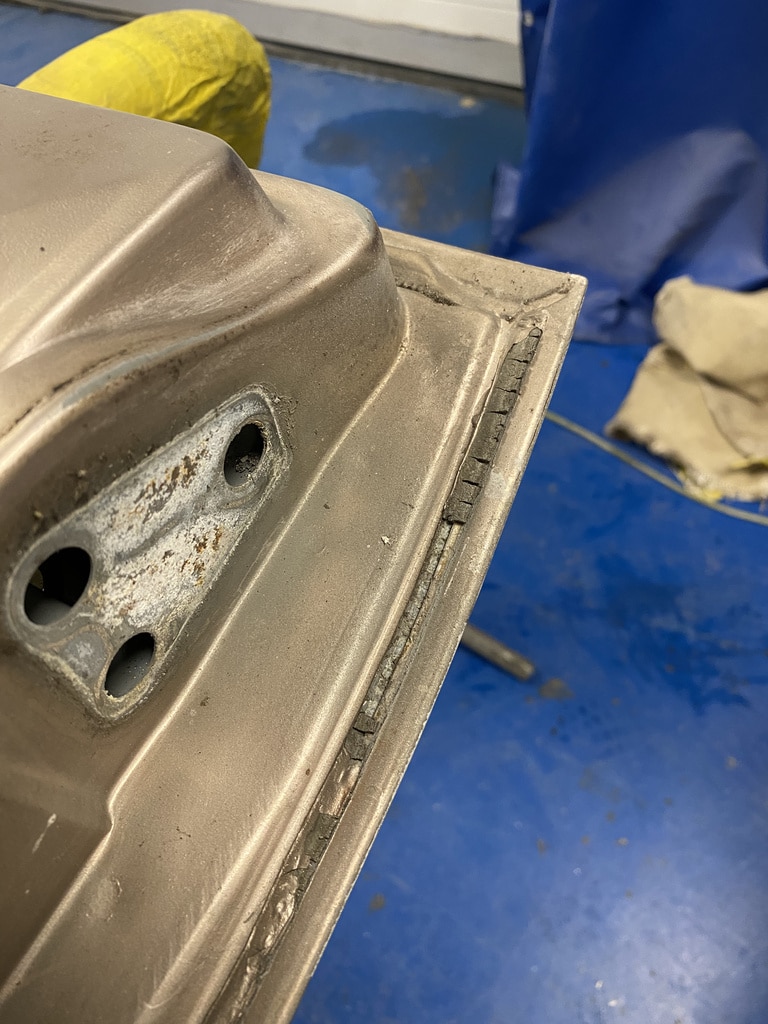
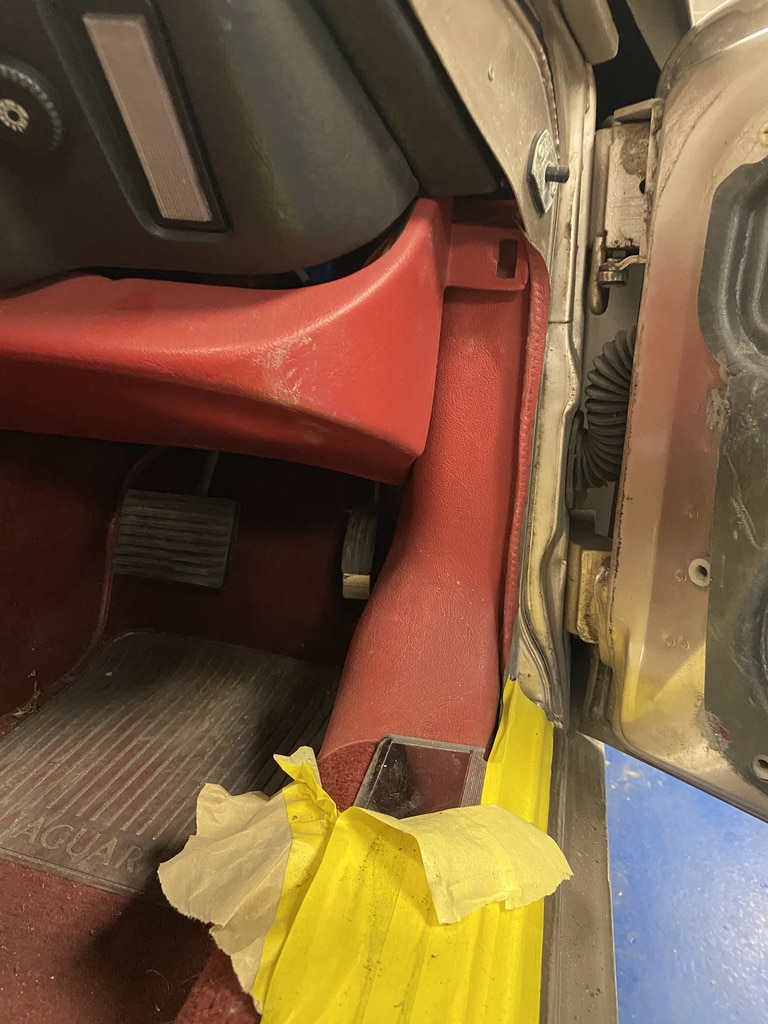
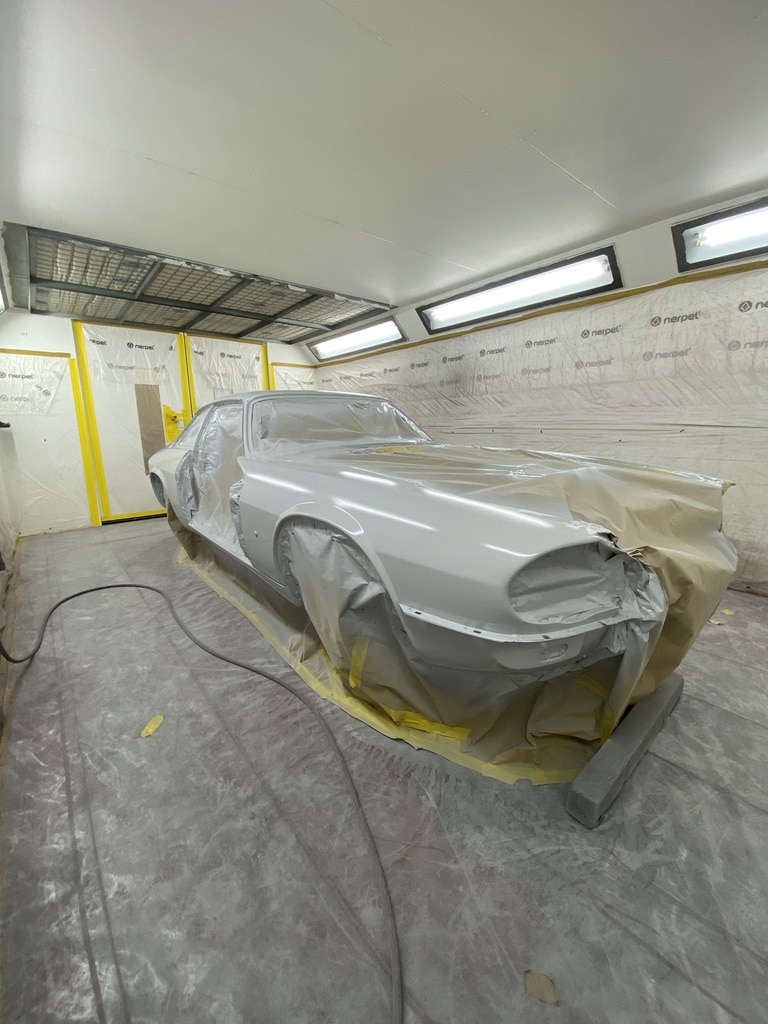
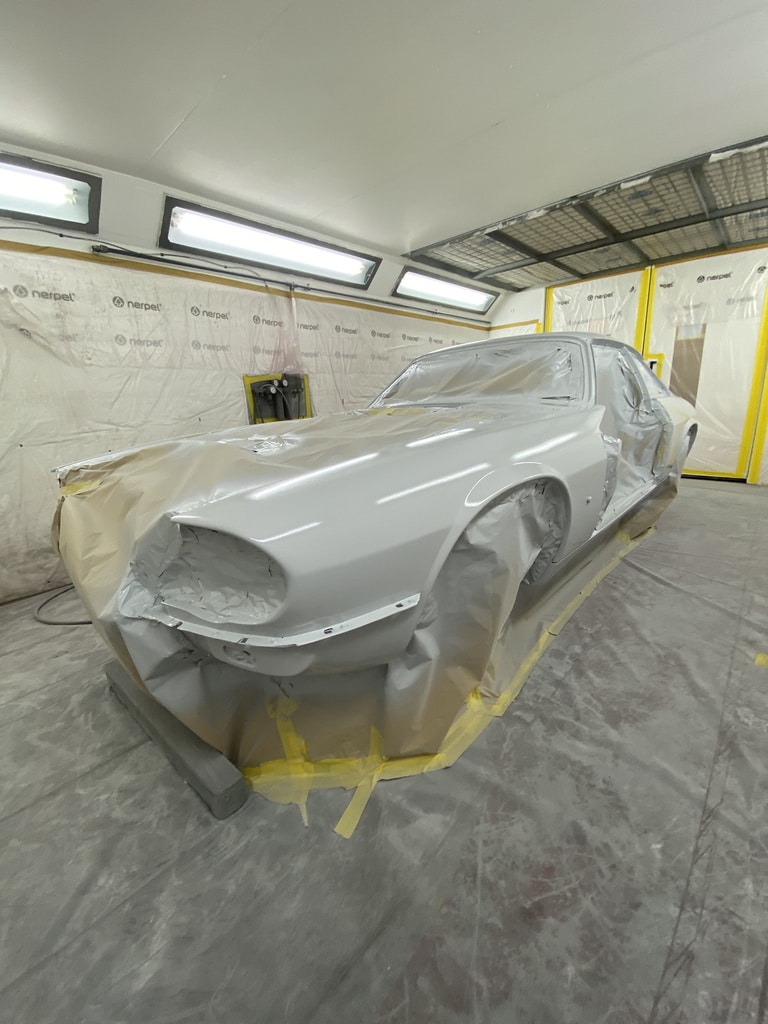
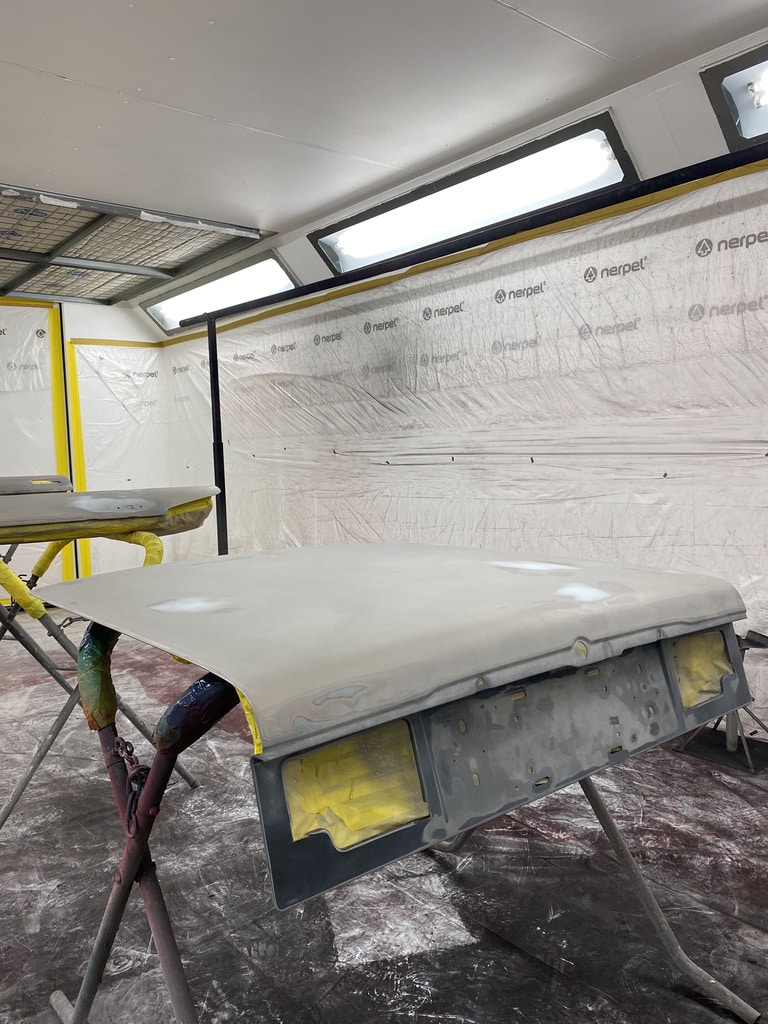
Then, after removing some of the smaller areas for Adam to gain access to for levelling – the entire car could be cleaned down and prepared for its time in the spray booth for priming. But as part of that and to make it easier to get into areas to primer, the team removed the doors before finding a small area of corrosion which was neutralised and made ready.


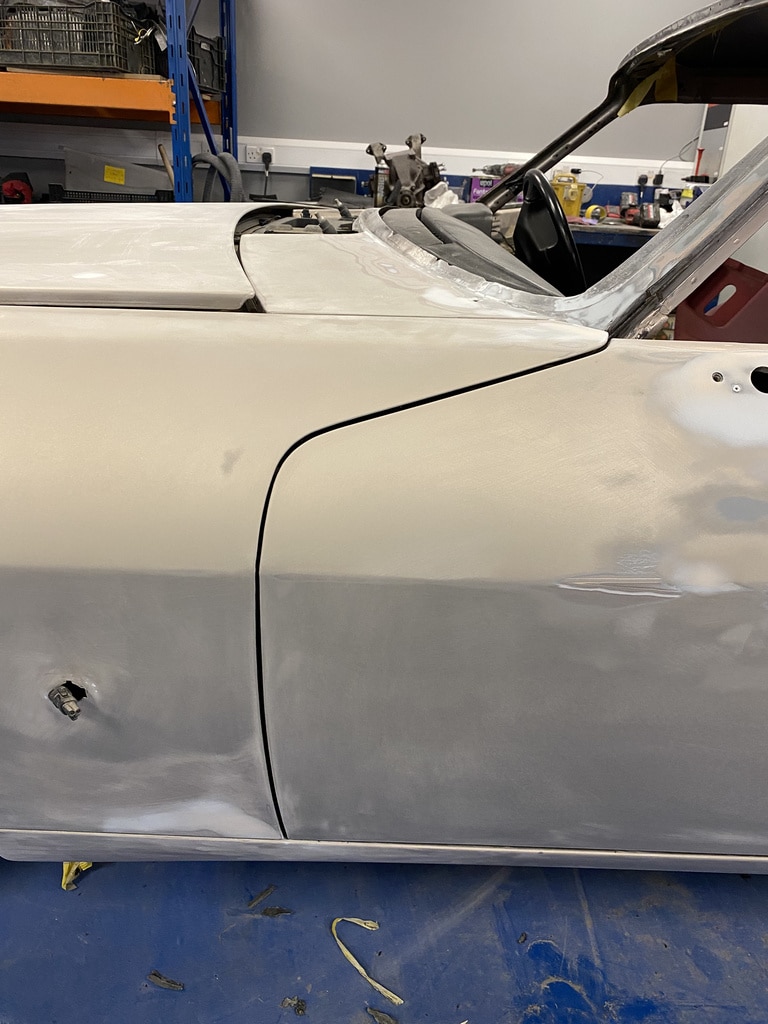
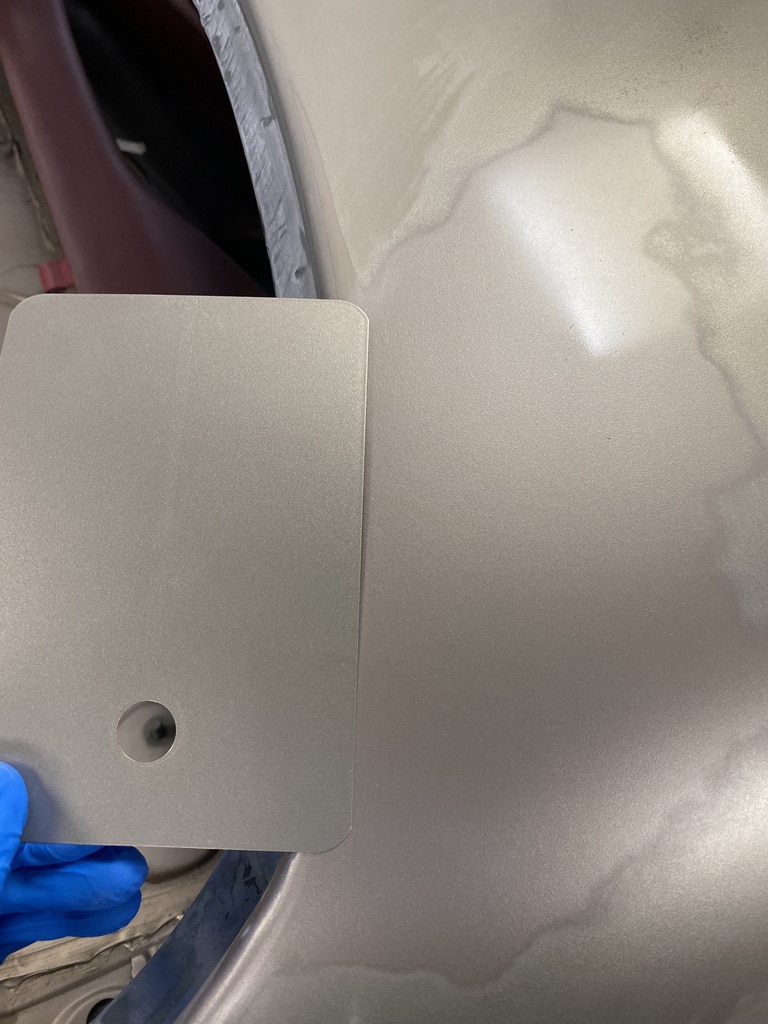
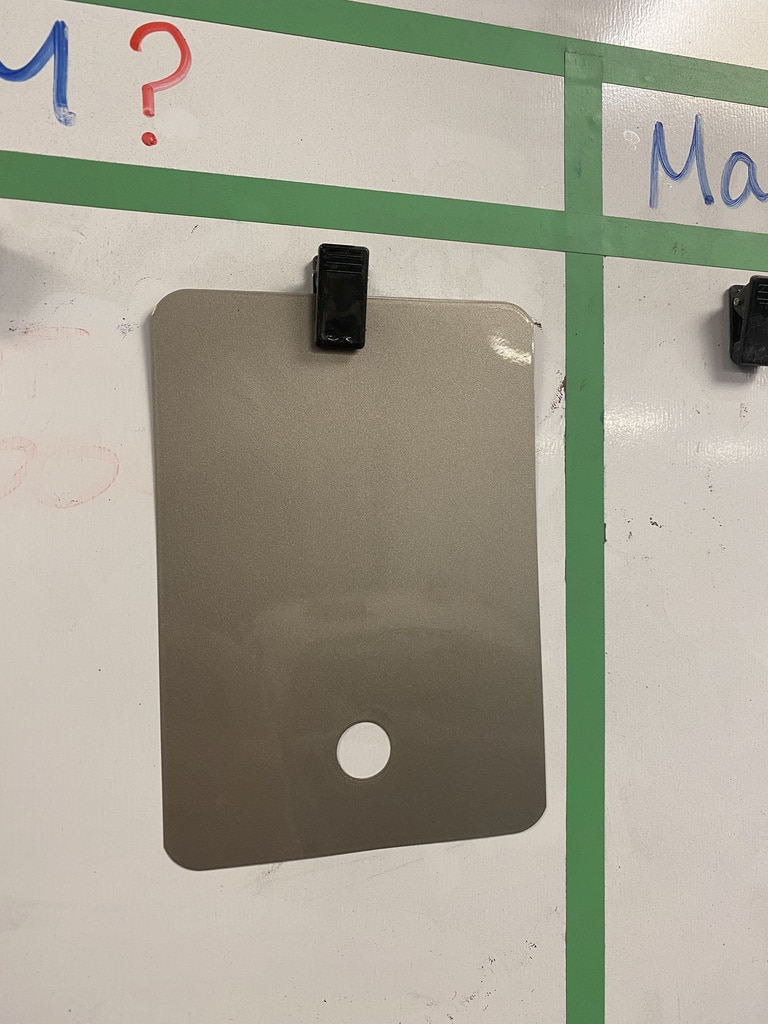
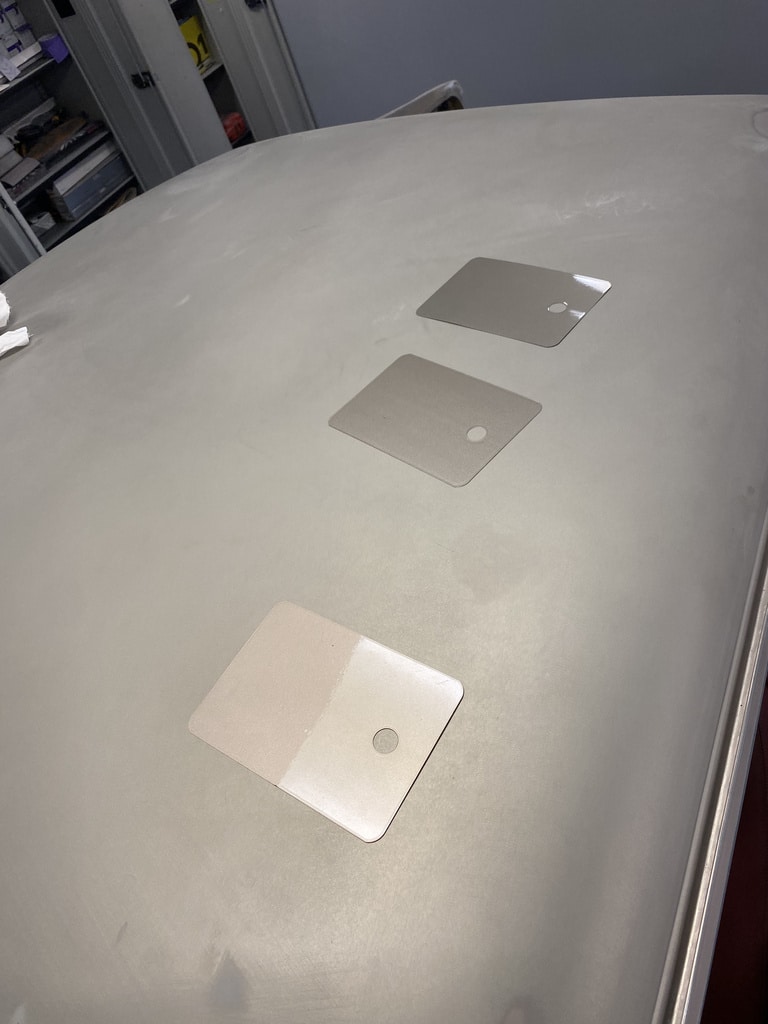
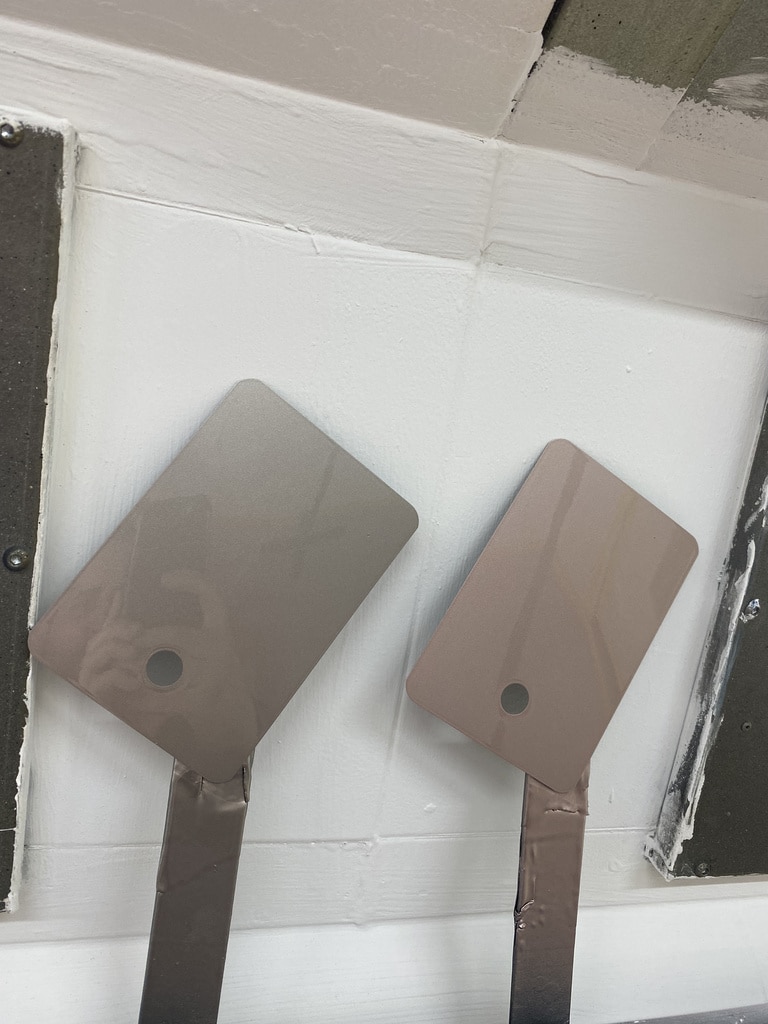
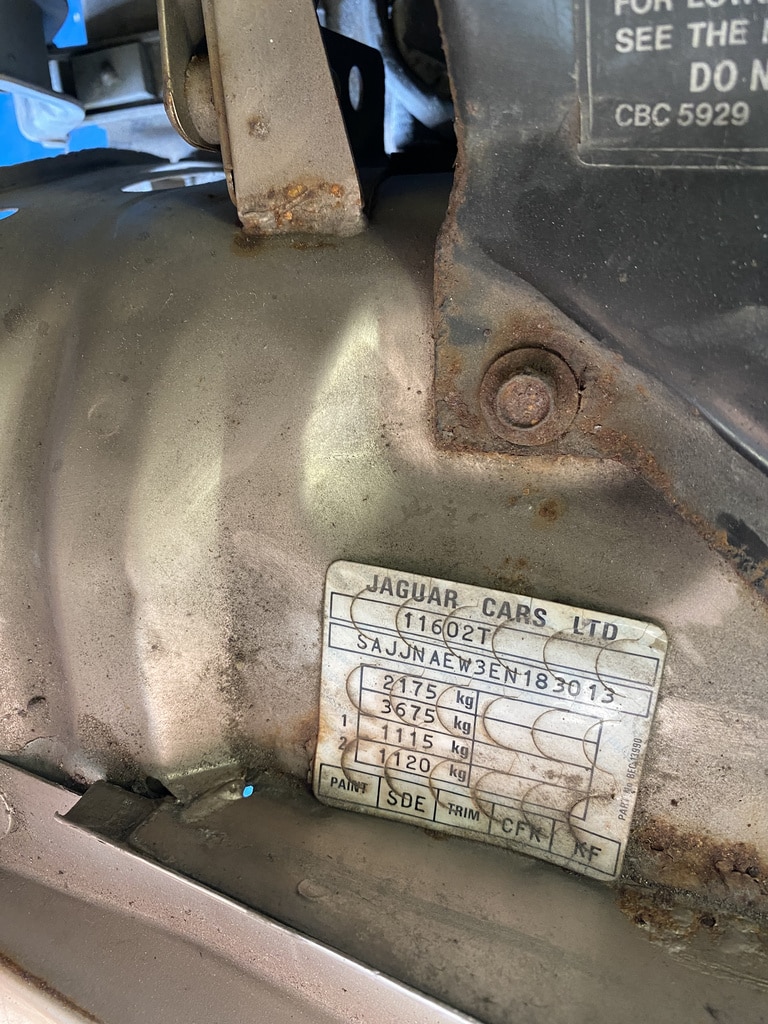
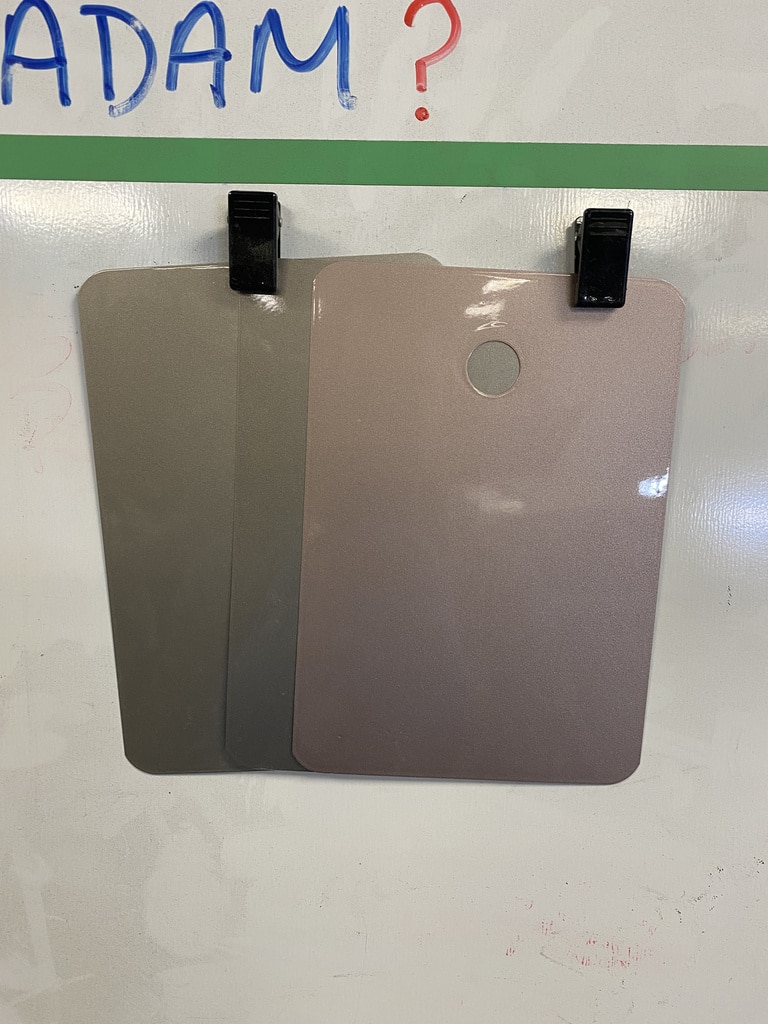
Whilst the team cleaned down the car ready for primer, Adam carried out some paint tests to get the colour just right – ‘So the colour code on the Jag is SDE (light oyster) a spray out card was done but didn’t match the car at all. When prep began on the panels it was found that the car had been painted a few times before. Therefore we located the original colour and matched it with the yellow variant to which the owner confirmed that it was best to go back to the original colour rather the colour that was on the car currently.’
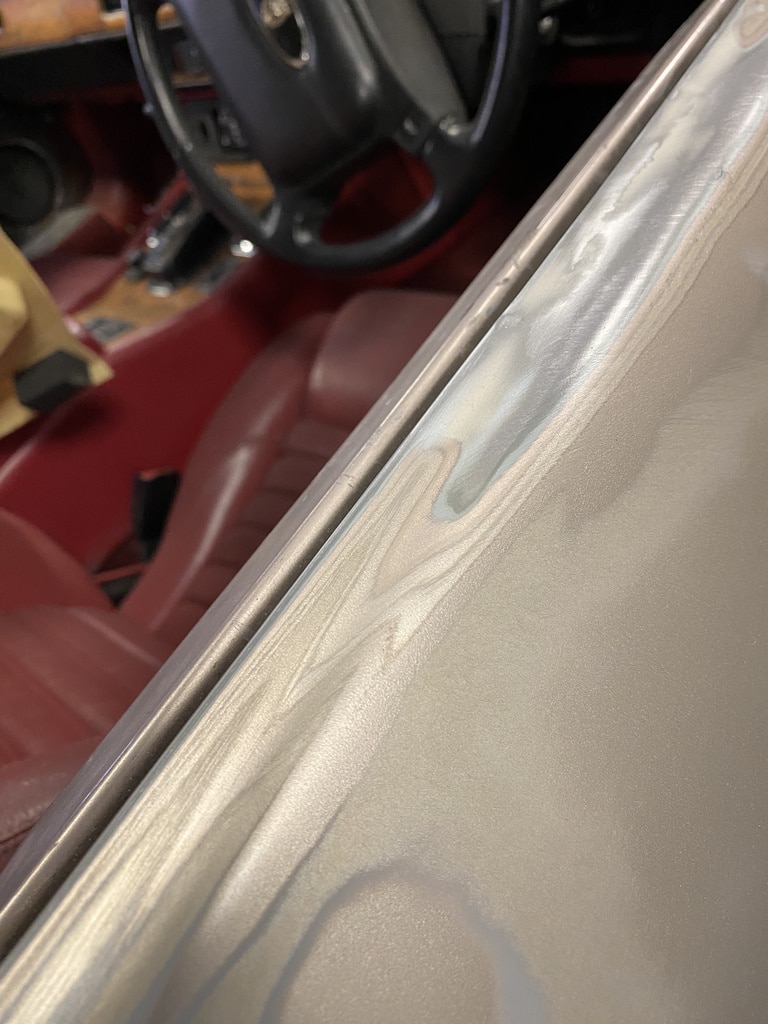
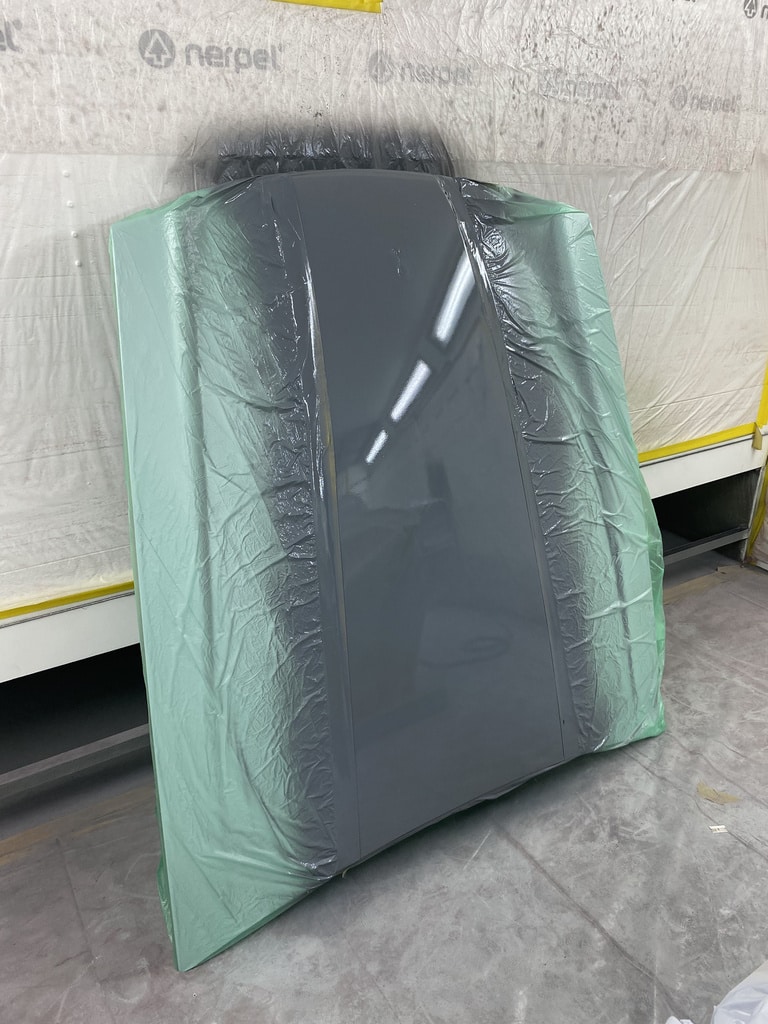
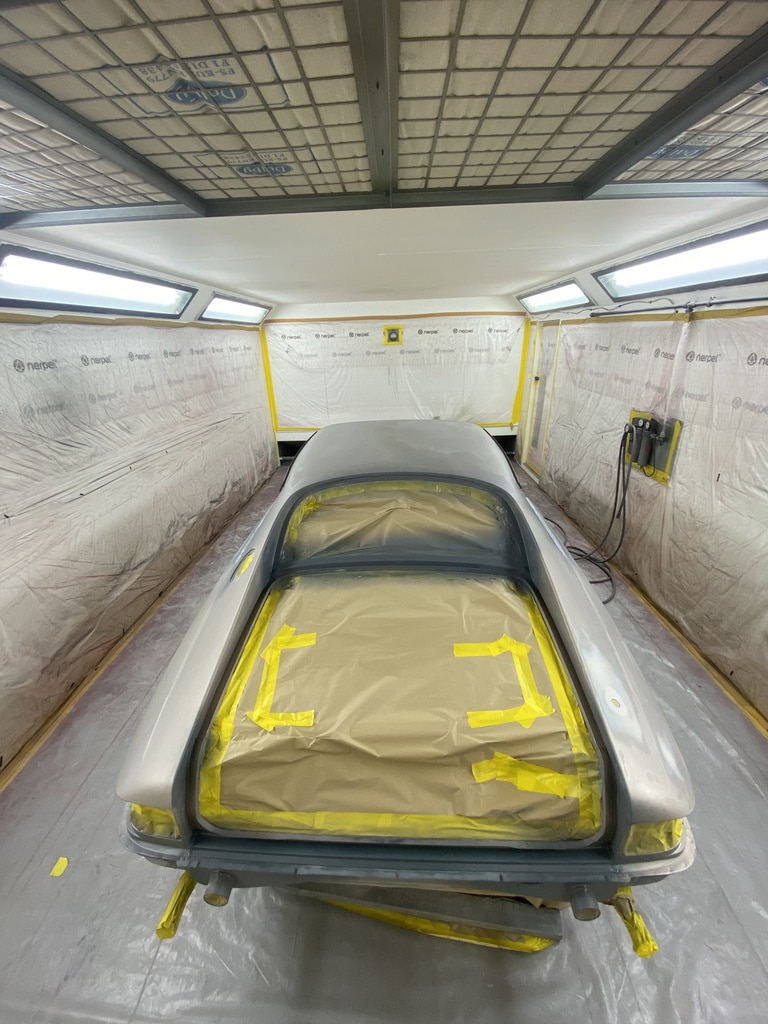
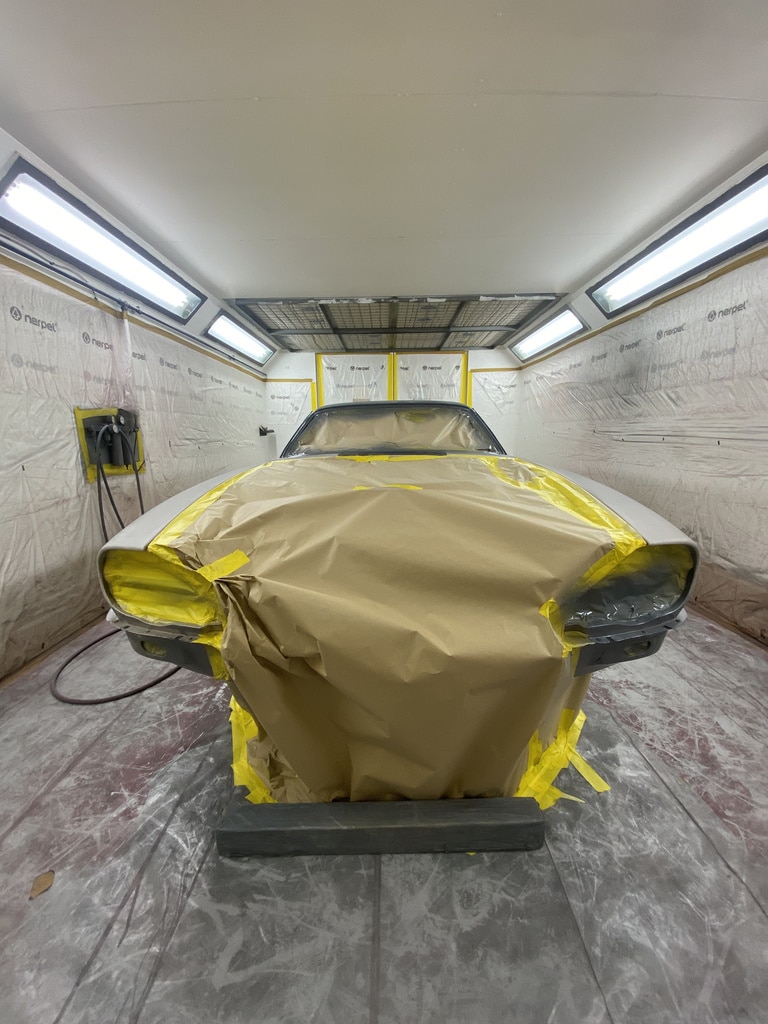
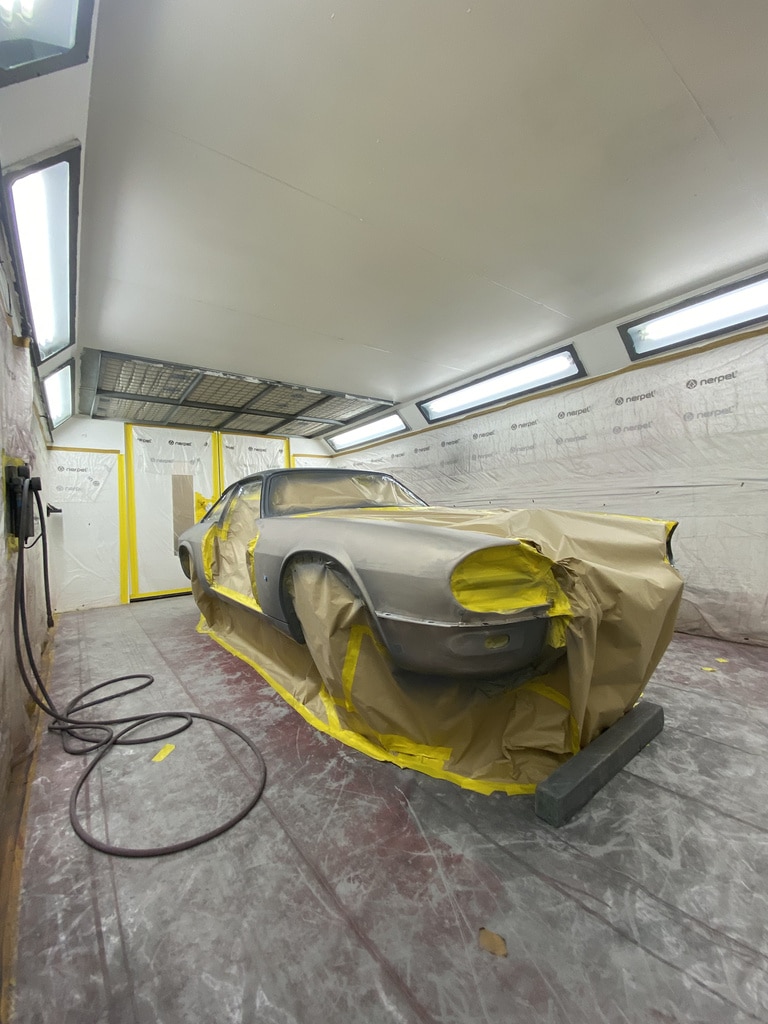
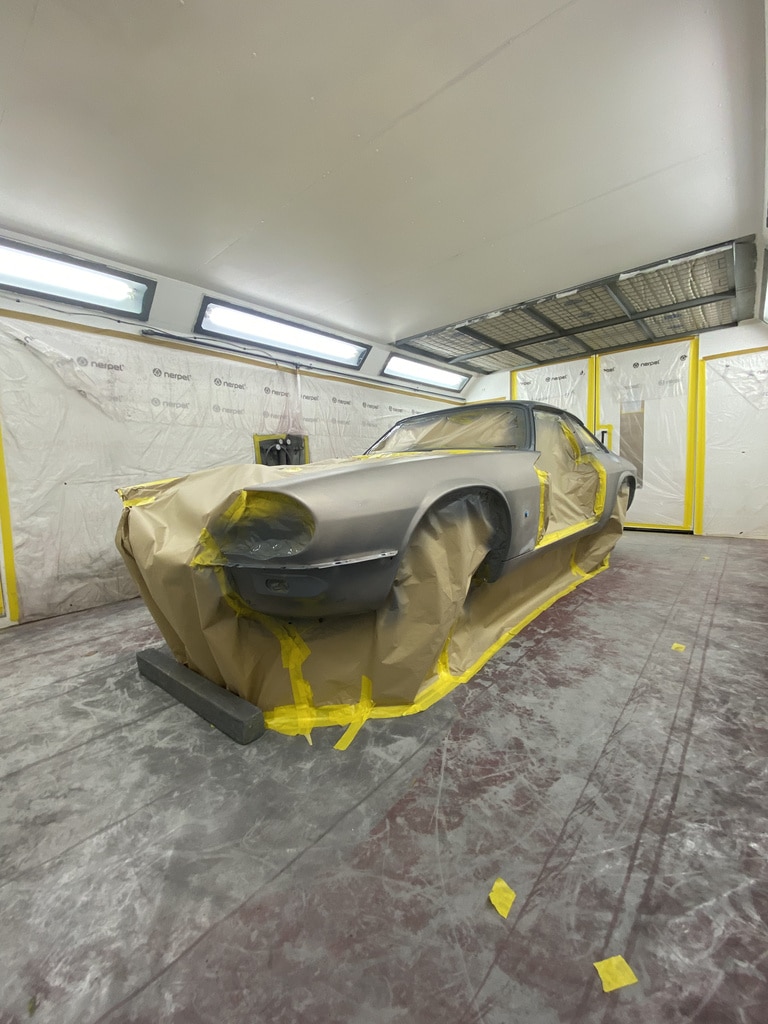
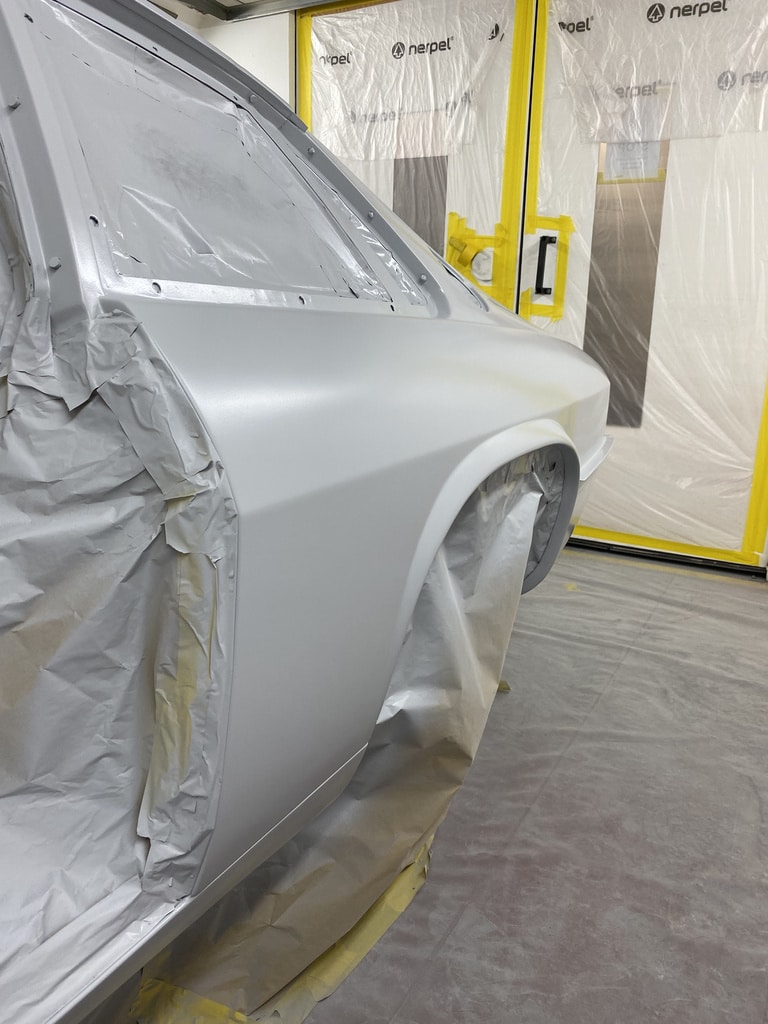
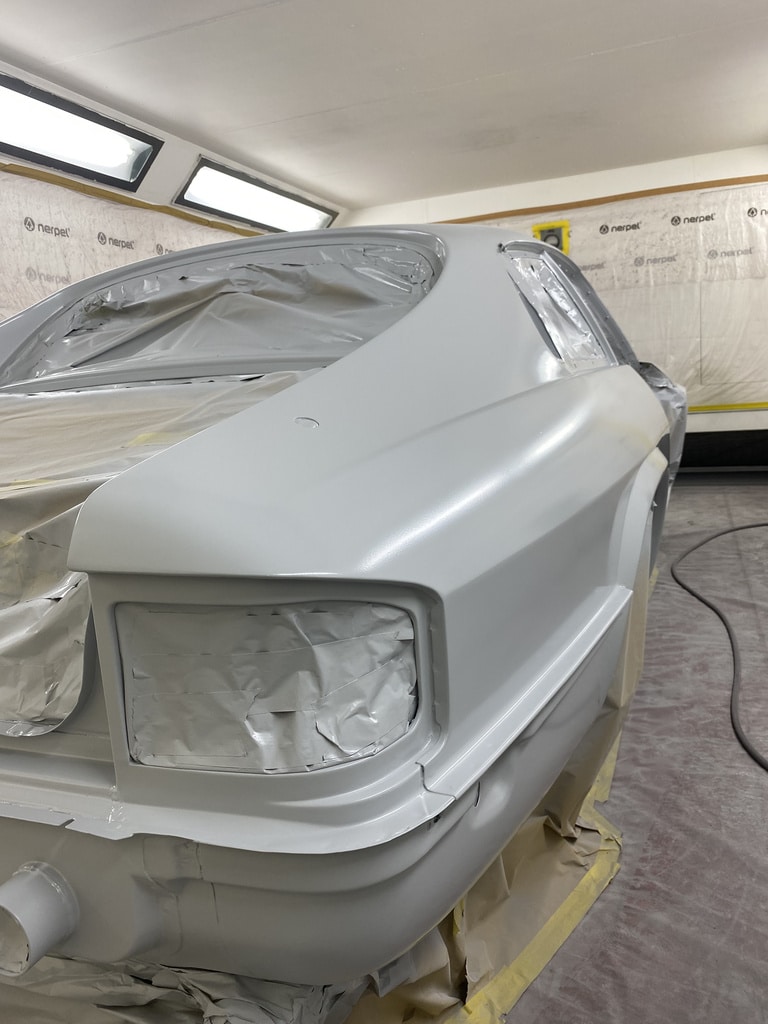
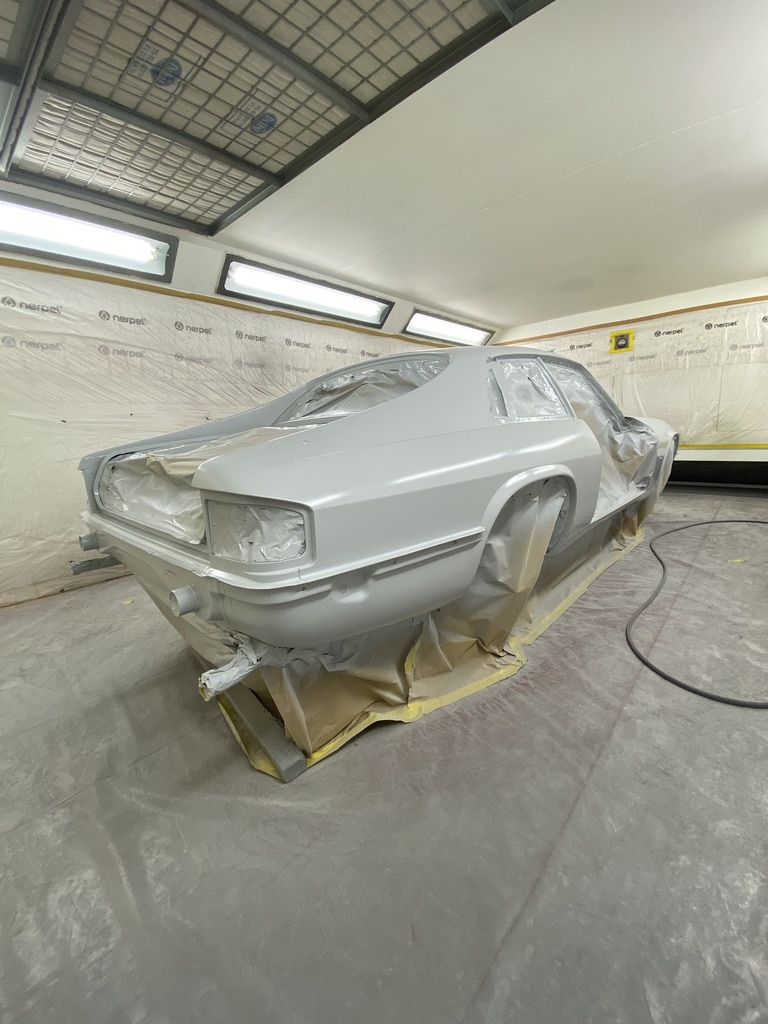
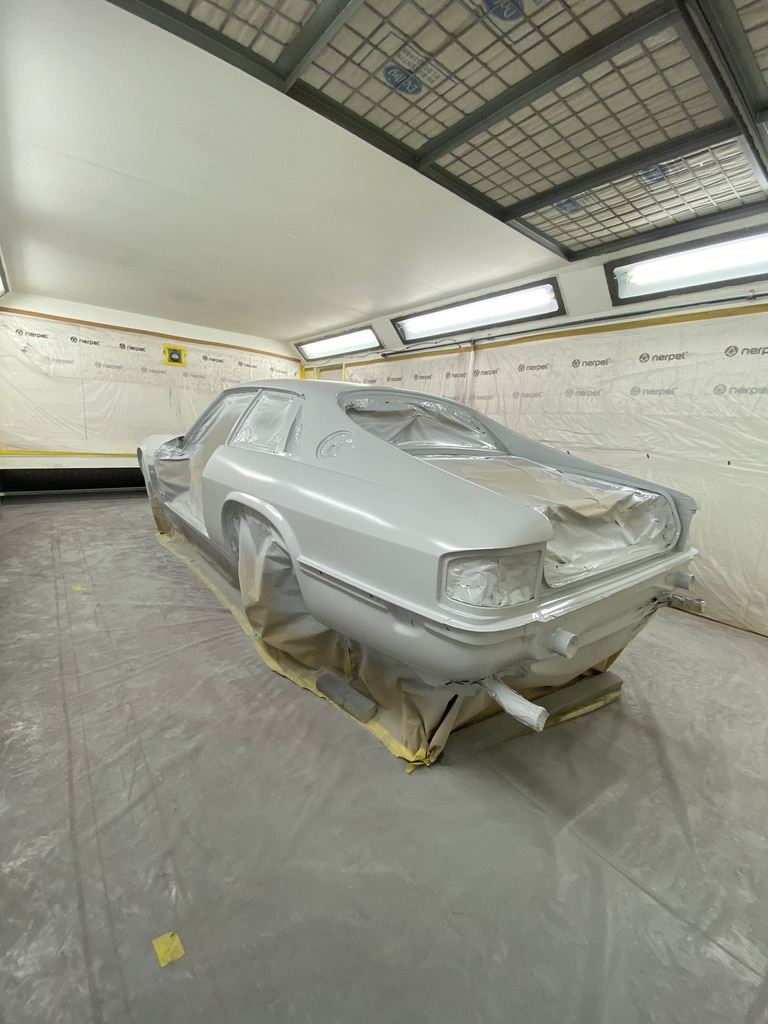
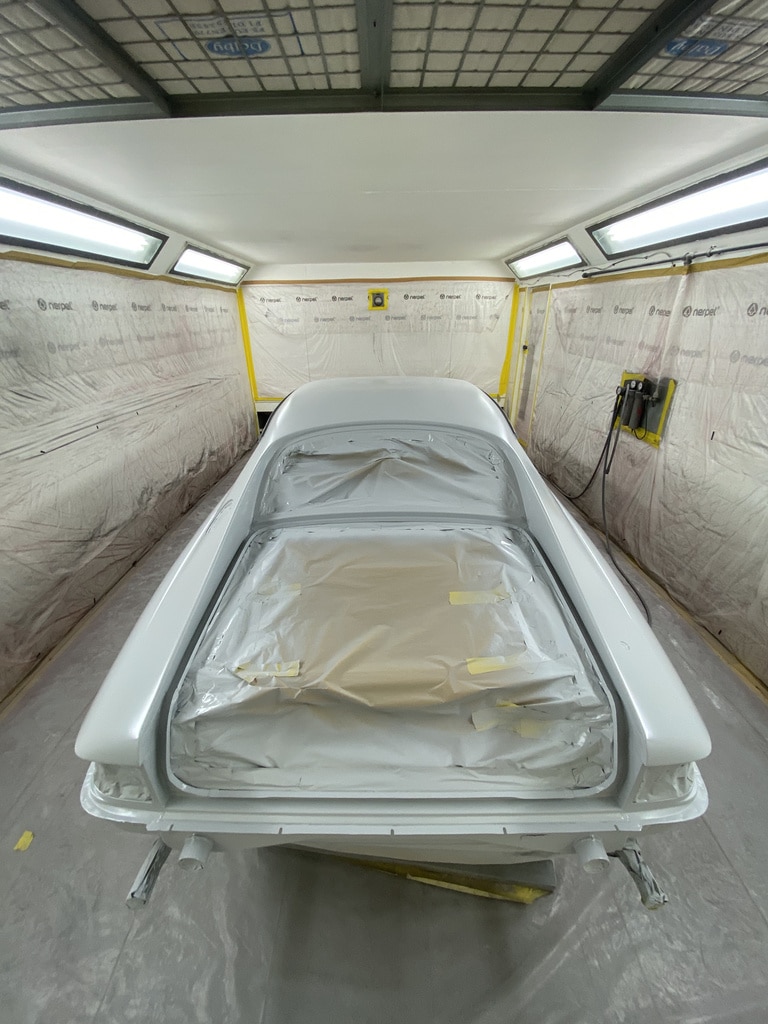
‘Car in primer after being masked up blown down, and cleaned with panel wipe. Before 3 coats of primer was applied, epoxy primer was applied to the areas which were down to bare metal as this is our process for protection. Overall the car looks good and with a good sand with a block it will be lovely a flat and straight.’
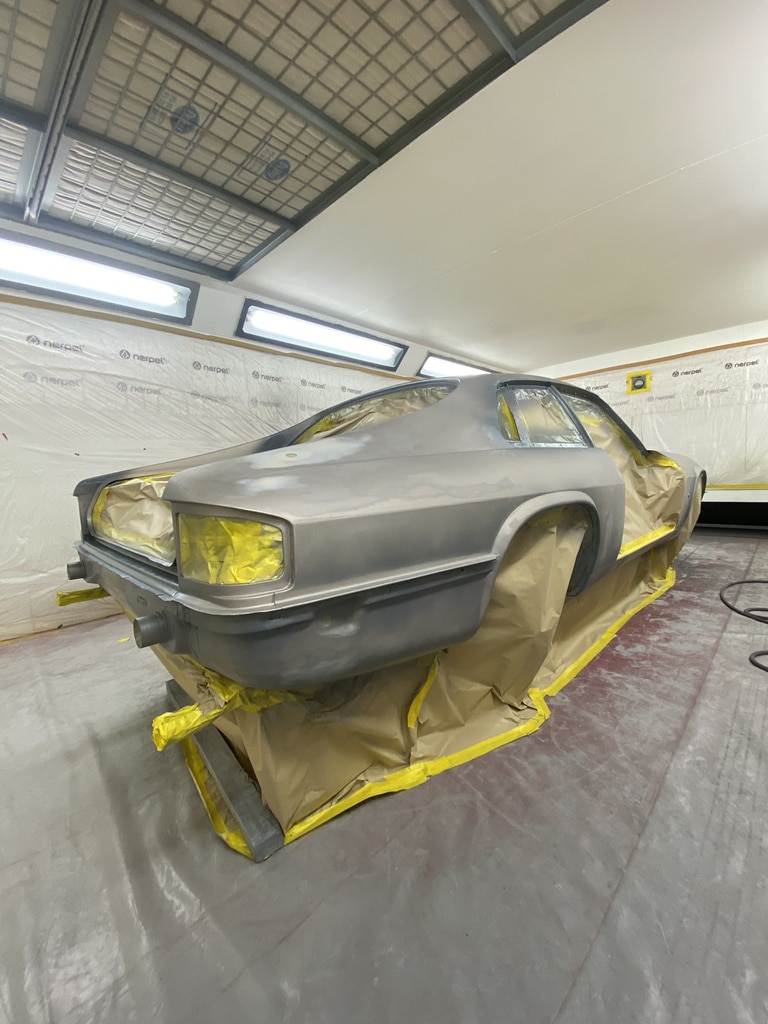
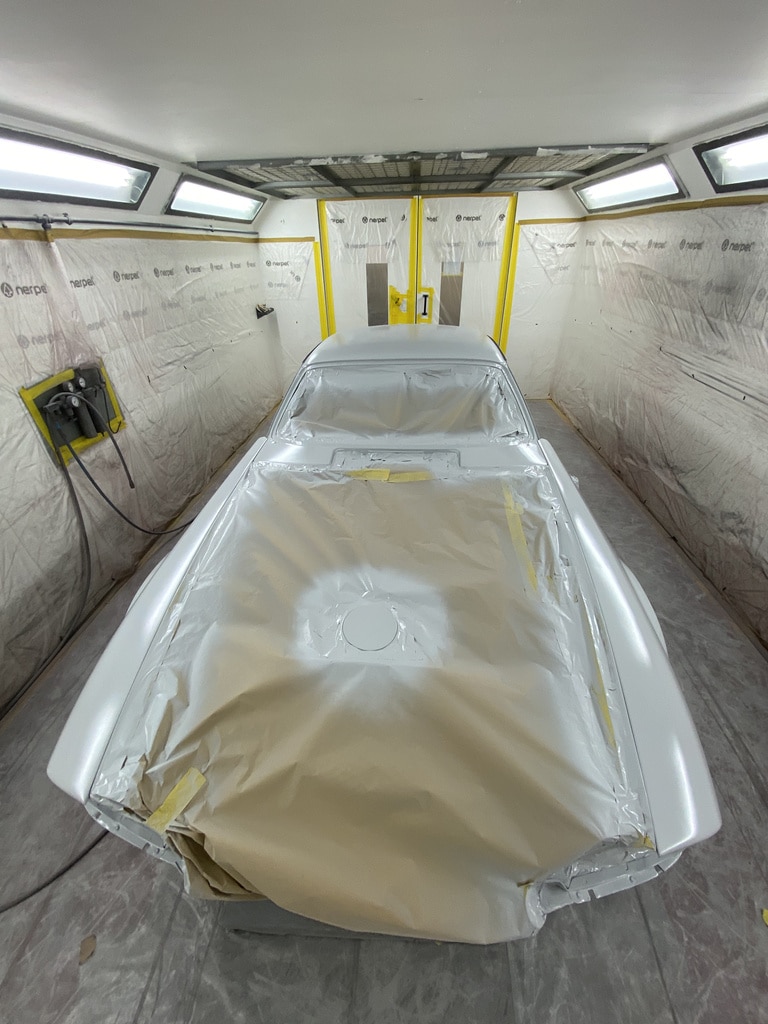
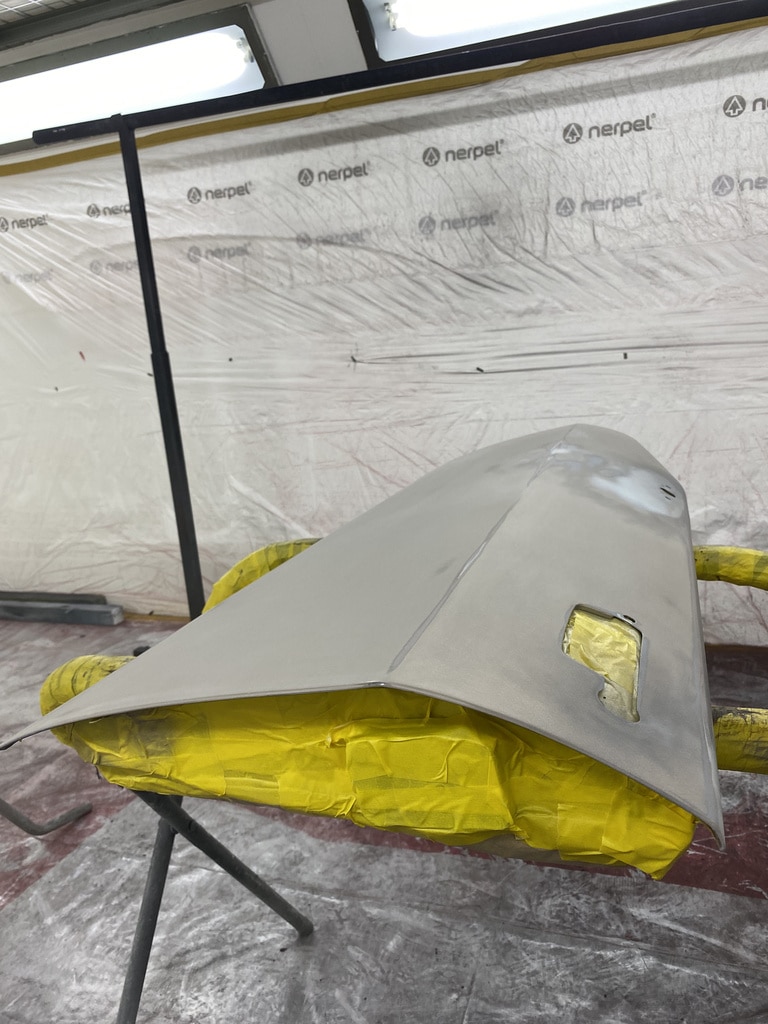
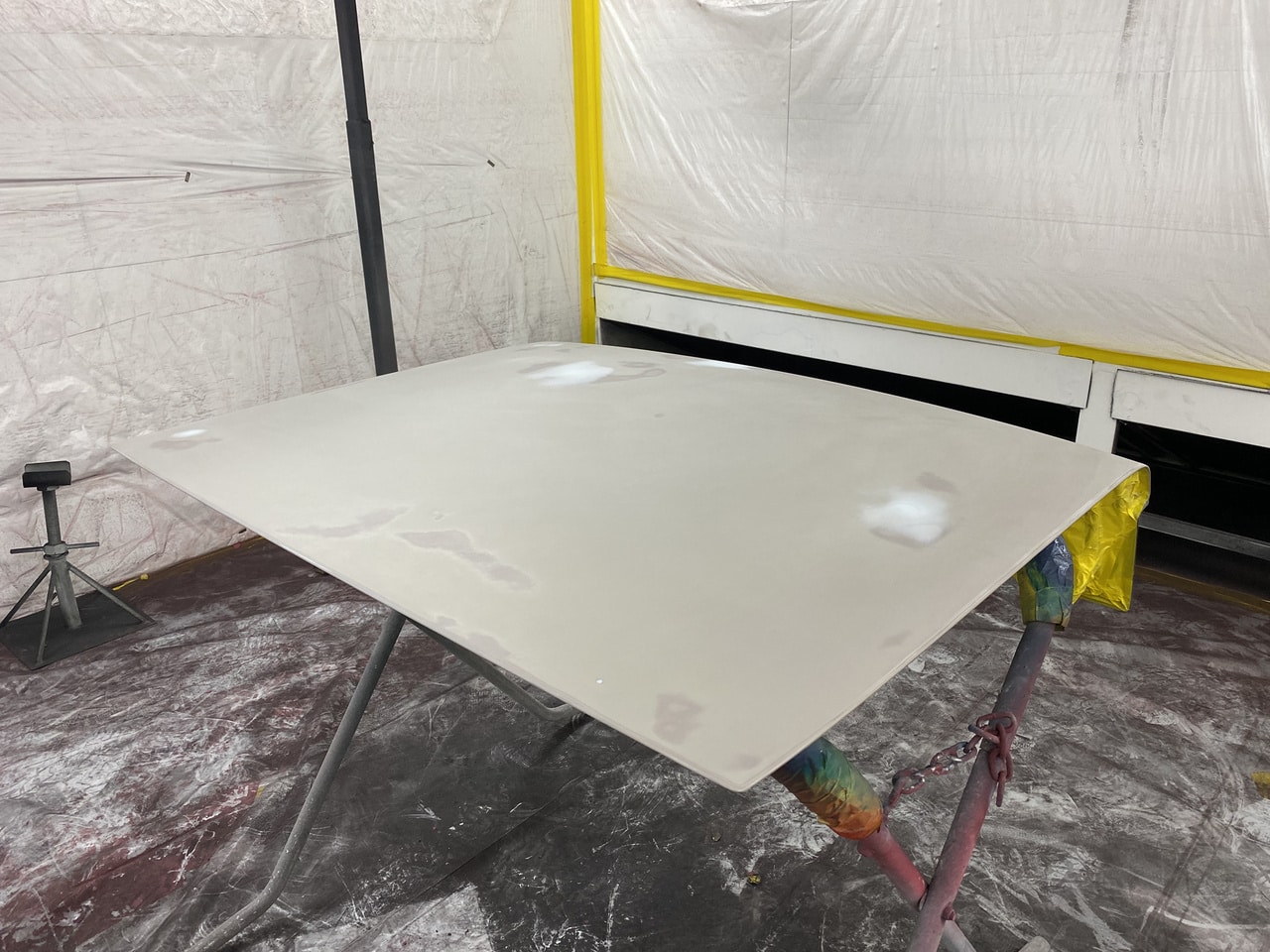
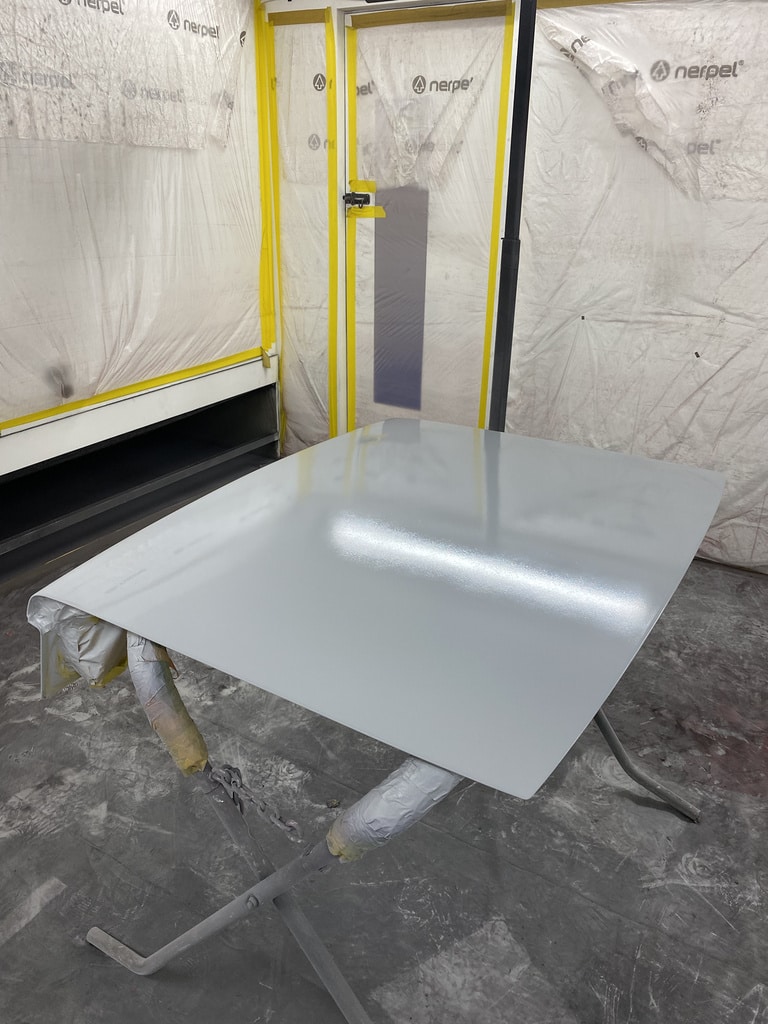
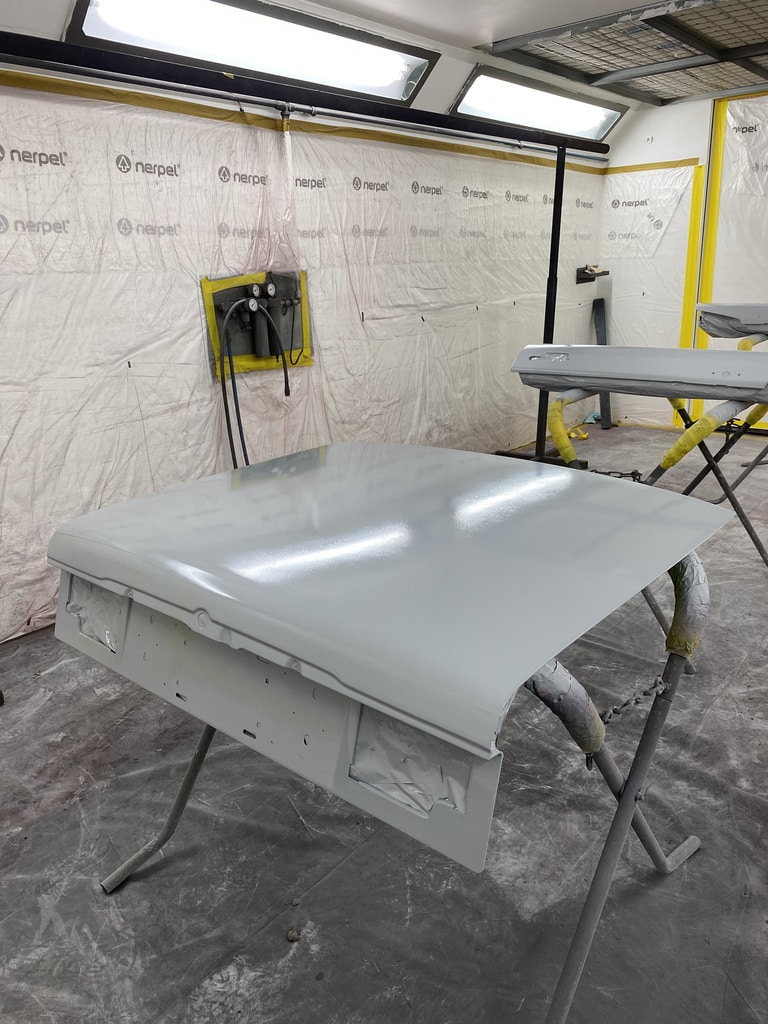
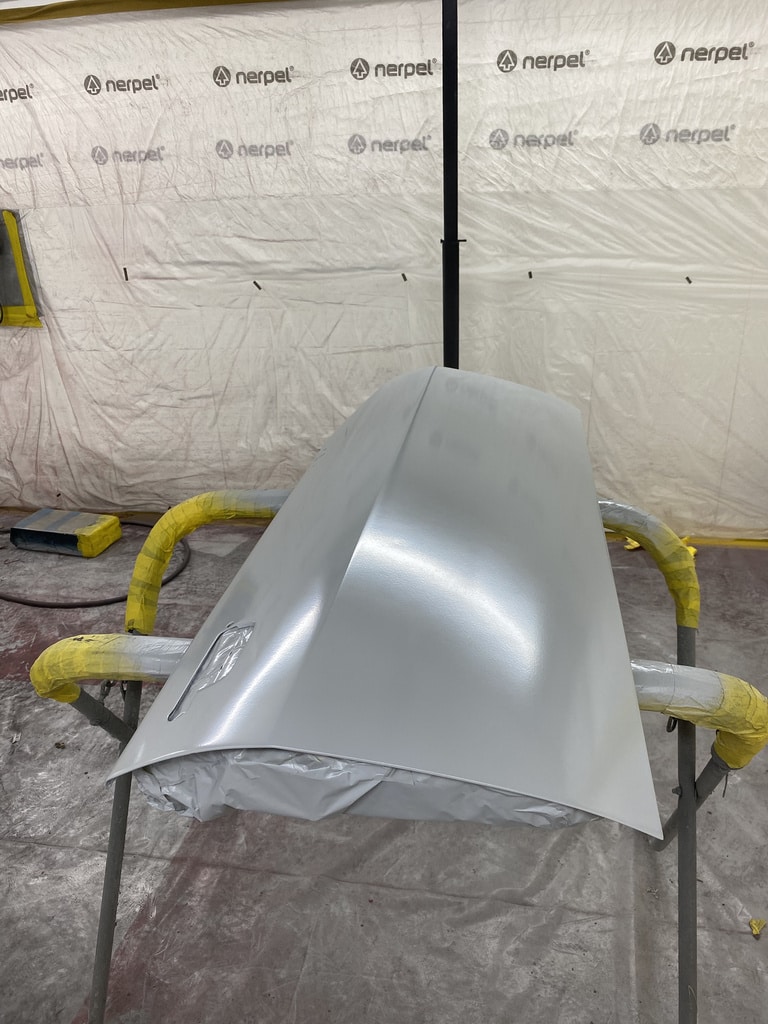
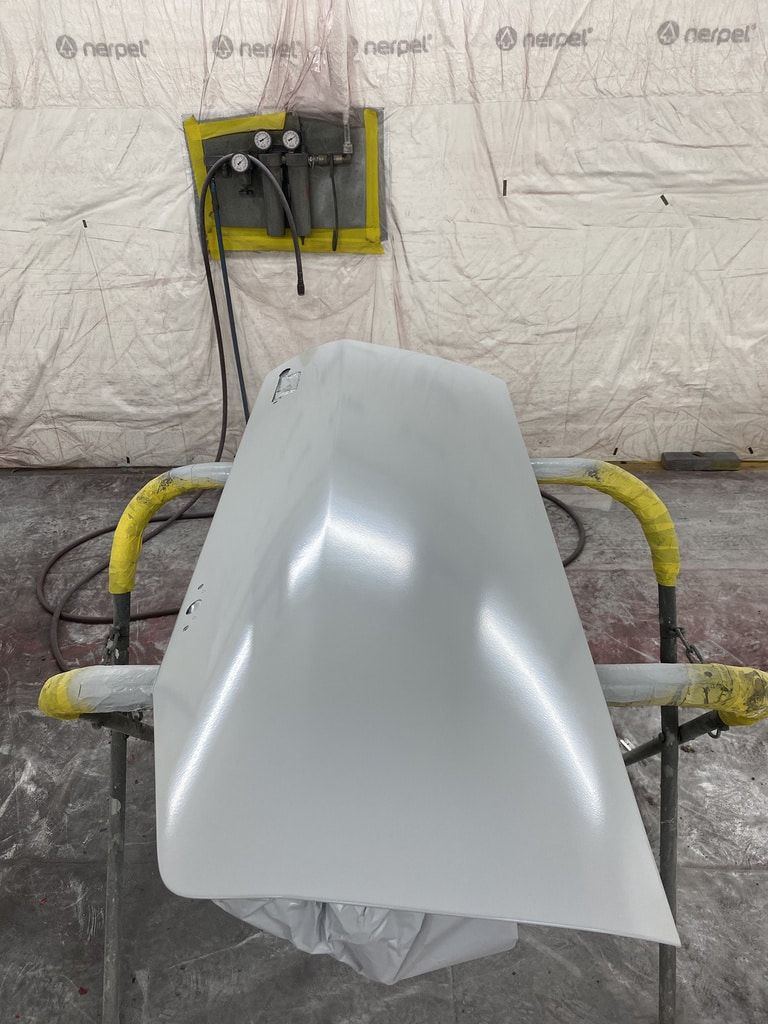
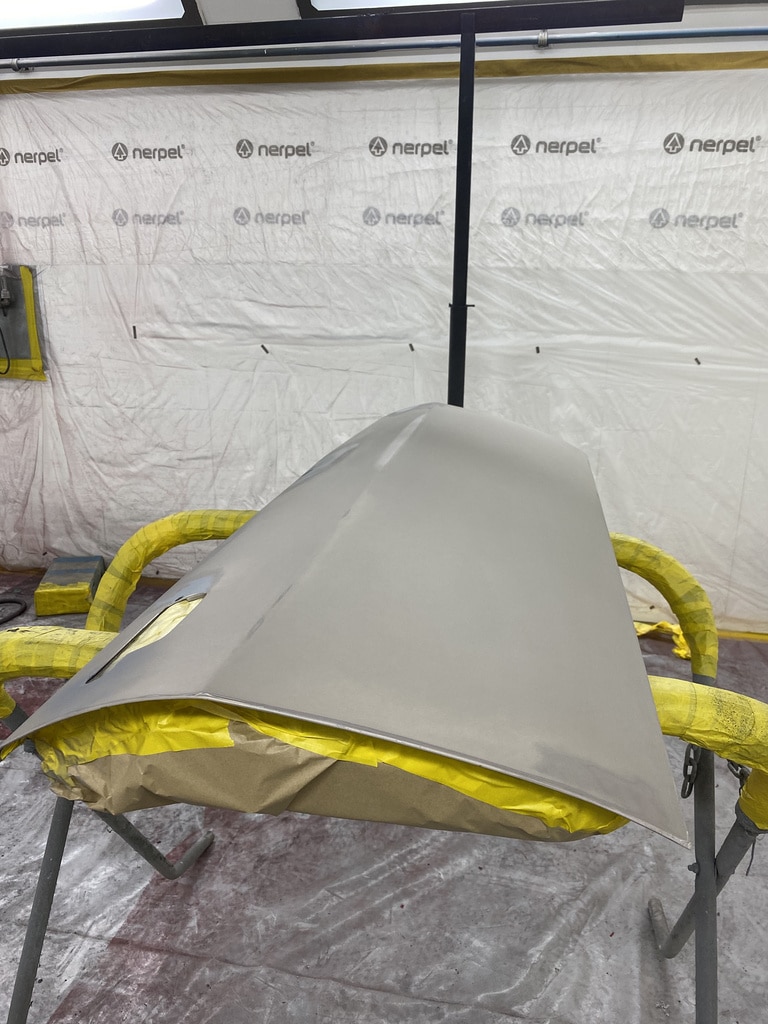
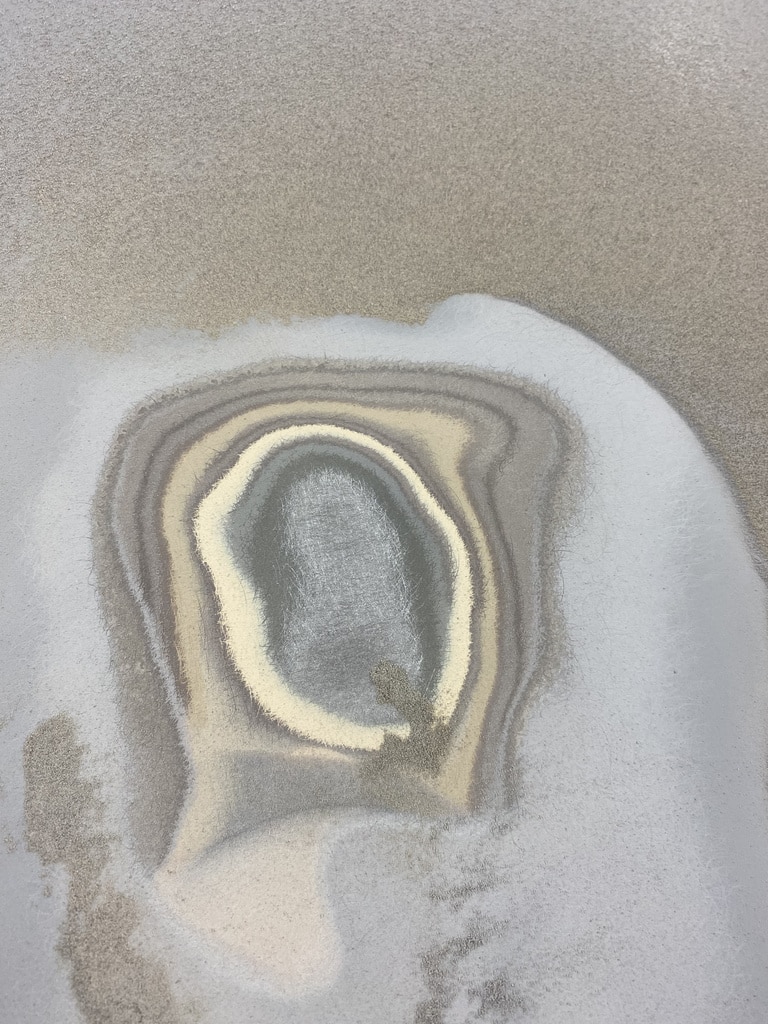
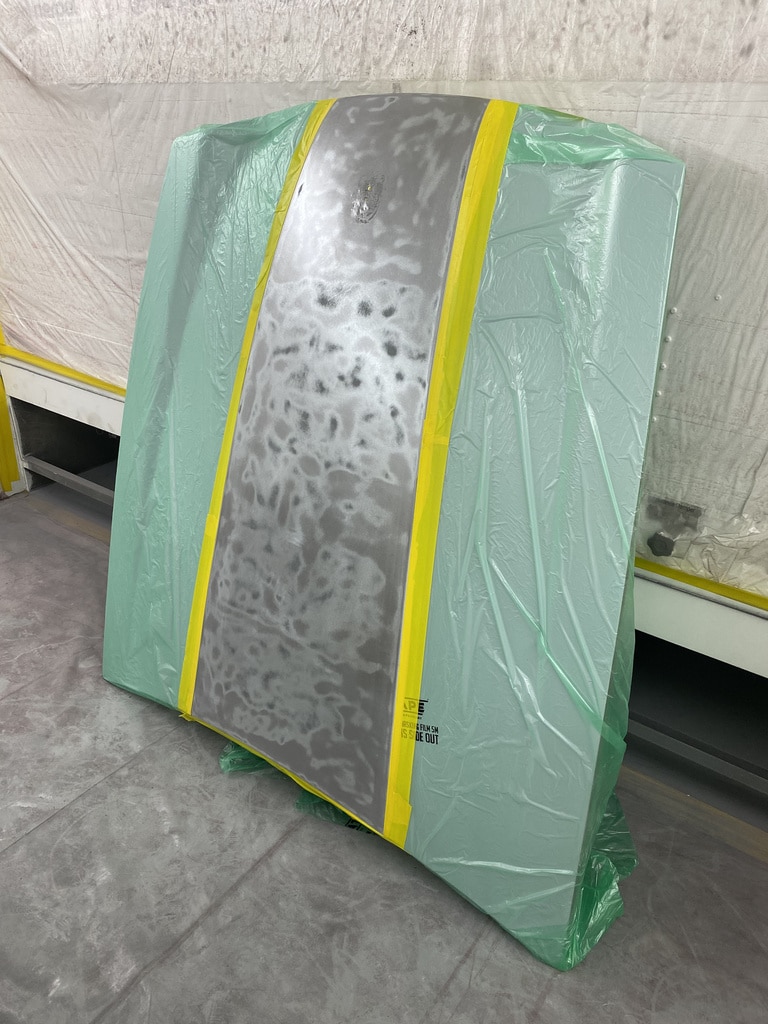
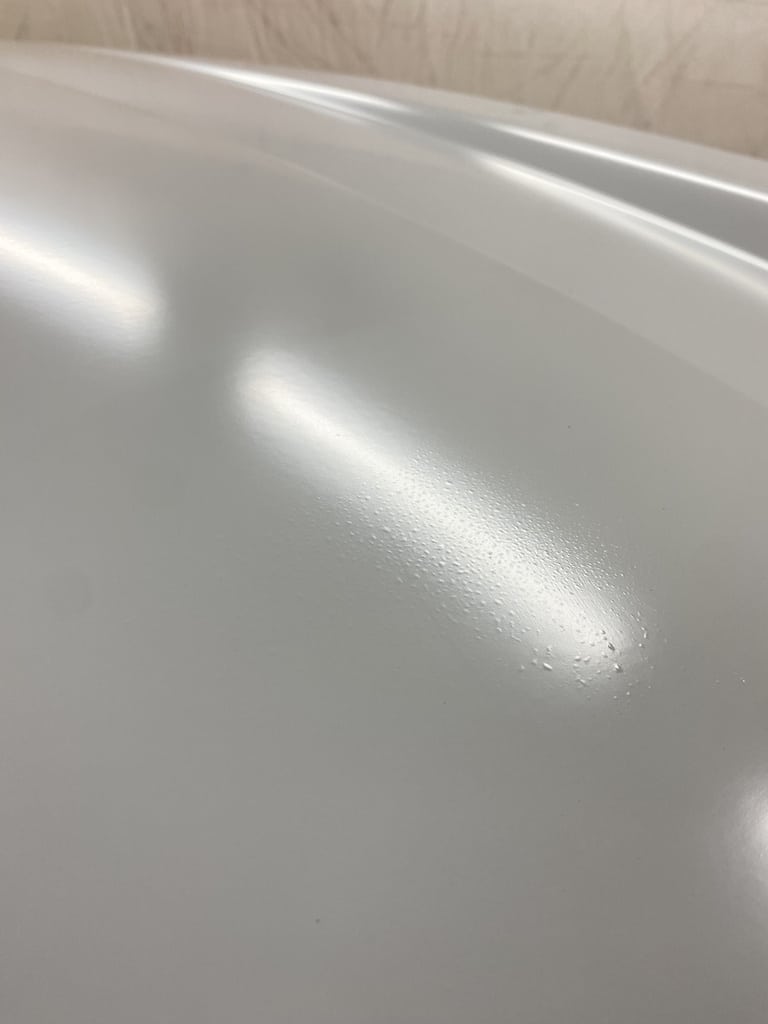
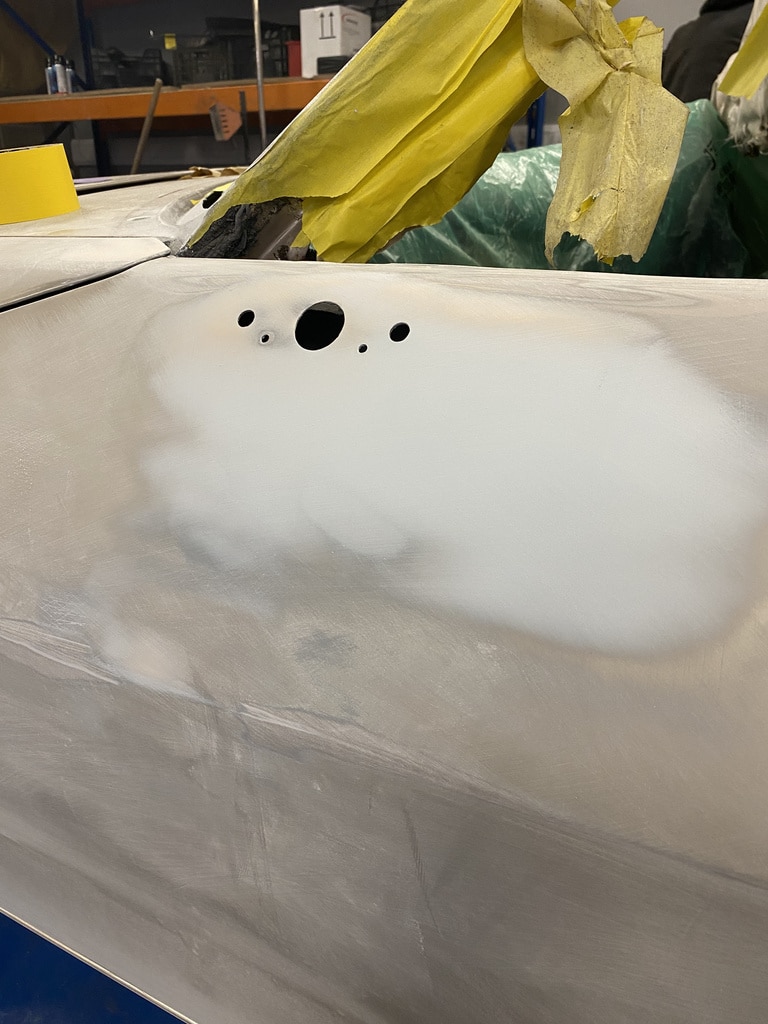
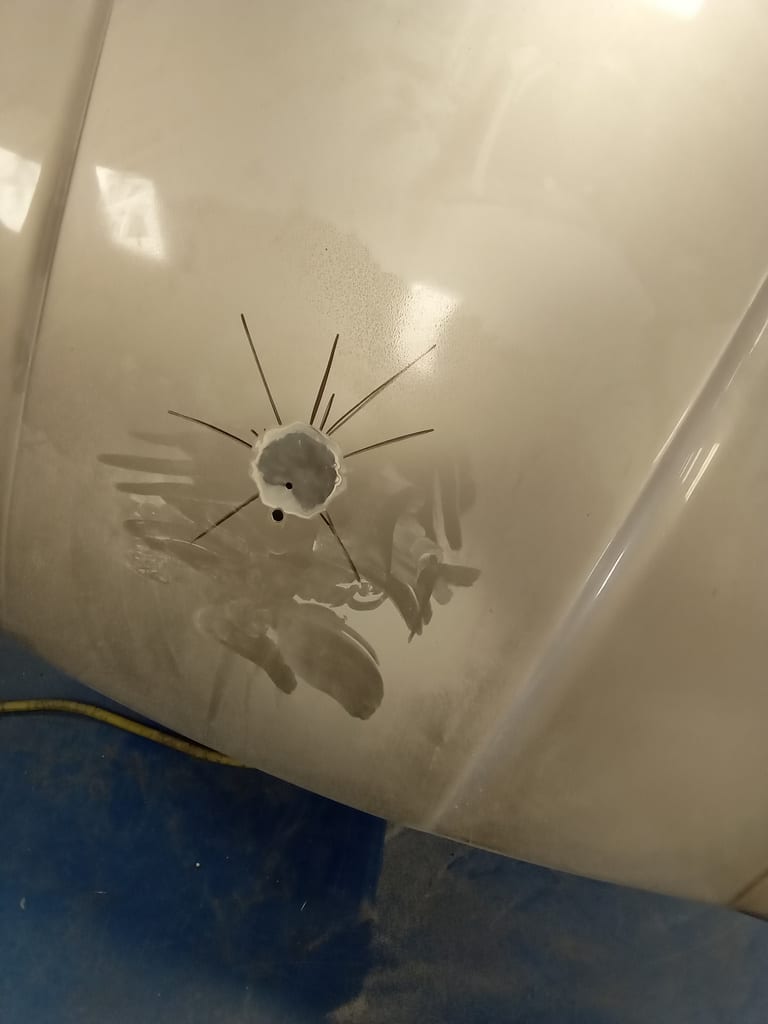
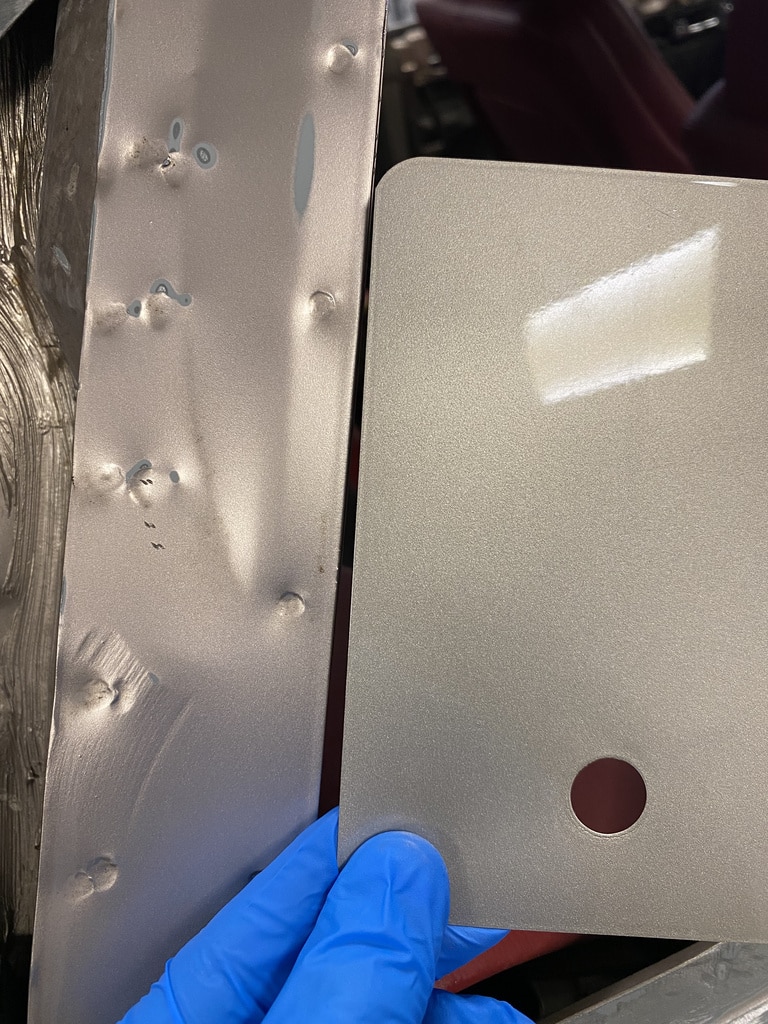
‘After priming the bonnet and baking it up, a reaction occurred in the middle of the panel.
Small blisters came up so this had to be sanded back to the metal which showed that the front area had been painted a few times. Bare metal was then protected with epoxy primer.’