


The BMW Group is continuing its goal of implementing digitalisation and the use of artificial intelligence in production with its recent announcement that humanoid robots will be deployed in Germany for the first time.
Following a successful pilot project in the United States, the company is now bringing its “Physical AI” approach to Europe, with a new pilot programme at its Leipzig plant.
Bringing Physical AI to Europe
The main feature of this is what BMW Group is calling “Physical AI”. Effectively, it’s the combination of digital artificial intelligence with real-world machines and robotics. The aim is to integrate intelligent systems, including humanoid robots, directly into series vehicle production.
The pilot at BMW Group Plant Leipzig will focus on integrating humanoid robotics into existing car production processes. Further applications in battery assembly and component manufacturing are also being looked into.
“Digitalisation improves the competitiveness of our production – here in Europe and worldwide. The symbiosis of engineering expertise and artificial intelligence opens up entirely new possibilities in production.”
Milan Nedeljković, Member of the Board of Management of BMW AG, Production
Building on Proven Experience in the US
The move comes after last year’s successful pilot at BMW’s Spartanburg plant in the United States, carried out in partnership with Figure AI.
During the 2025 trial, the humanoid robot Figure 02 supported the production of more than 30,000 BMW X3 models at BMW Group Plant Spartanburg. Operating ten-hour shifts from Monday to Friday, the robot handled the removal and positioning of sheet metal parts for welding.
In total, it moved more than 90,000 components, covered approximately 1.2 million steps and completed around 1,250 operating hours. The task required millimetre-level precision while also being physically demanding for human workers. The pilot confirmed that humanoid robots can reliably manage repetitive, high-accuracy processes under real-world conditions.
Interestingly, BMW found that the transition from laboratory testing to live production was quicker than expected. Motion sequences trained in controlled environments were rapidly transferred into stable shift operations. Integration into BMW’s Smart Robotics ecosystem was achieved through standardised interfaces, ensuring smooth coexistence with existing systems.
The company and Figure AI are now evaluating further use cases, including potential deployment of the Figure 03 robot.
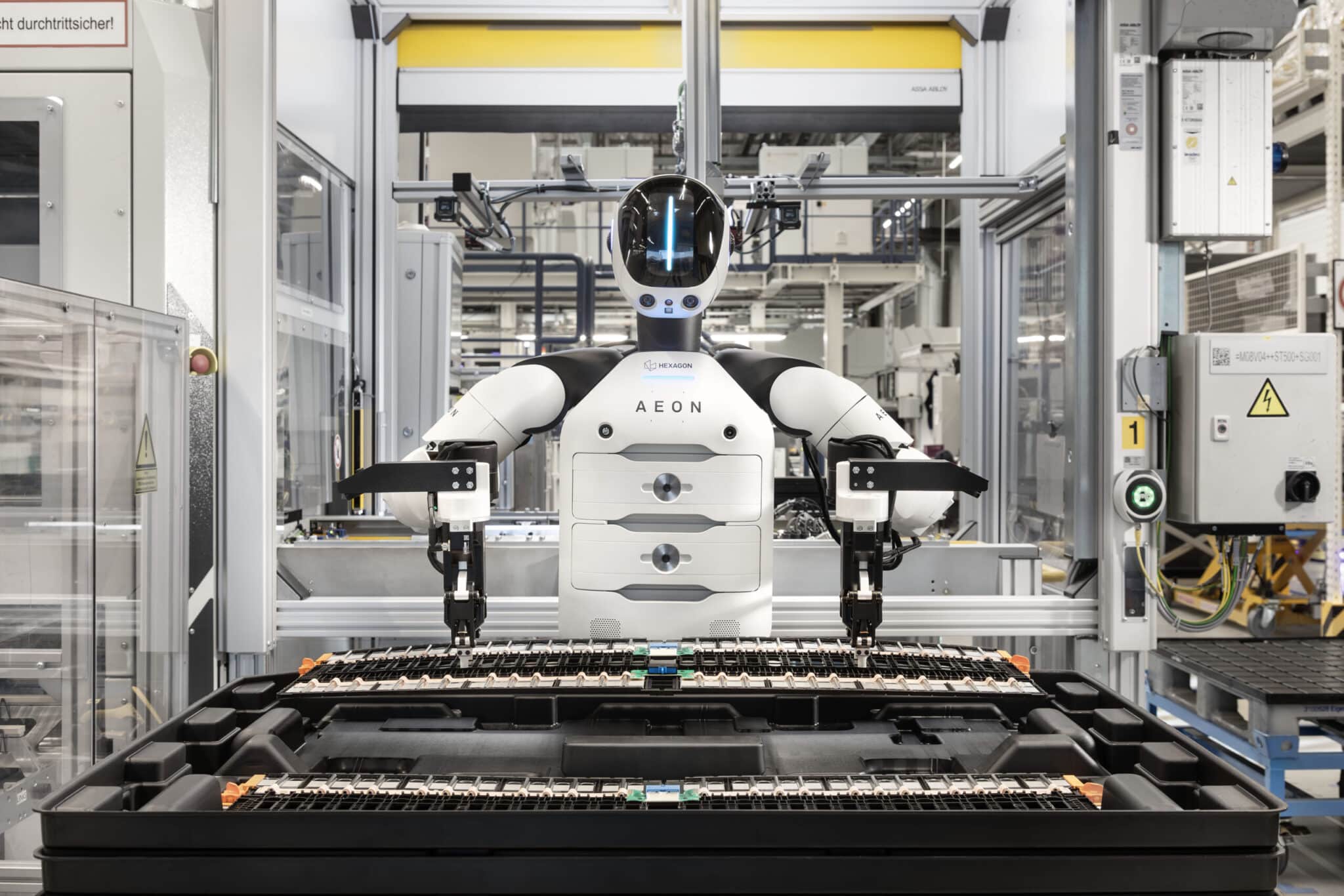
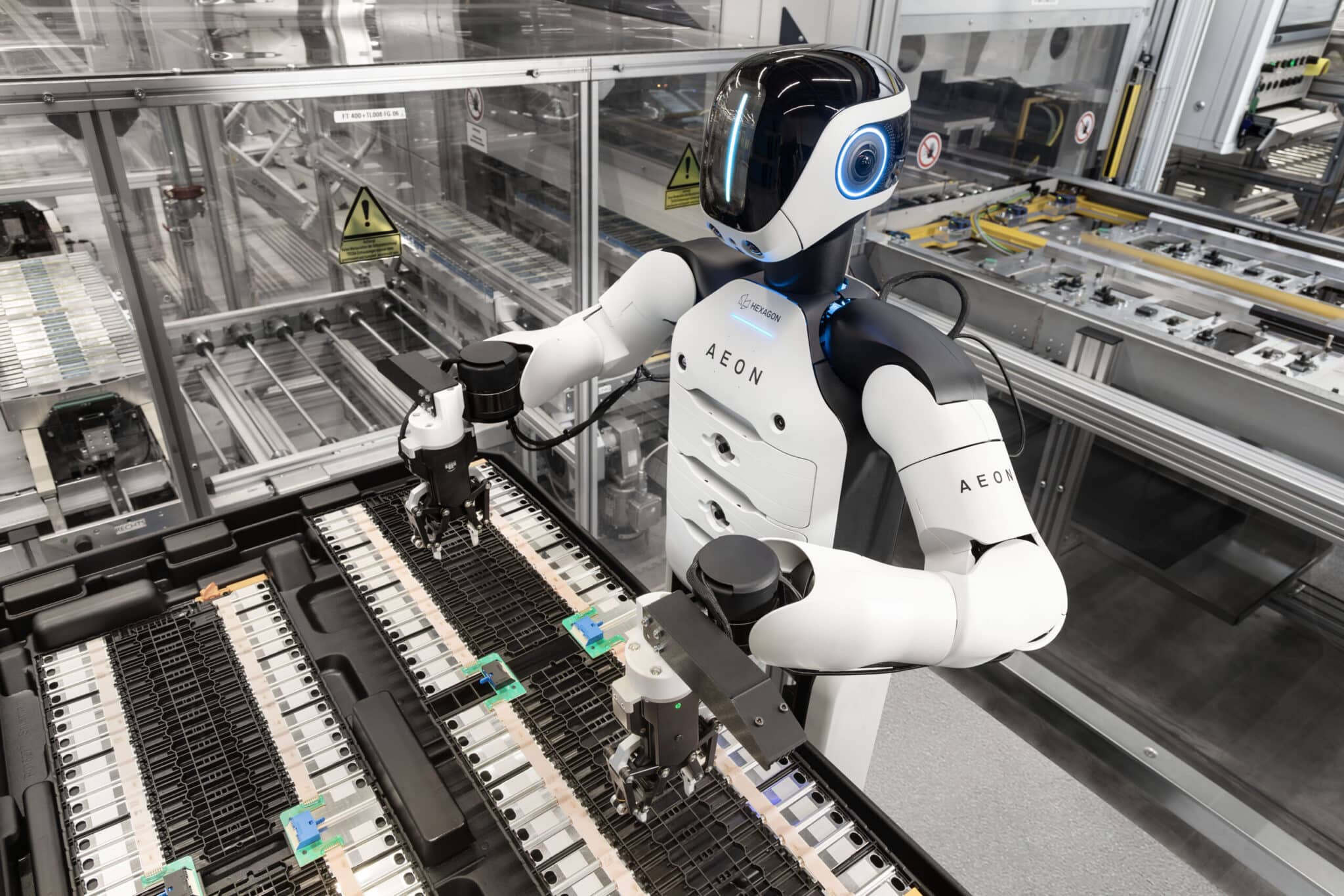
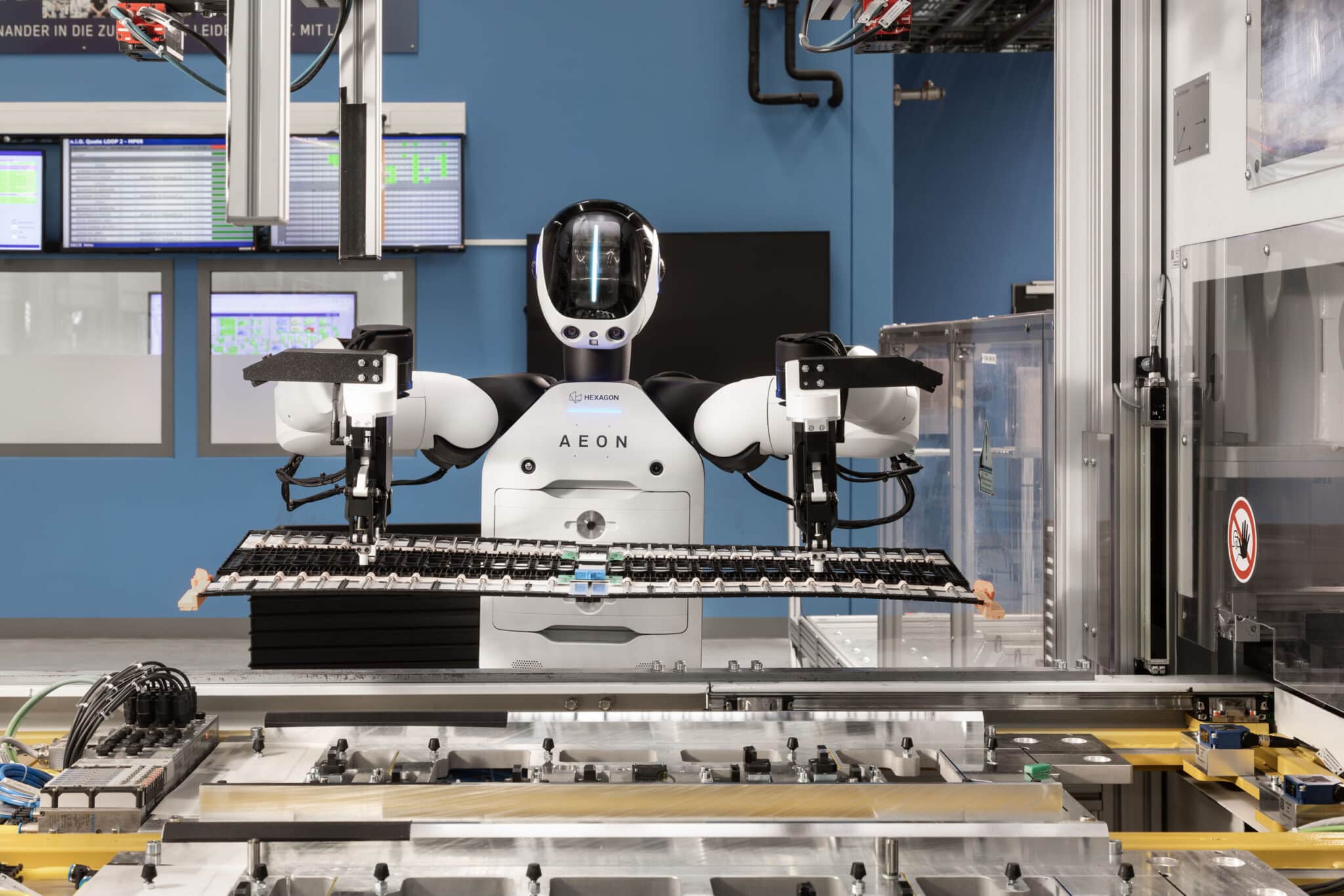
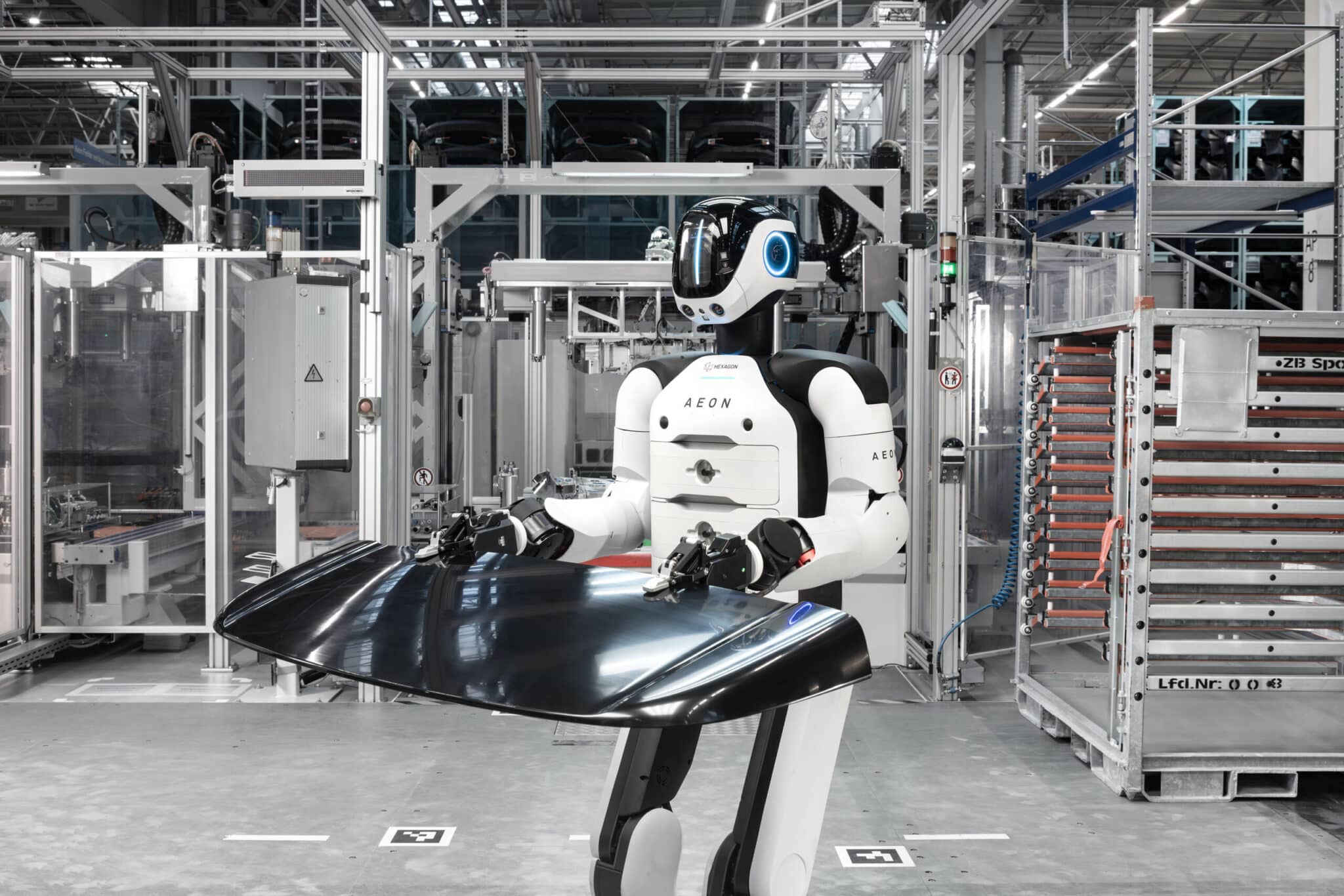
Leipzig Pilot with Hexagon Robotics
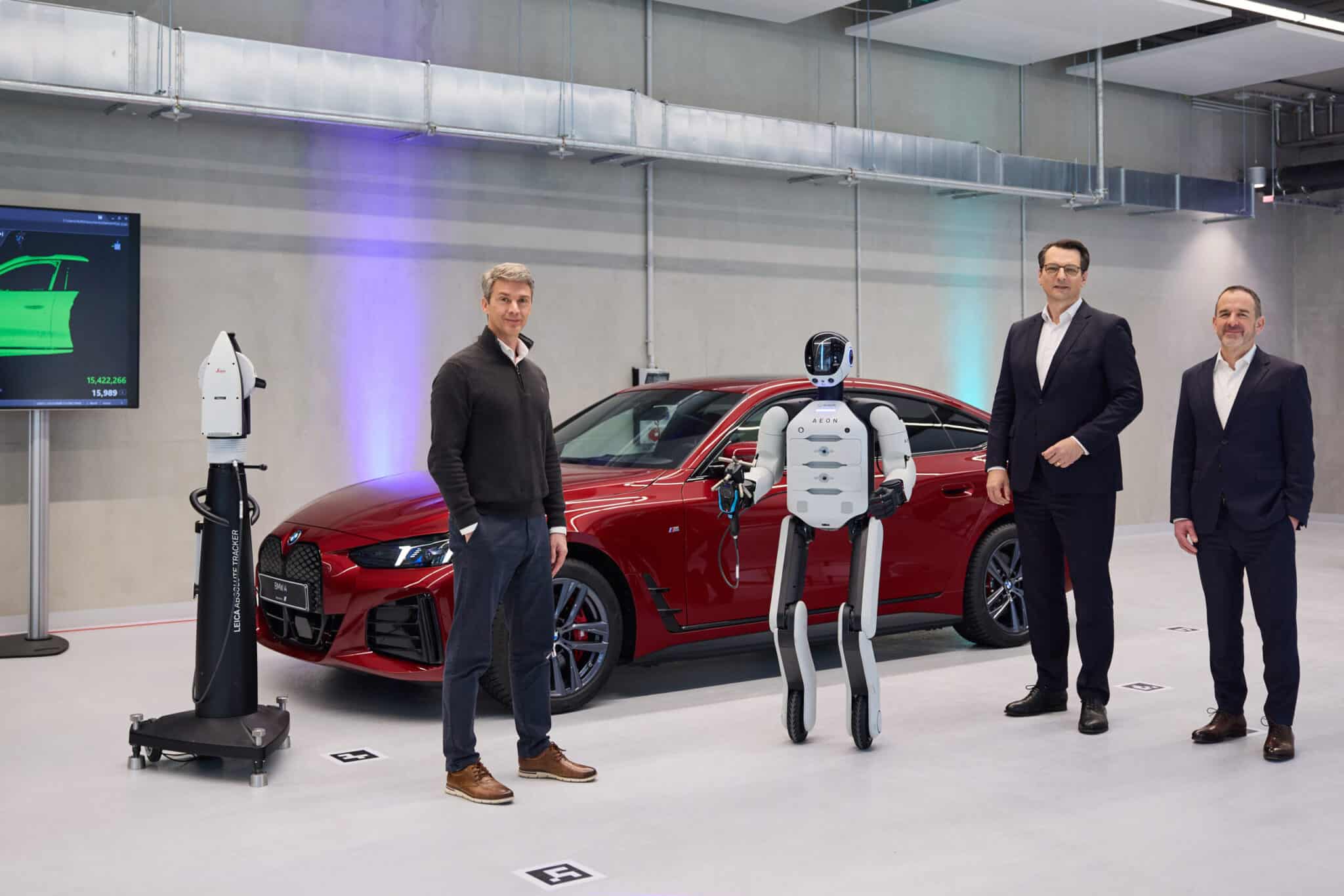
In Europe, BMW is collaborating with long-standing technology partner Hexagon, specifically its Zürich-based division Hexagon Robotics.
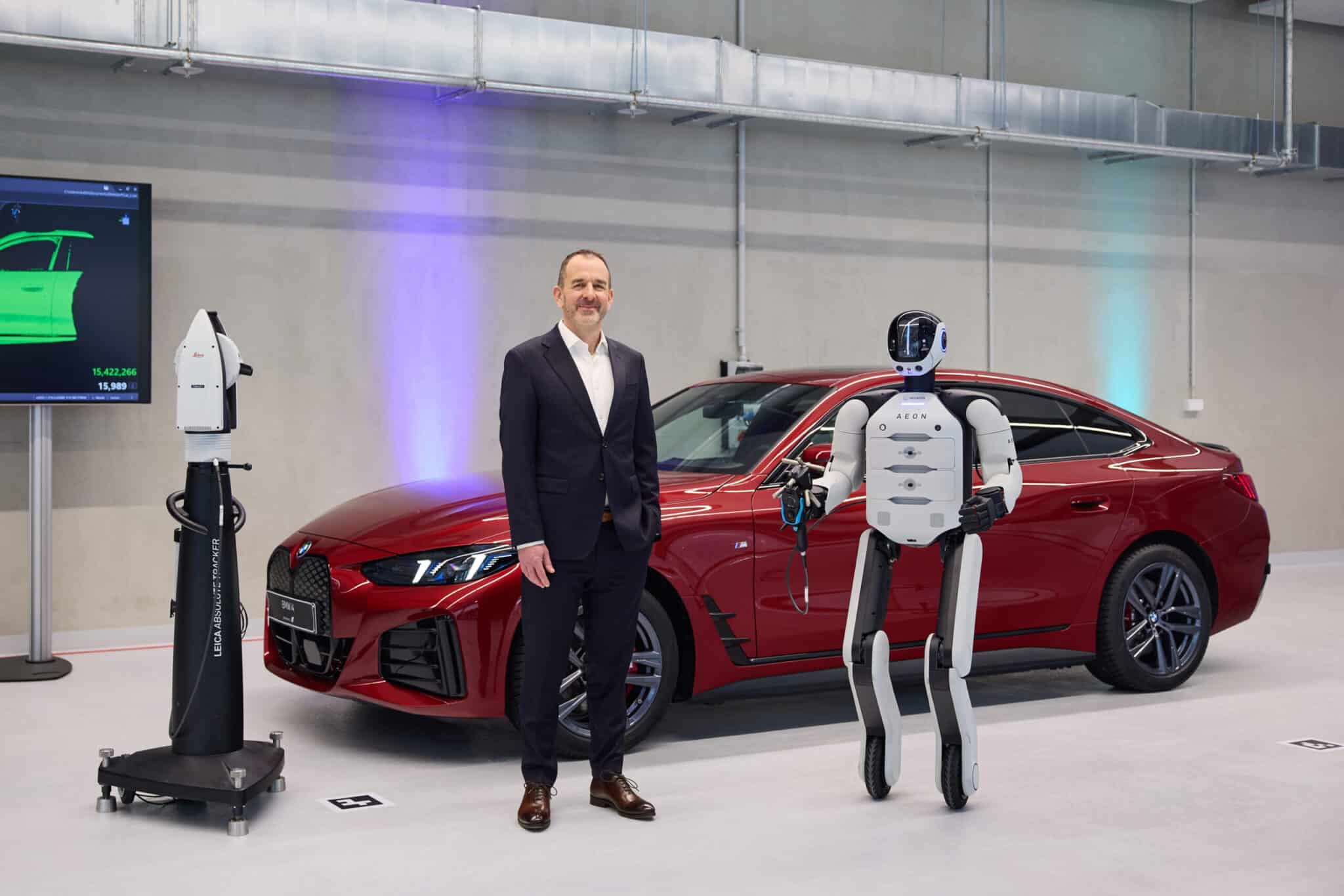
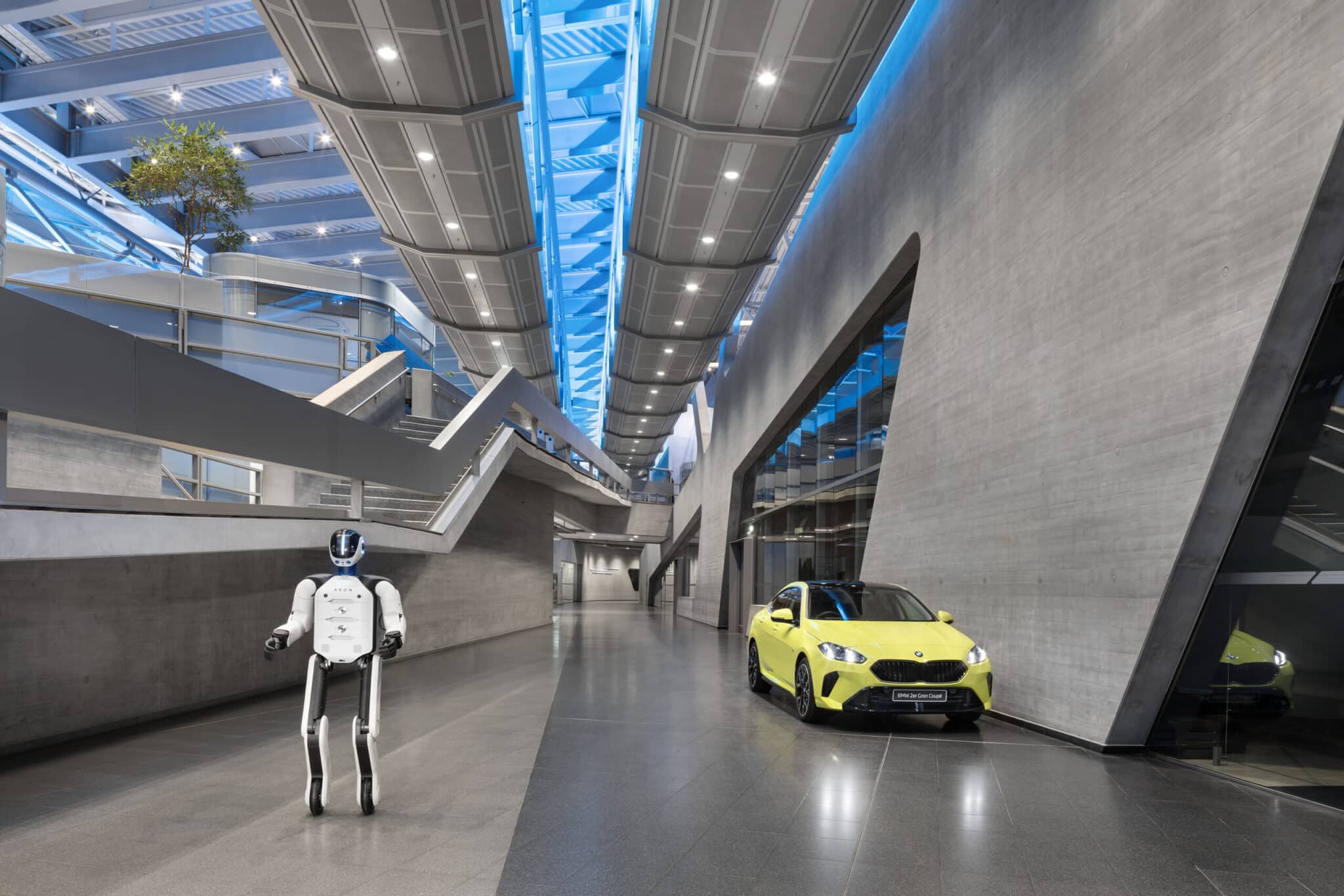
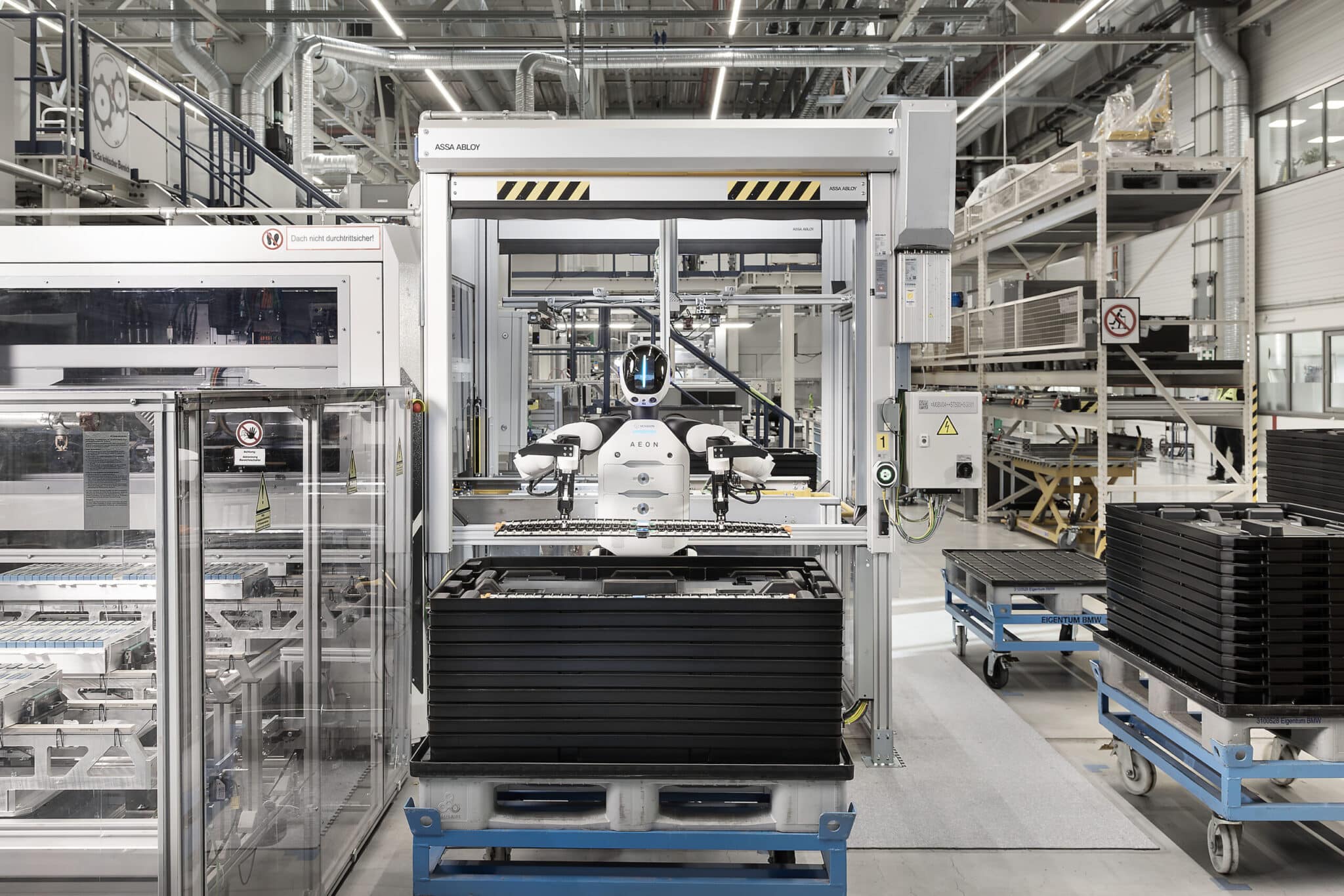
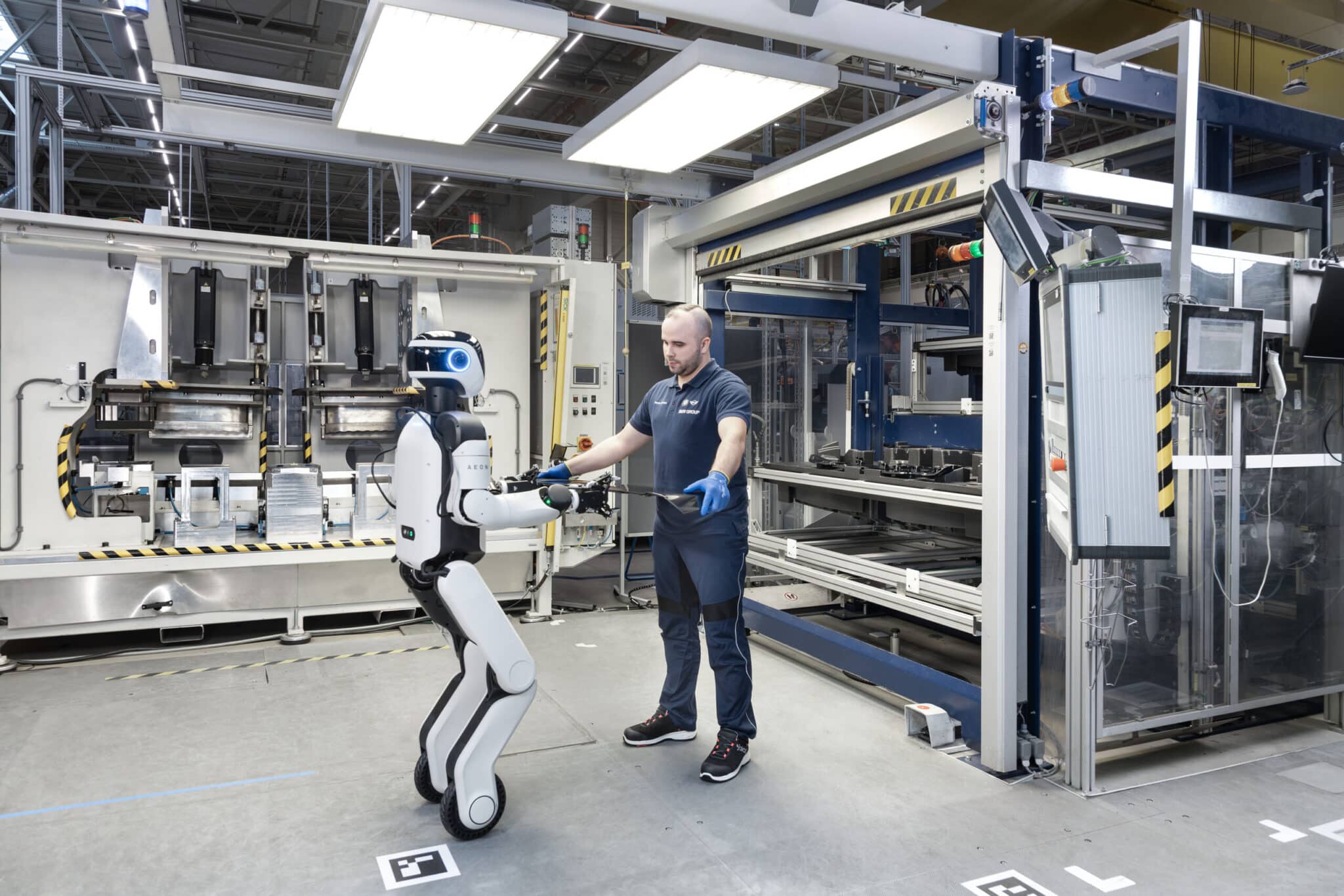
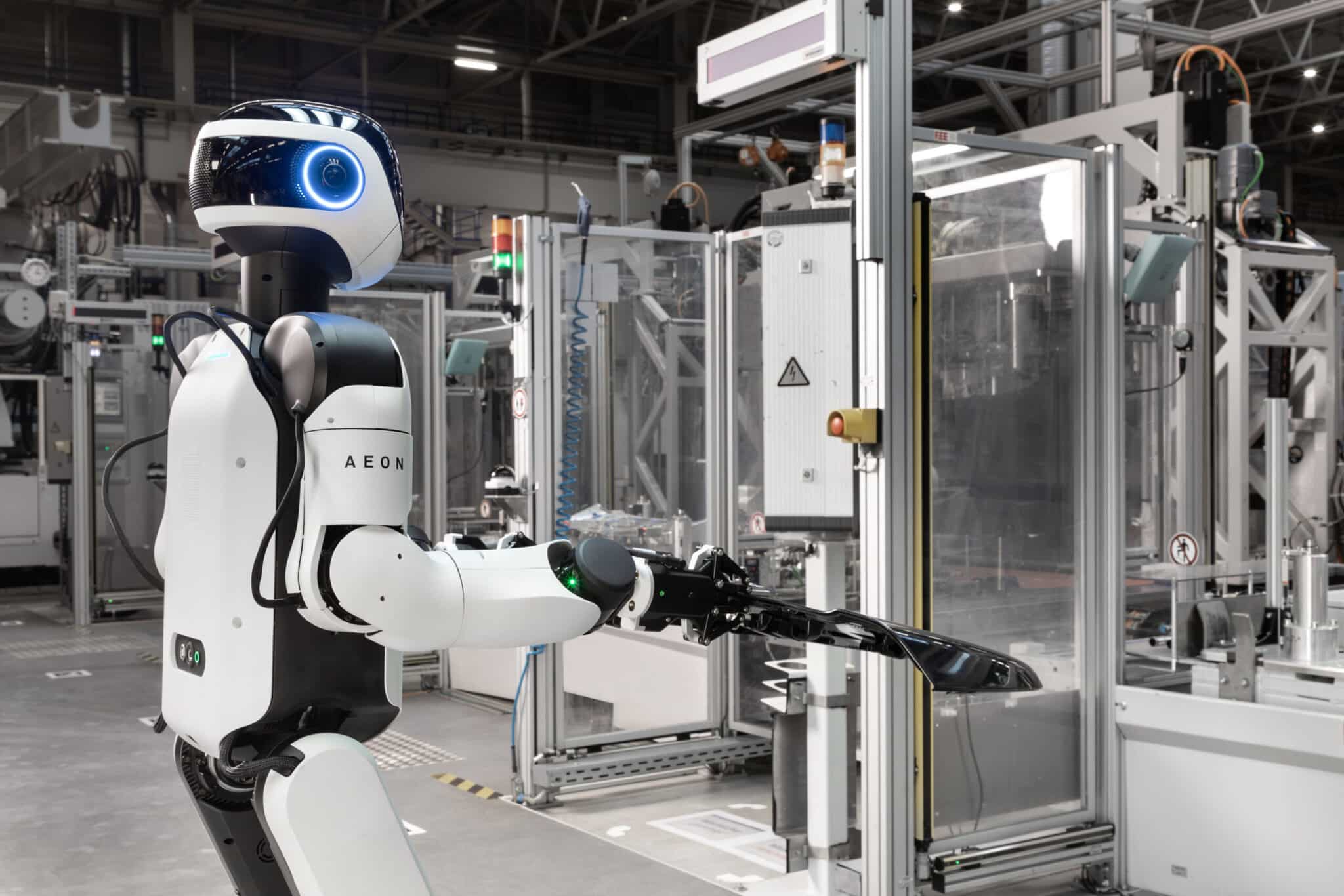
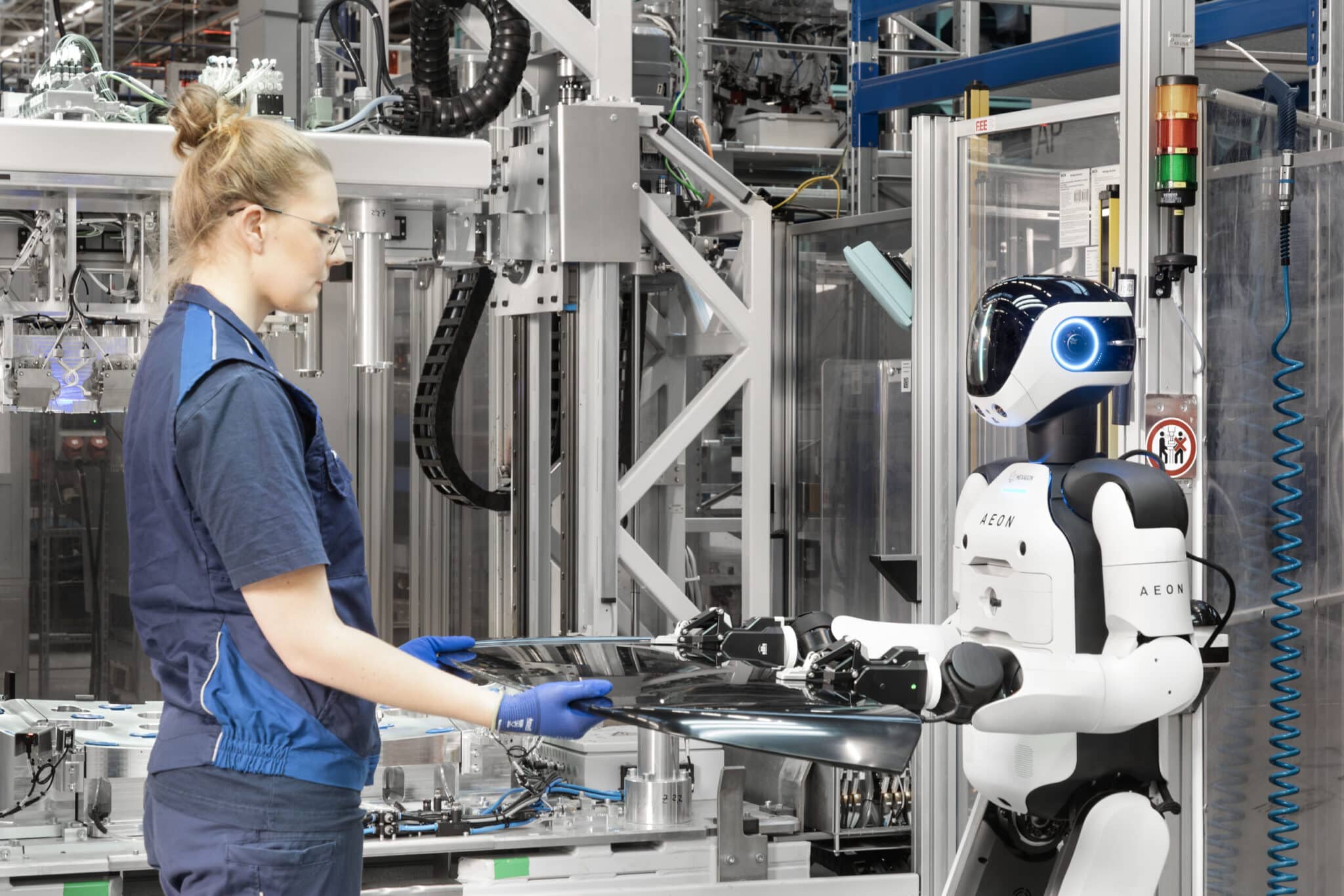
Hexagon Robotics introduced its first humanoid robot, AEON, in June 2025. After theoretical assessments and successful laboratory testing, AEON underwent an initial test deployment at BMW Group Plant Leipzig in December 2025. A further test phase is scheduled for April 2026, with the full pilot set to begin in summer 2026.
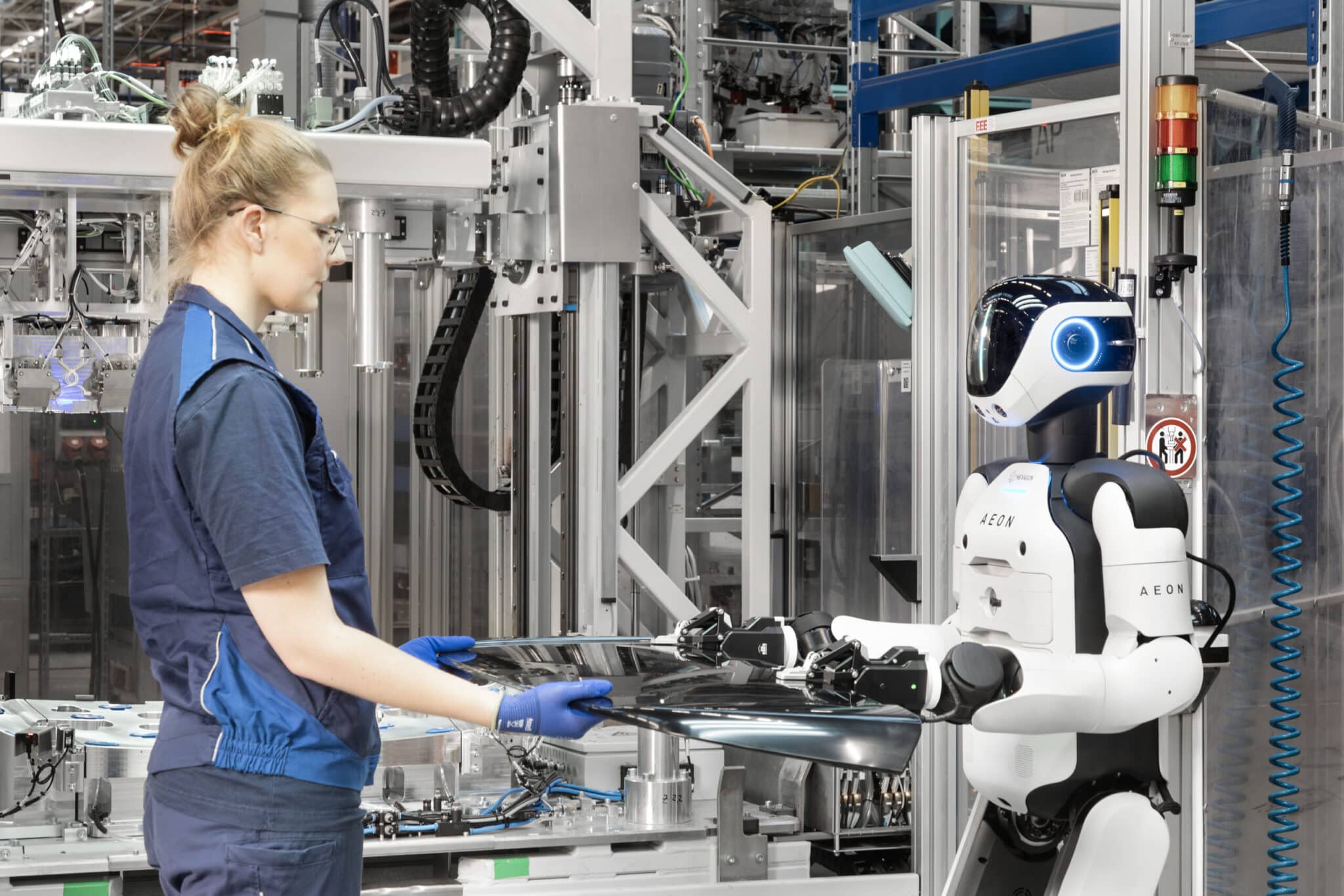
AEON’s human-like design allows for flexible attachment of different hands, grippers and scanning tools. Mounted on wheels, it is designed for dynamic deployment across various workstations. In Leipzig, it will initially be tested in high-voltage battery assembly and component manufacturing.
A Unified Data Foundation
Artificial intelligence is already embedded throughout BMW’s production system, from digital twins in the virtual factory to AI-supported quality control and autonomous intralogistics systems.
A key enabler of this development is a unified IT and data model. BMW has transformed previously isolated data silos into a consistent, standardised production data platform. This ensures that information is continuously available across the network, allowing digital AI agents to operate autonomously in complex environments and continuously improve through learning.
When these intelligent decision-making agents are combined with robotics, the result is Physical AI.
“Our aim is to be a technology leader and to integrate new technologies into production at an early stage. Pilot projects help us to test and further develop the use of Physical AI – that is, AI‑enabled robots capable of learning – under real-world industrial conditions.”
Michael Nikolaides, Senior Vice President Production Network, Supply Chain Management at BMW Group
Expanding Automation with a Human Focus
BMW views humanoid robotics as a complement to its existing automation portfolio rather than a replacement. The focus is on value-adding applications, particularly in monotonous, ergonomically demanding or safety-critical tasks.
The intention is not to remove the human work force but to relieve employees of physically strenuous activities while improving working conditions and maintaining production flexibility.
To support this strategy, BMW has established a new “Centre of Competence for Physical AI in Production”. This will consolidate expertise, evaluate technology partners against defined industrial criteria and coordinate pilot testing across the global production network.
Read more automotive industry news
Leave a Reply
You must be logged in to post a comment.