


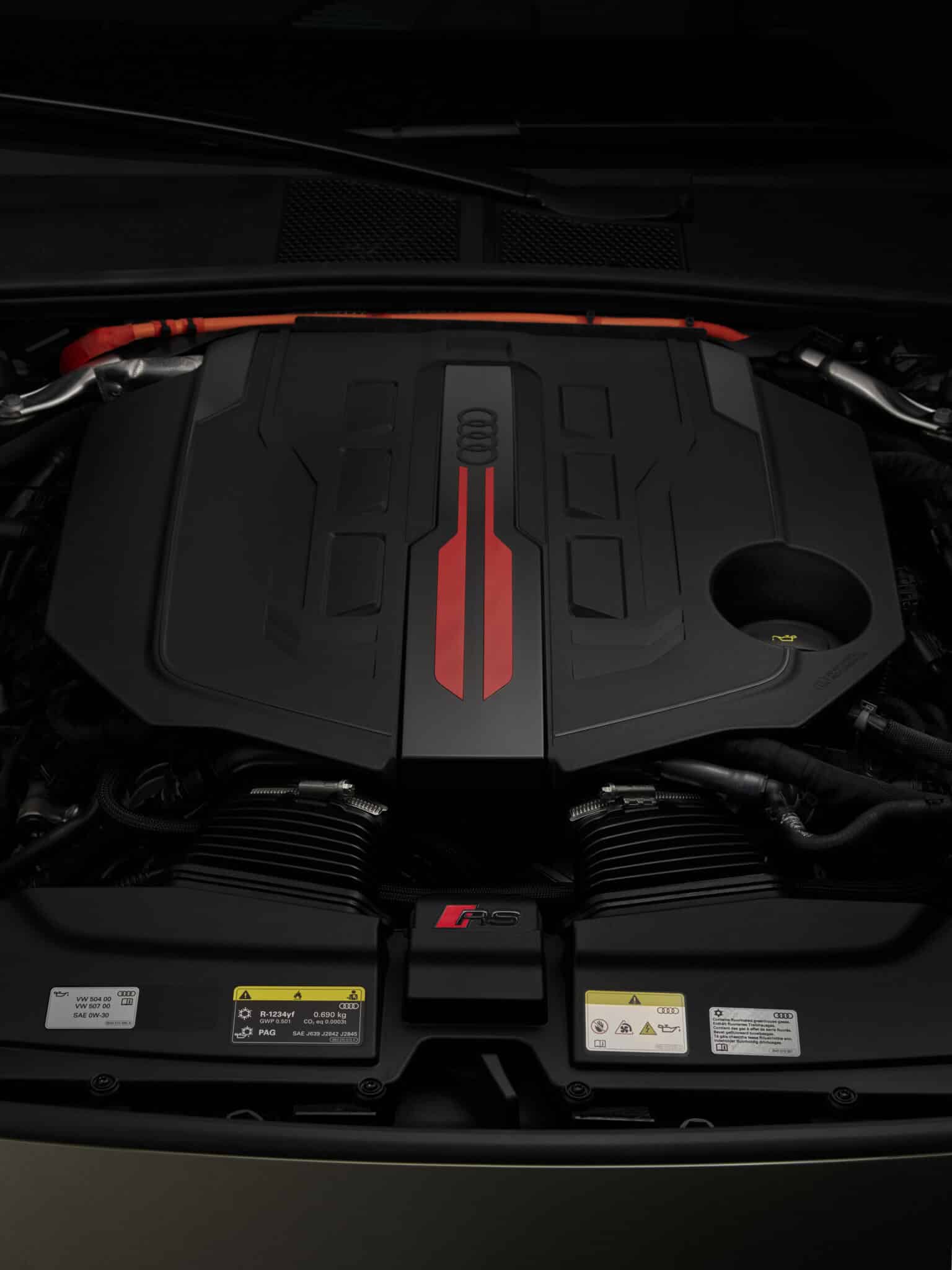
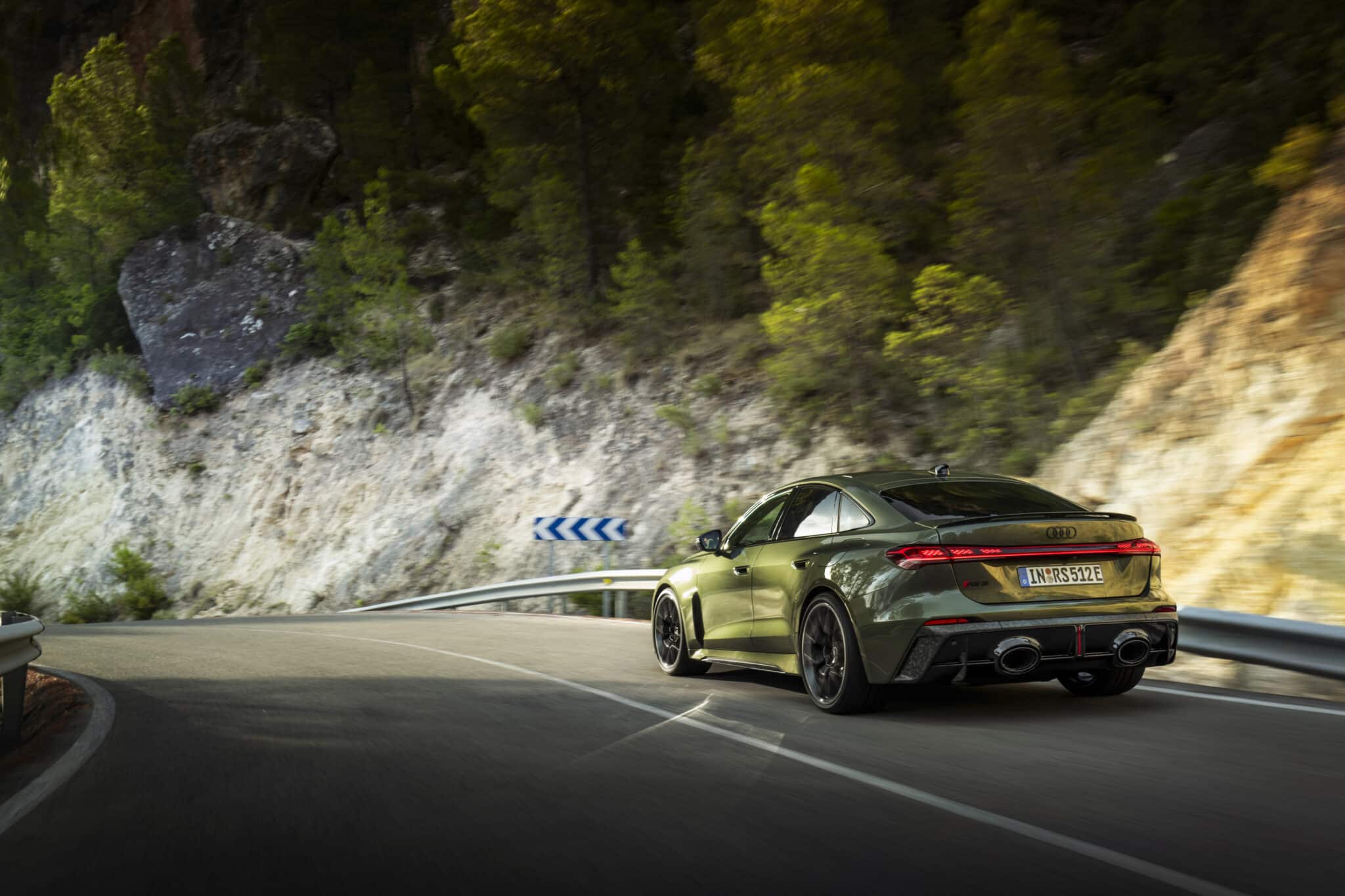
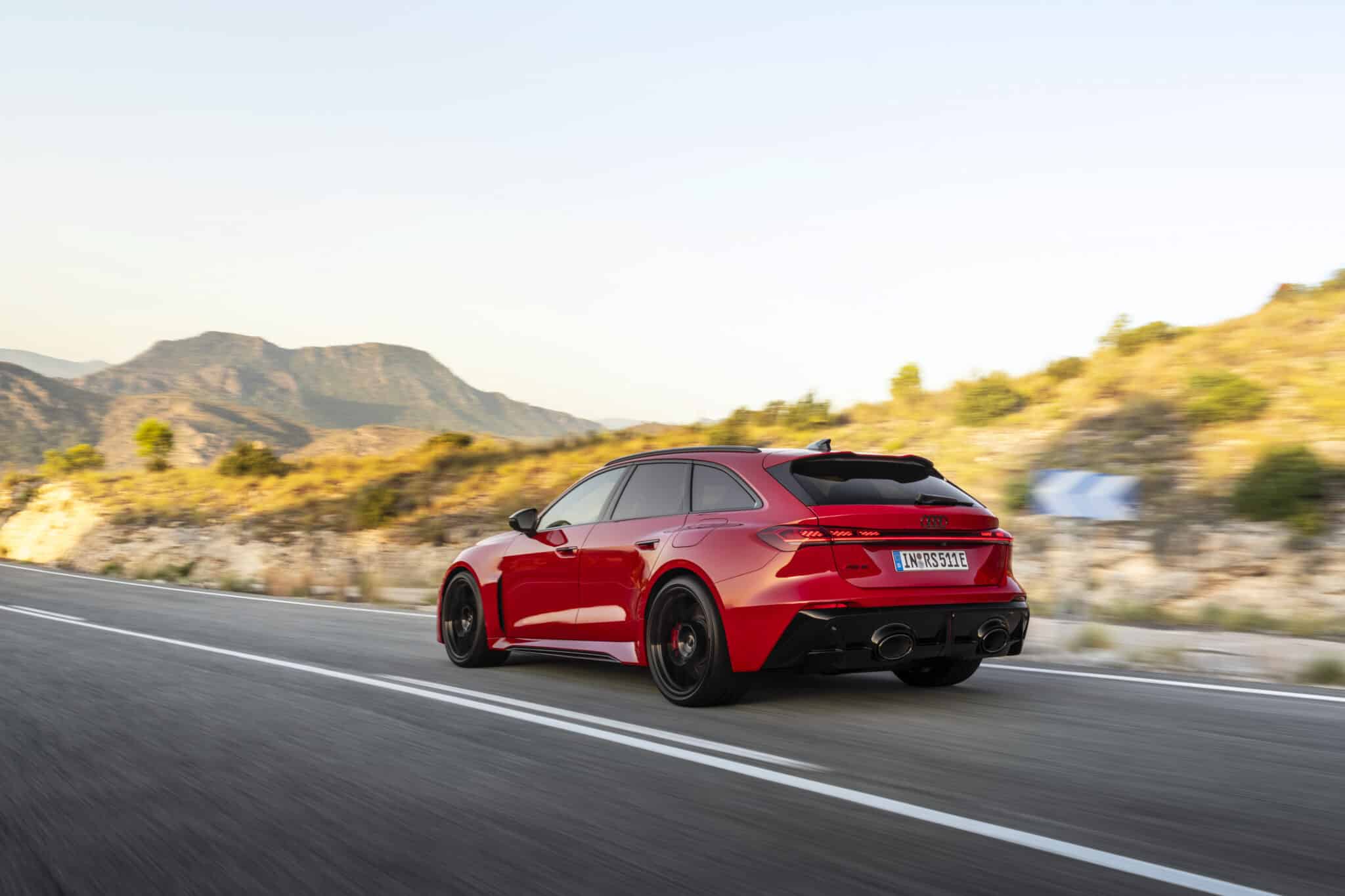
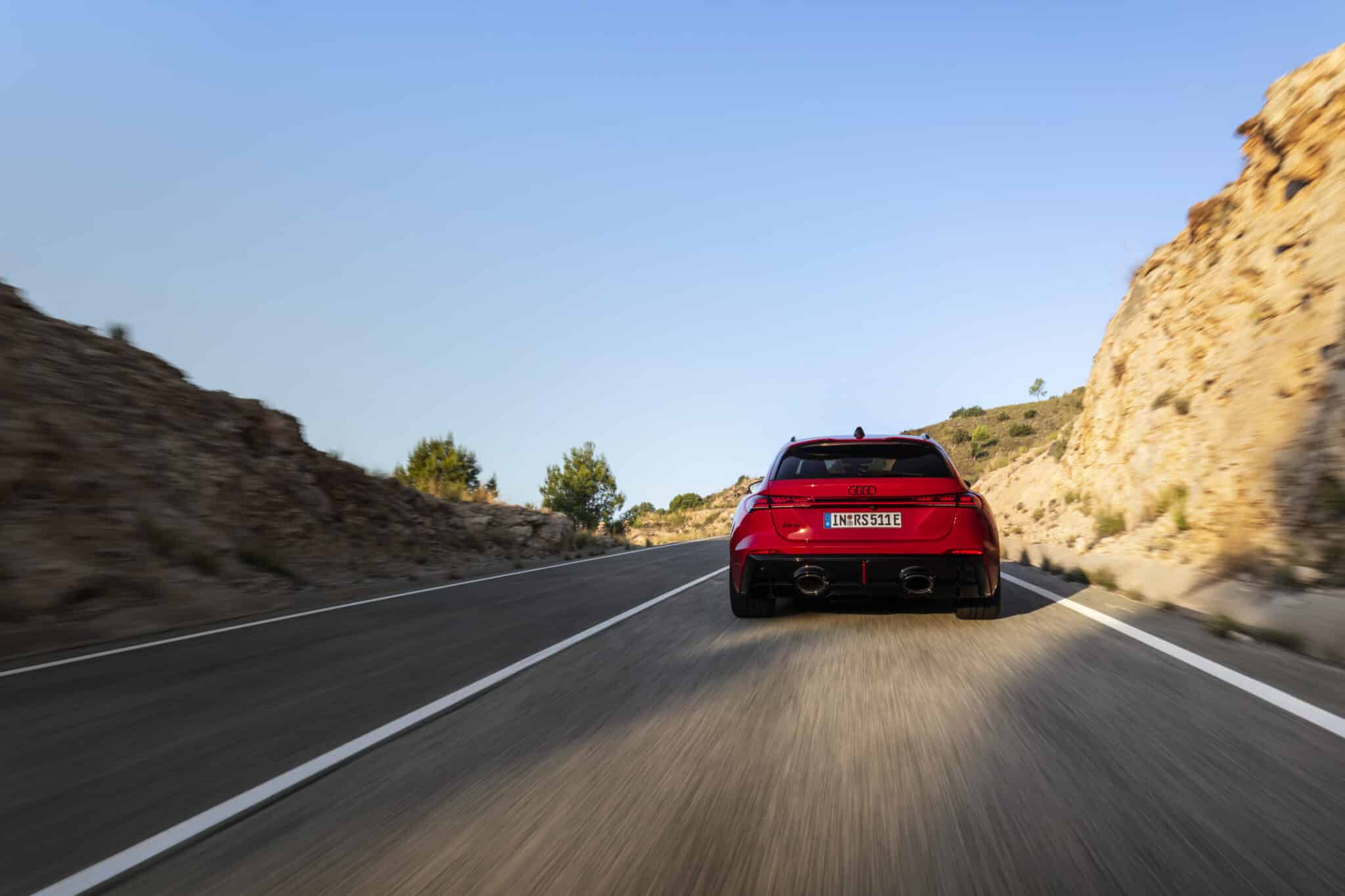
Audi Sport has revealed its first-ever high-performance plug-in hybrid, and it has one of its most recognisable badges on it. The new RS 5 pairs a 2.9-litre twin-turbo V6 with a powerful electric motor to produce a combined 470 kW (639PS/630bhp) and 825Nm of torque.
It can cover 0-62mph in 3.6 seconds, can run on electric power alone for day-to-day driving, and, with the optional Audi Sport package, can reach a top speed of 177mph.
Electrified Performance
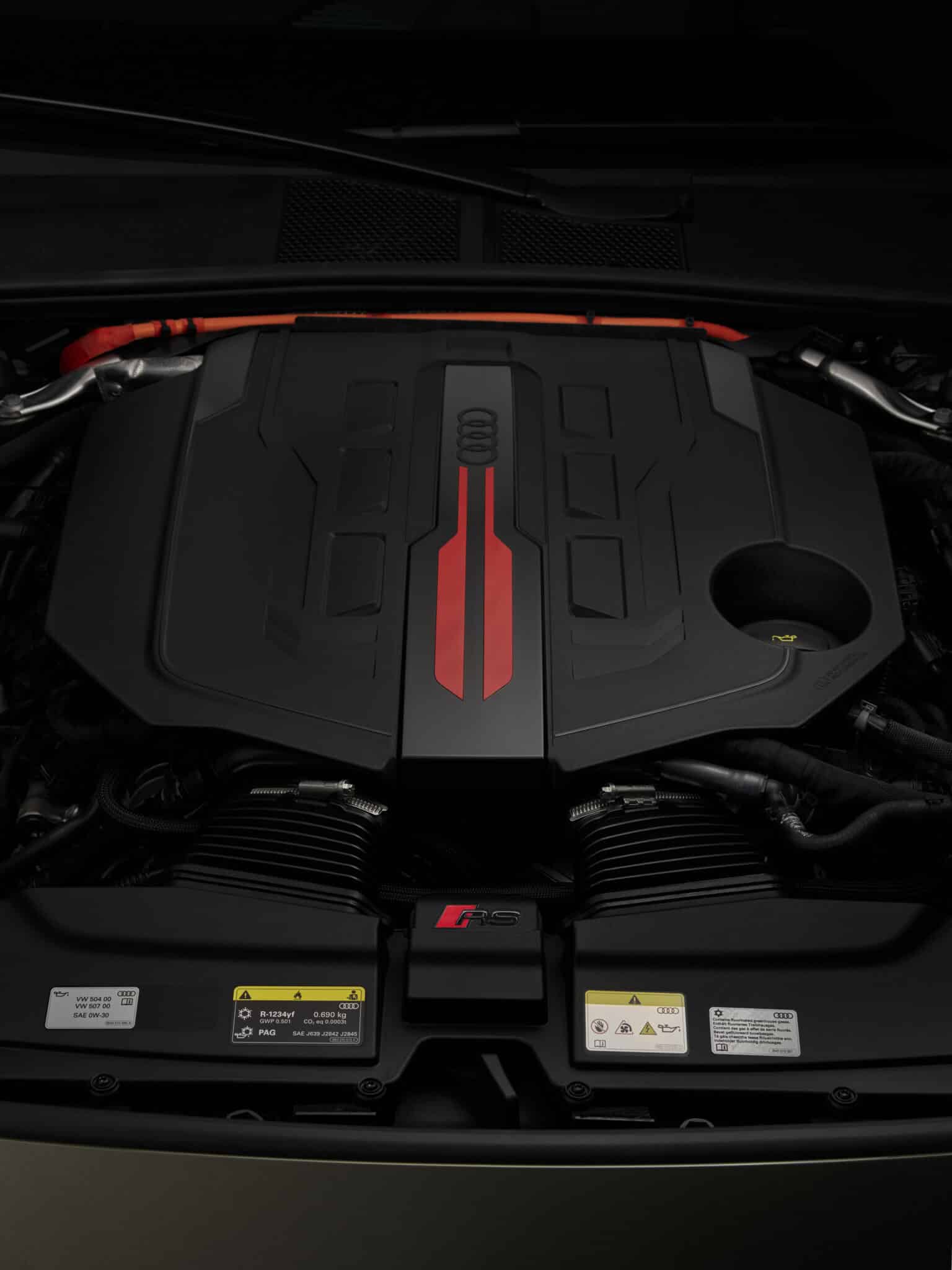
The new RS 5 has an evolved 2.9-litre V6 TFSI producing 375 kW (510PS/503bhp), working alongside a 130 kW electric motor integrated into a hybridised eight-speed tiptronic gearbox.
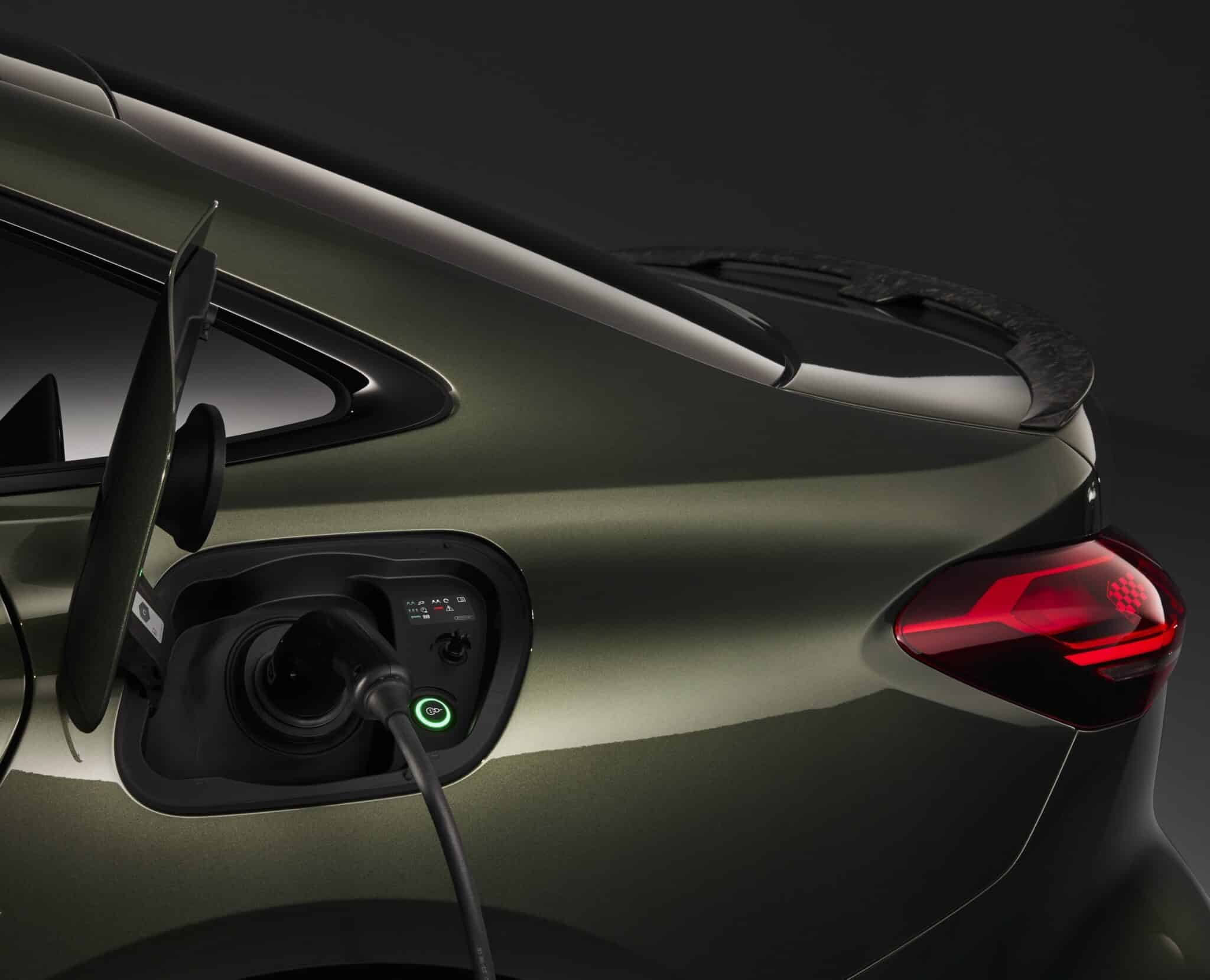
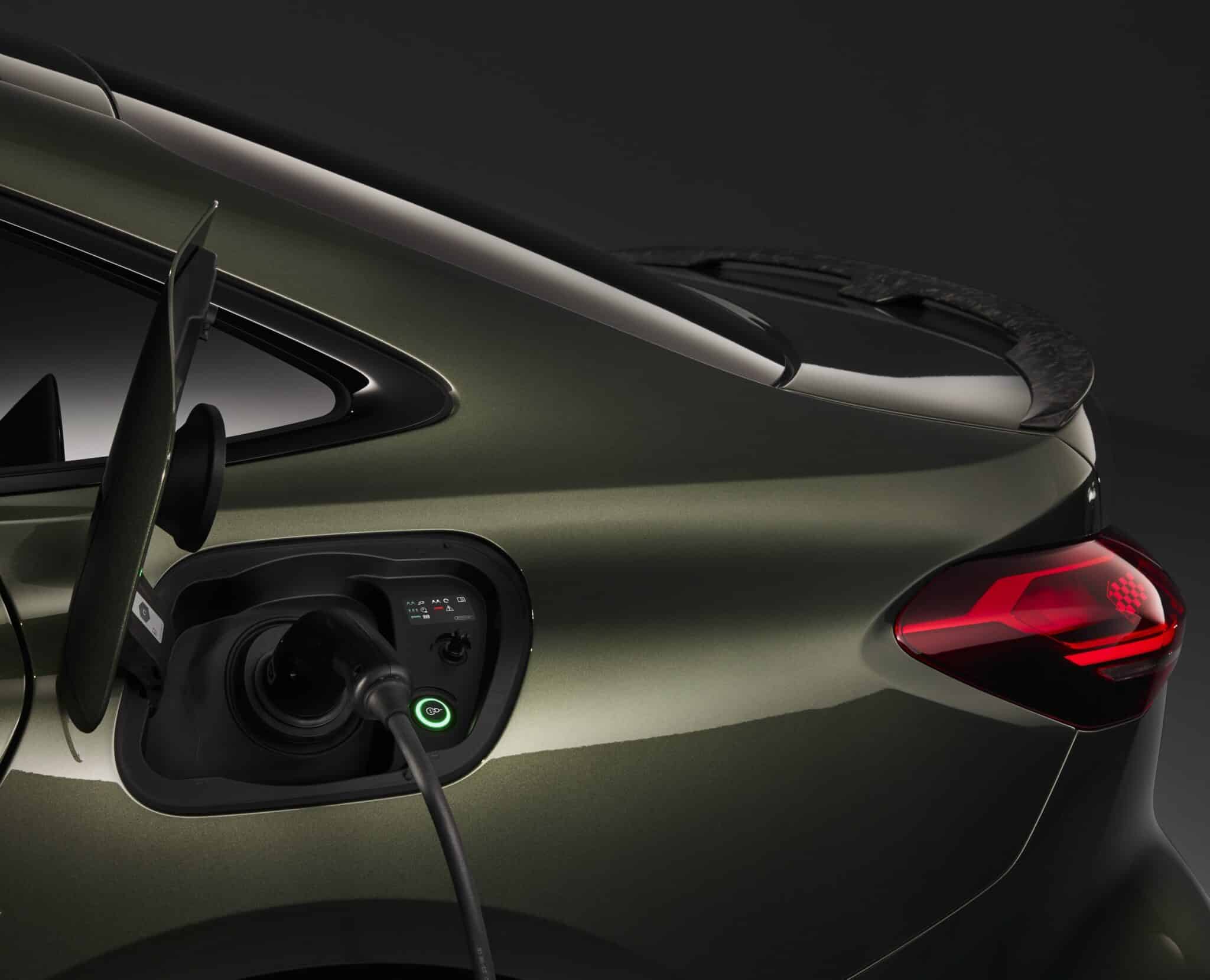
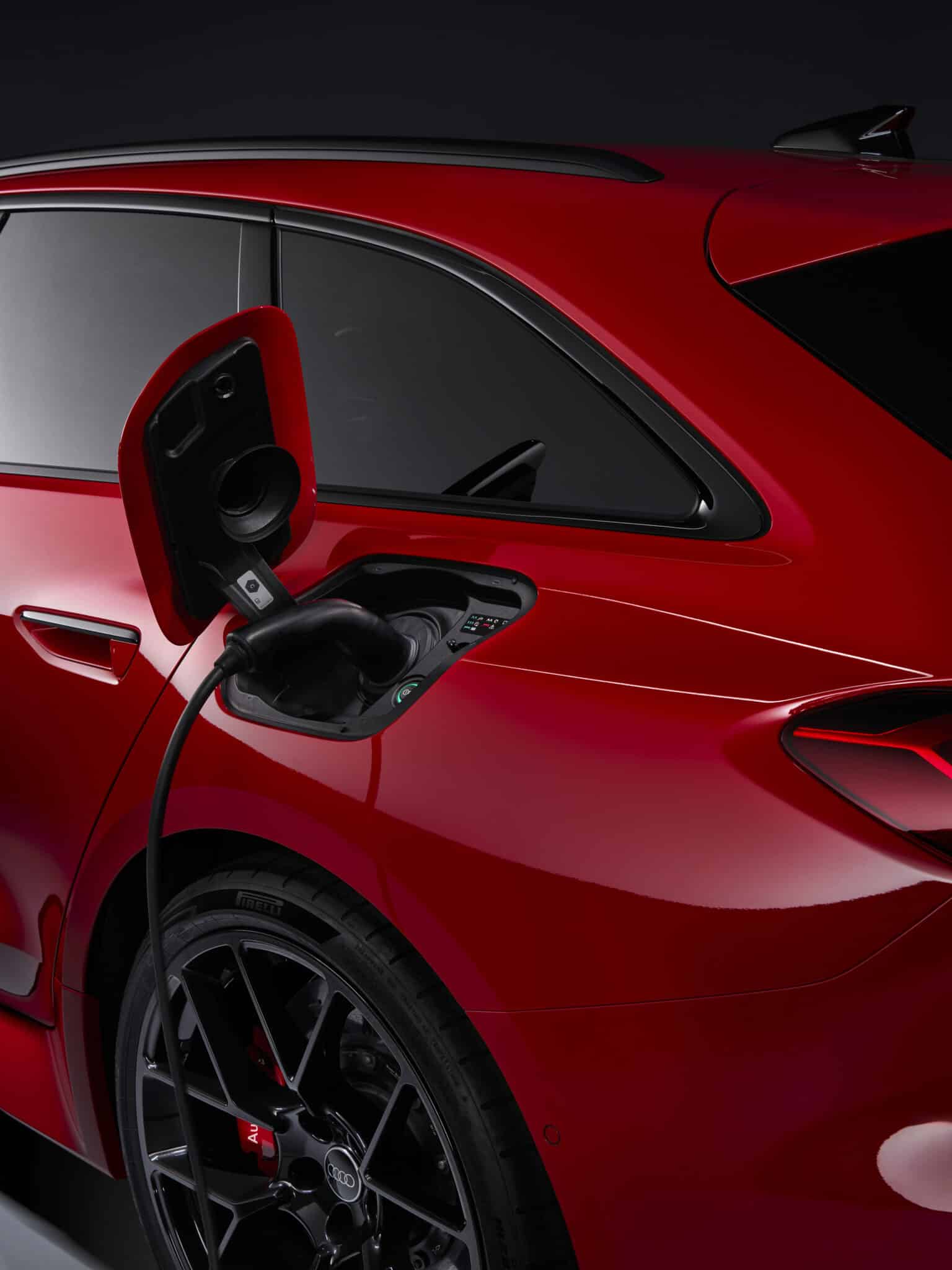
The 25.9 kWh (22 kWh net) battery supports a 400-volt electrical system and allows the RS 5 to travel purely on electric power when required. Charging at up to 11 kW AC, it can be charged to 100% in around 2.5 hours.
Audi has engineered the hybrid system to prioritise performance when needed. In RS Sport and RS Torque Rear modes, the system maintains a high state of charge to ensure maximum electric assistance is always available.
A World-First quattro System
The RS 5 introduces a new generation of quattro with Dynamic Torque Control, featuring electro-mechanical torque vectoring in the rear transaxle, a first for a production car.
An actuator, overdrive gears, and a differential combine to distribute torque between the rear wheels in just 15 milliseconds. A central driving dynamics controller recalculates torque distribution every five milliseconds, ensuring precise responses in any scenario.
The centre differential is preloaded, meaning it remains partially locked even when off throttle. This improves turn-in response, traction, and stability, particularly during rapid changes between acceleration and deceleration.
Chassis and Control
The new RS 5 sits on a significantly stiffened structure, with a body that is 10% more rigid than the base A5. It uses five-link suspension front and rear, alongside RS-specific axles and a newly developed rear setup to accommodate the advanced drivetrain.
Twin-valve shock absorbers allow independent control of compression and rebound, and steering is more direct than the standard model, with a 13:1 ratio for sharper responses.
Braking comes from 420mm front and 400mm rear steel discs as standard, or optional ceramic discs measuring 440mm and 410mm respectively. The ceramic setup reduces weight by around 30kg and, in a segment-first, includes ceramic discs at the rear. From 62mph, the RS 5 can stop in 30.6 metres!
Designed to Look Like an RS
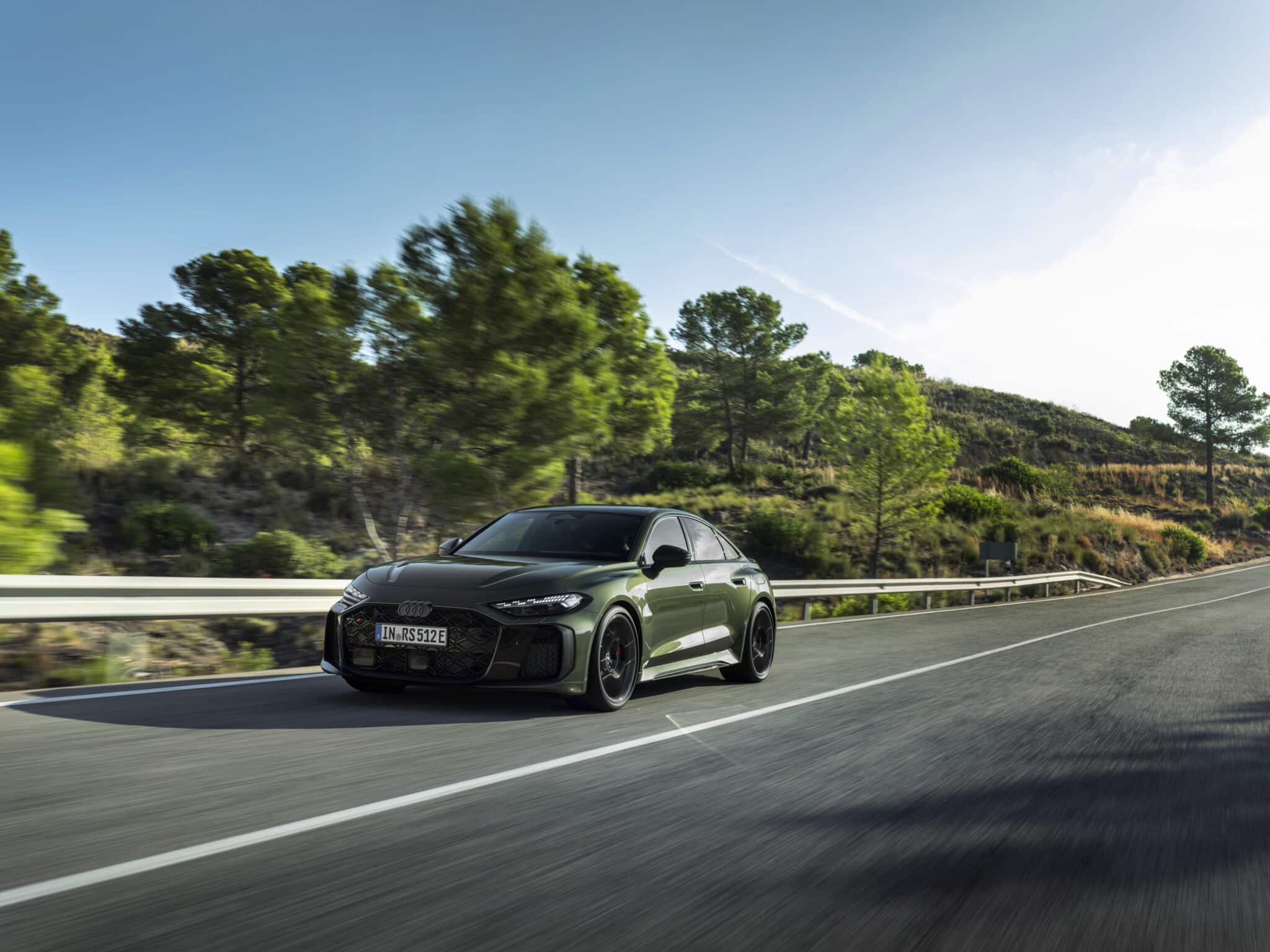
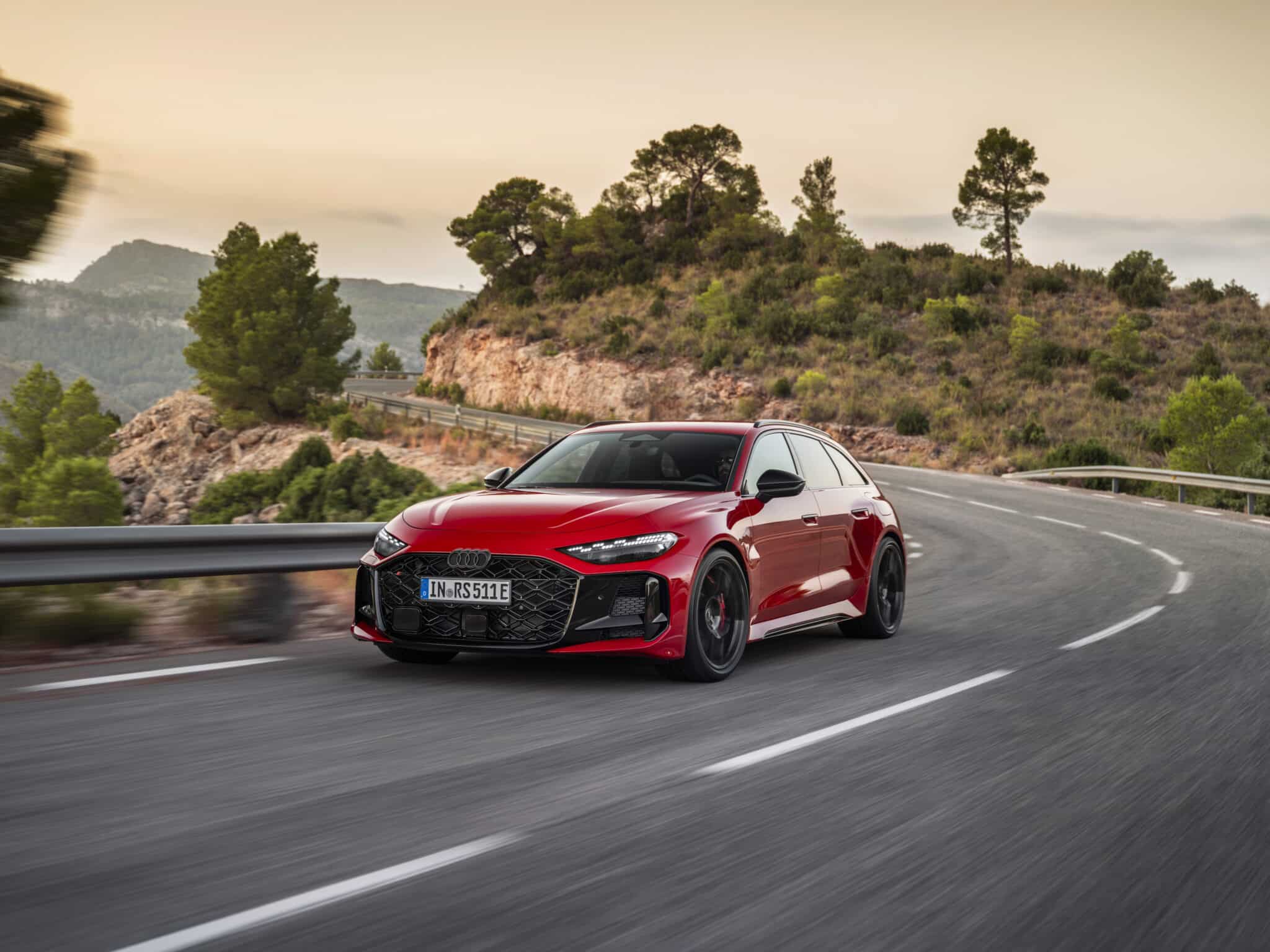
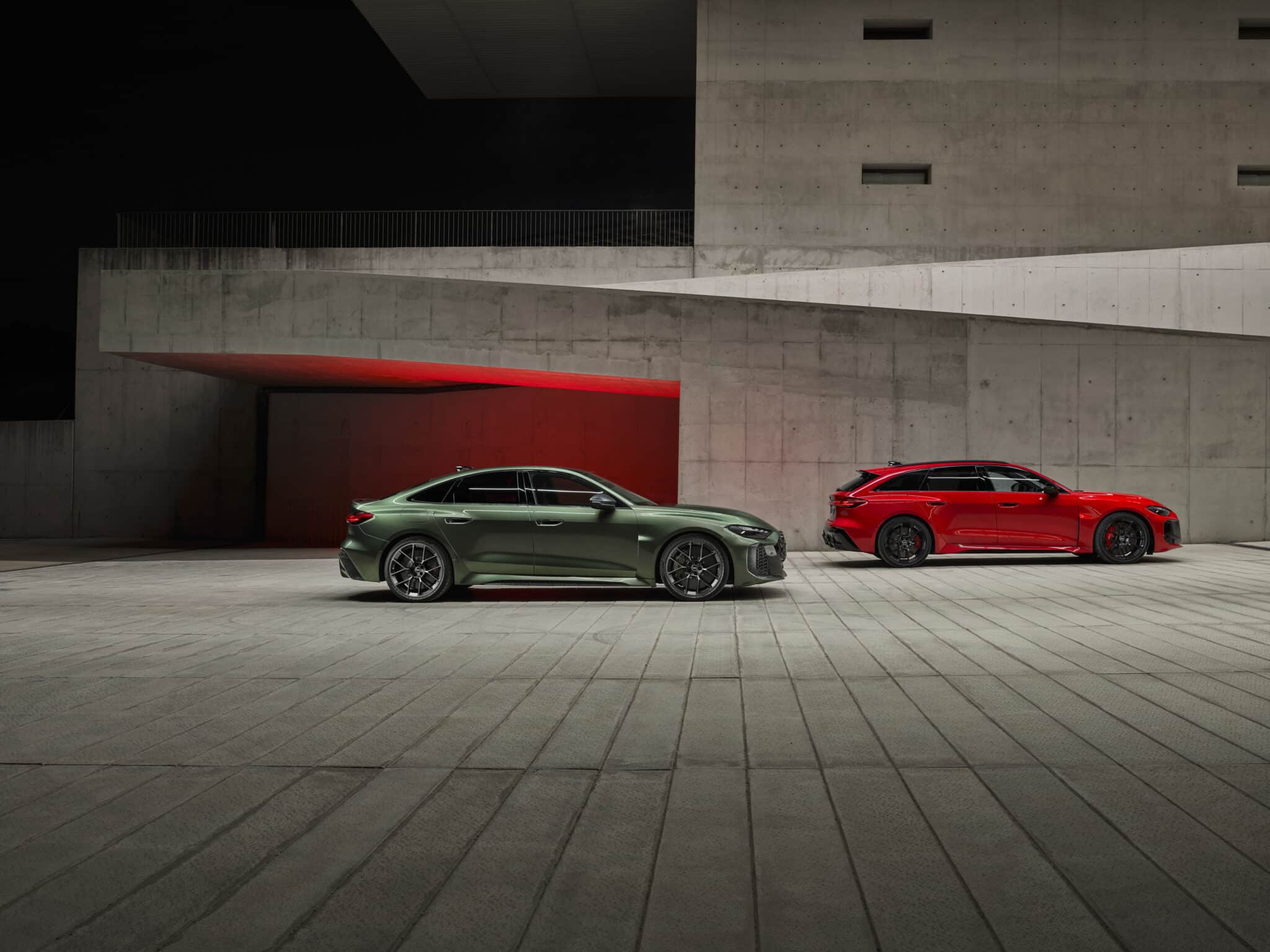
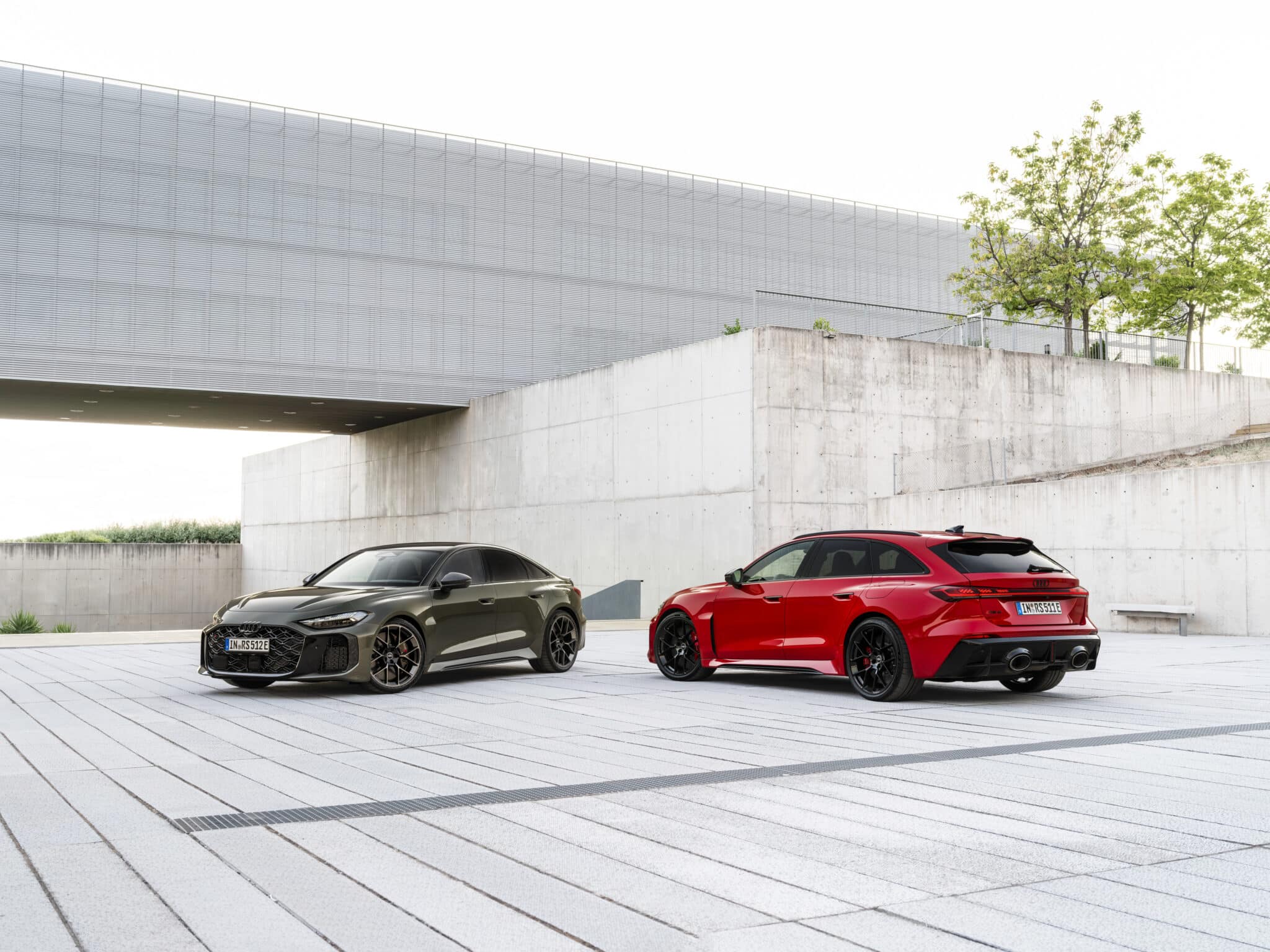
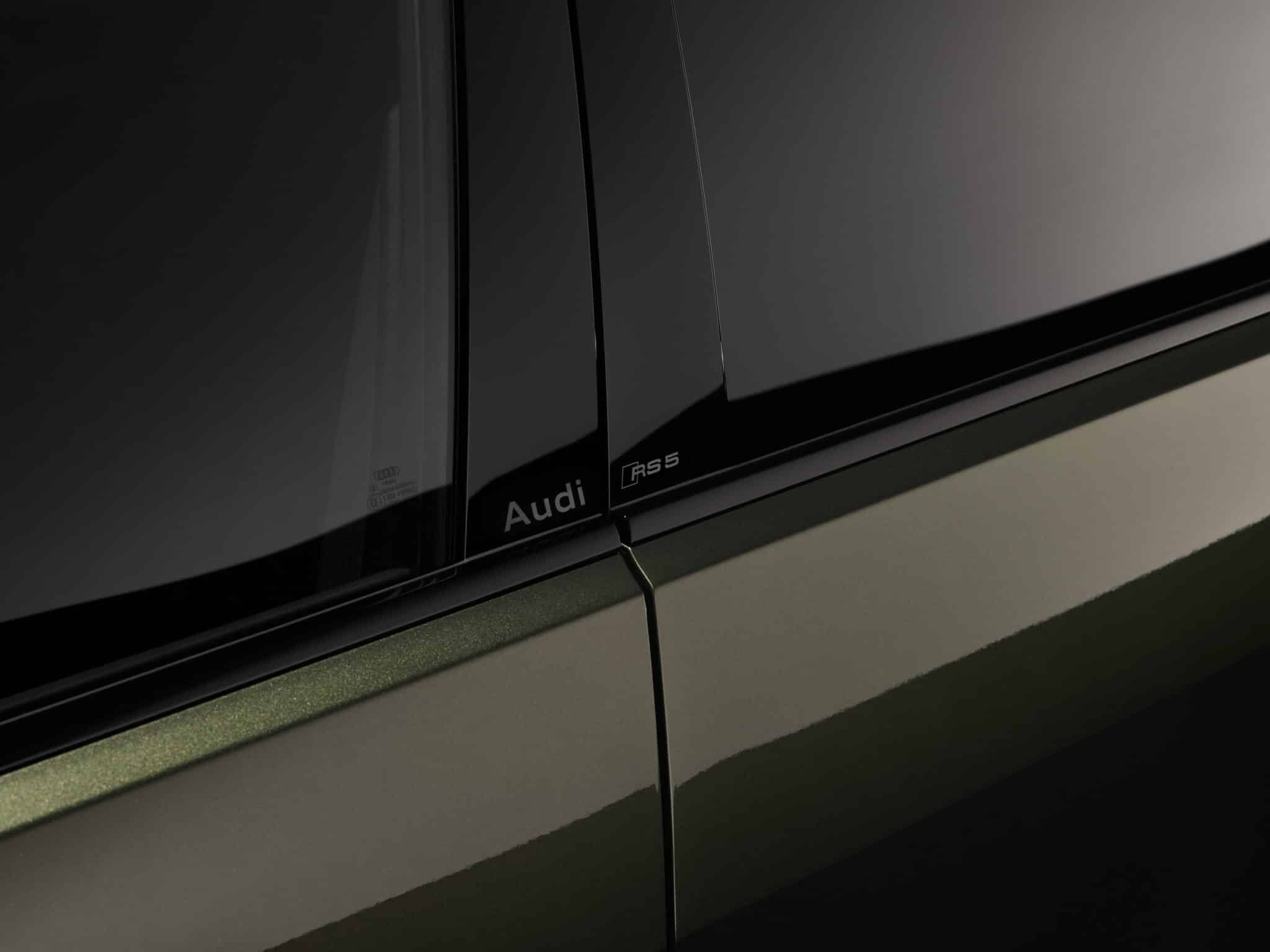
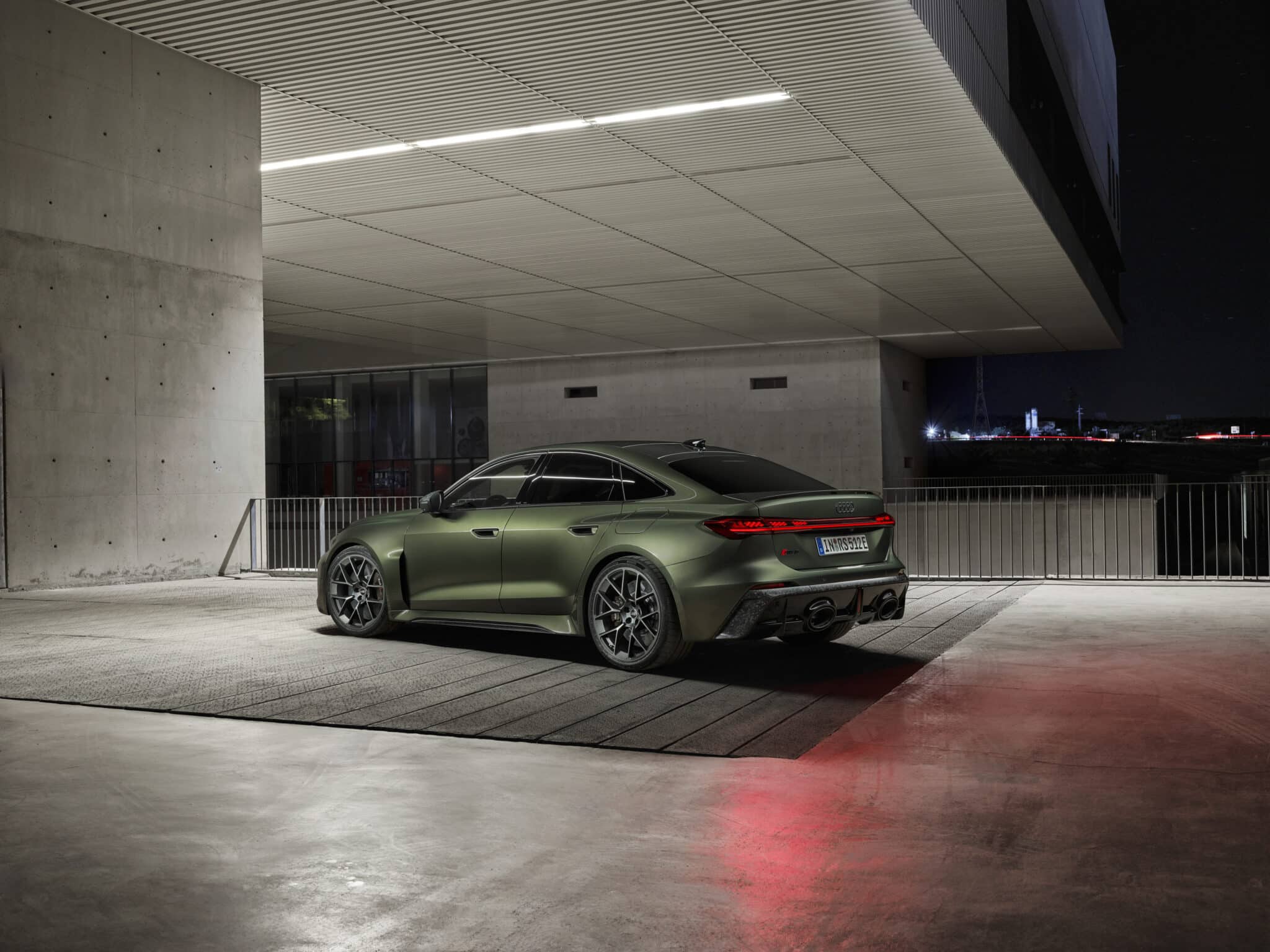
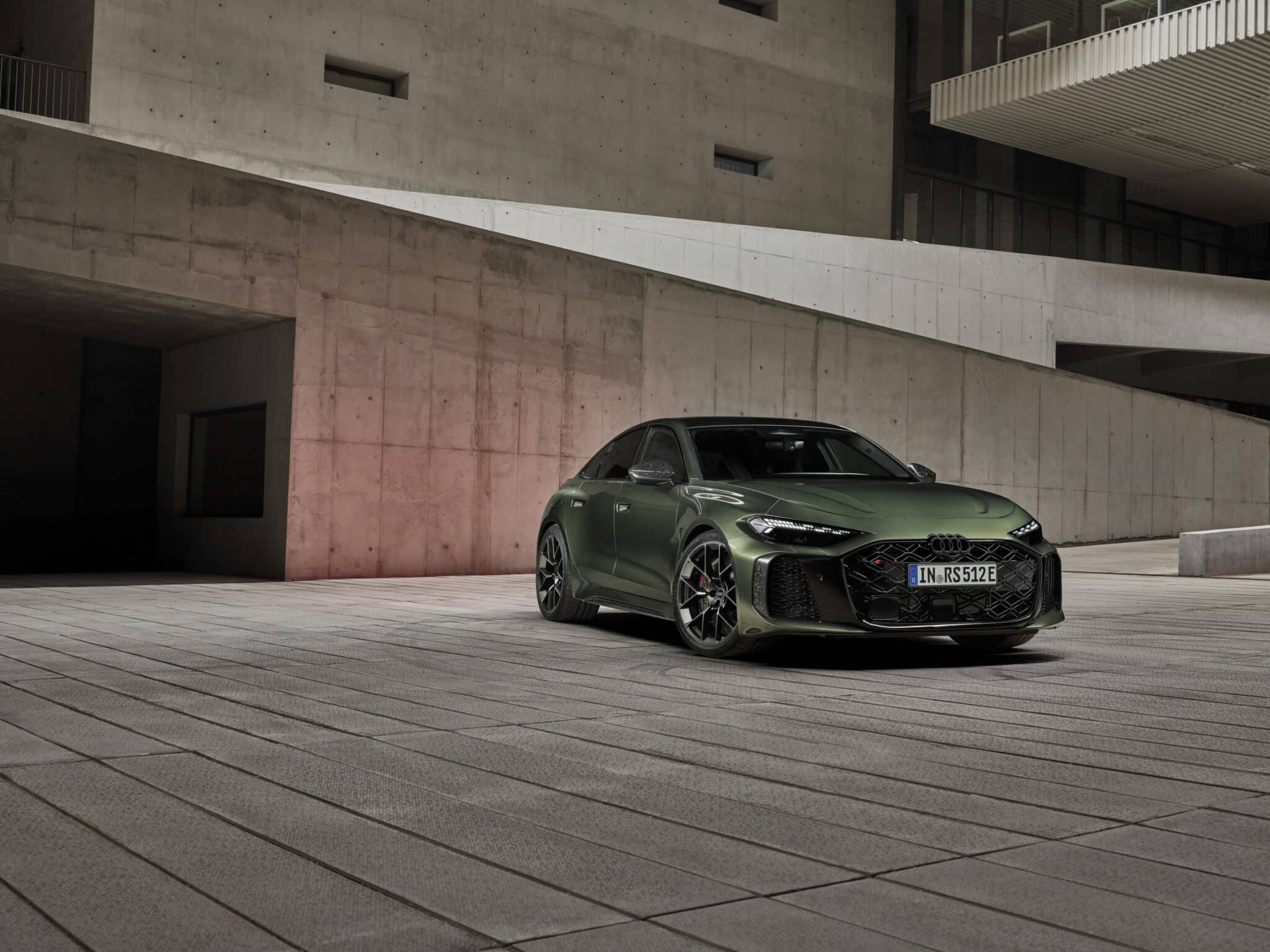
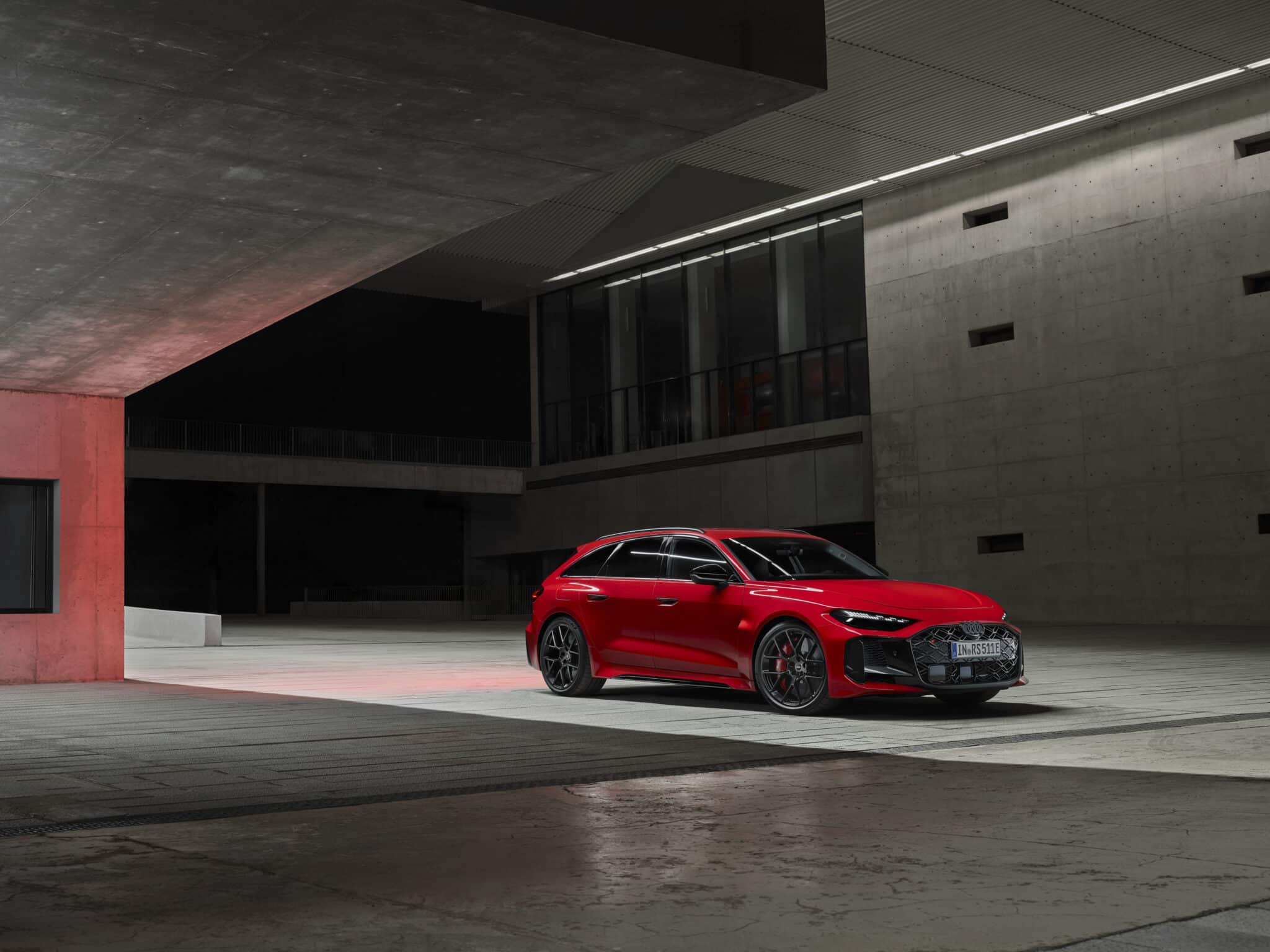
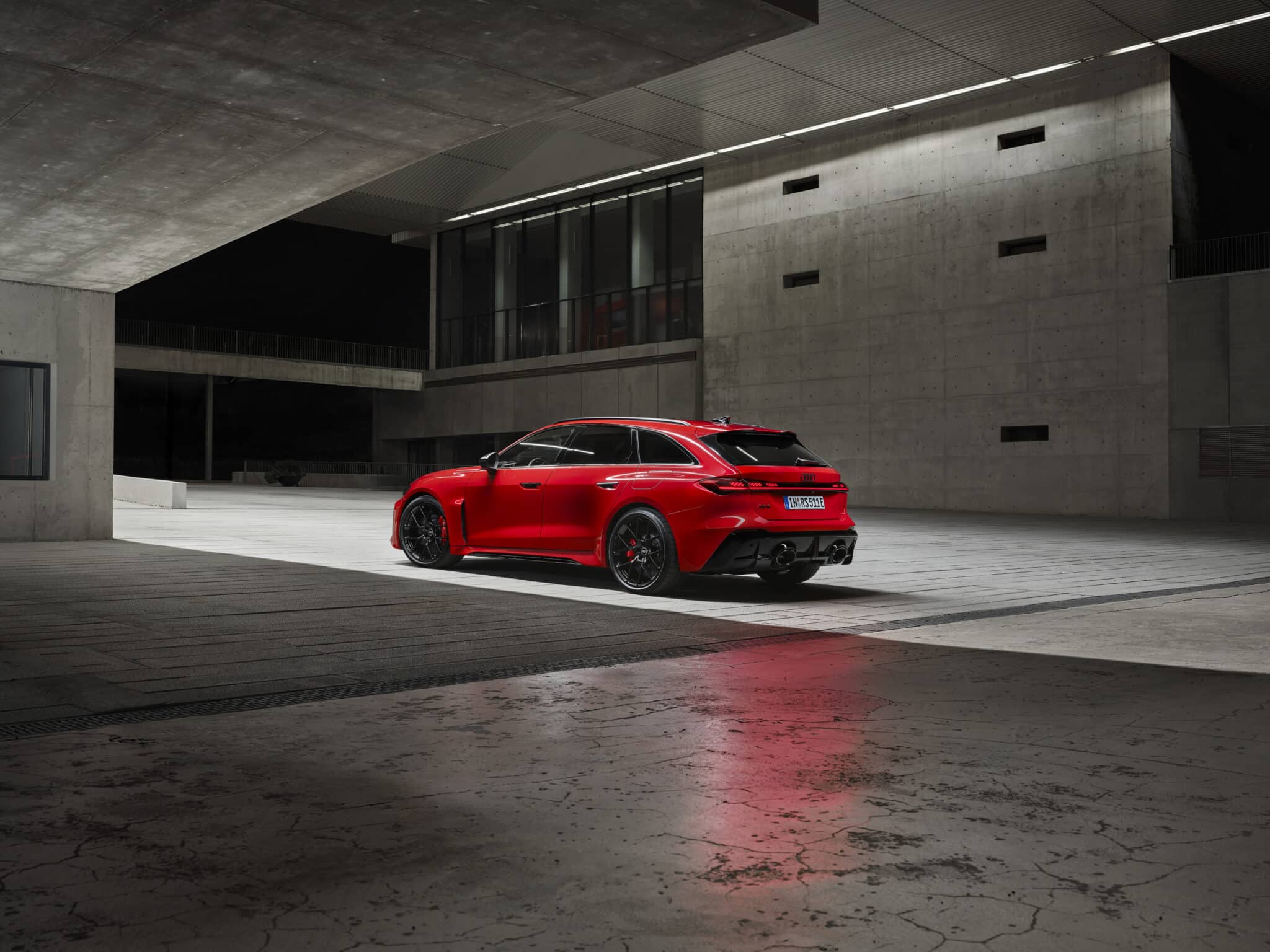
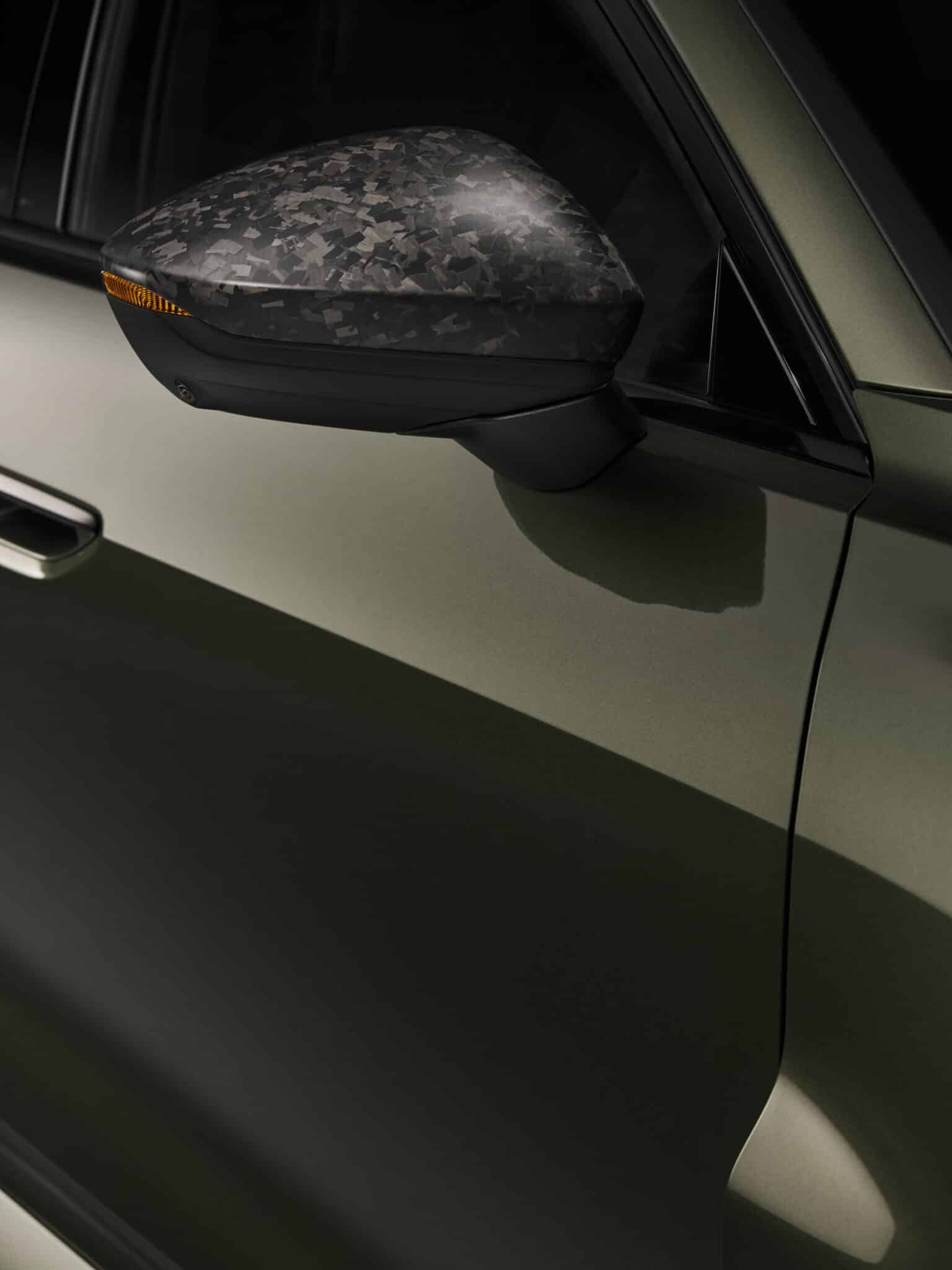
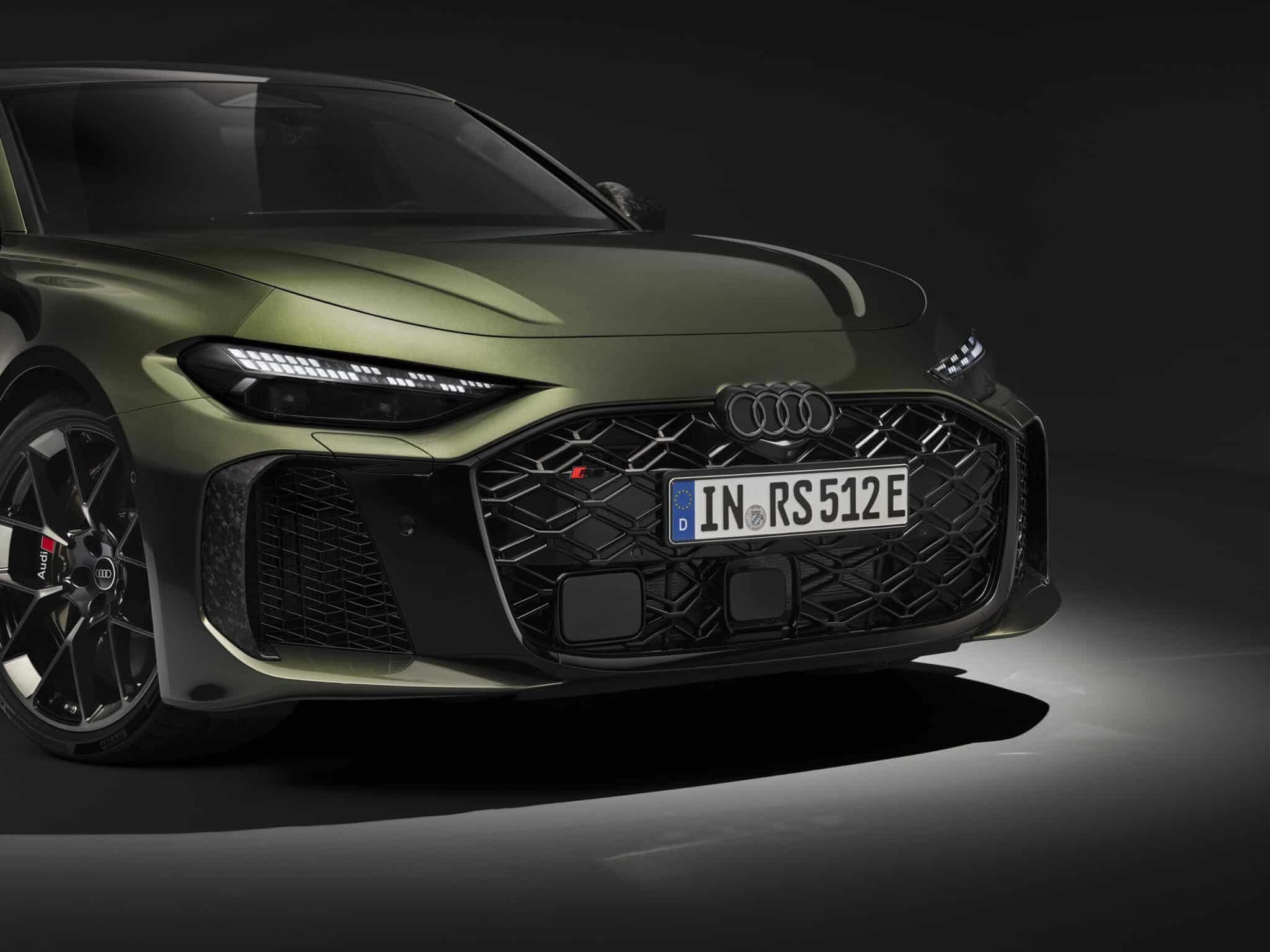
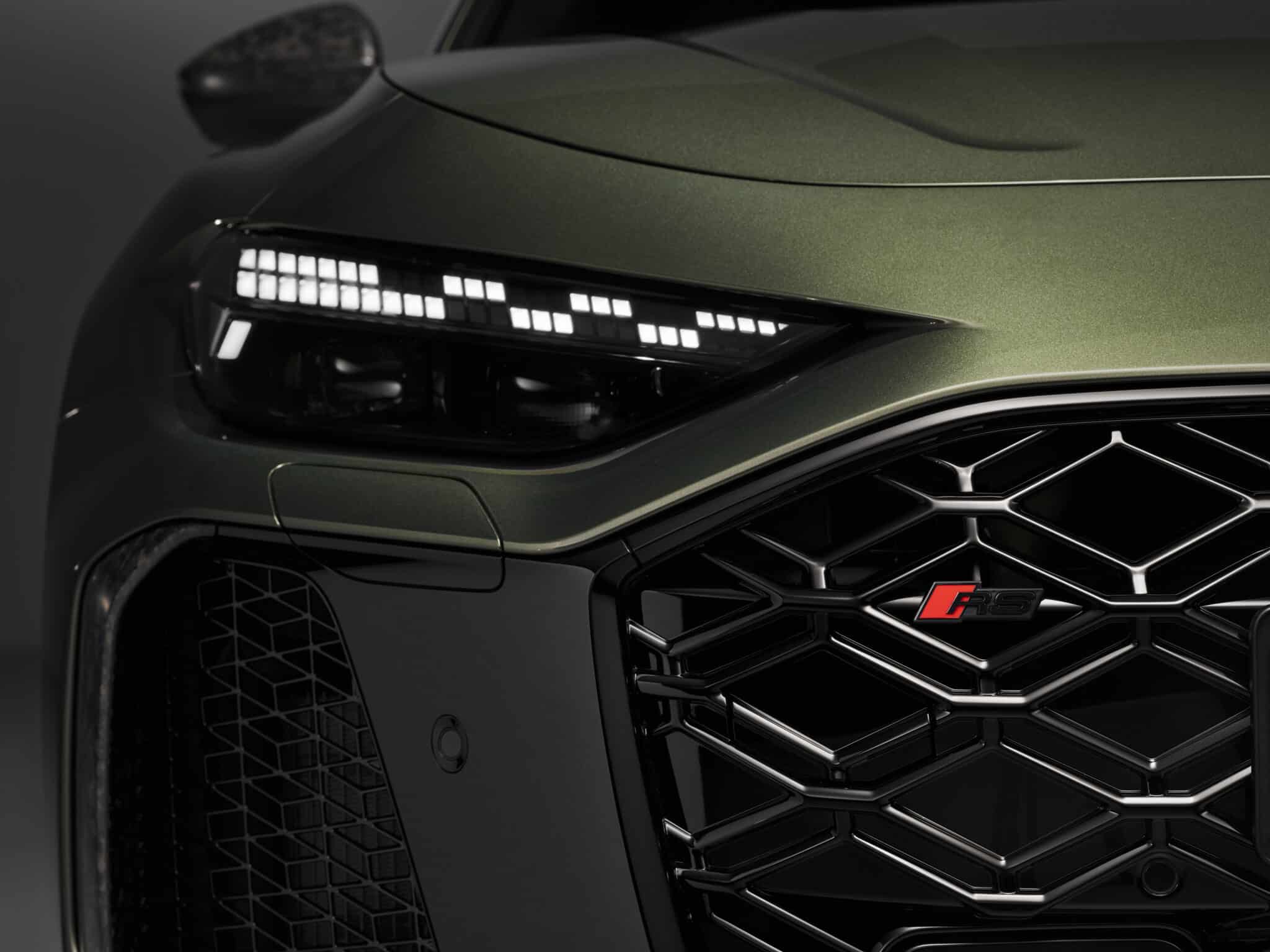
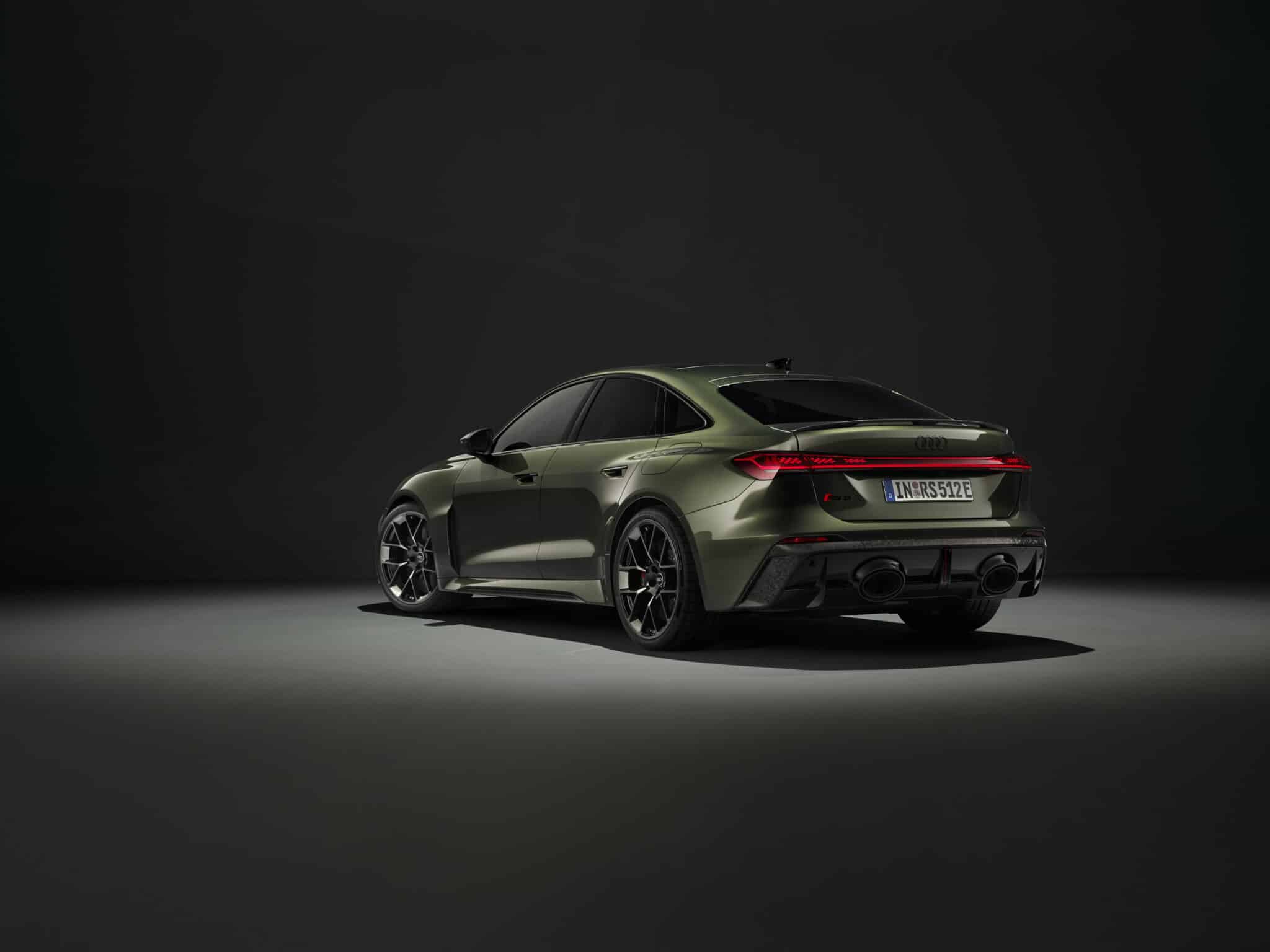
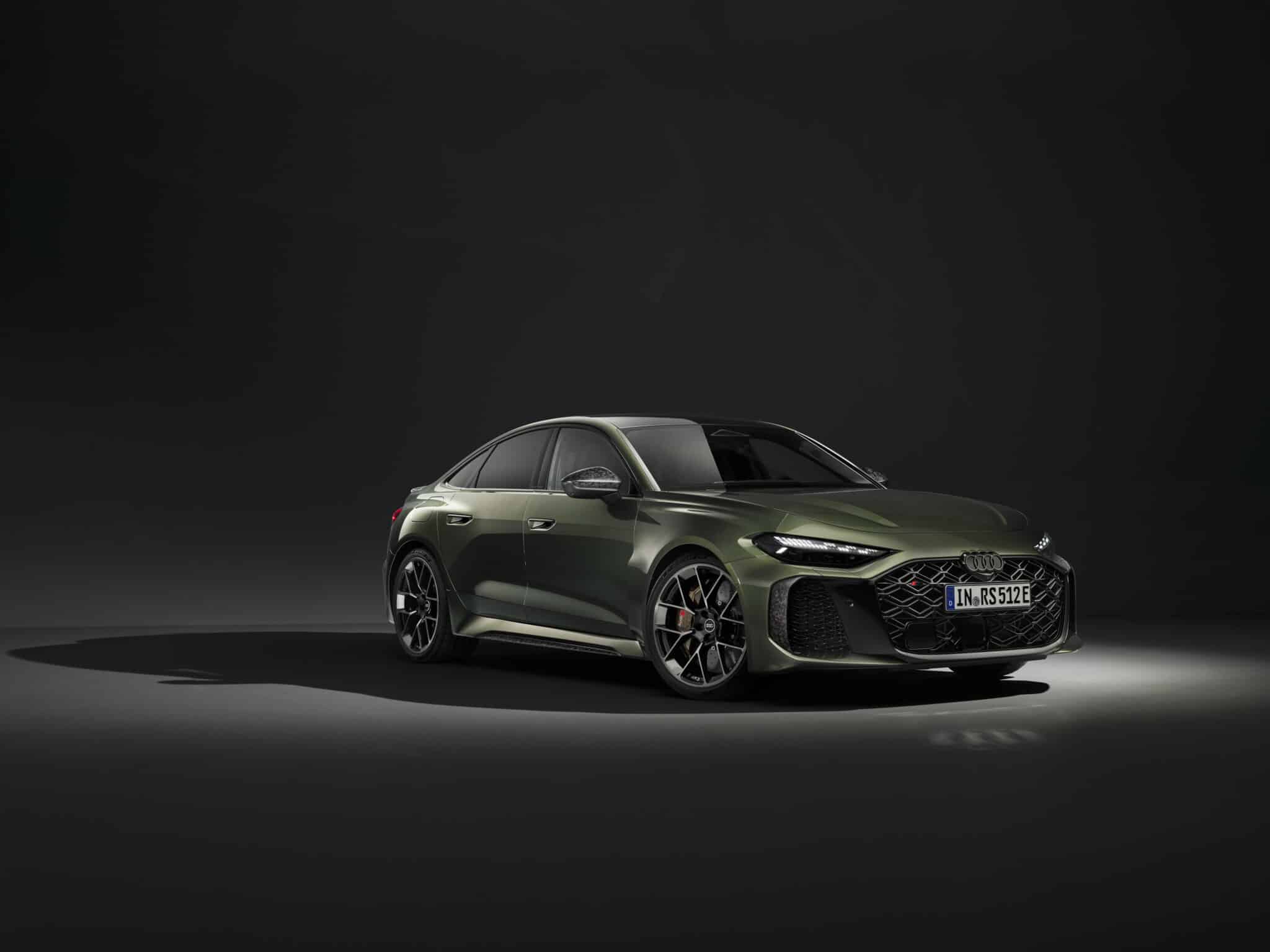
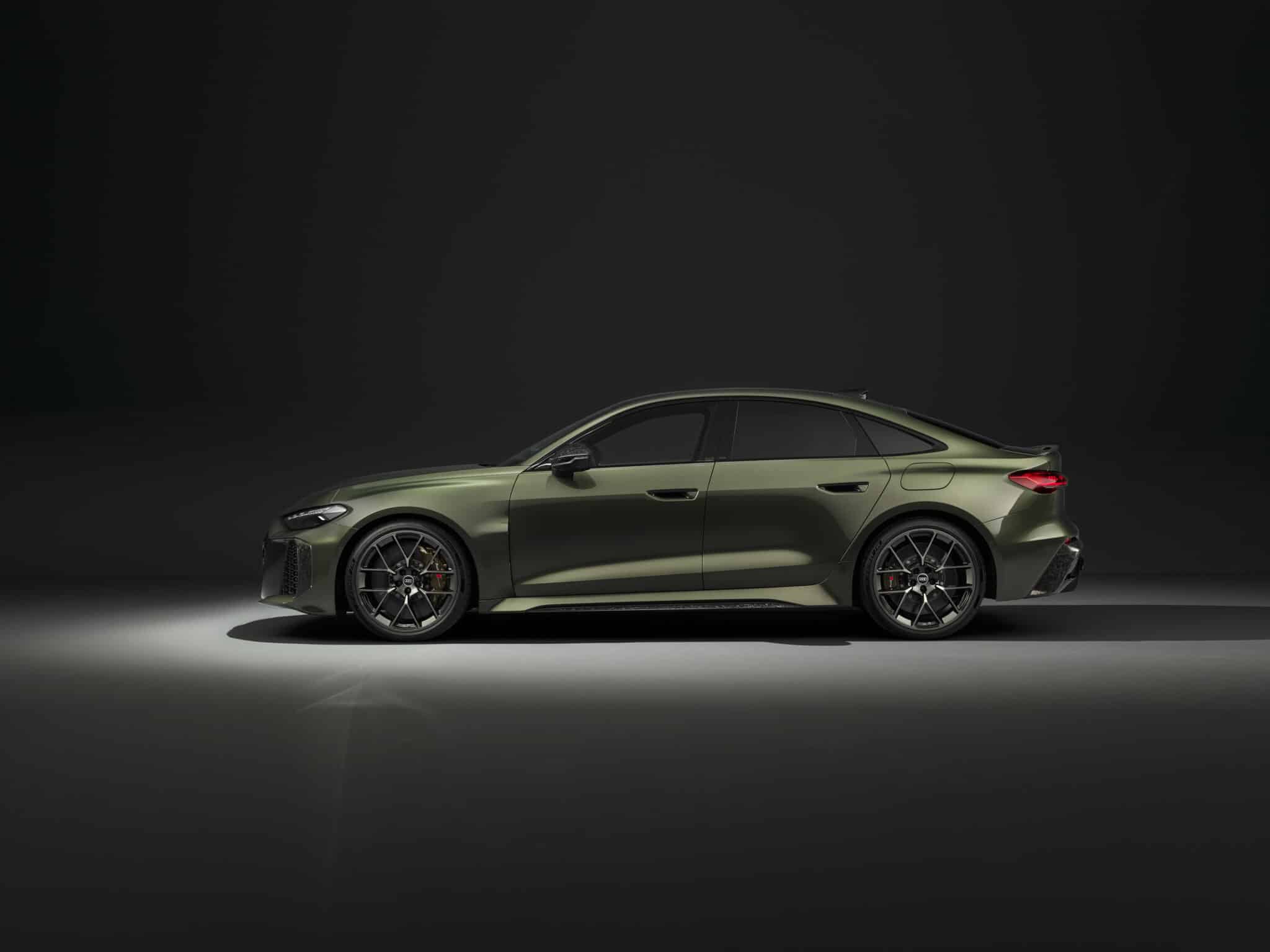
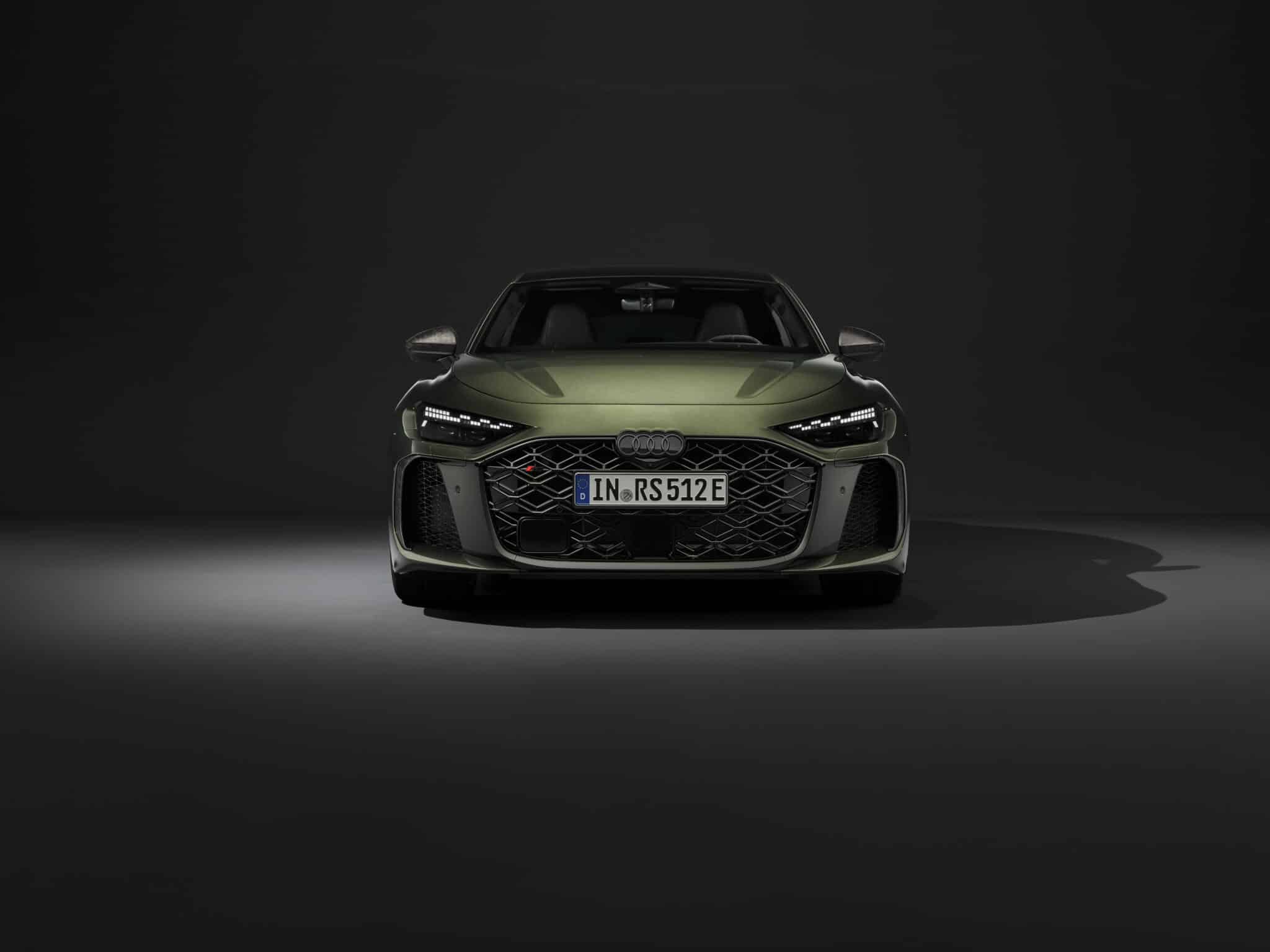
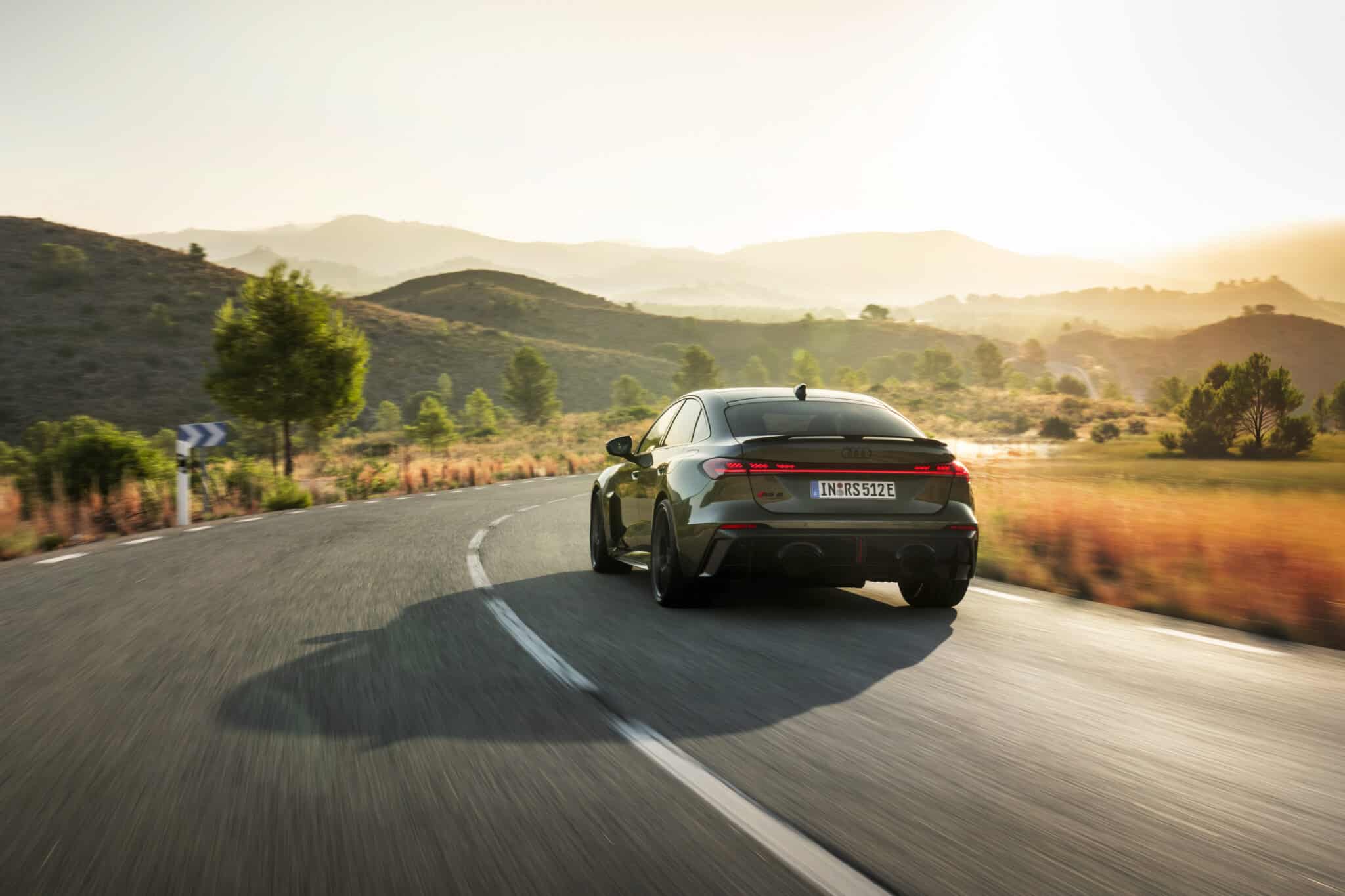
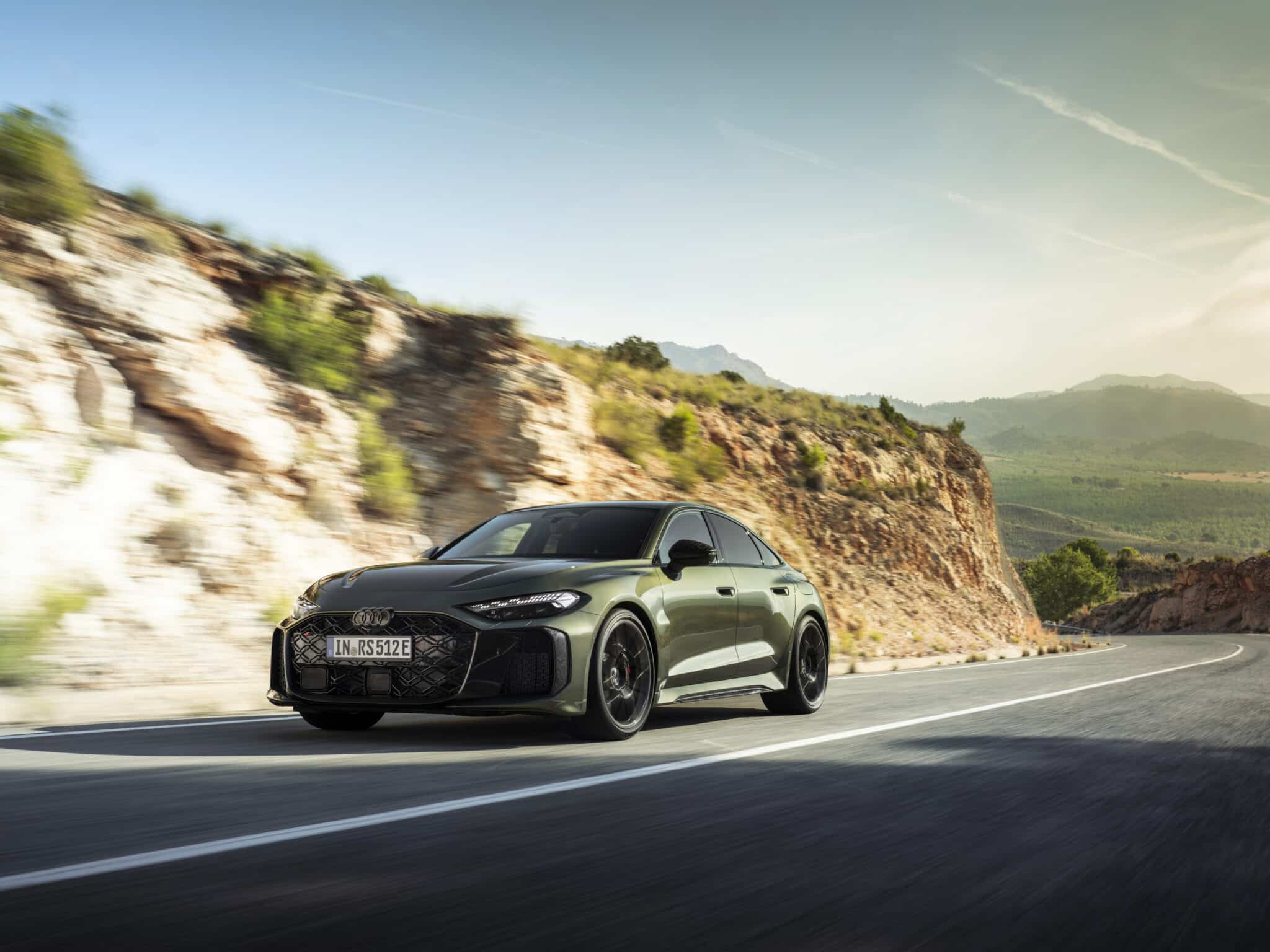
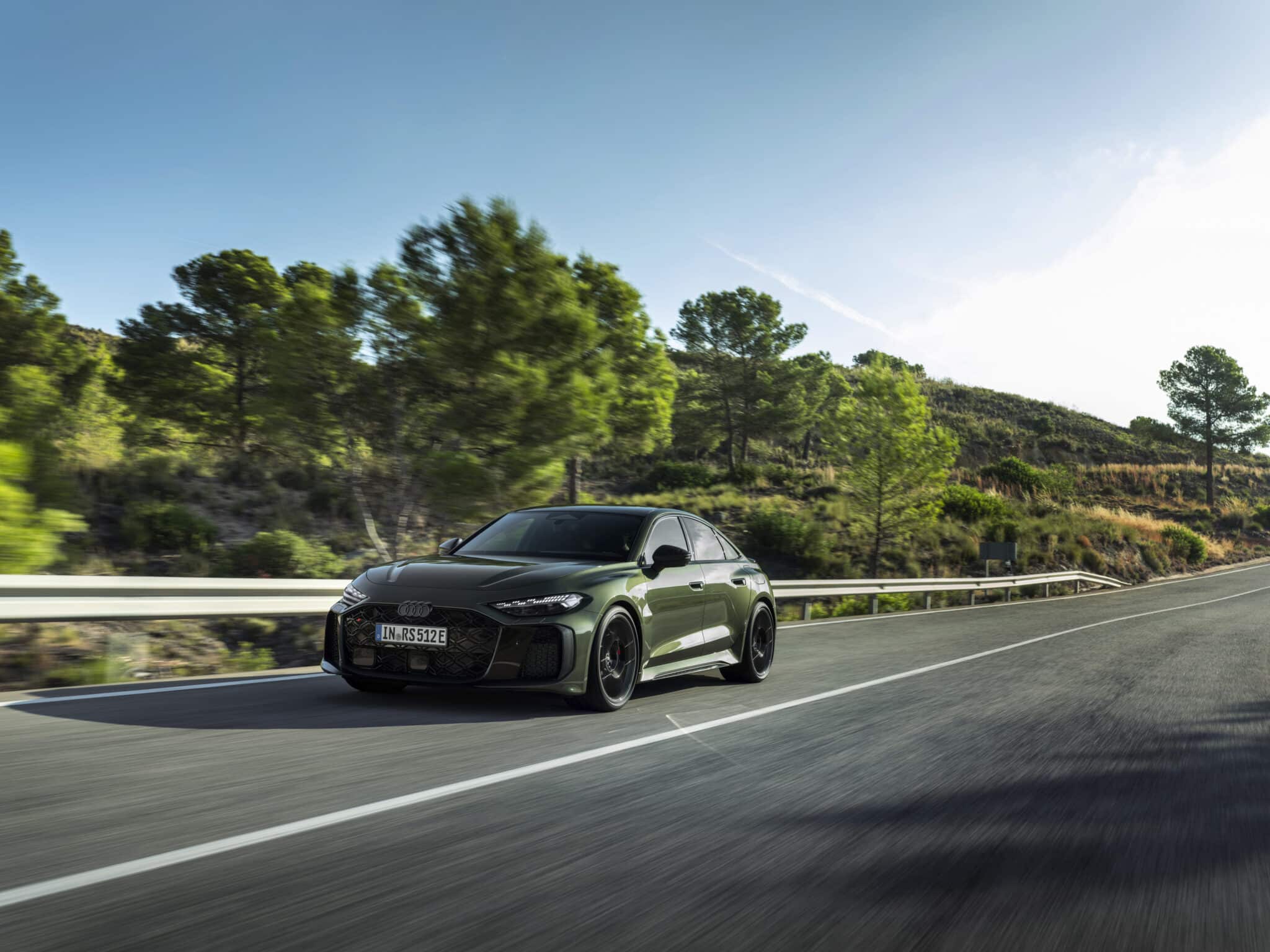
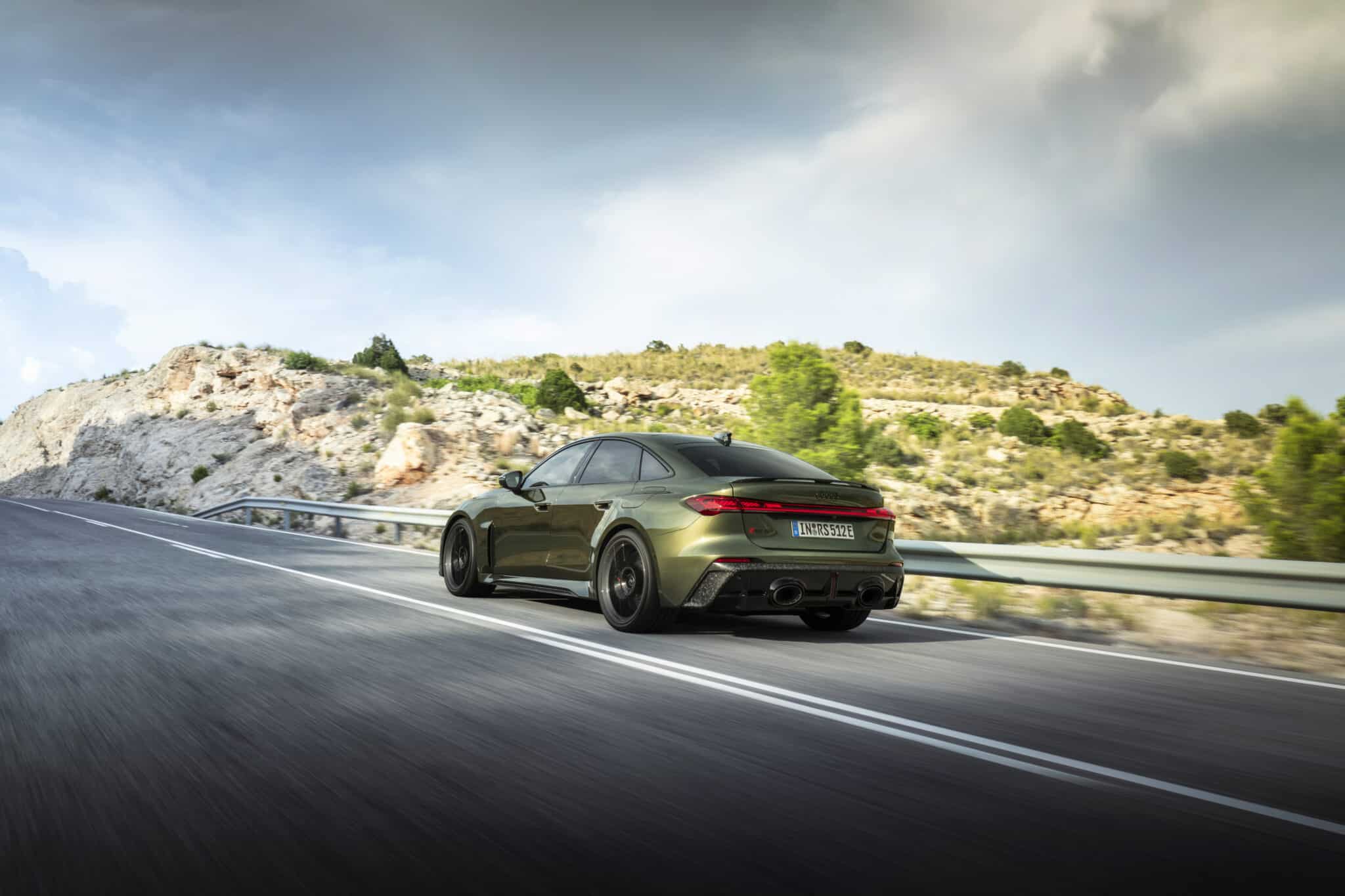
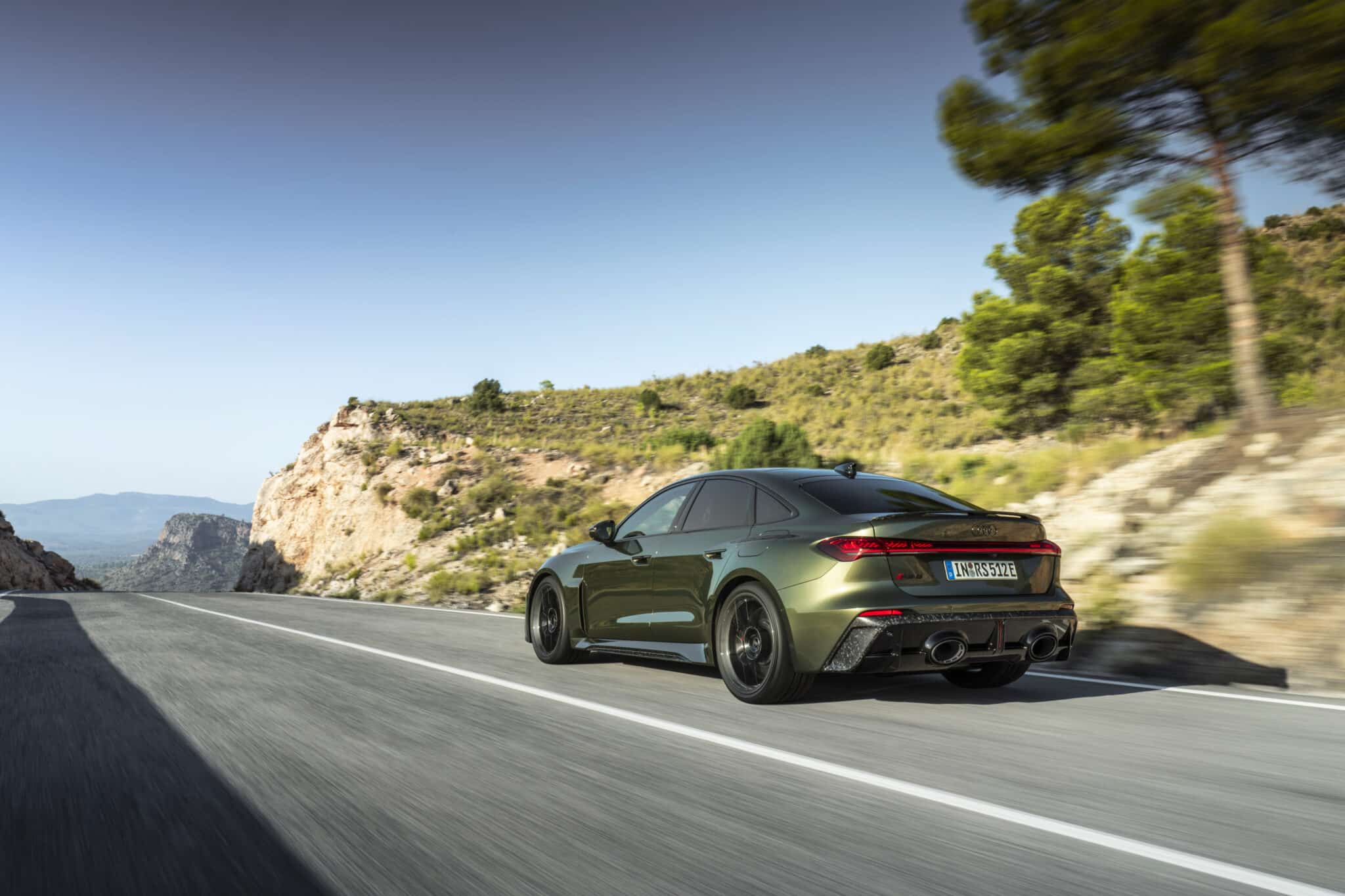
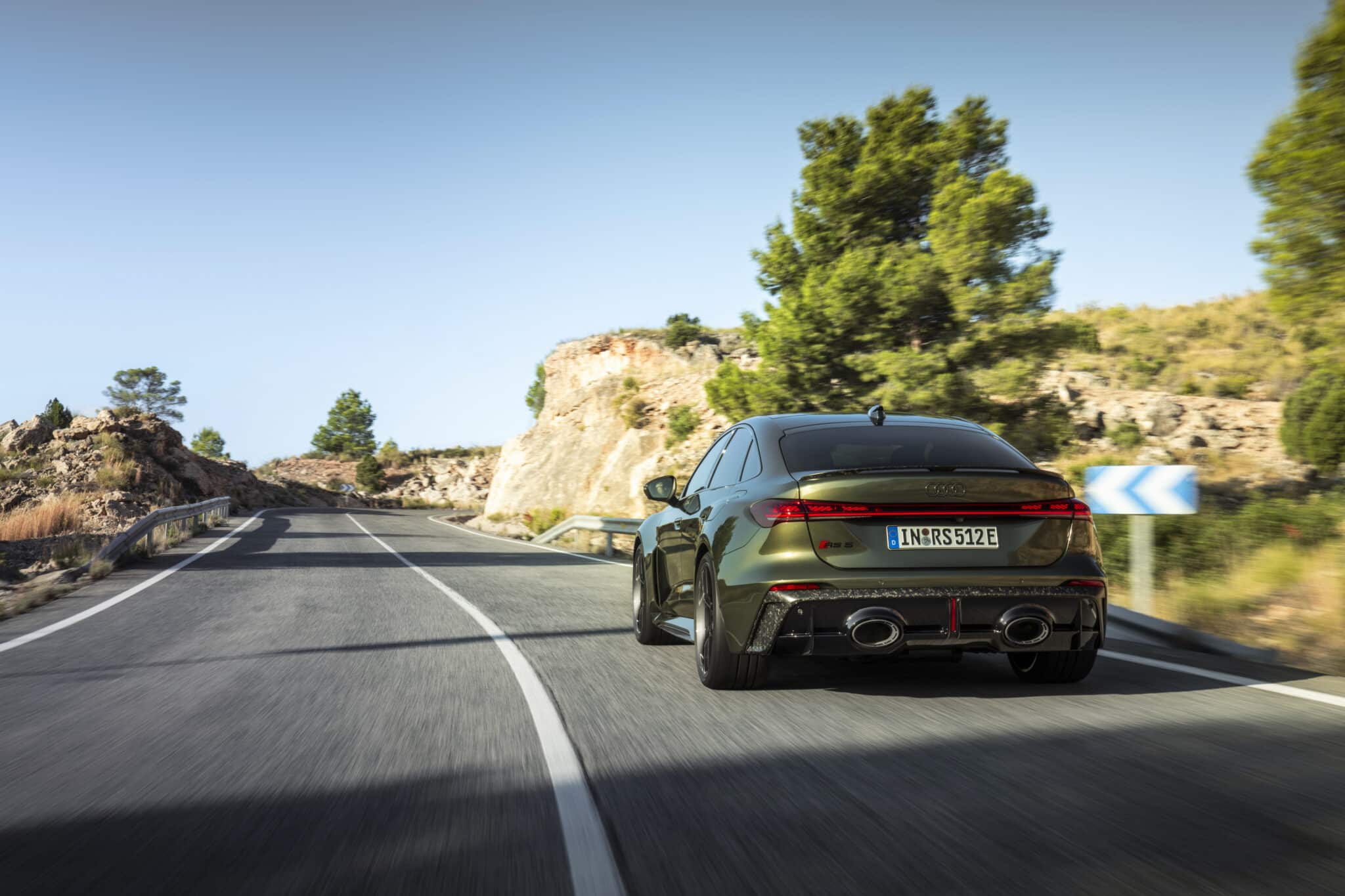
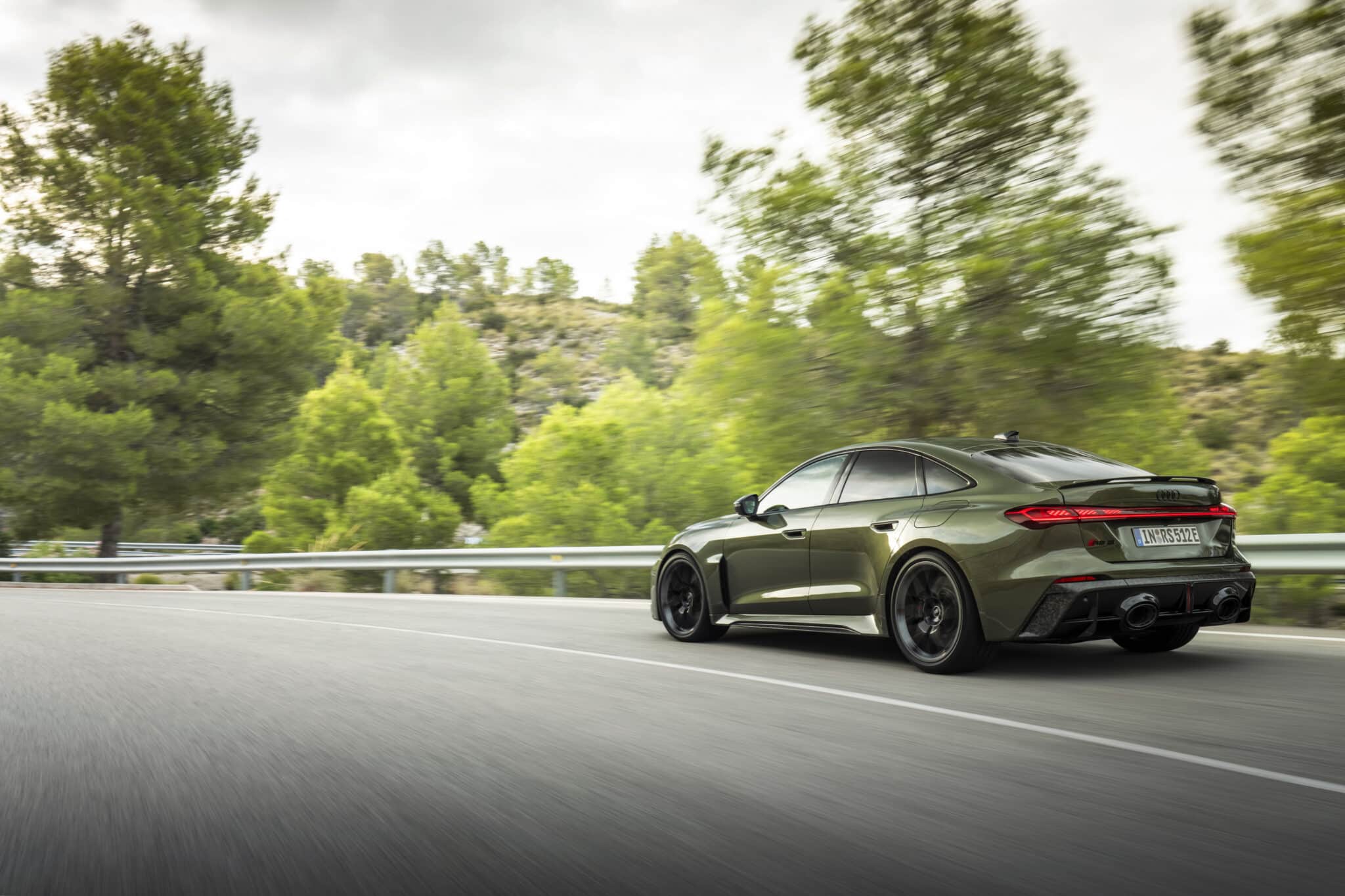
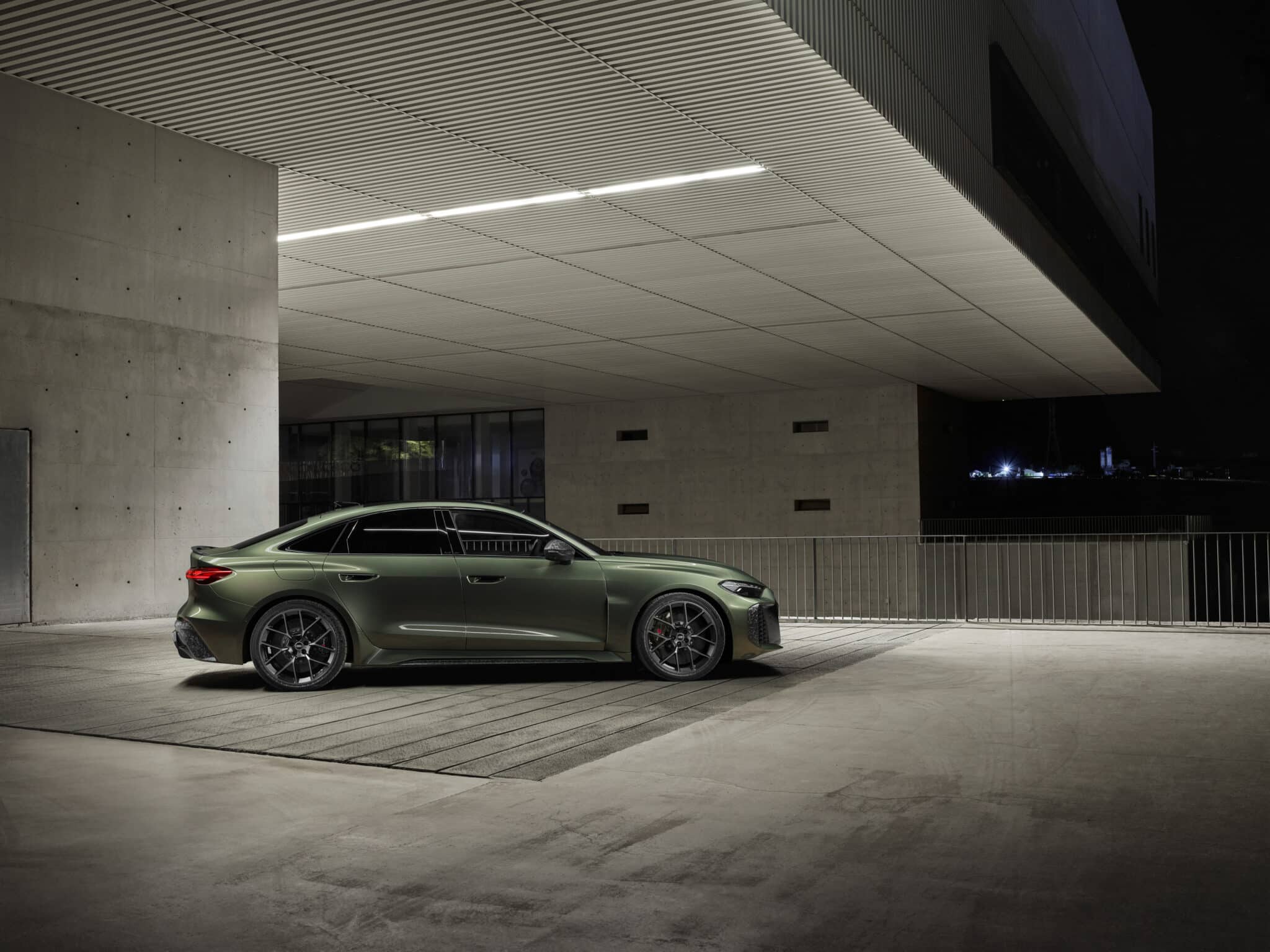
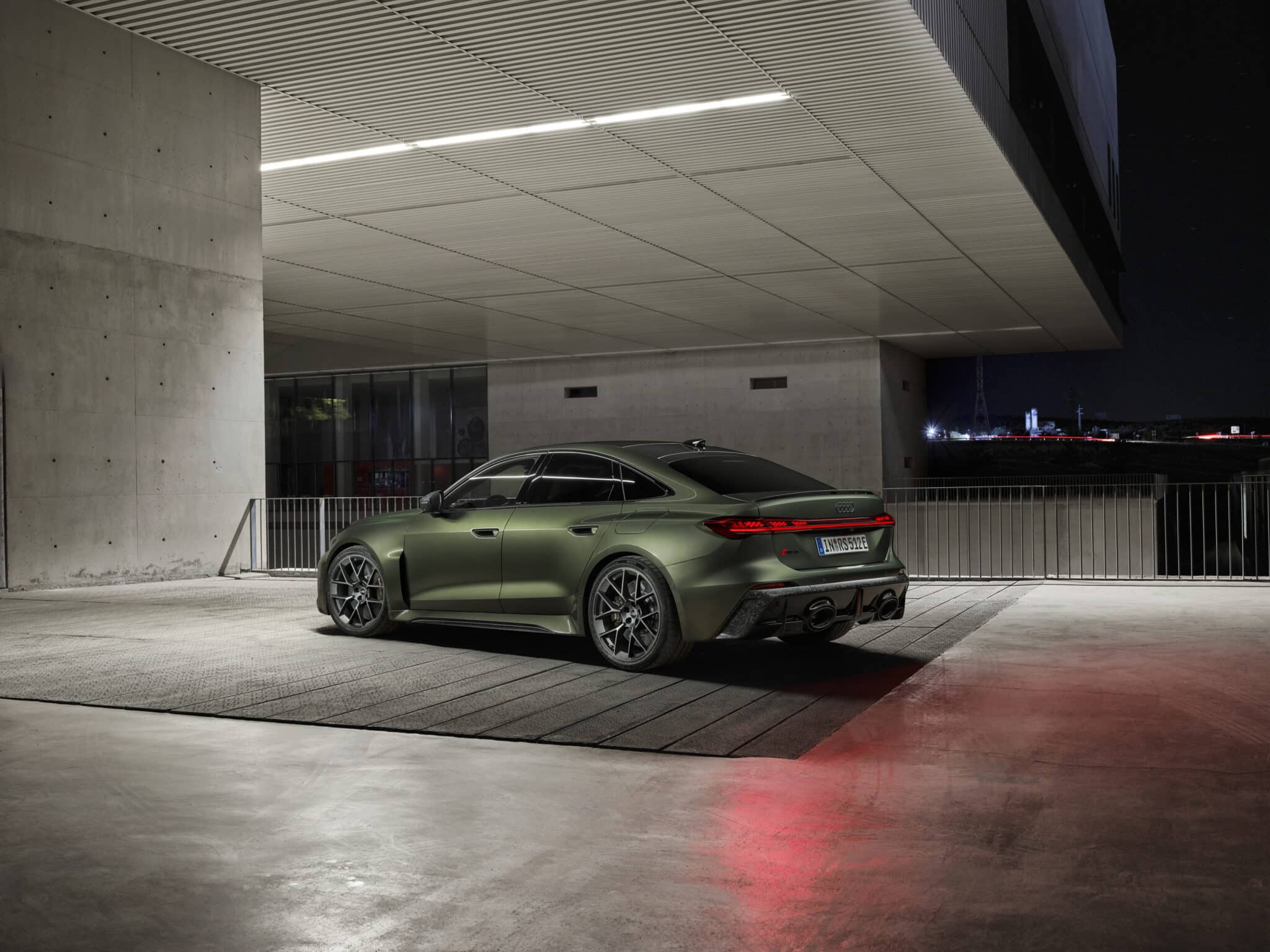
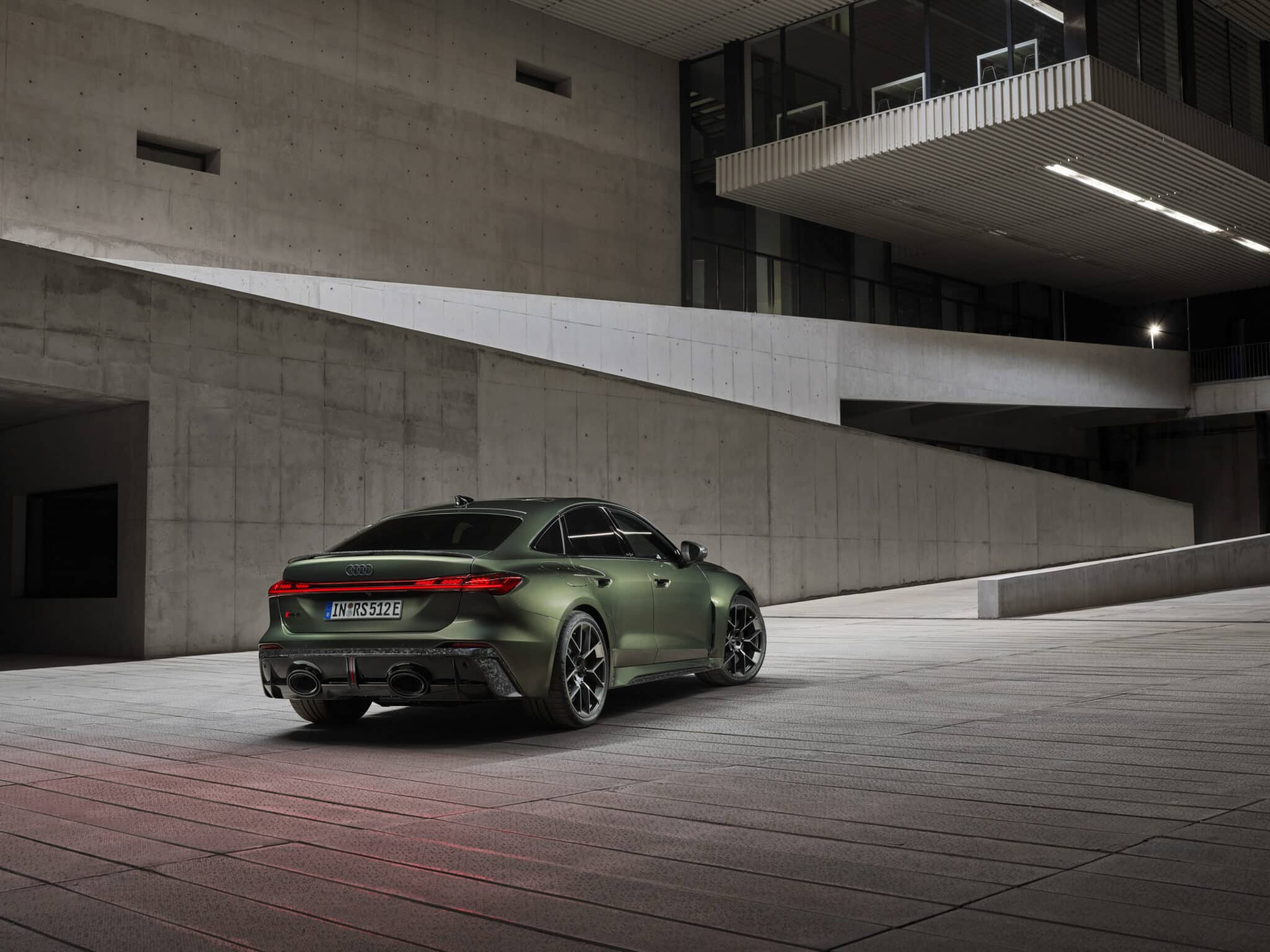
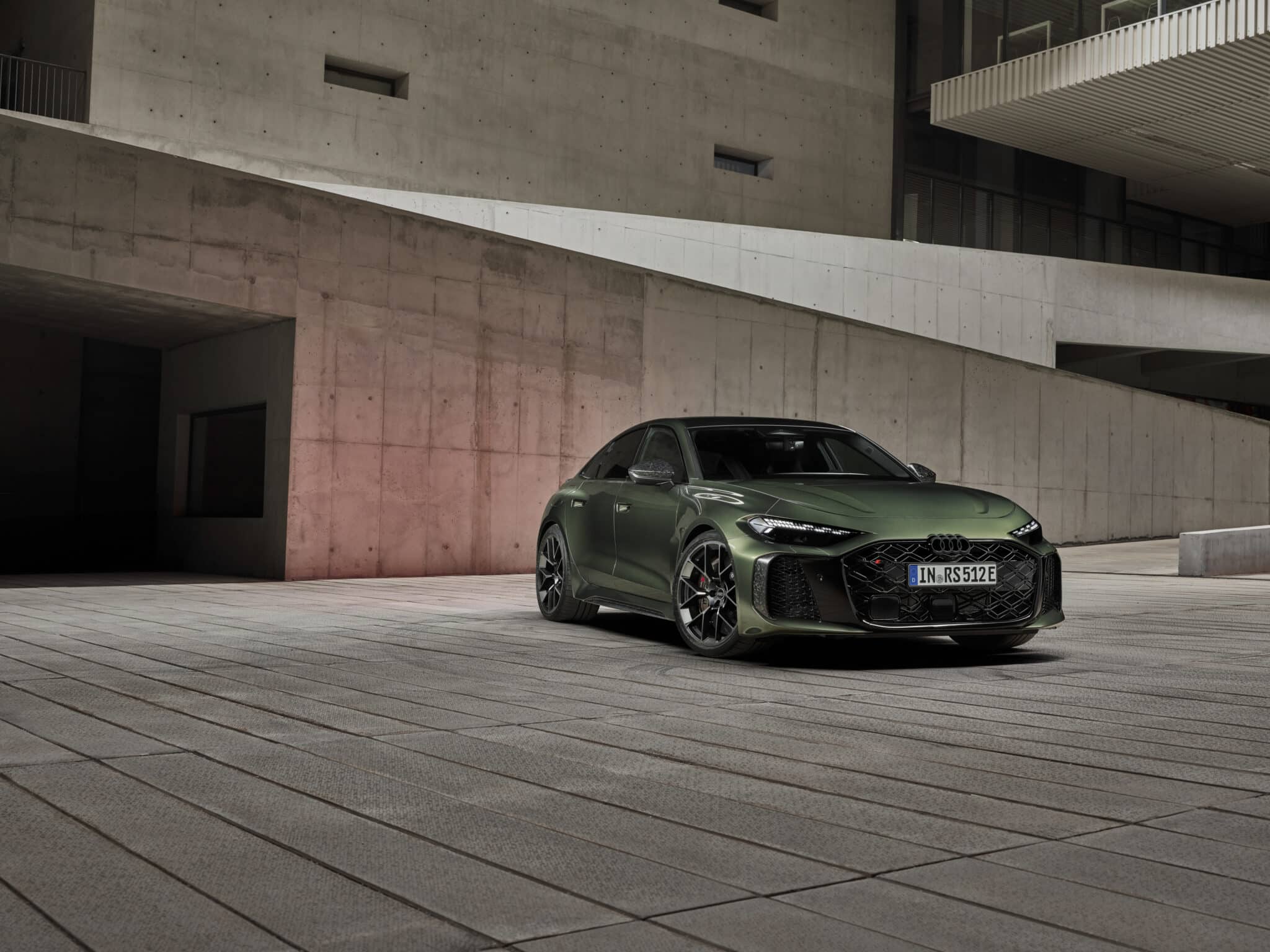
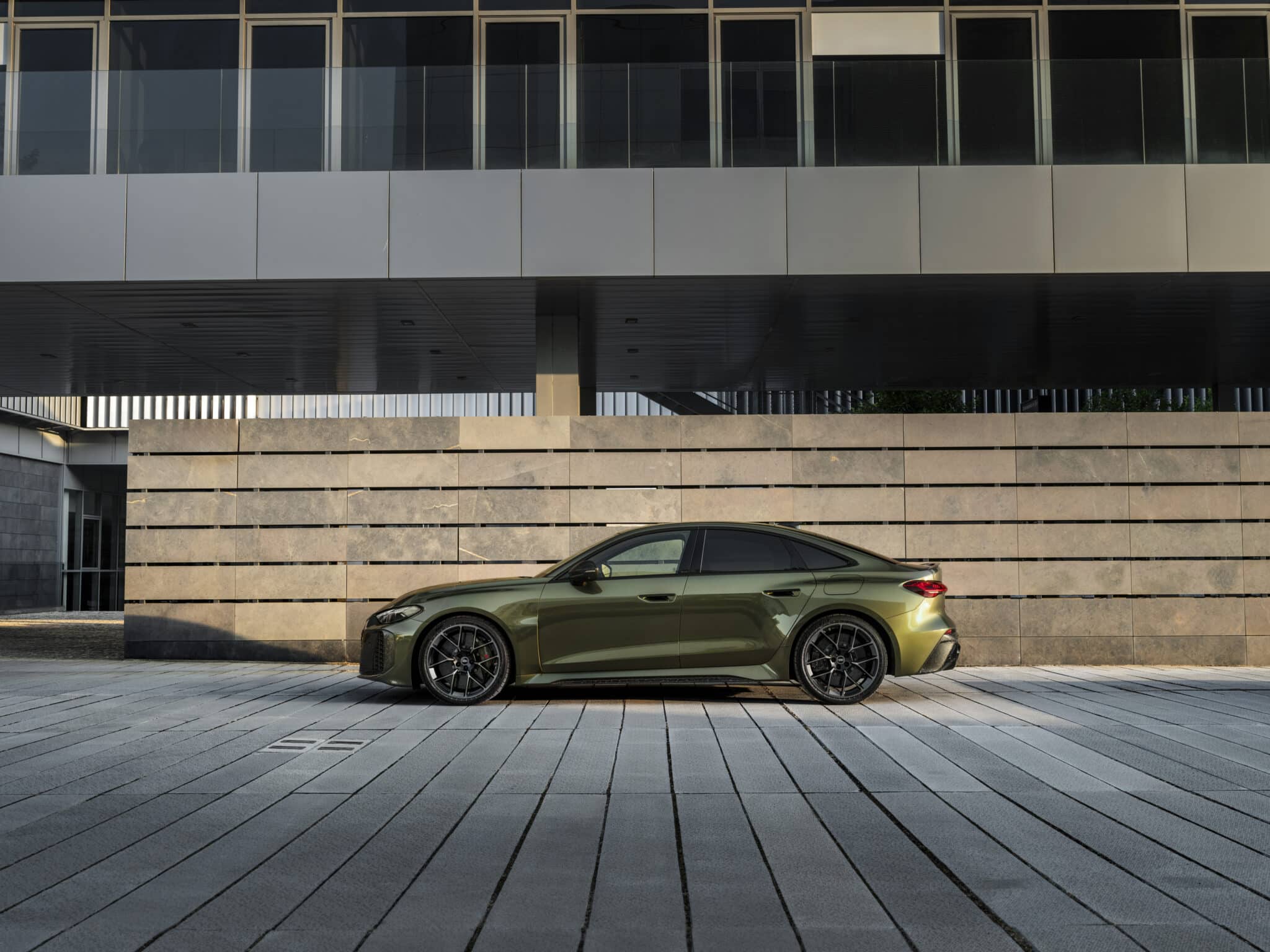
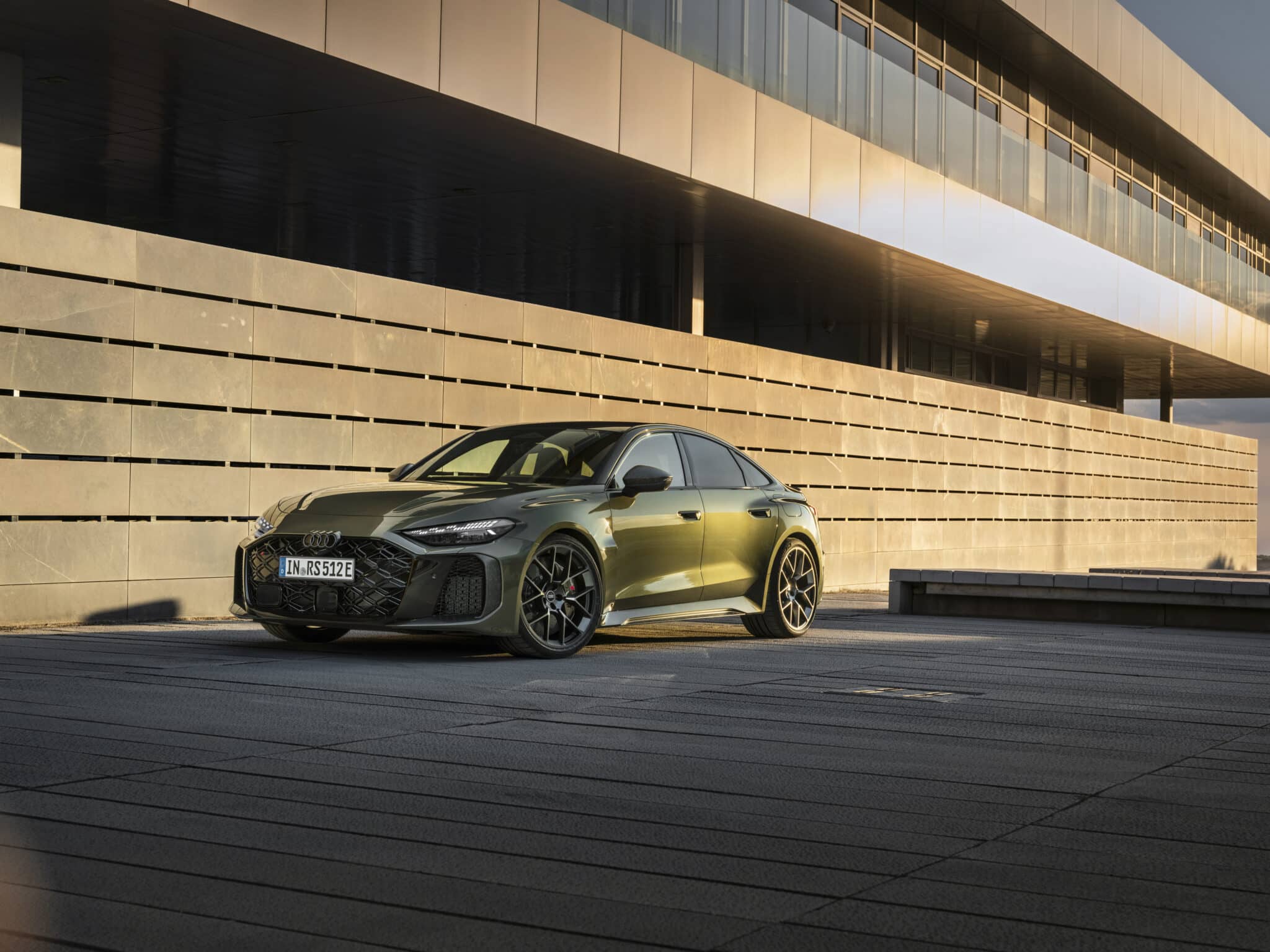
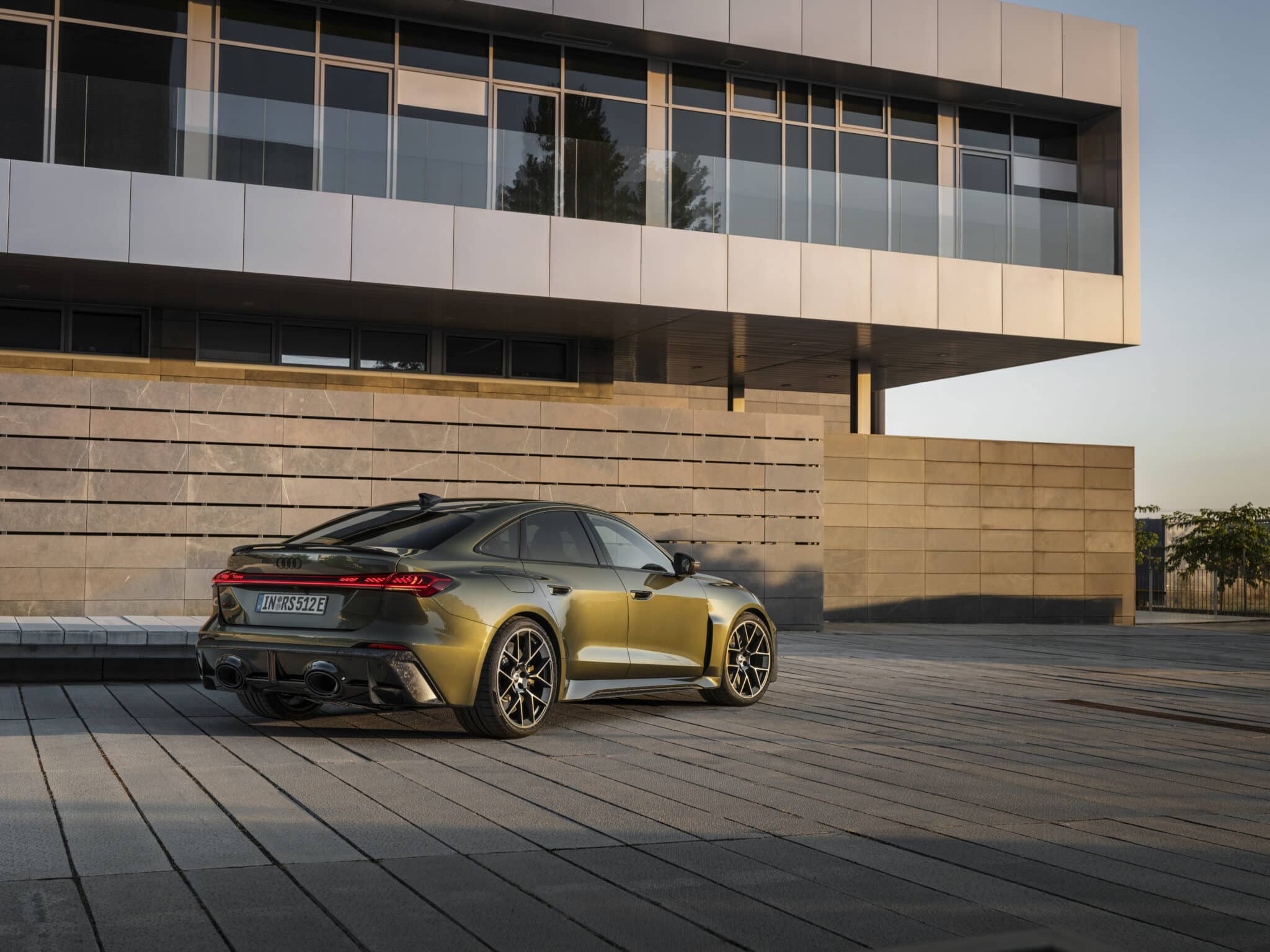
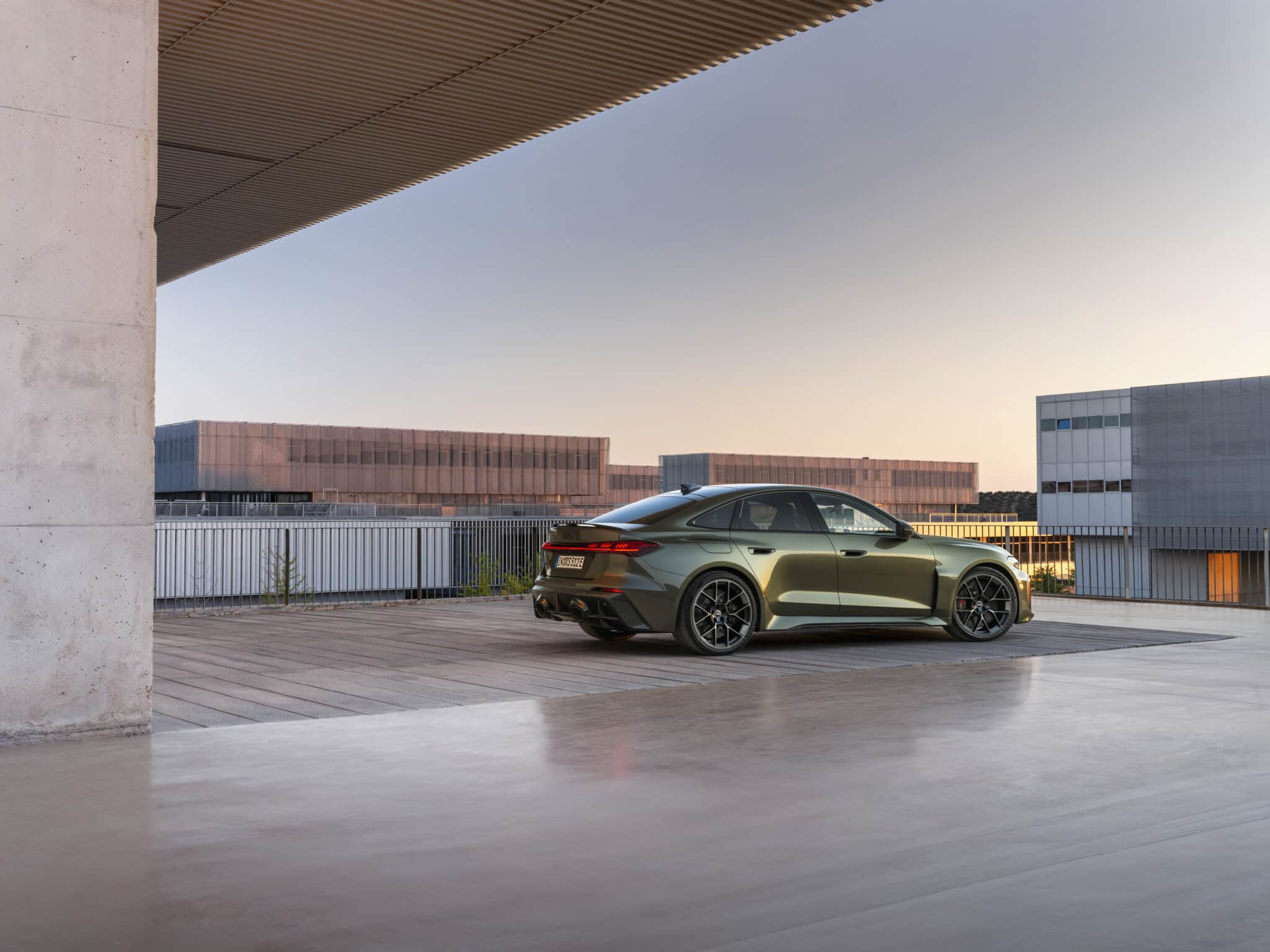
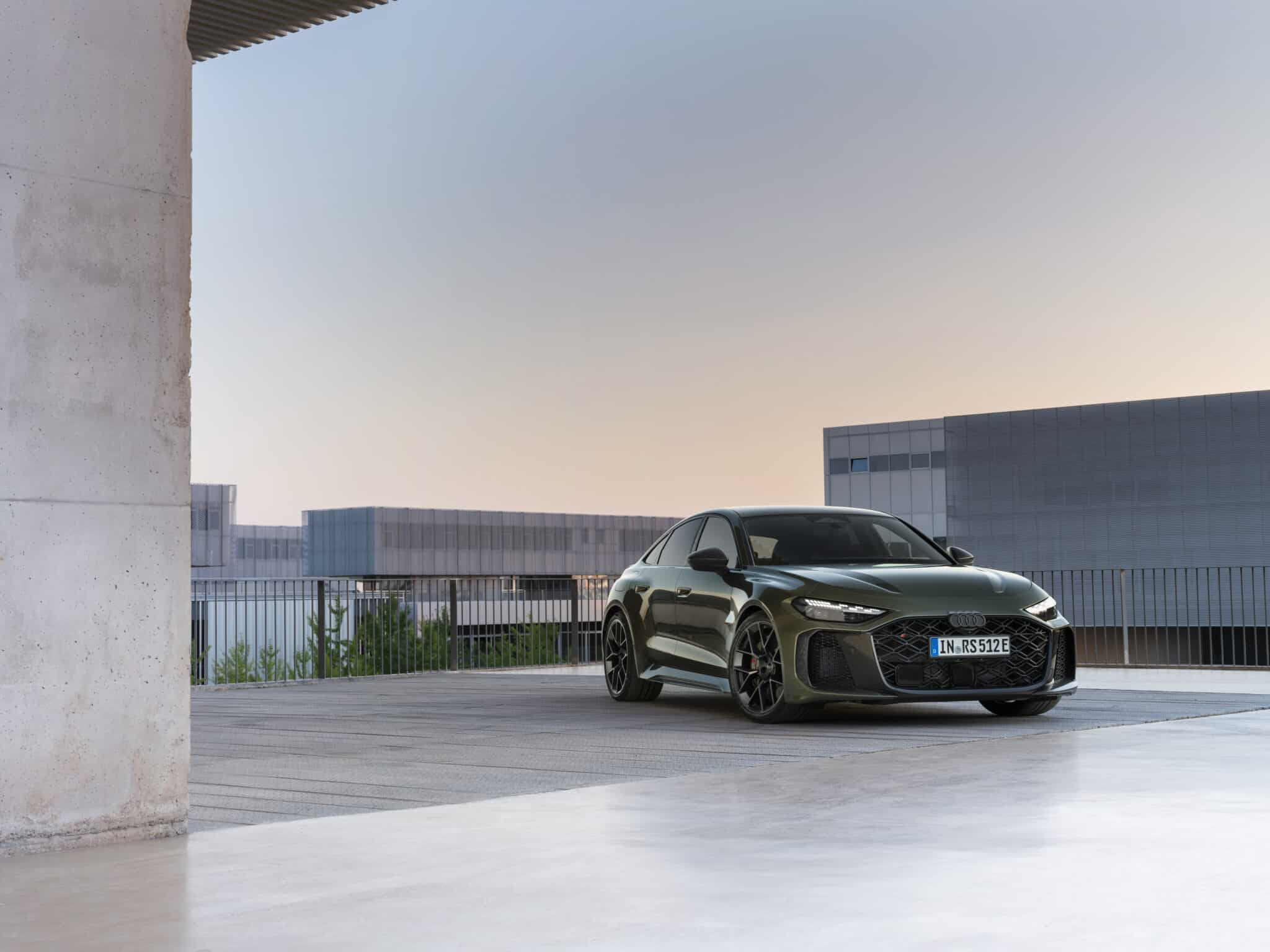
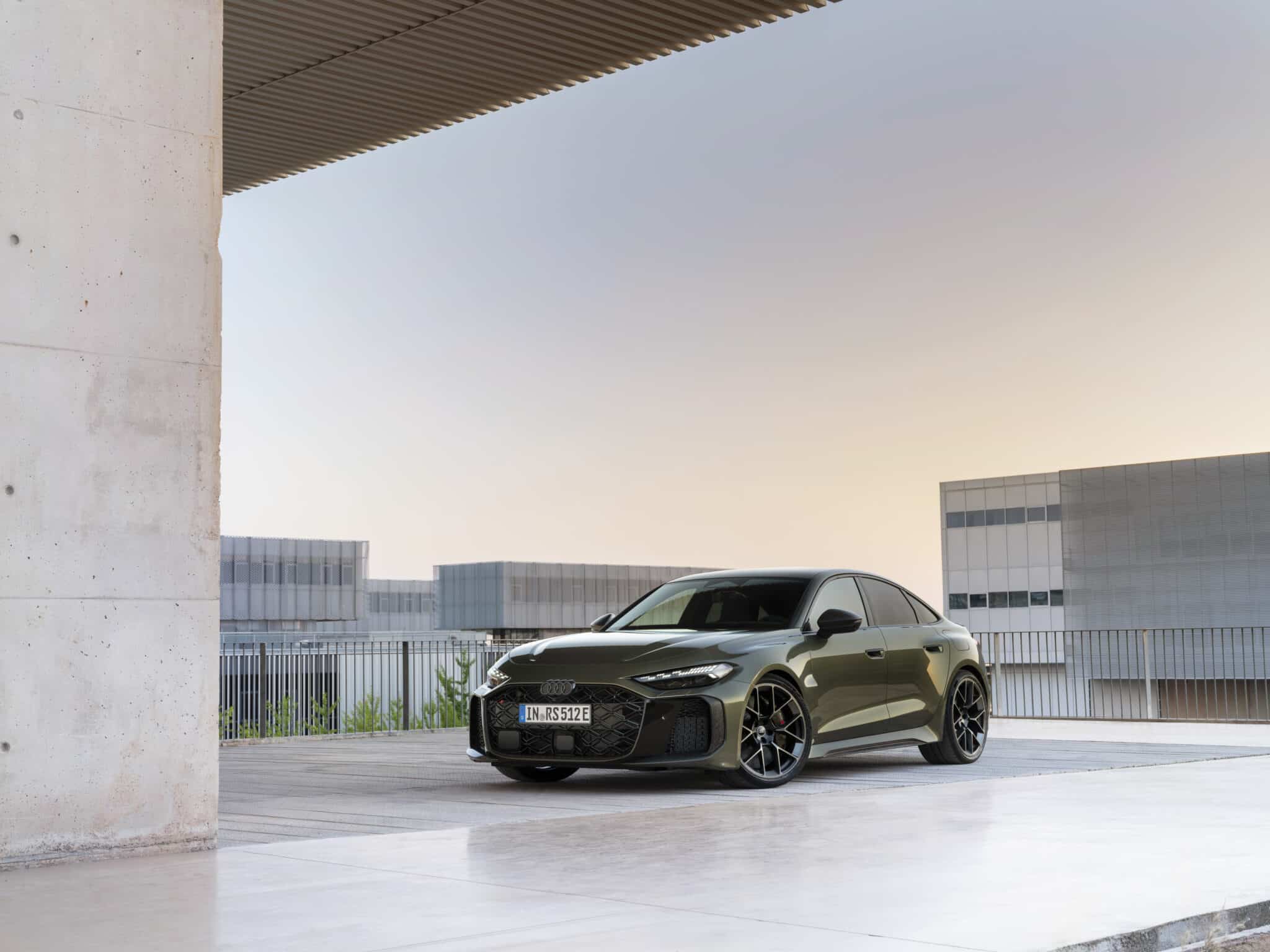
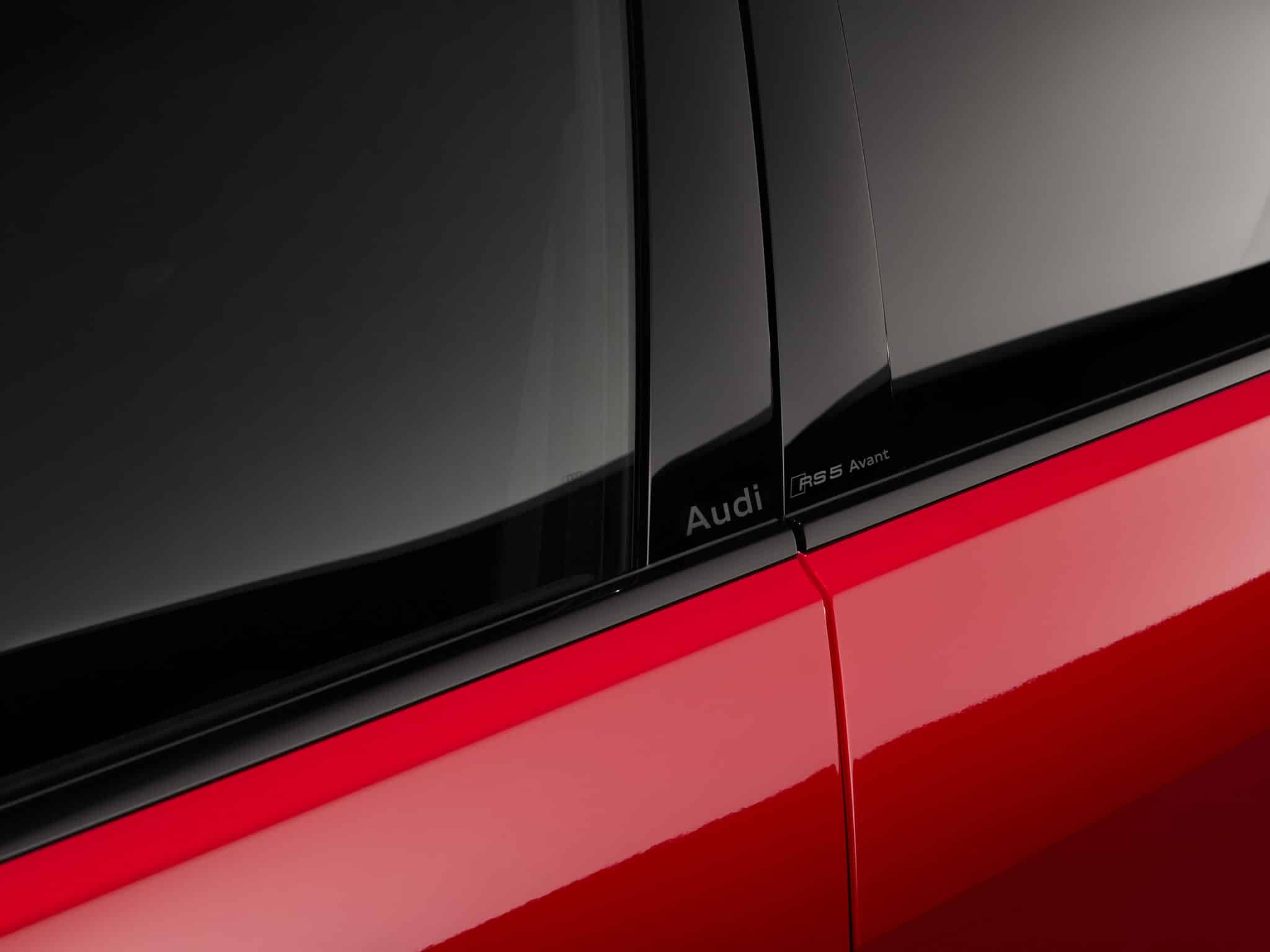
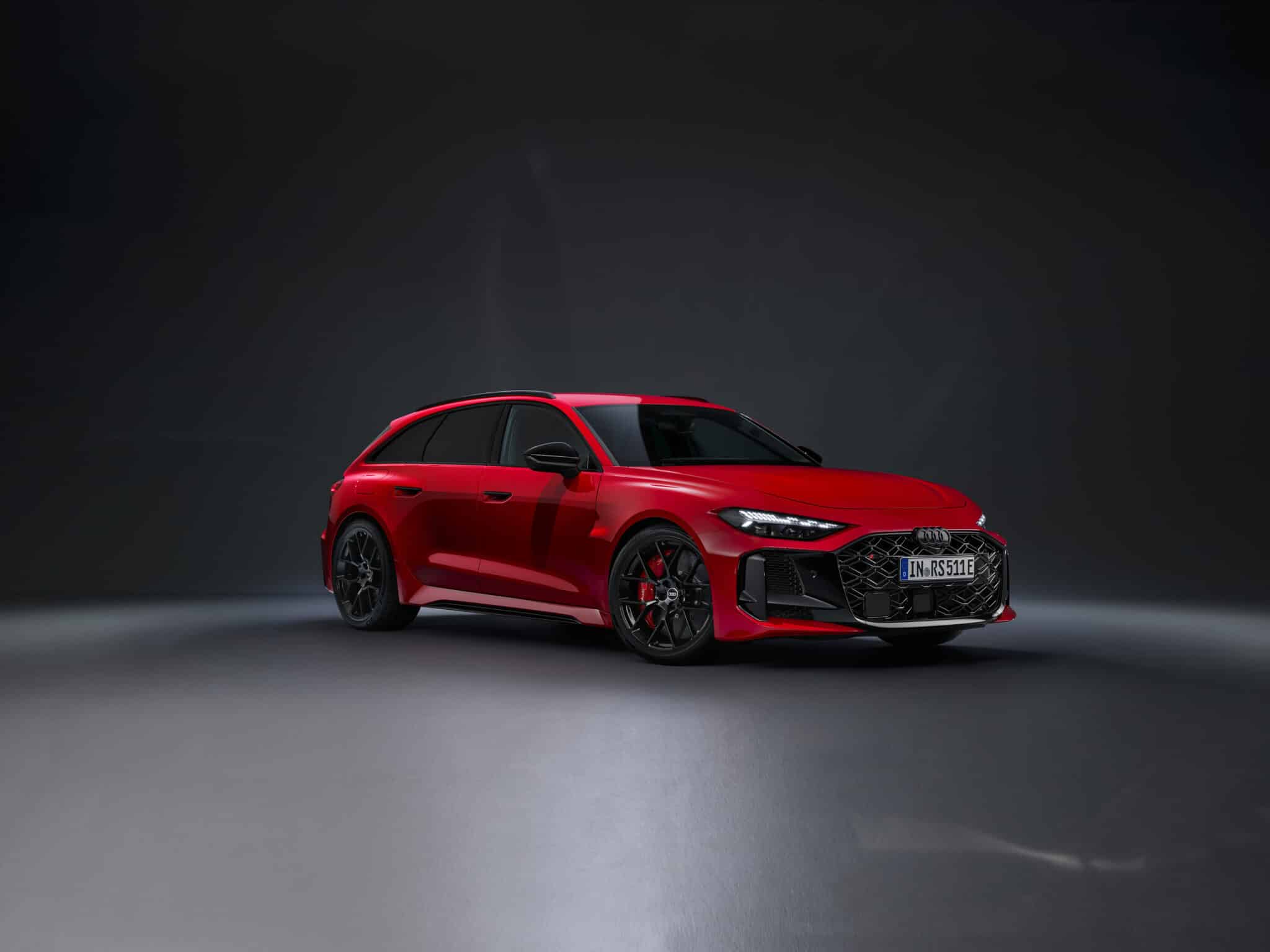
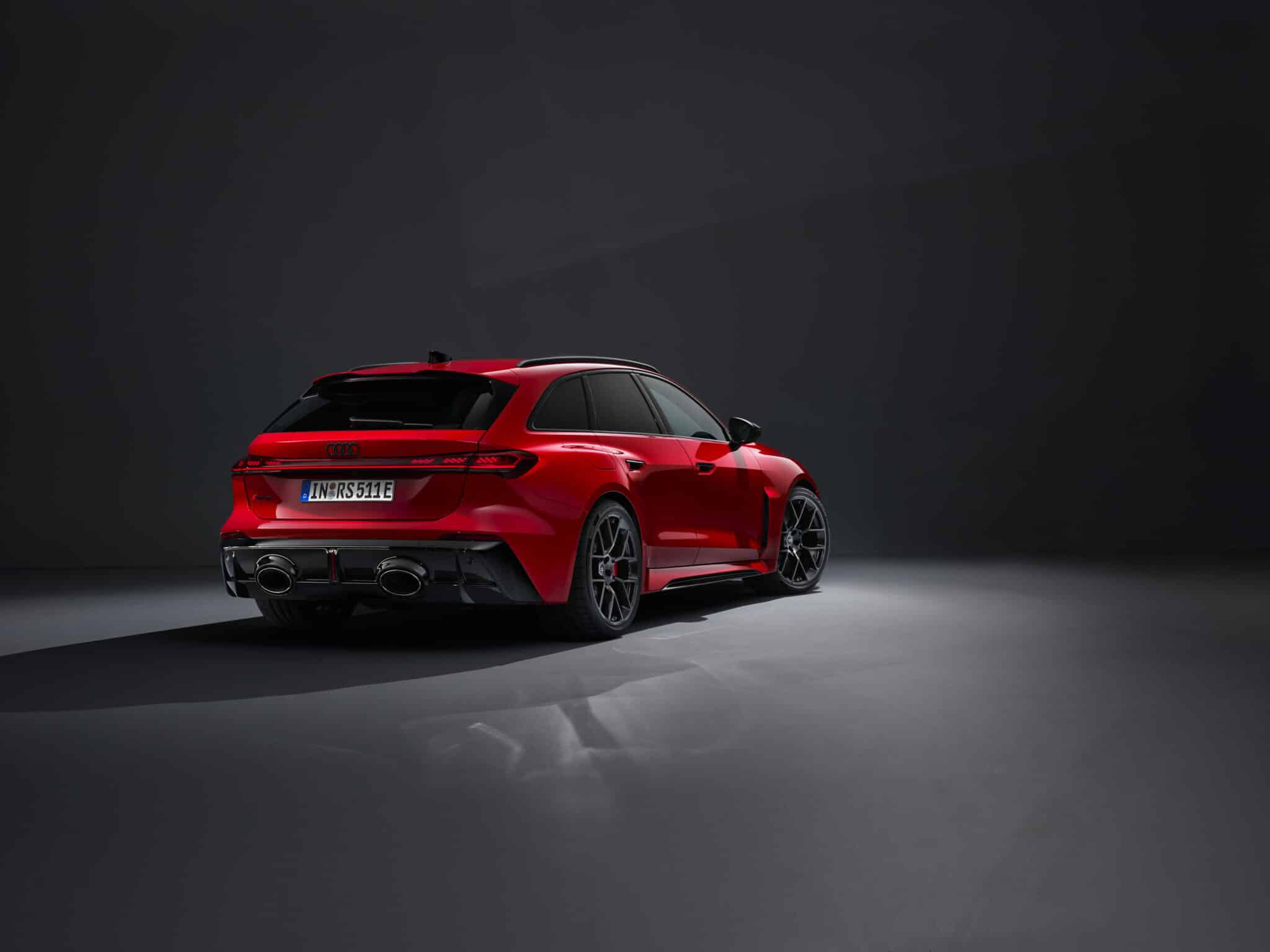
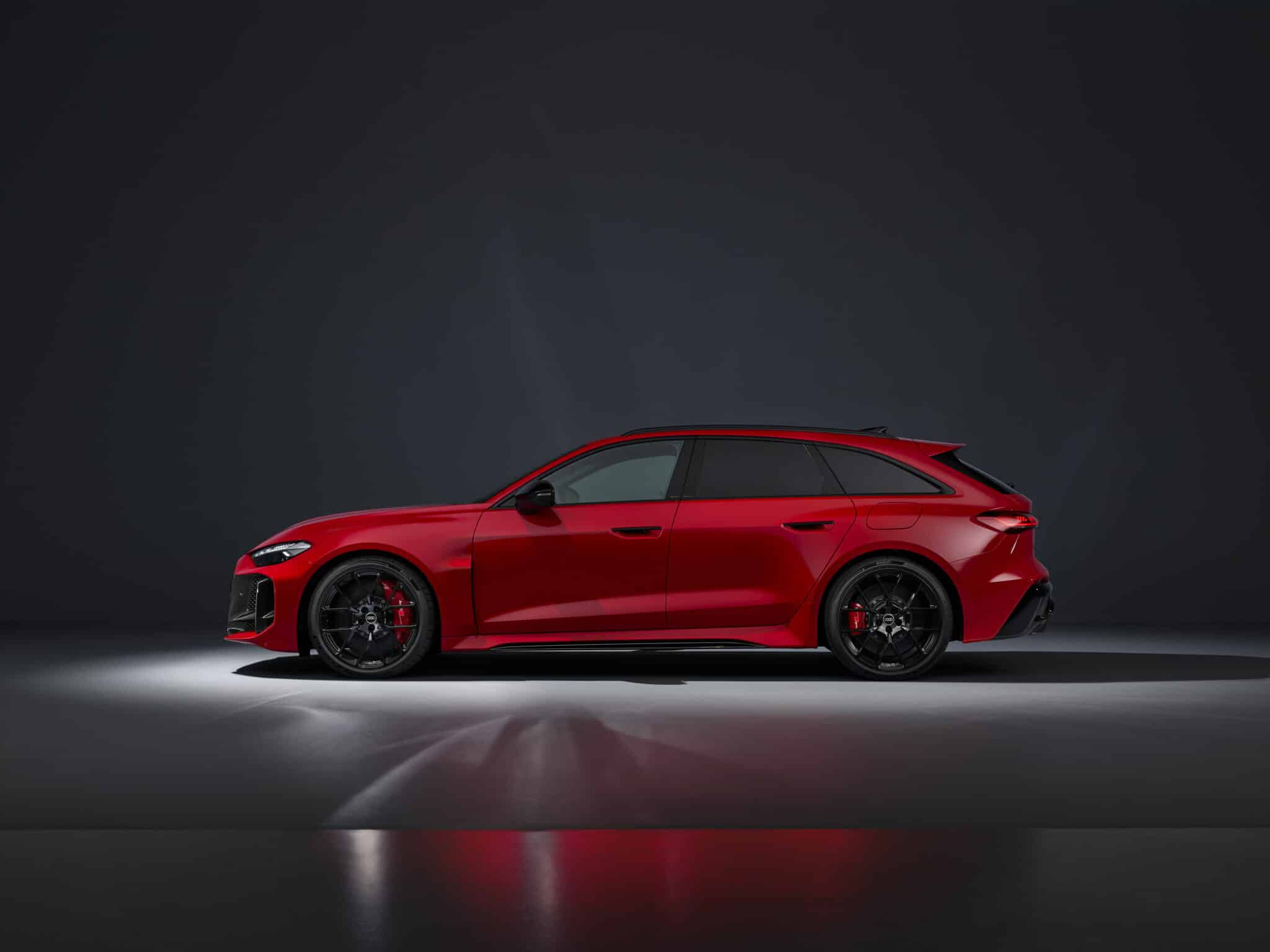
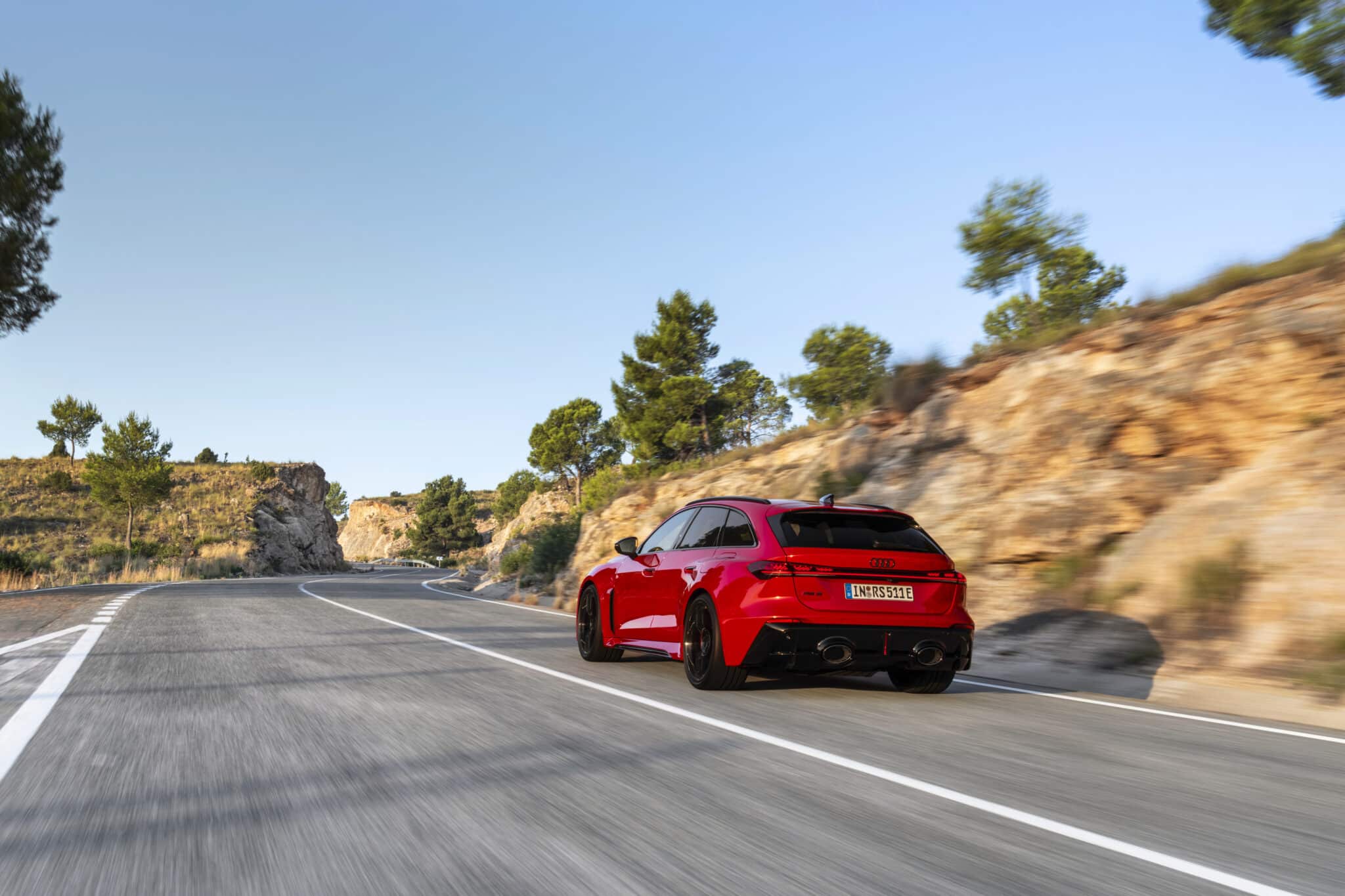
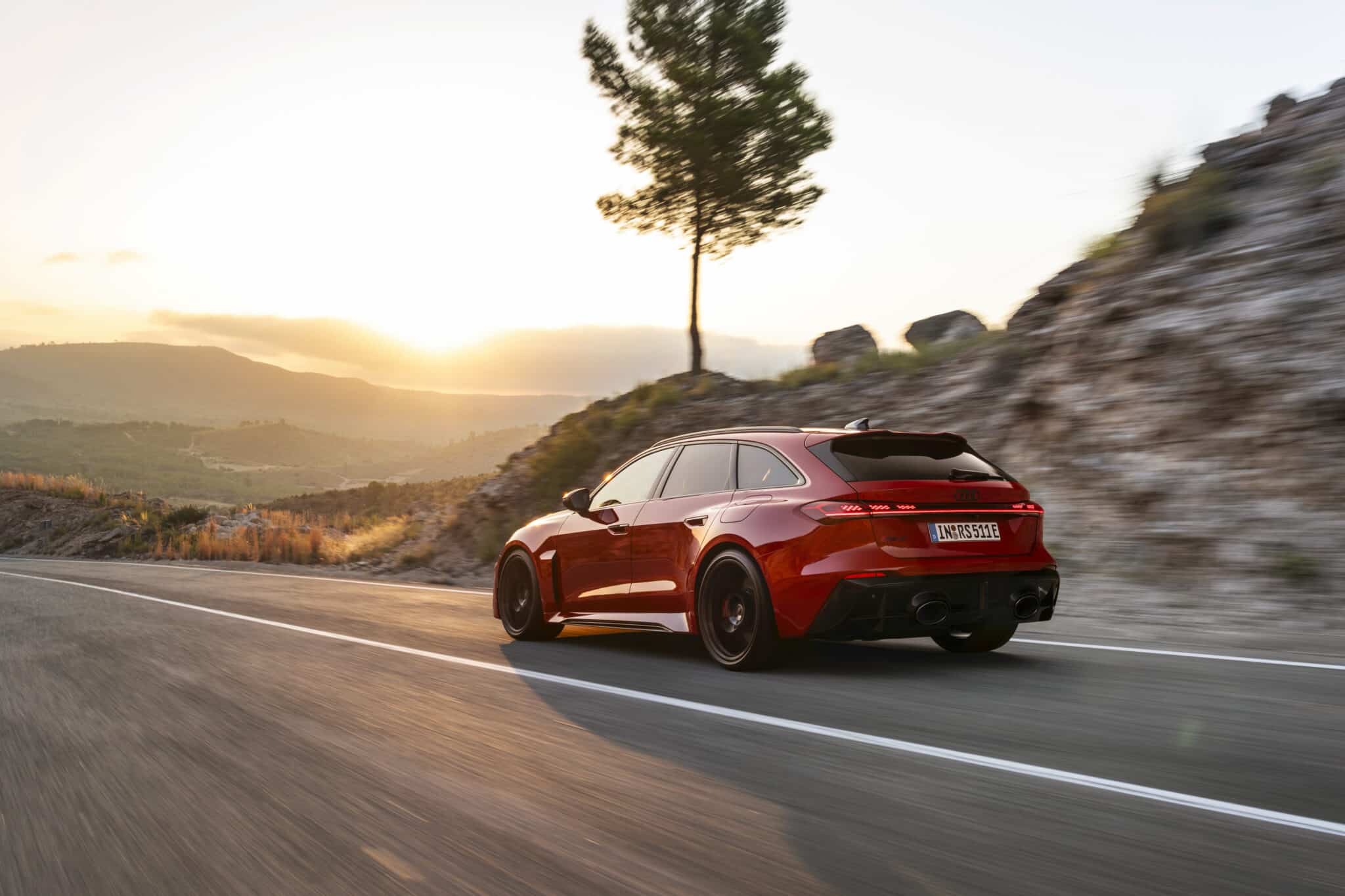
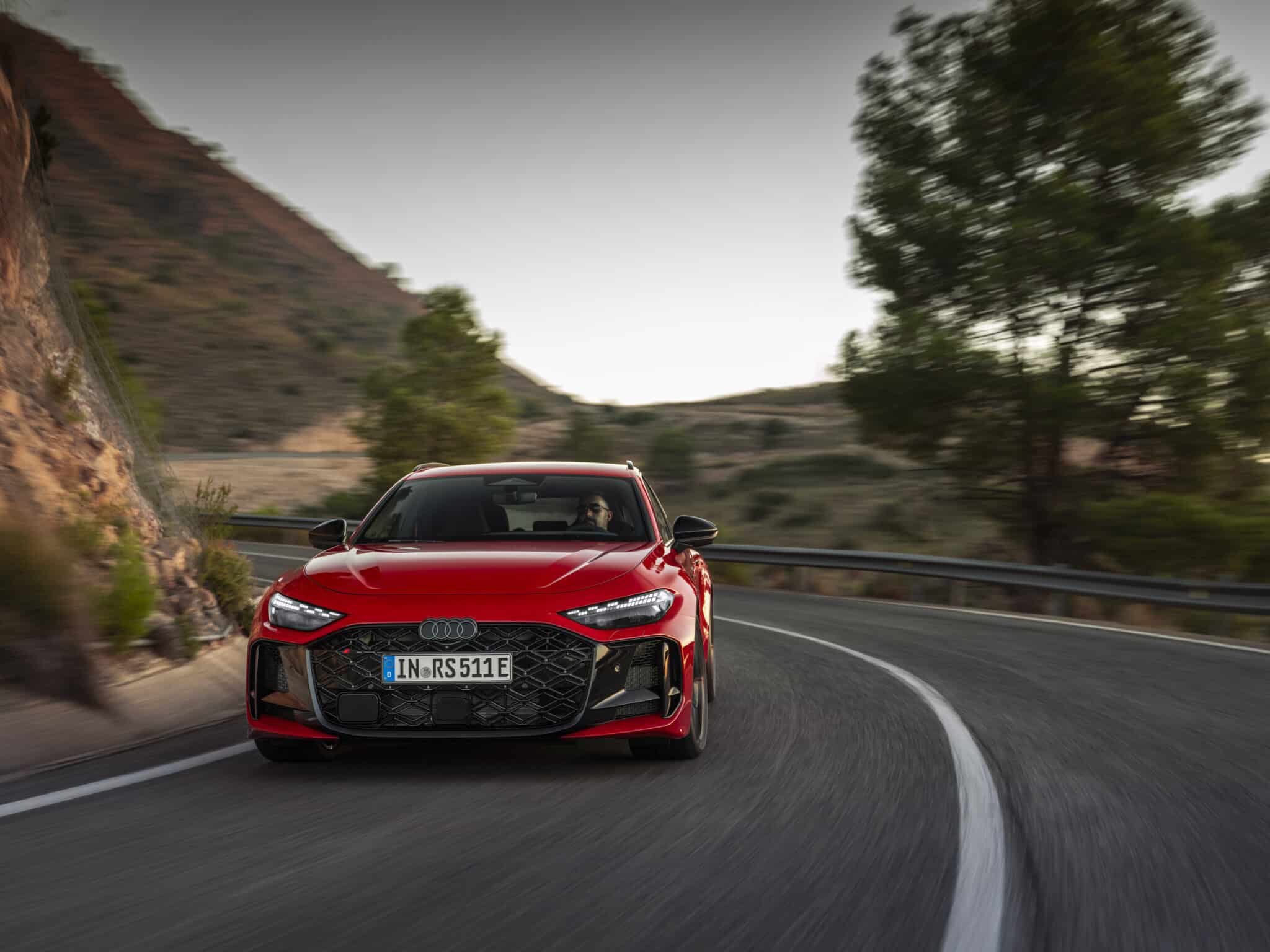
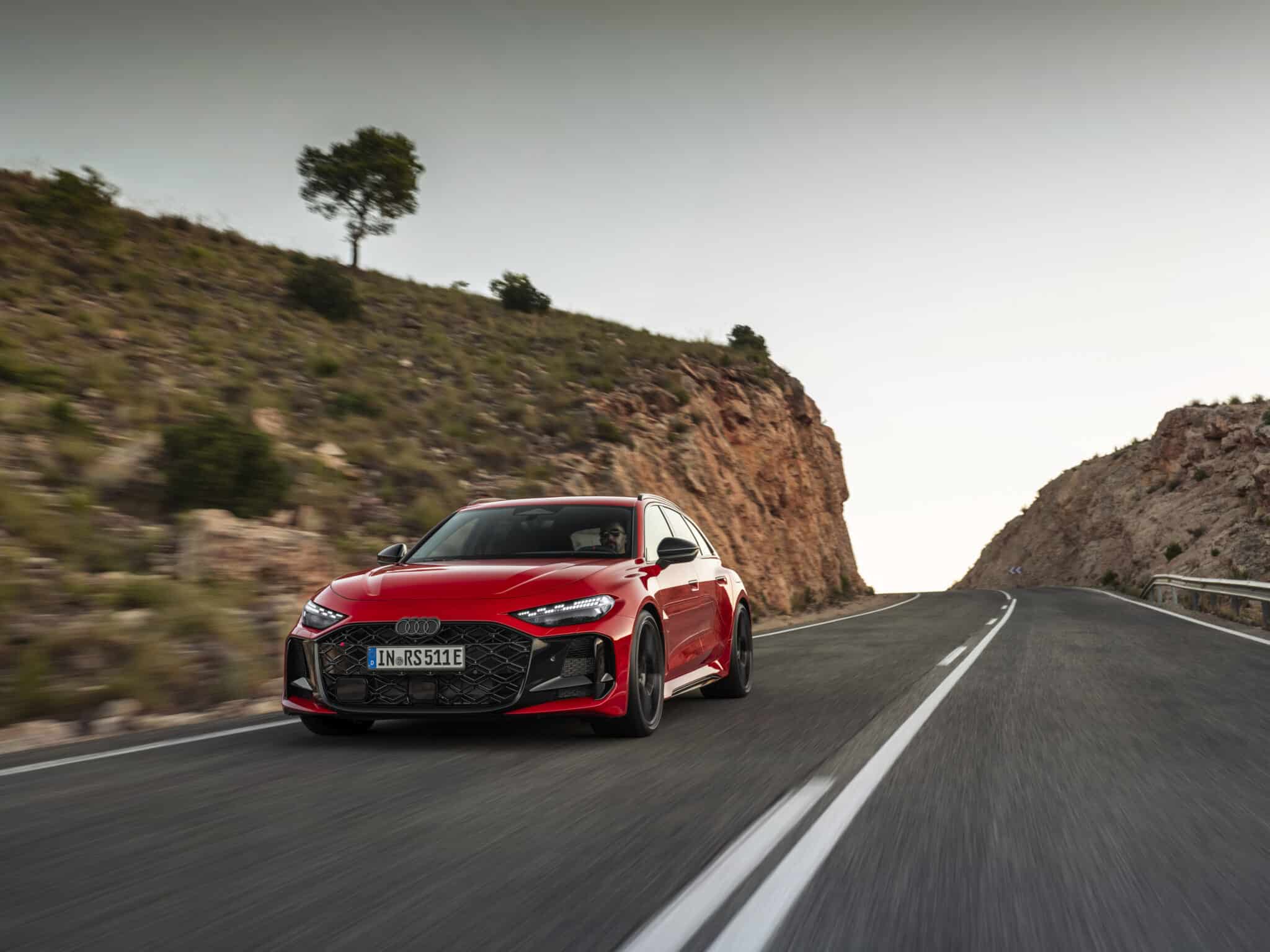
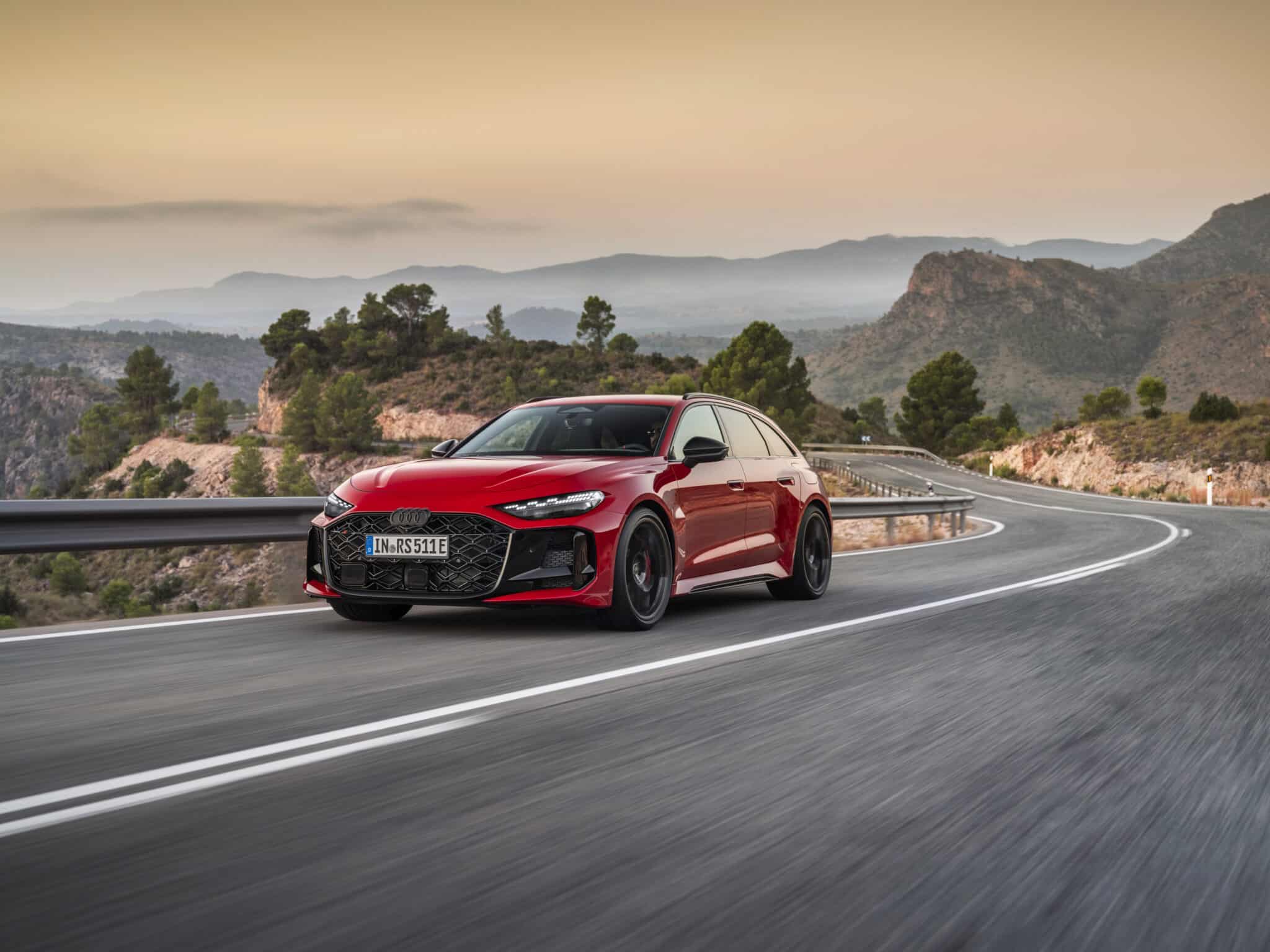
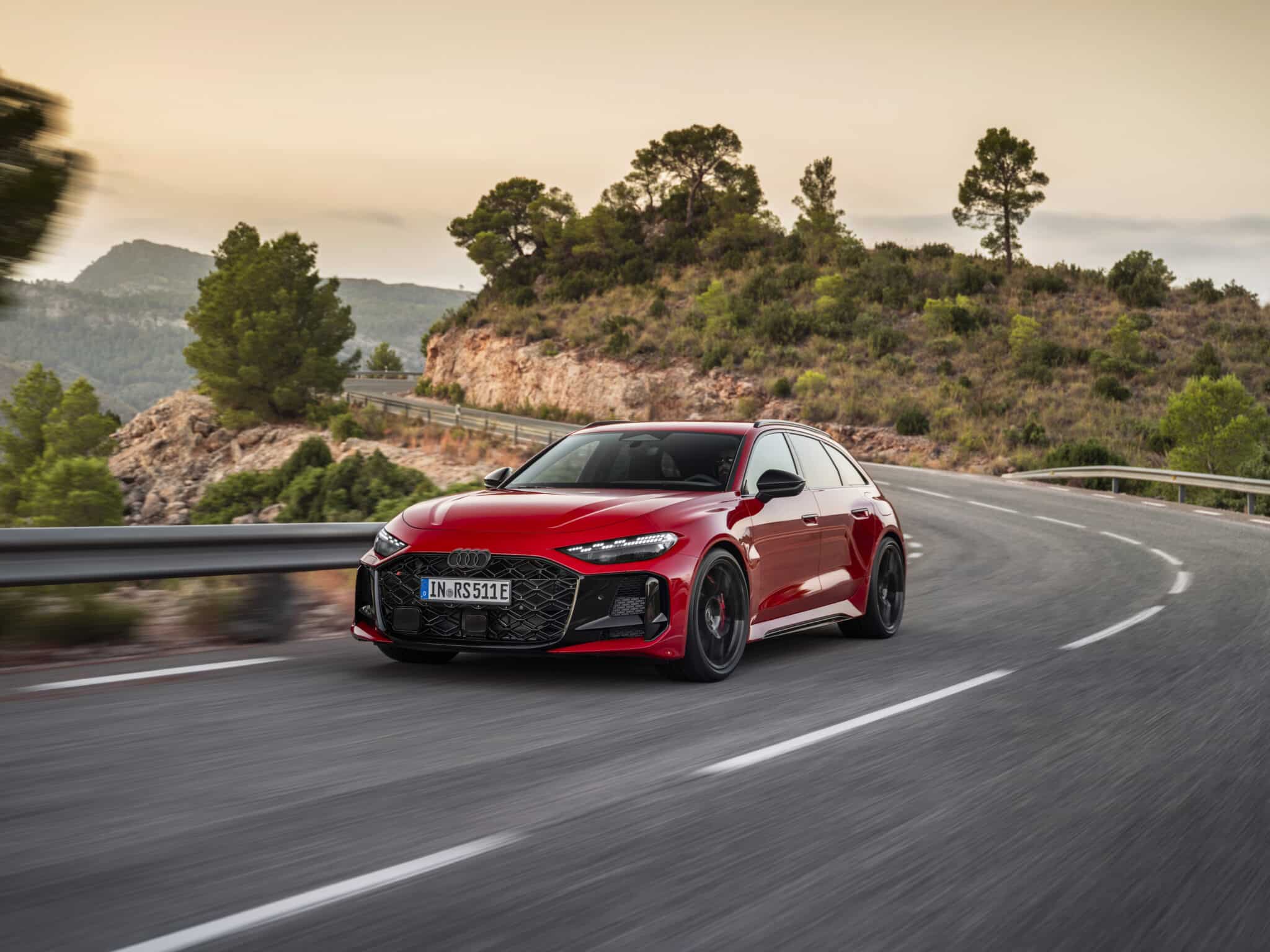
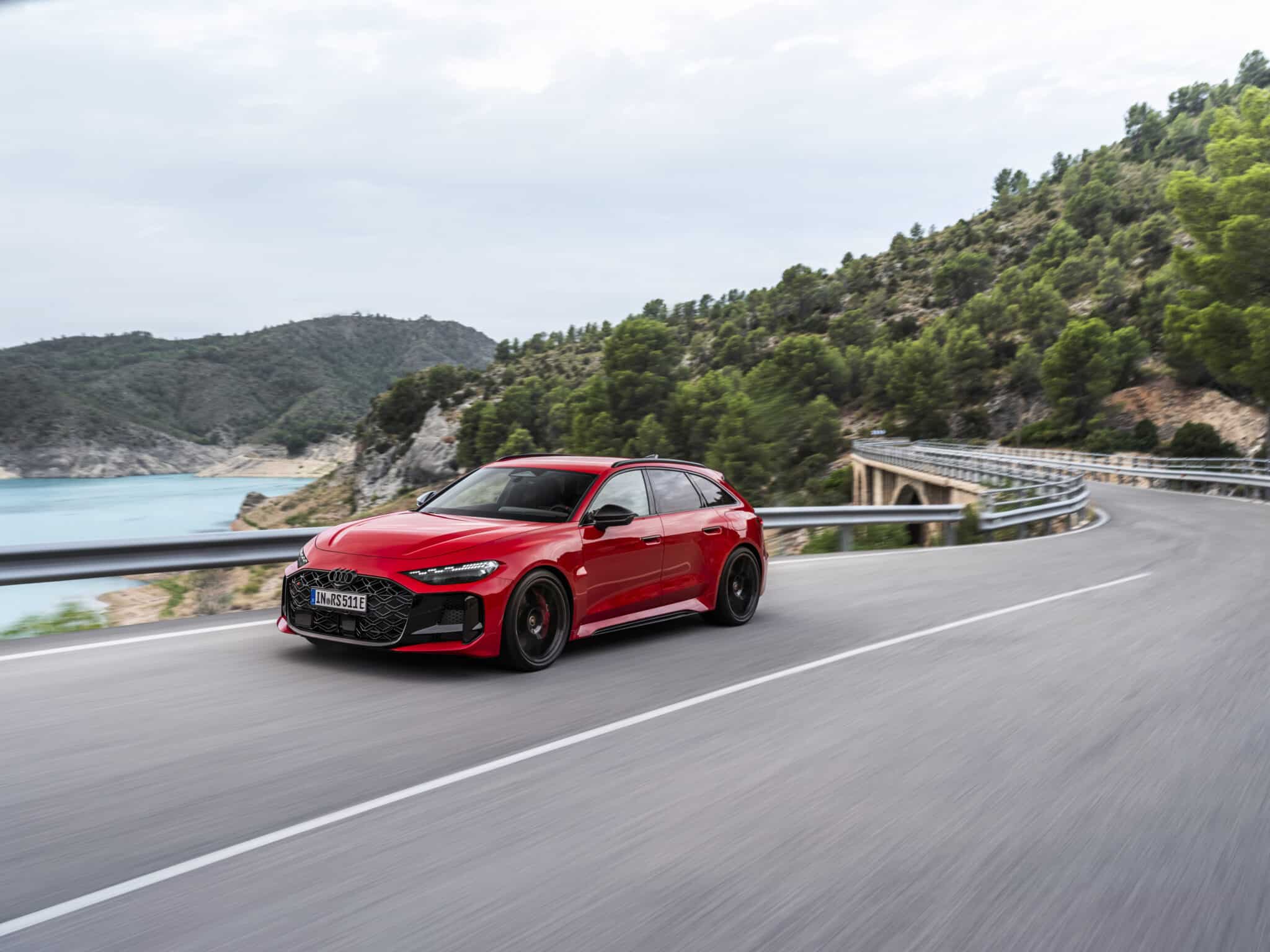
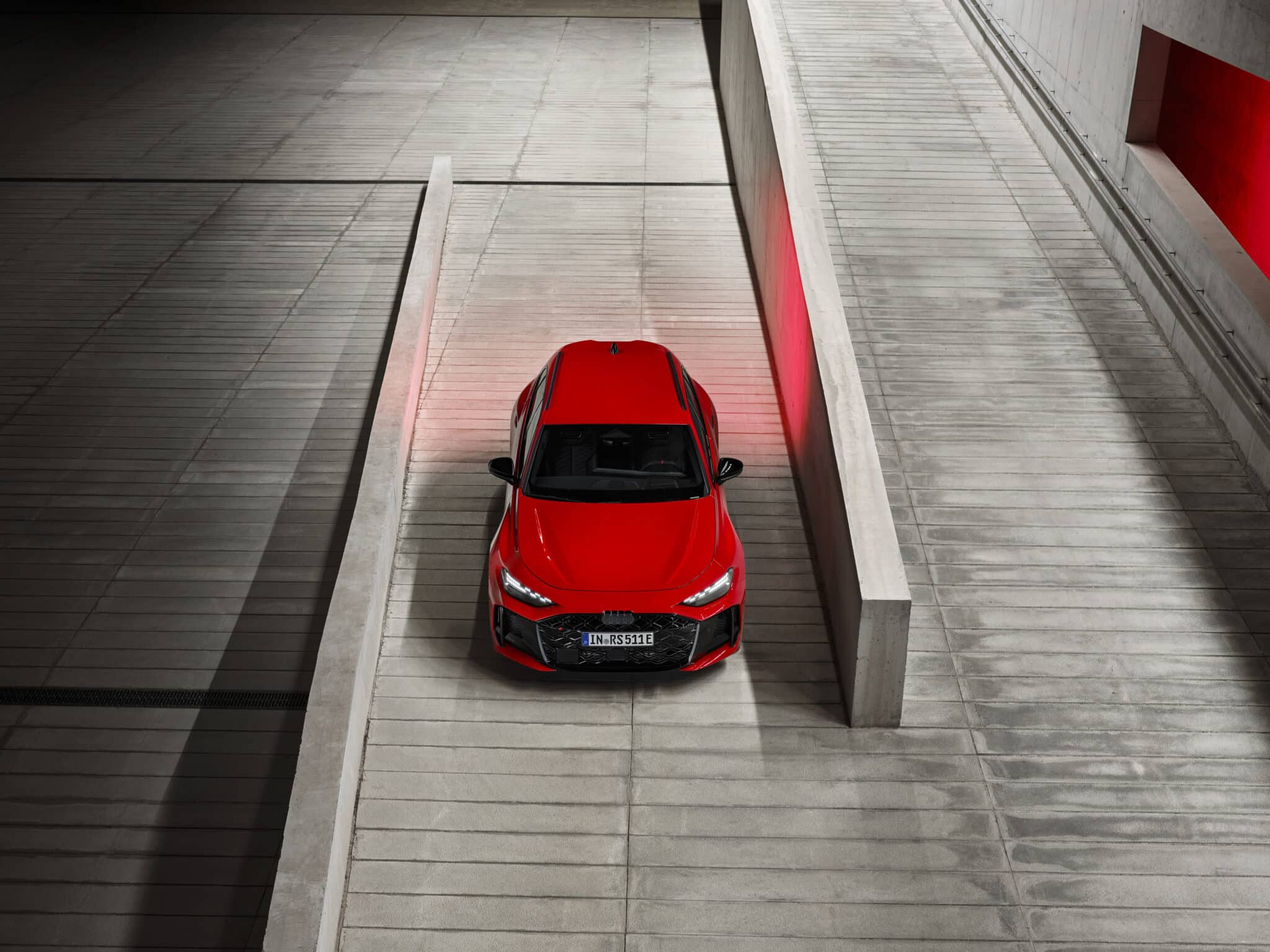
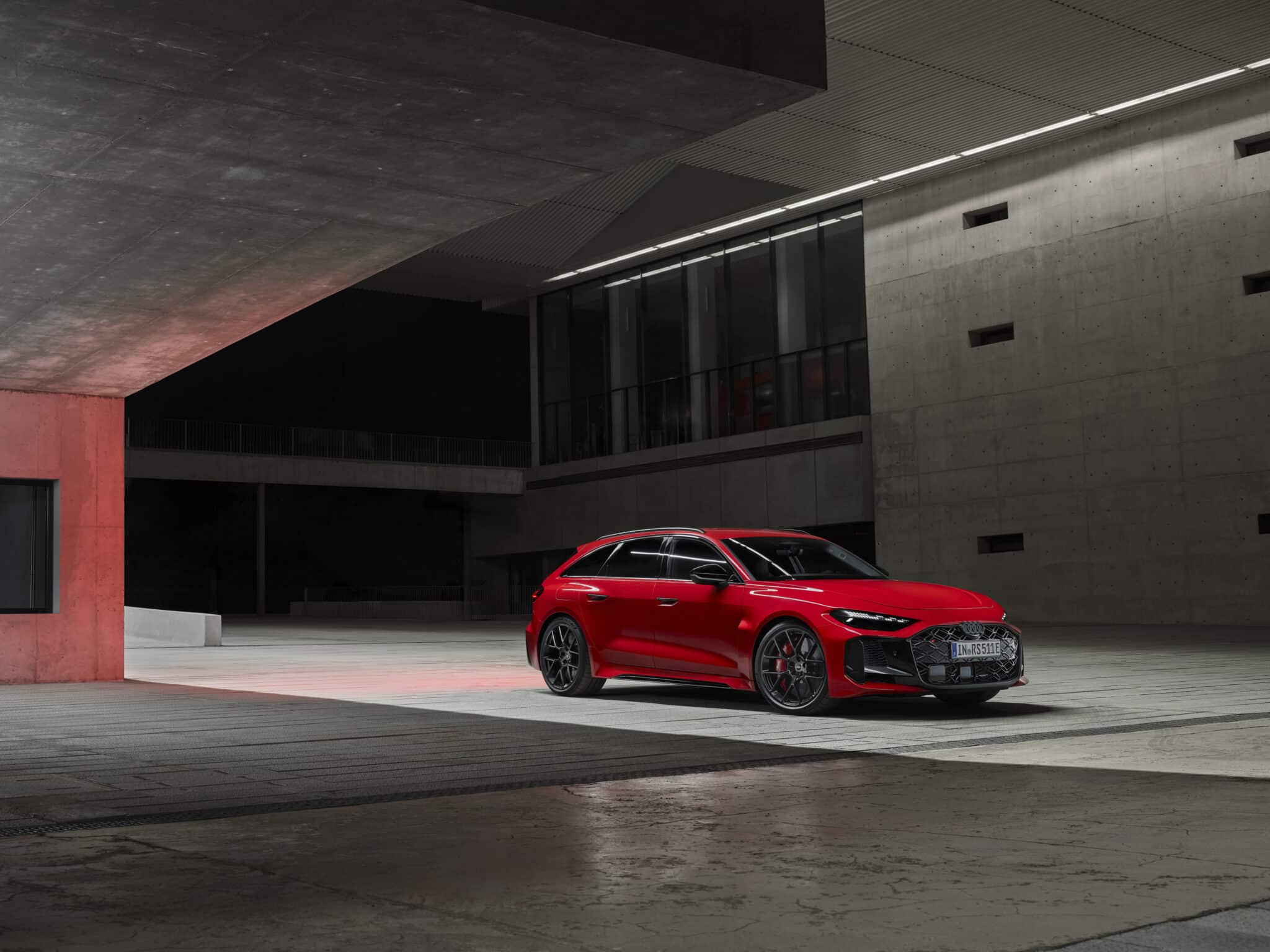
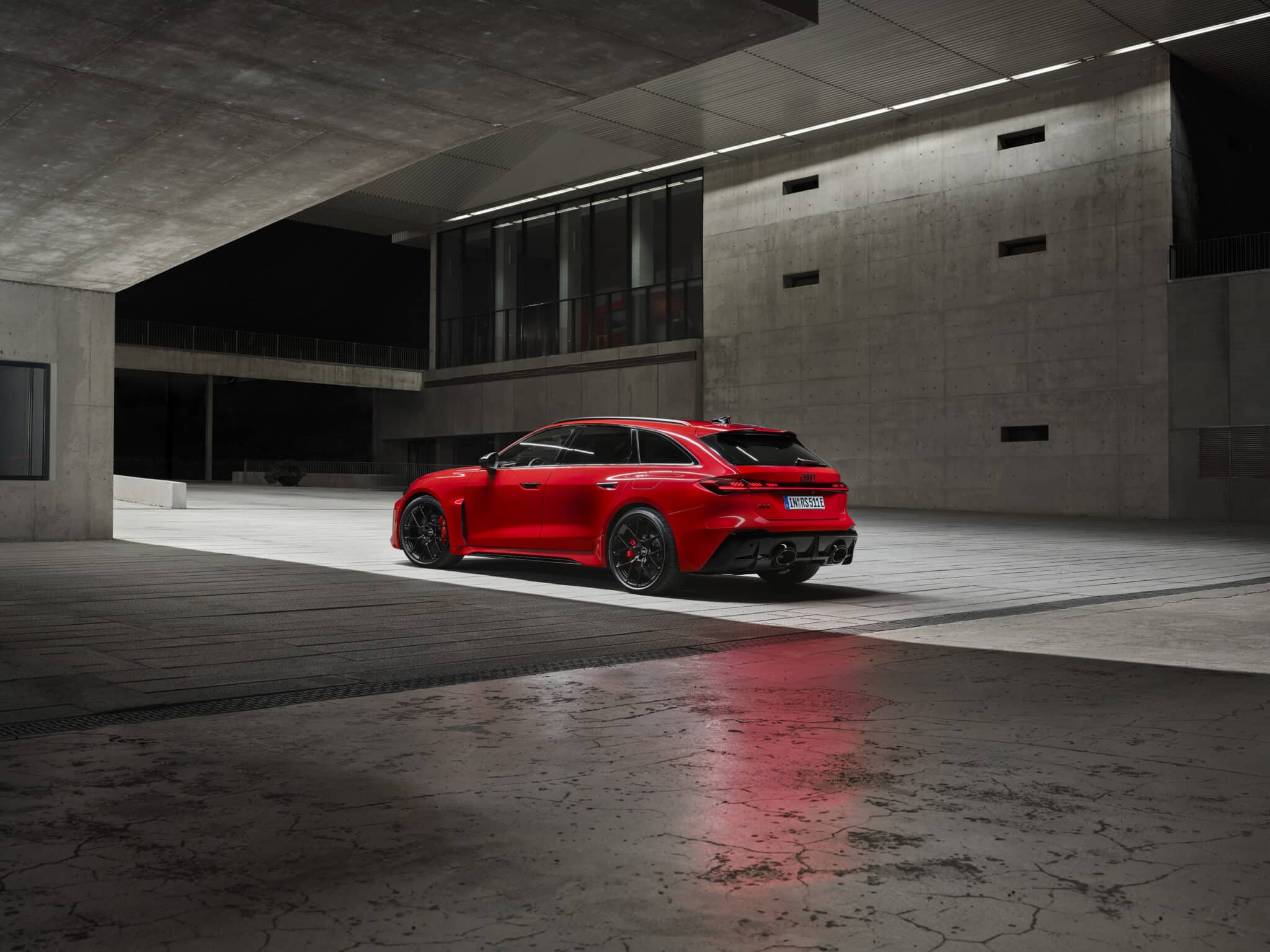
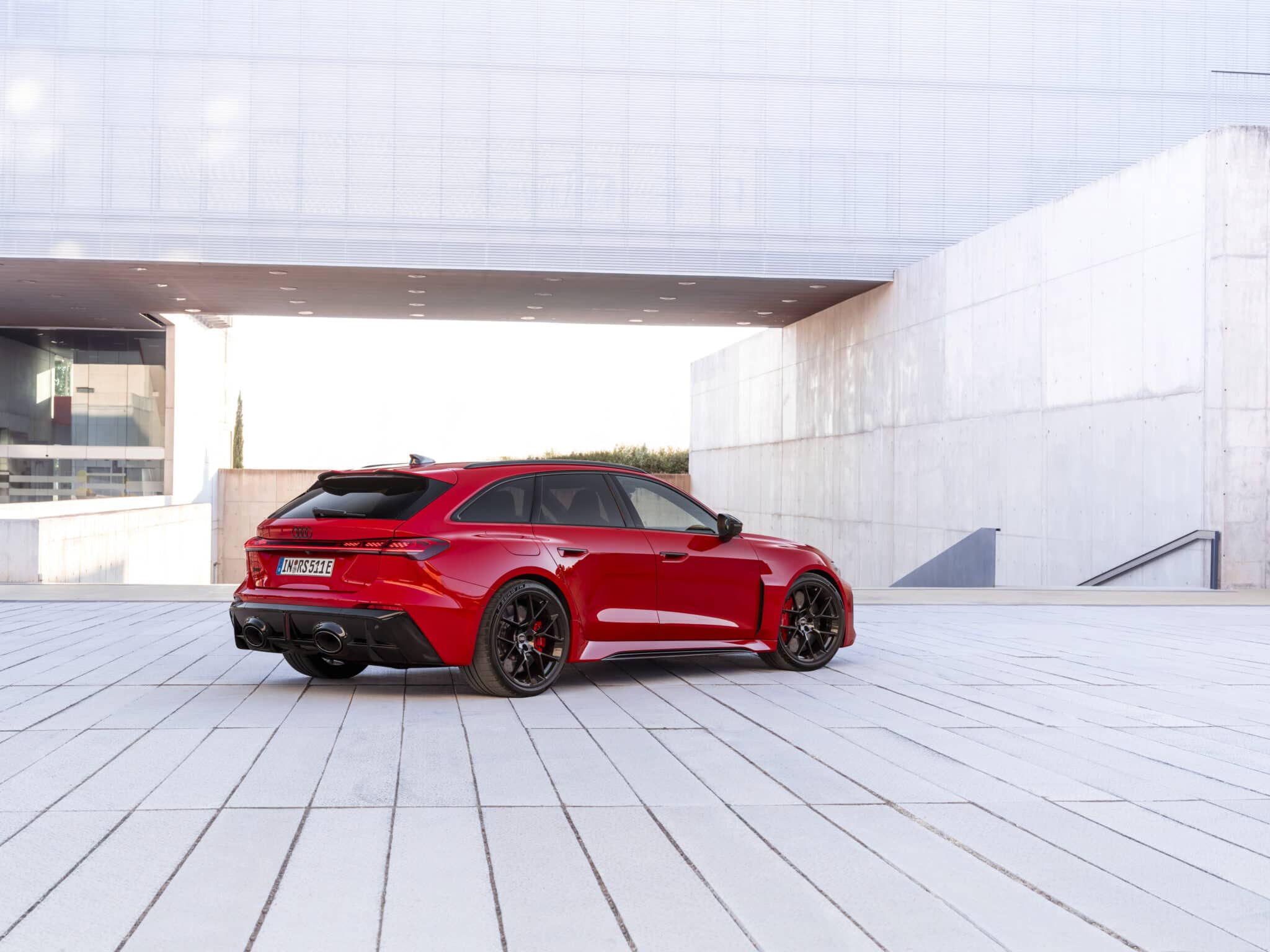
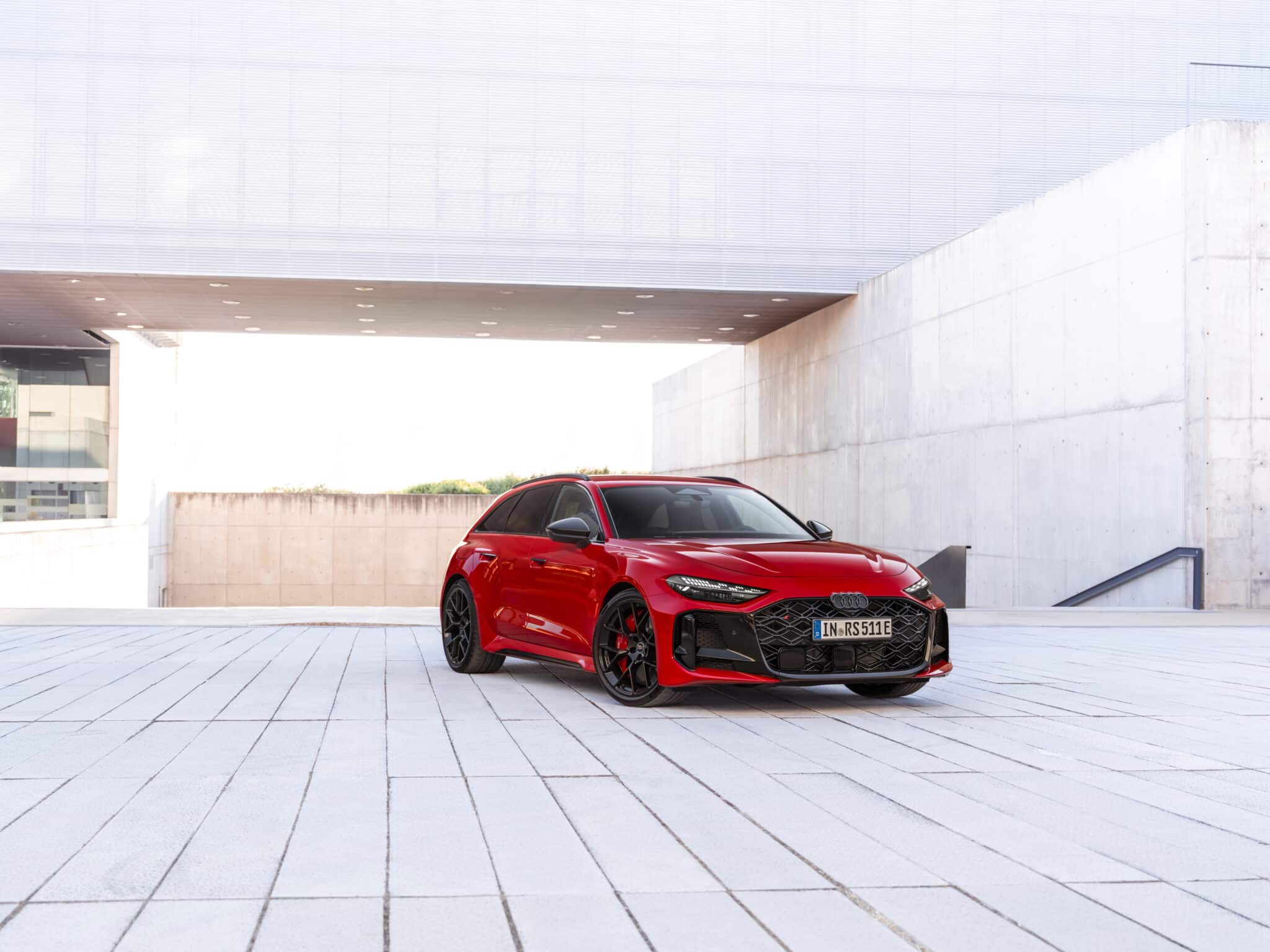
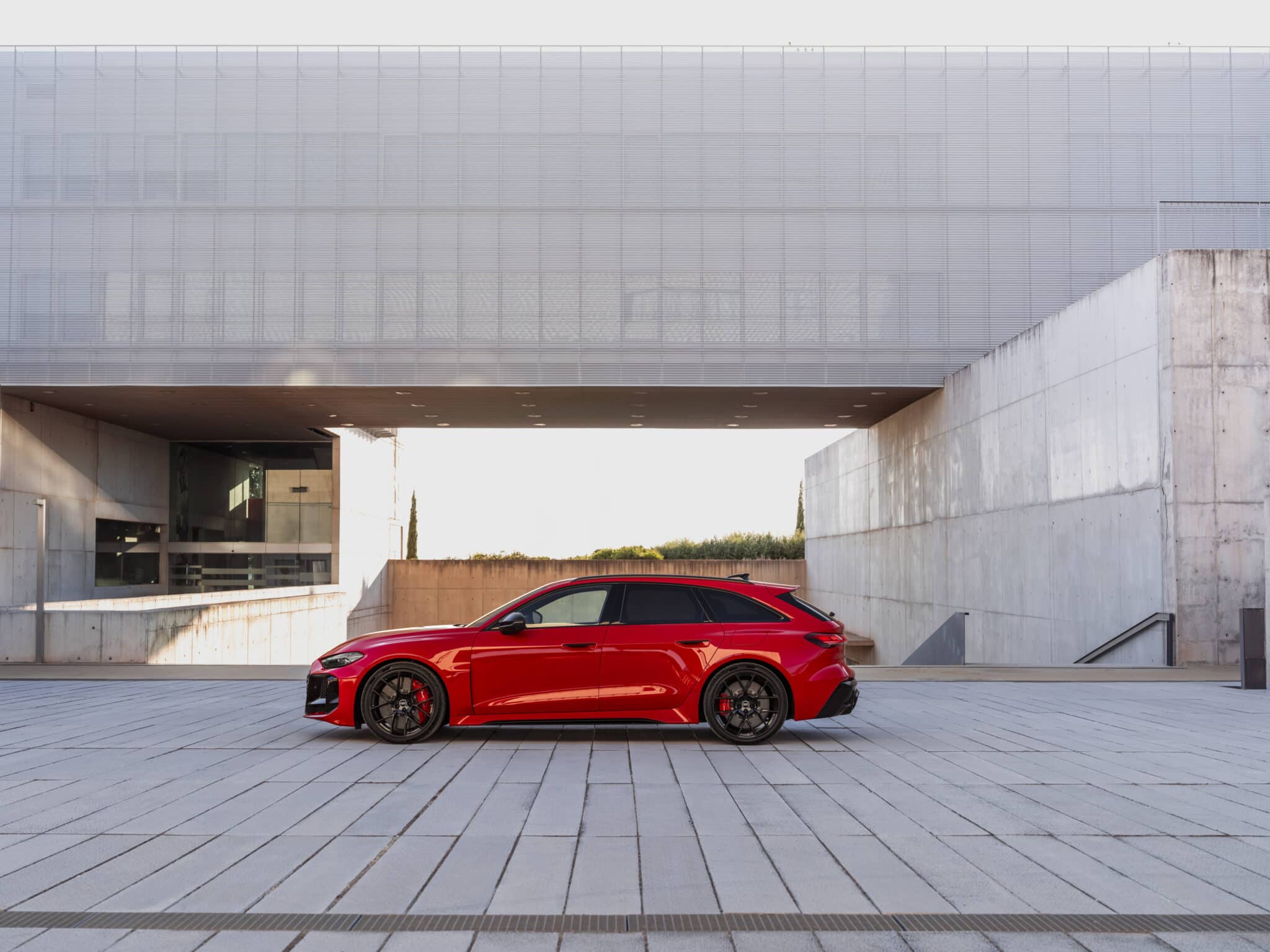
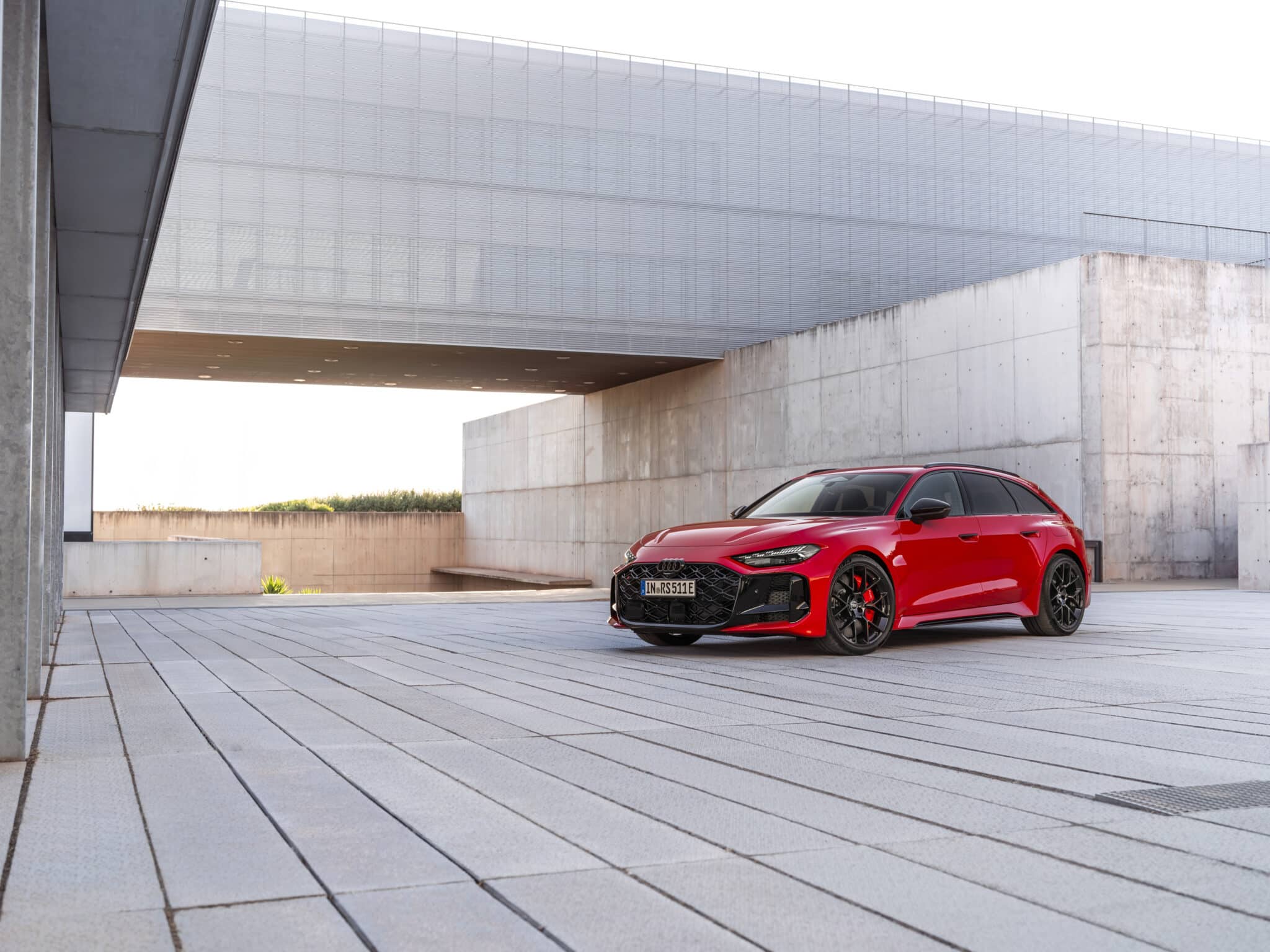
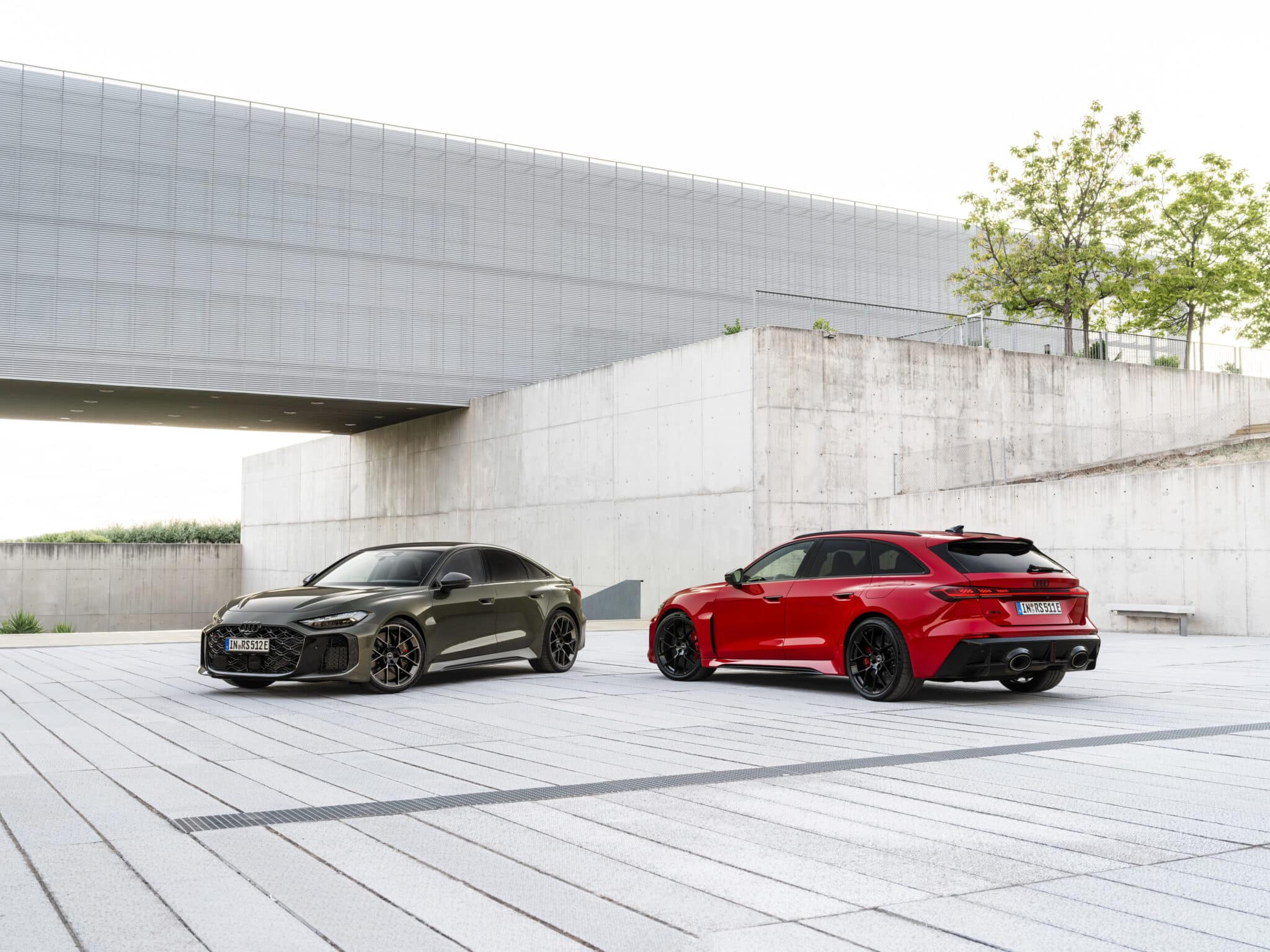
Visually, the RS 5 sits around 90mm wider than the standard A5, with flared arches, a three-dimensional honeycomb Singleframe grille, and functional air curtains.
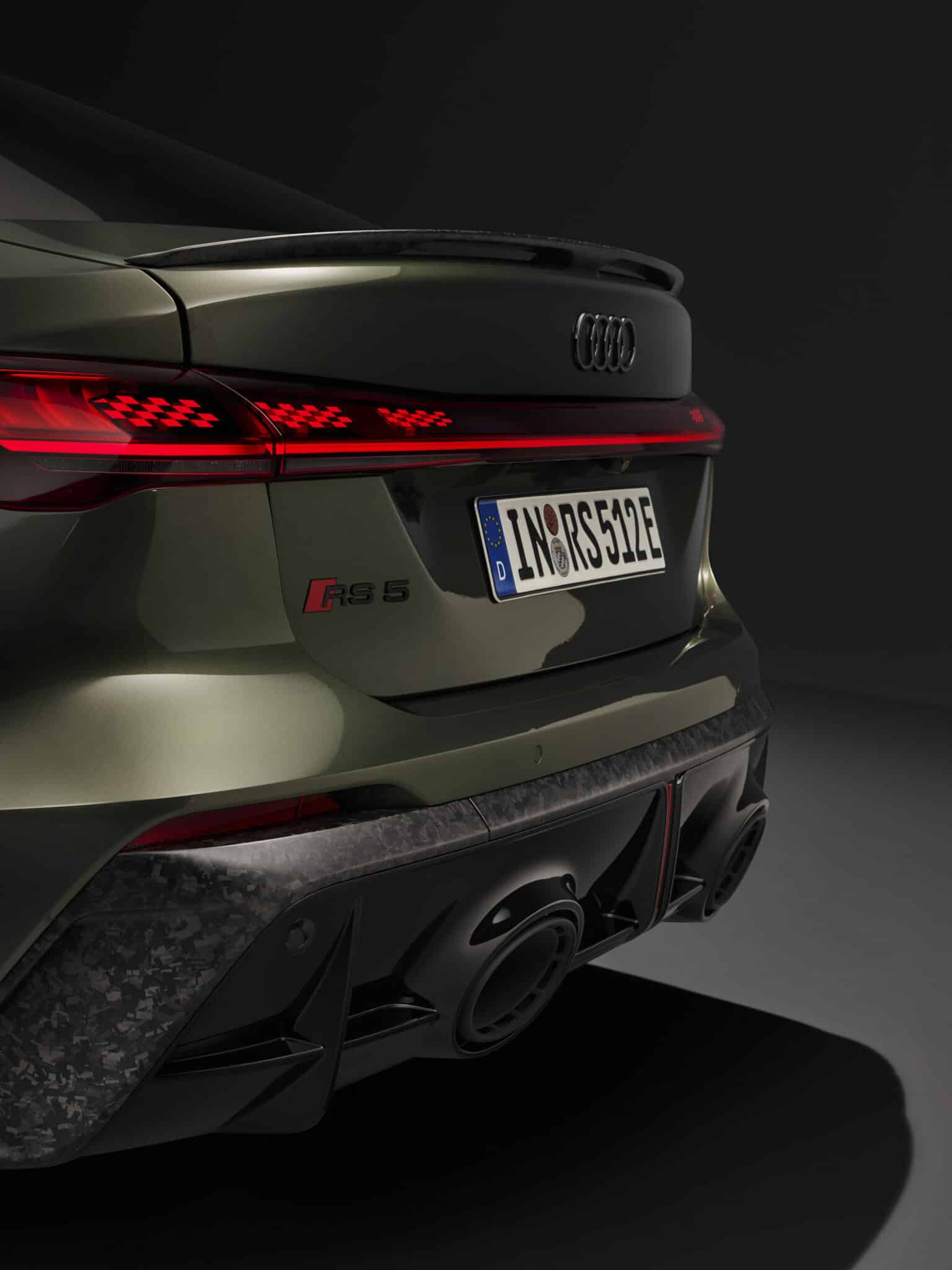
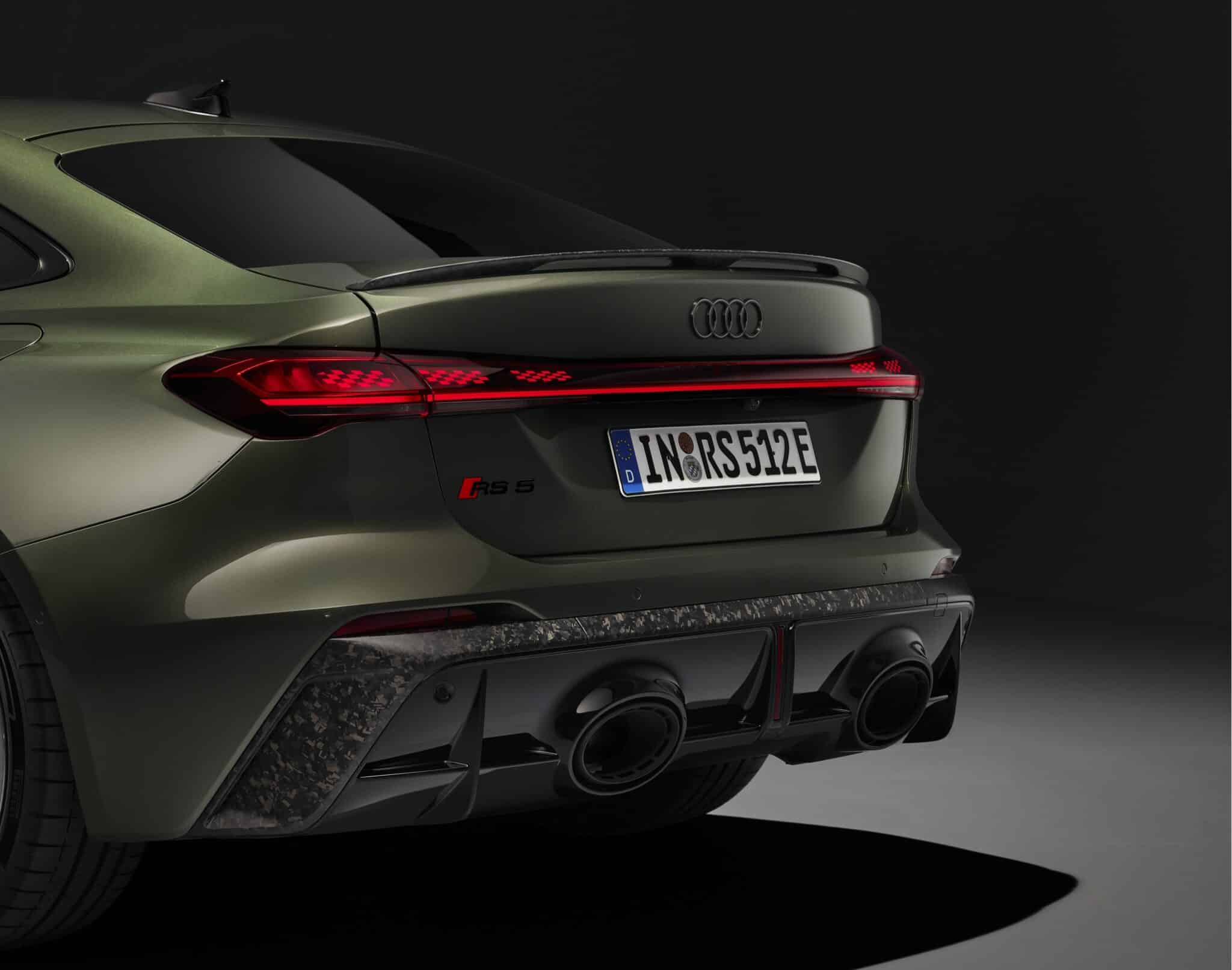
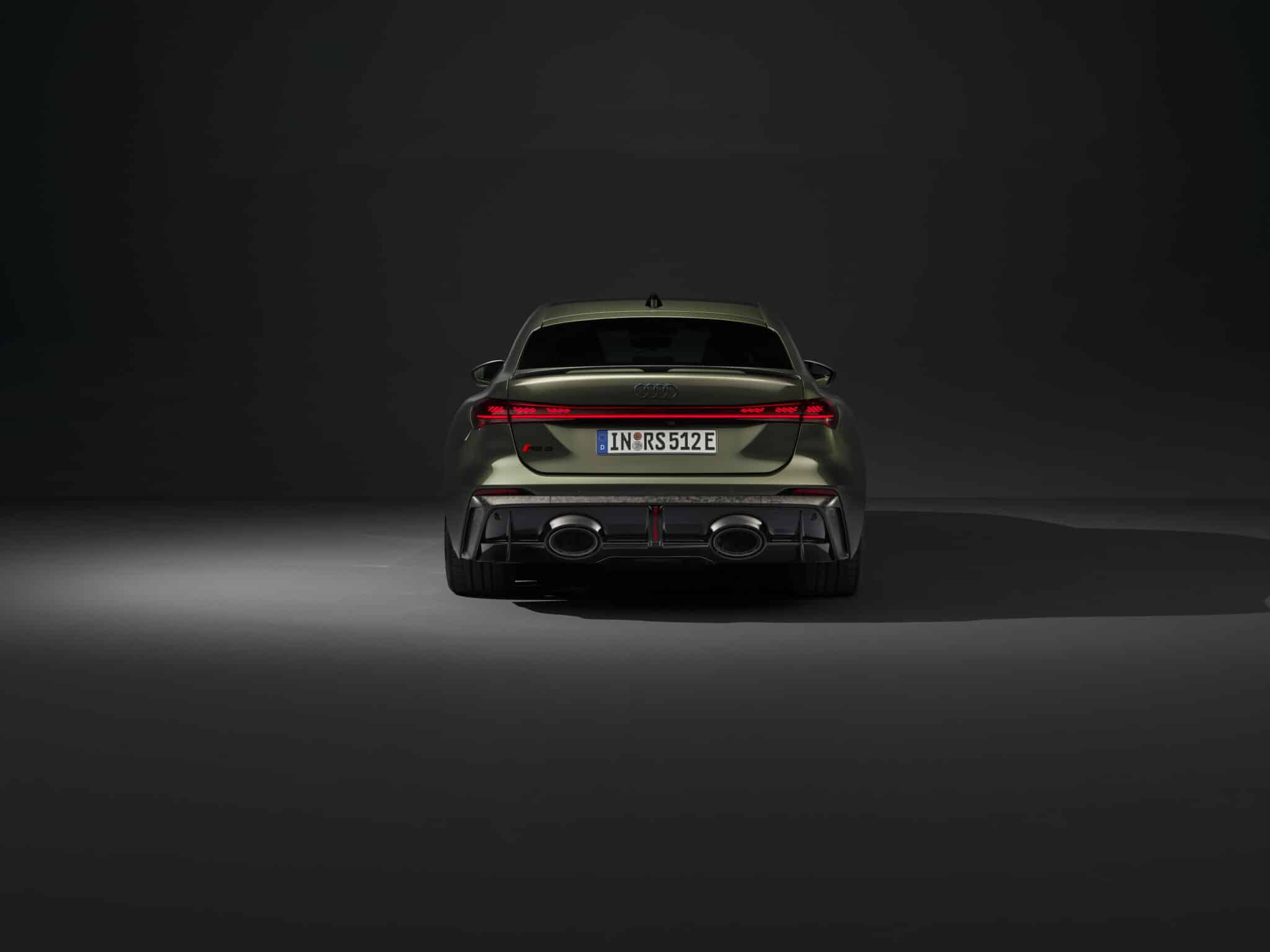
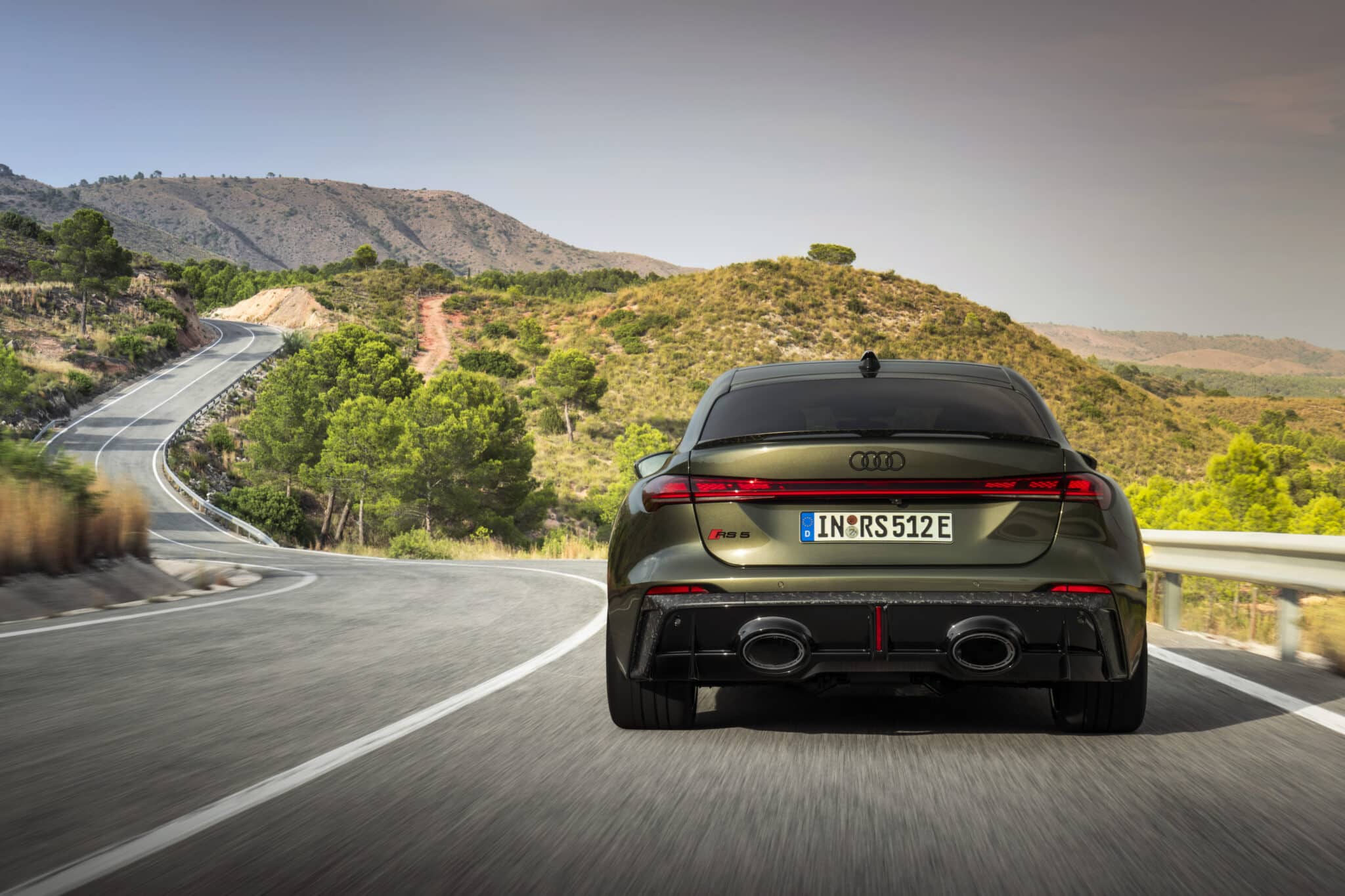
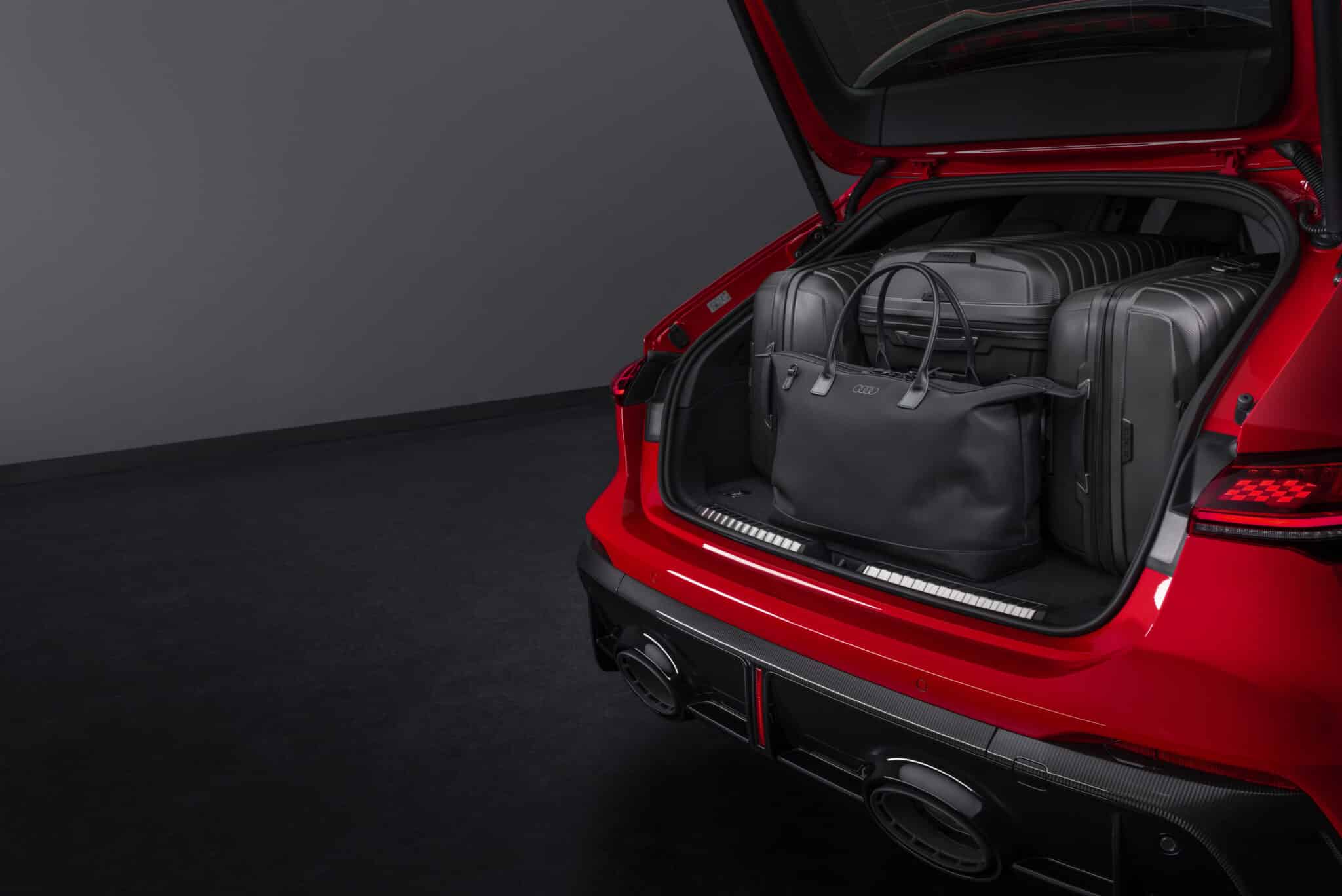
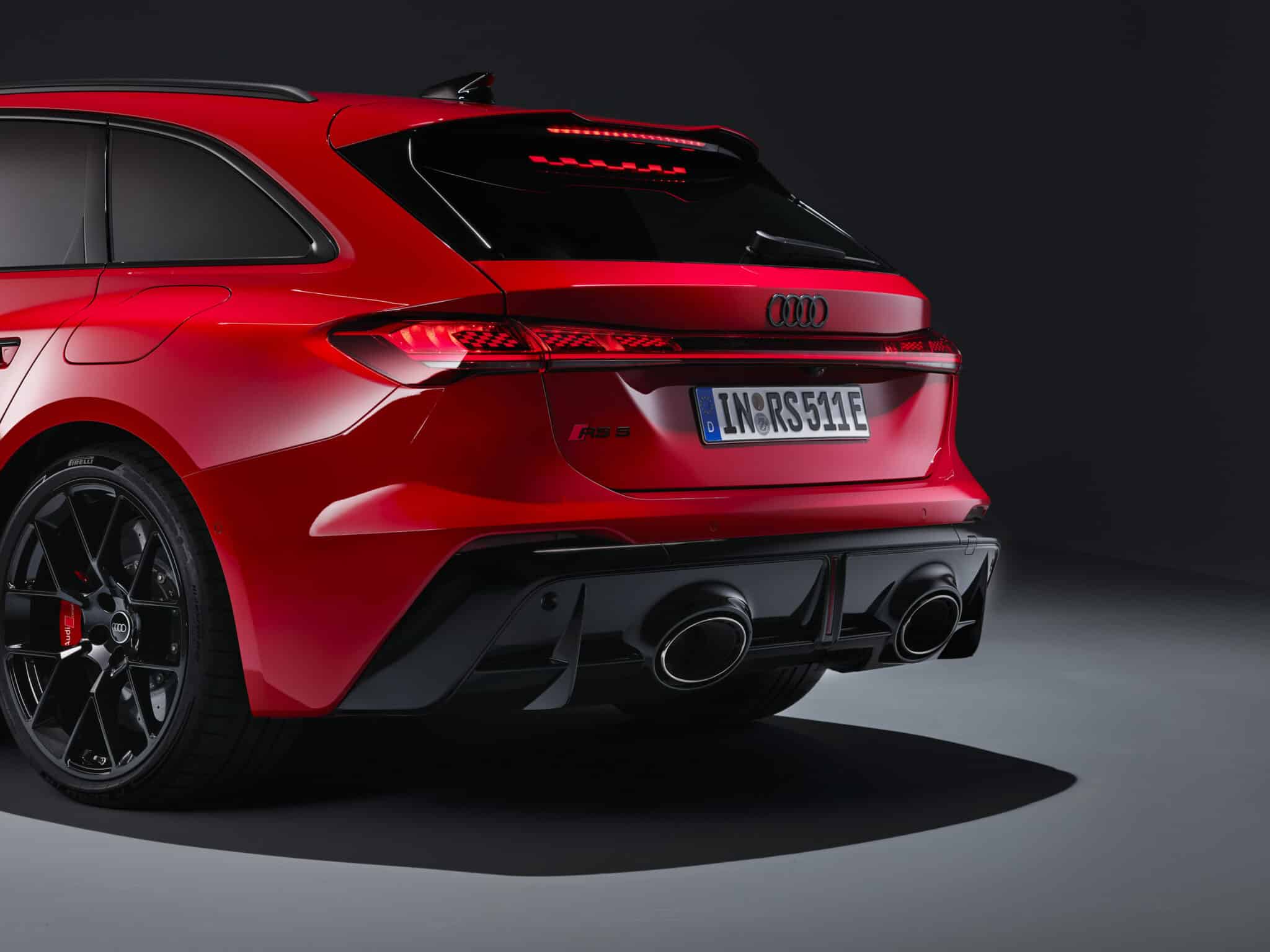
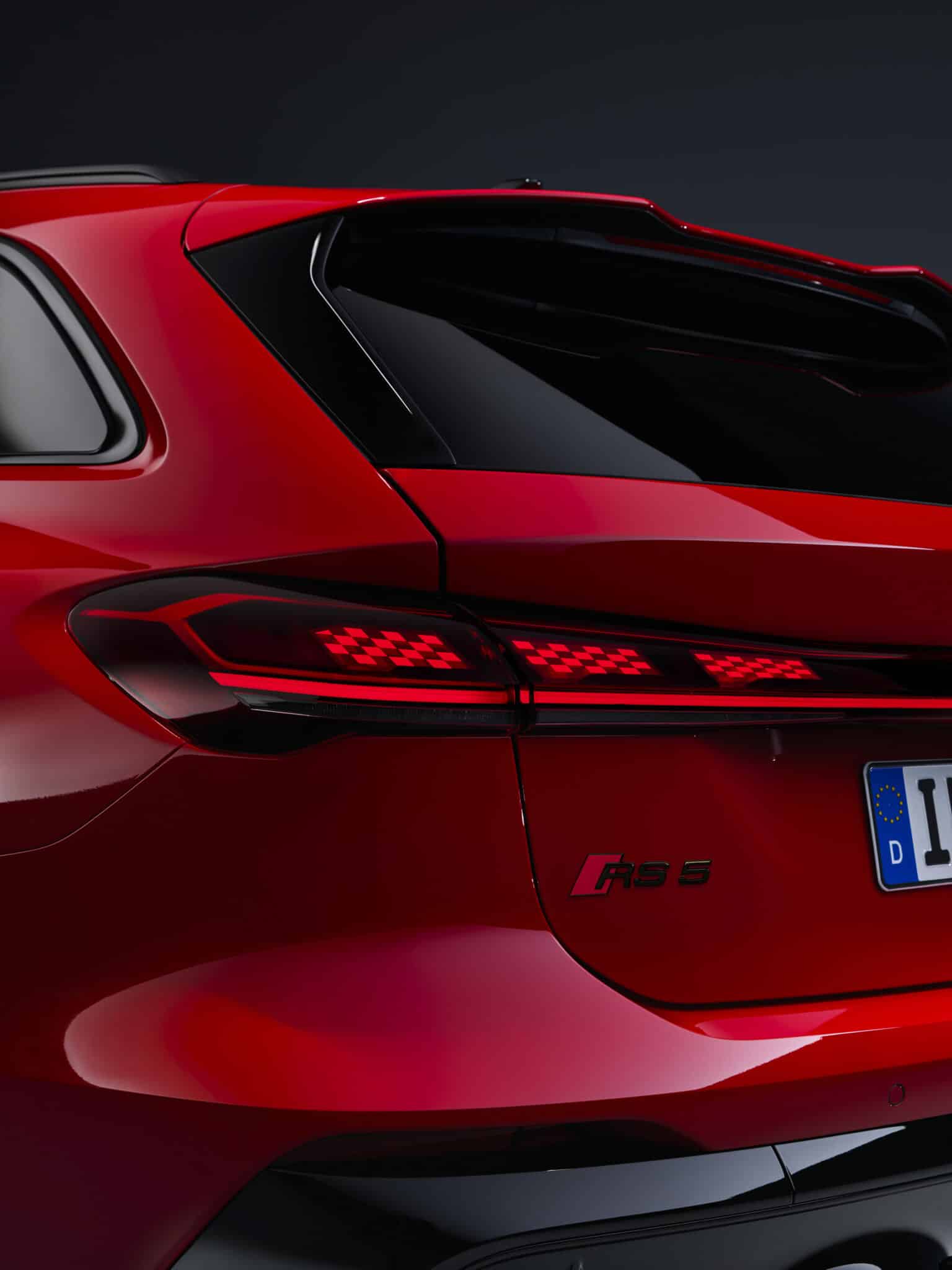
Darkened Matrix LED headlights feature a checkered-flag daytime running light signature, and the rear of the car has a sculpted diffuser and matte oval RS sport exhaust tailpipes.
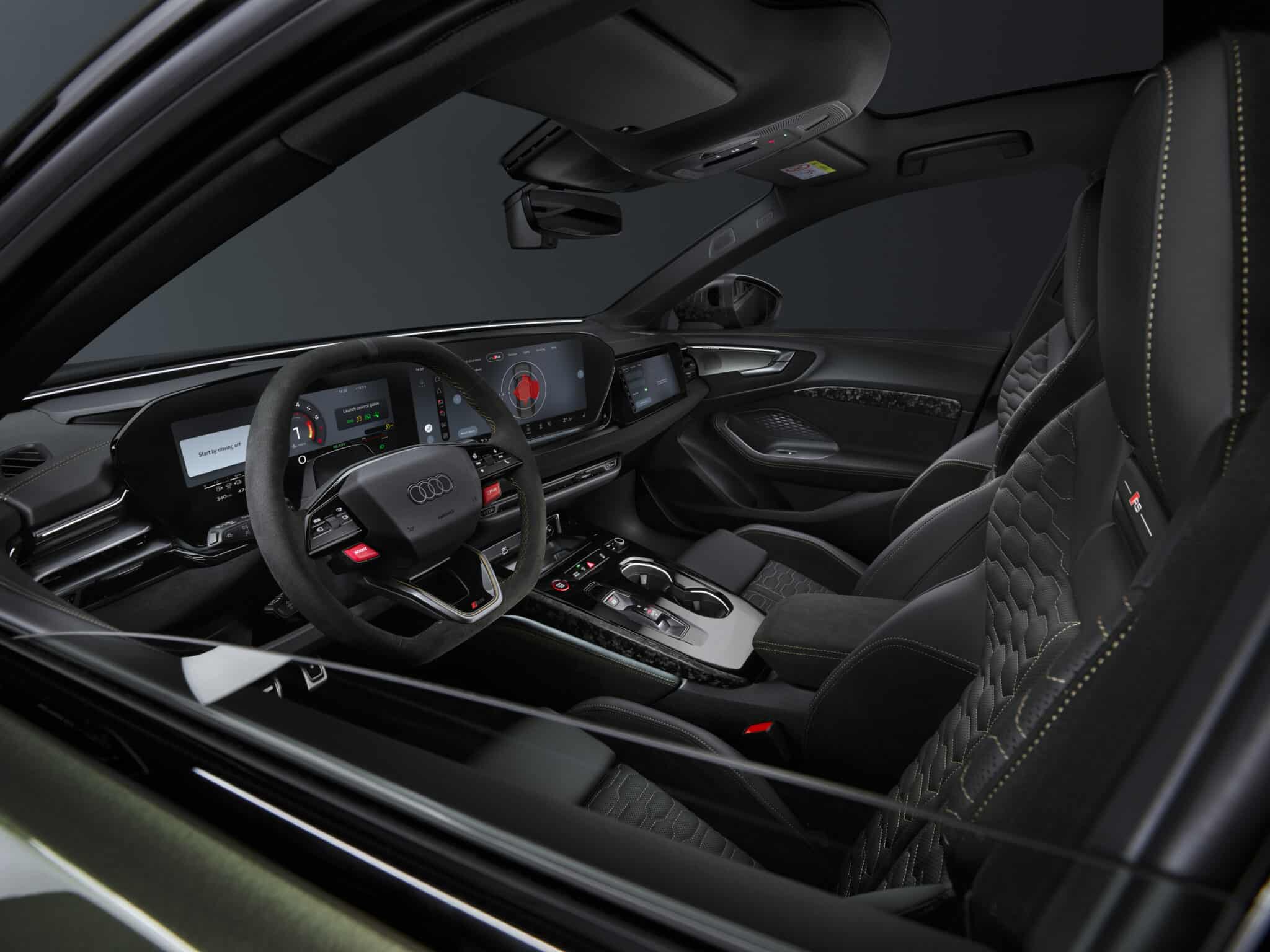
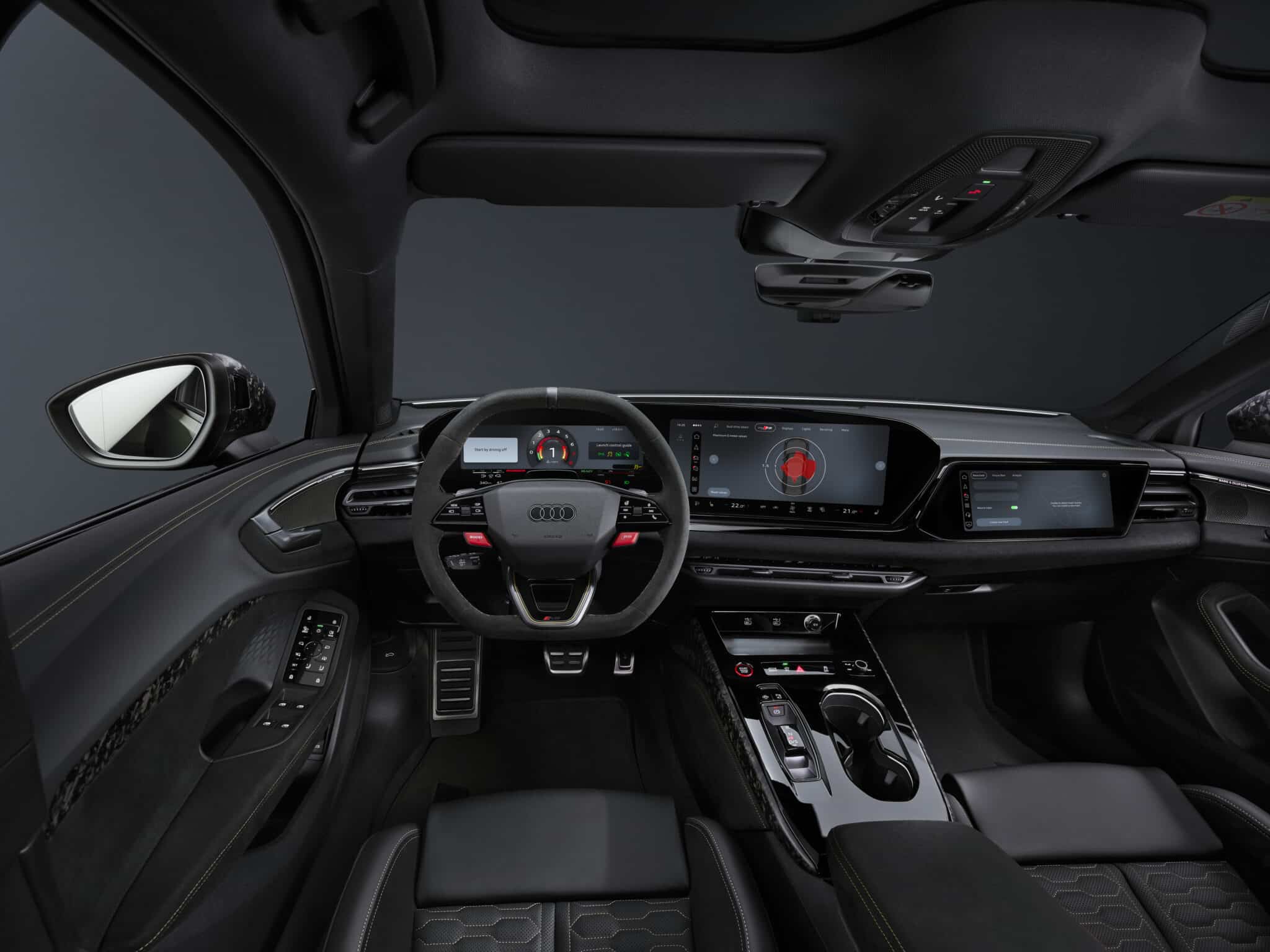
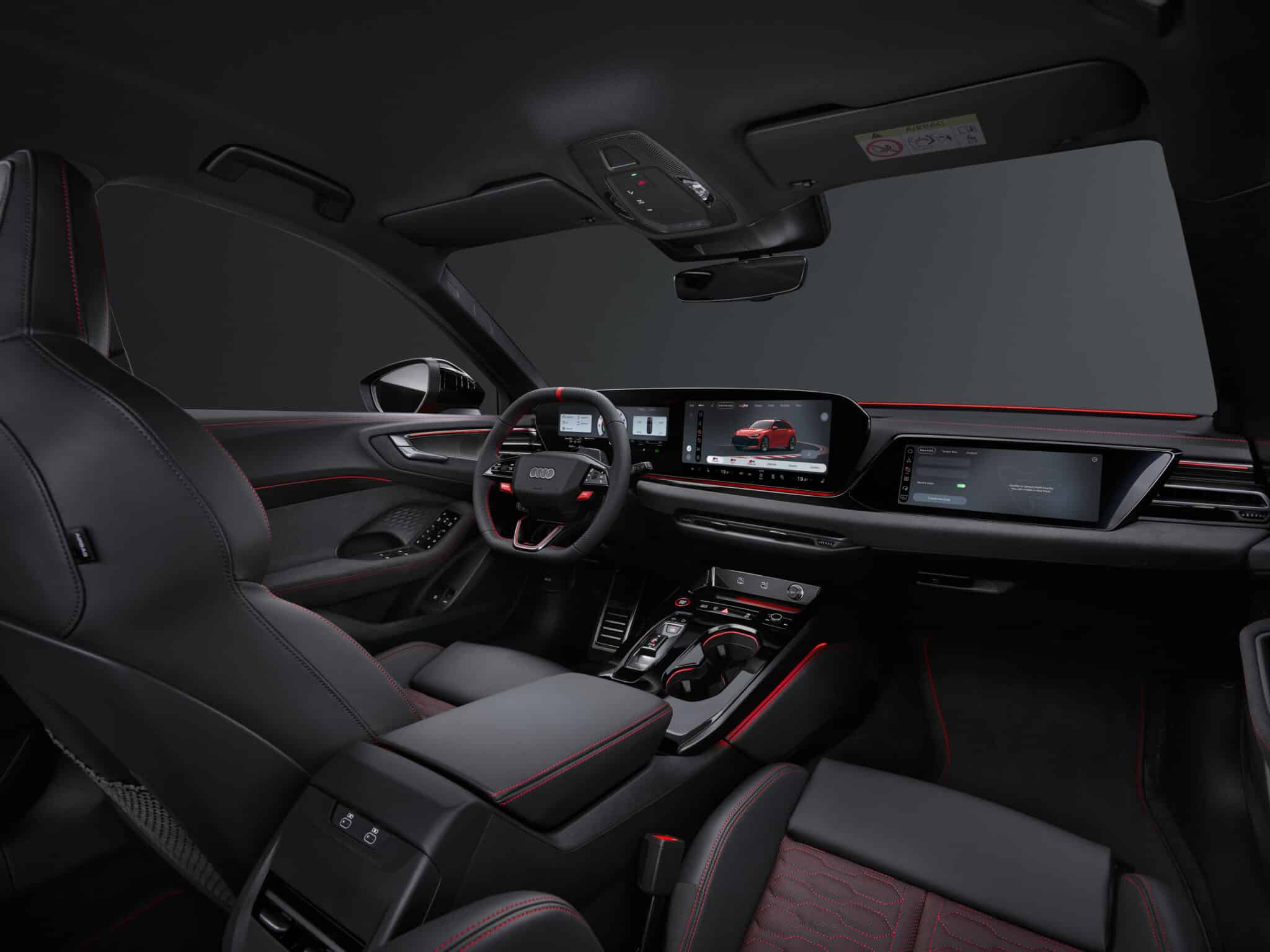
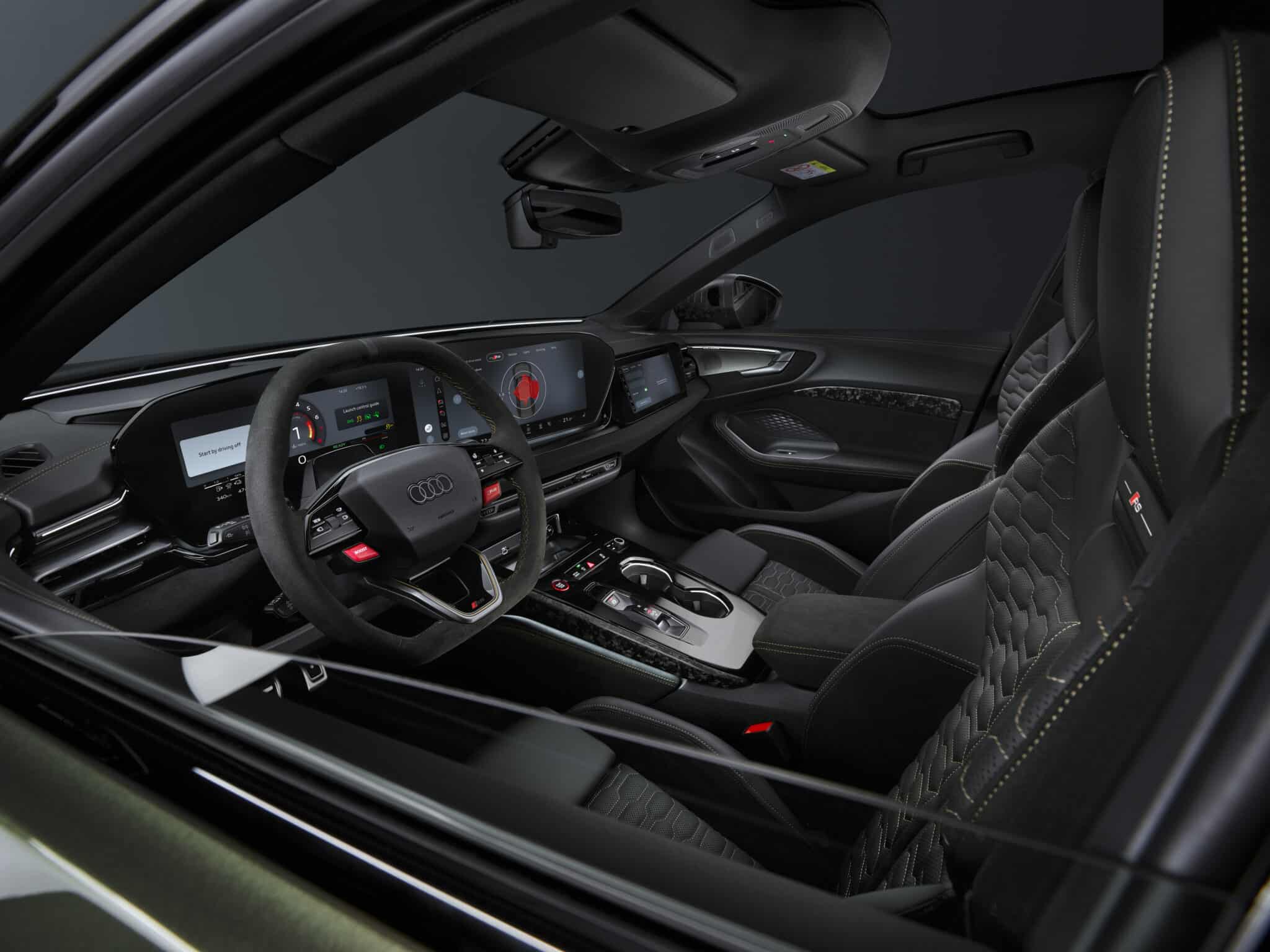
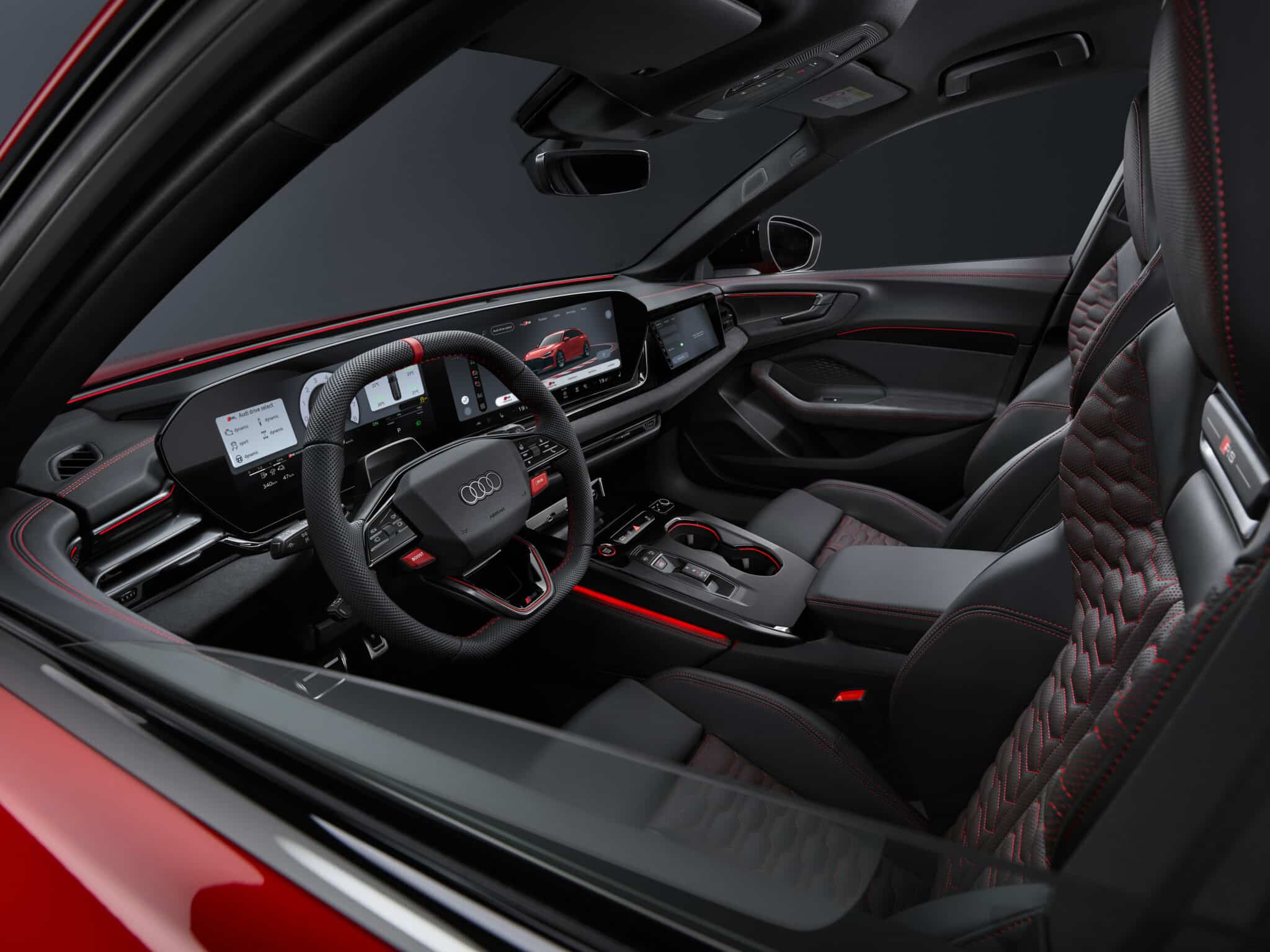
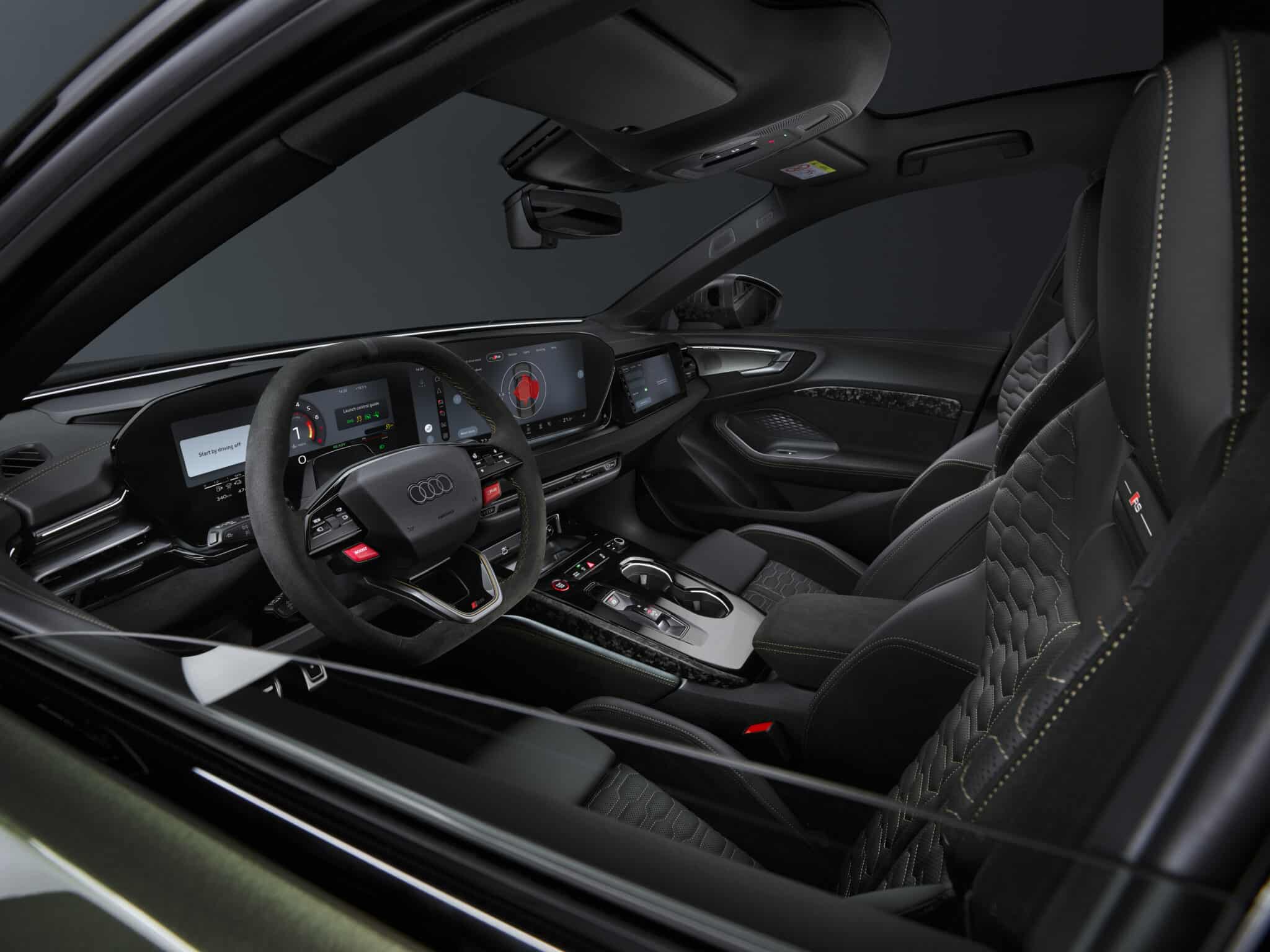
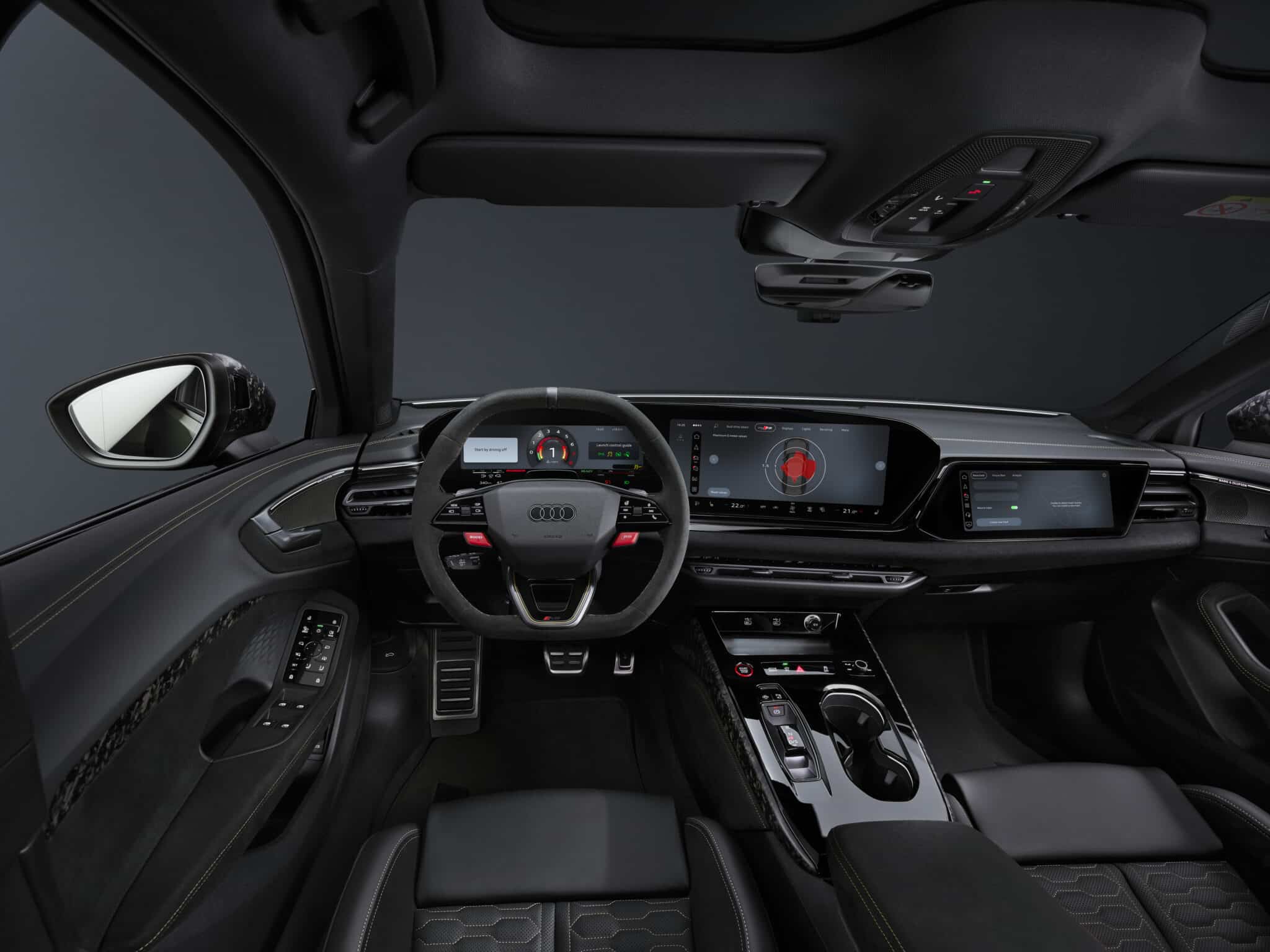
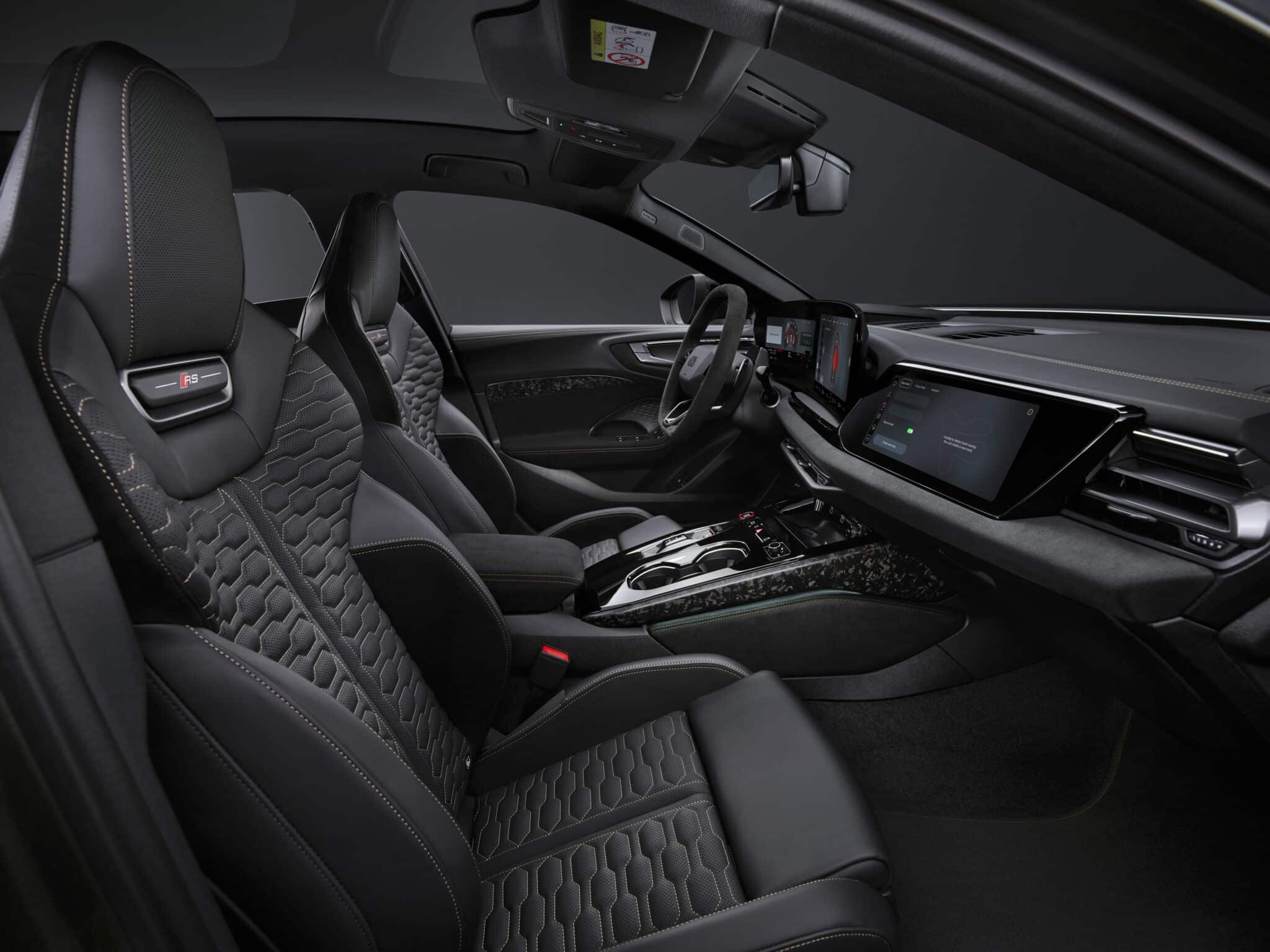
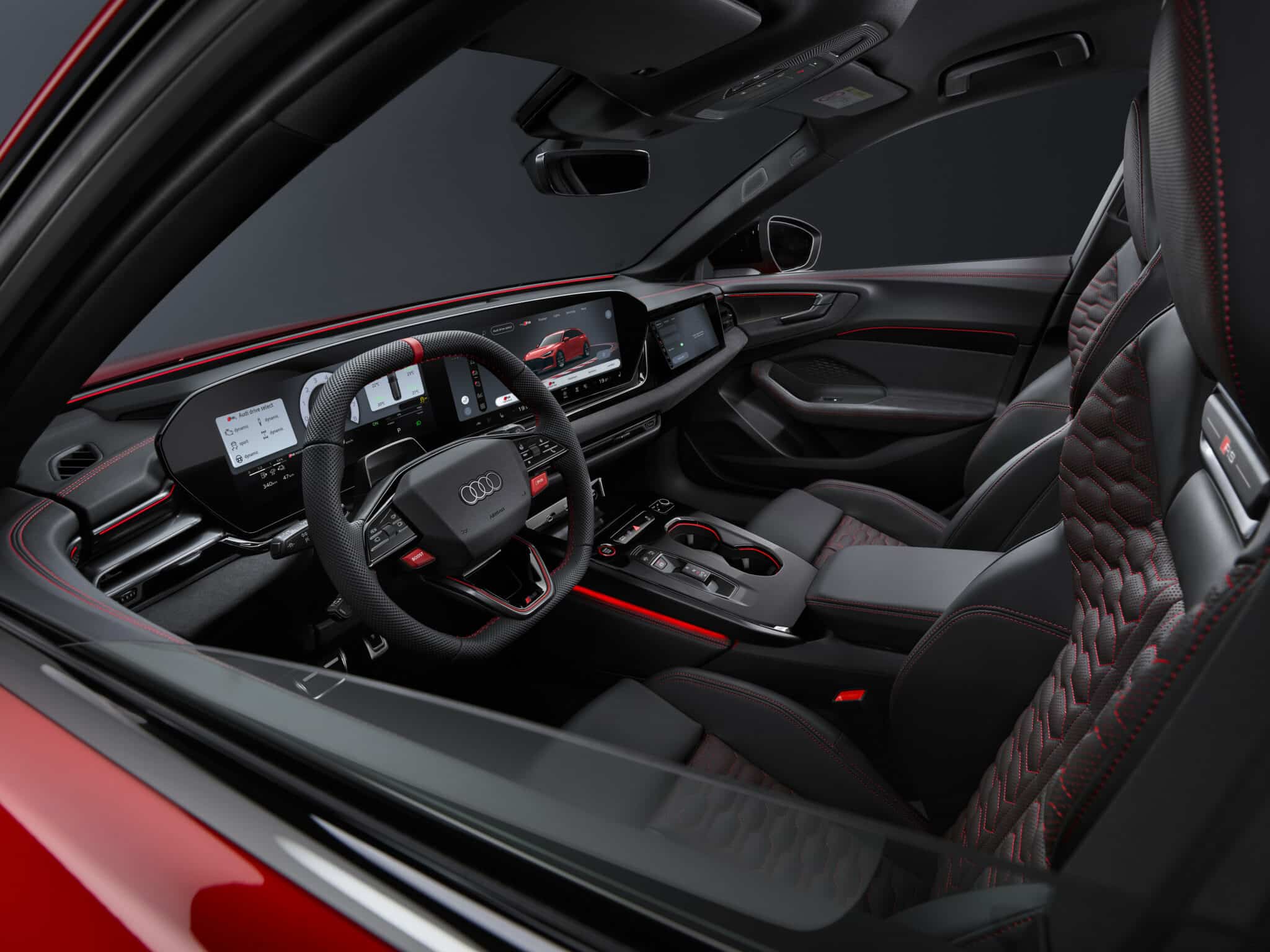
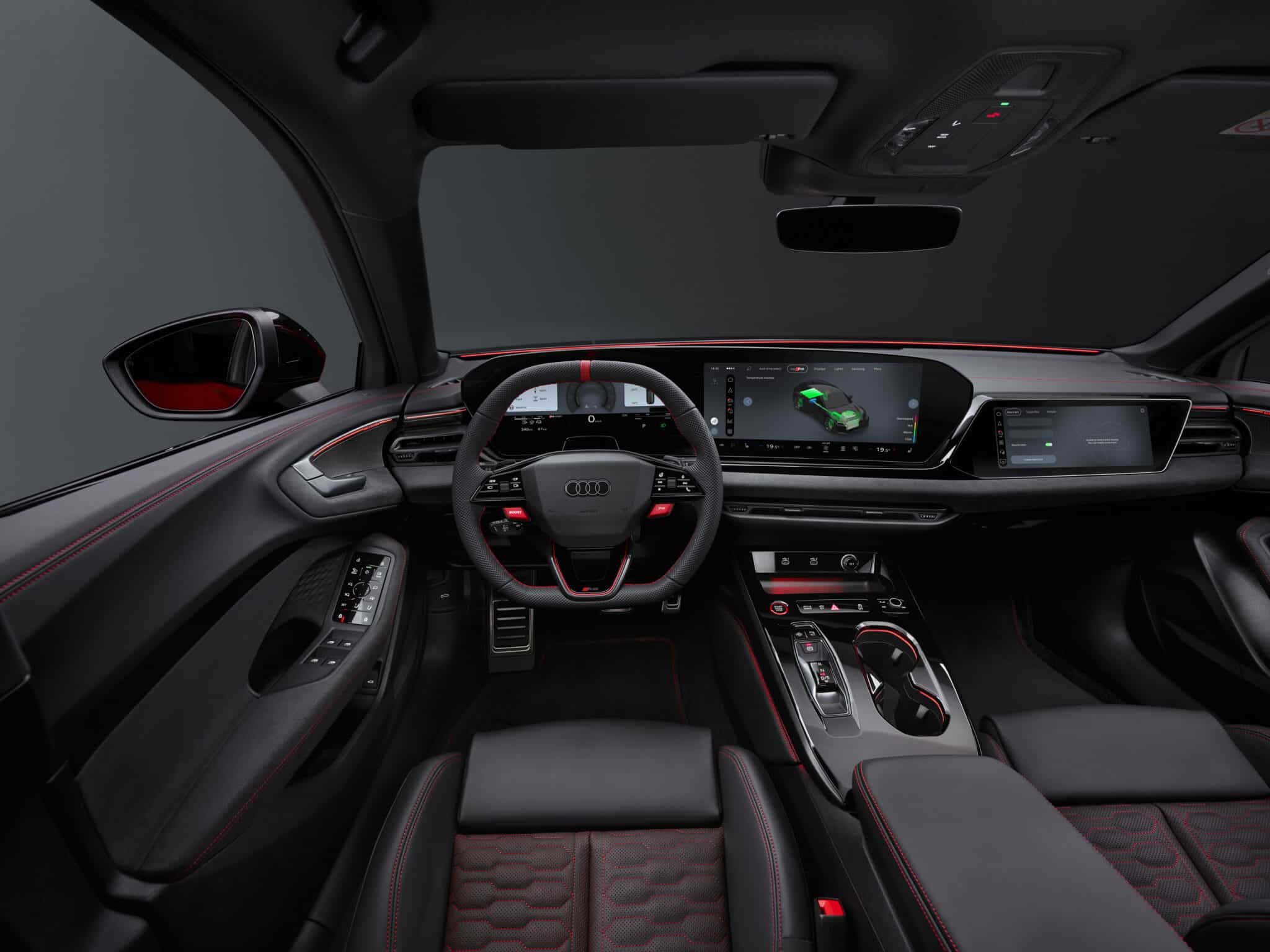
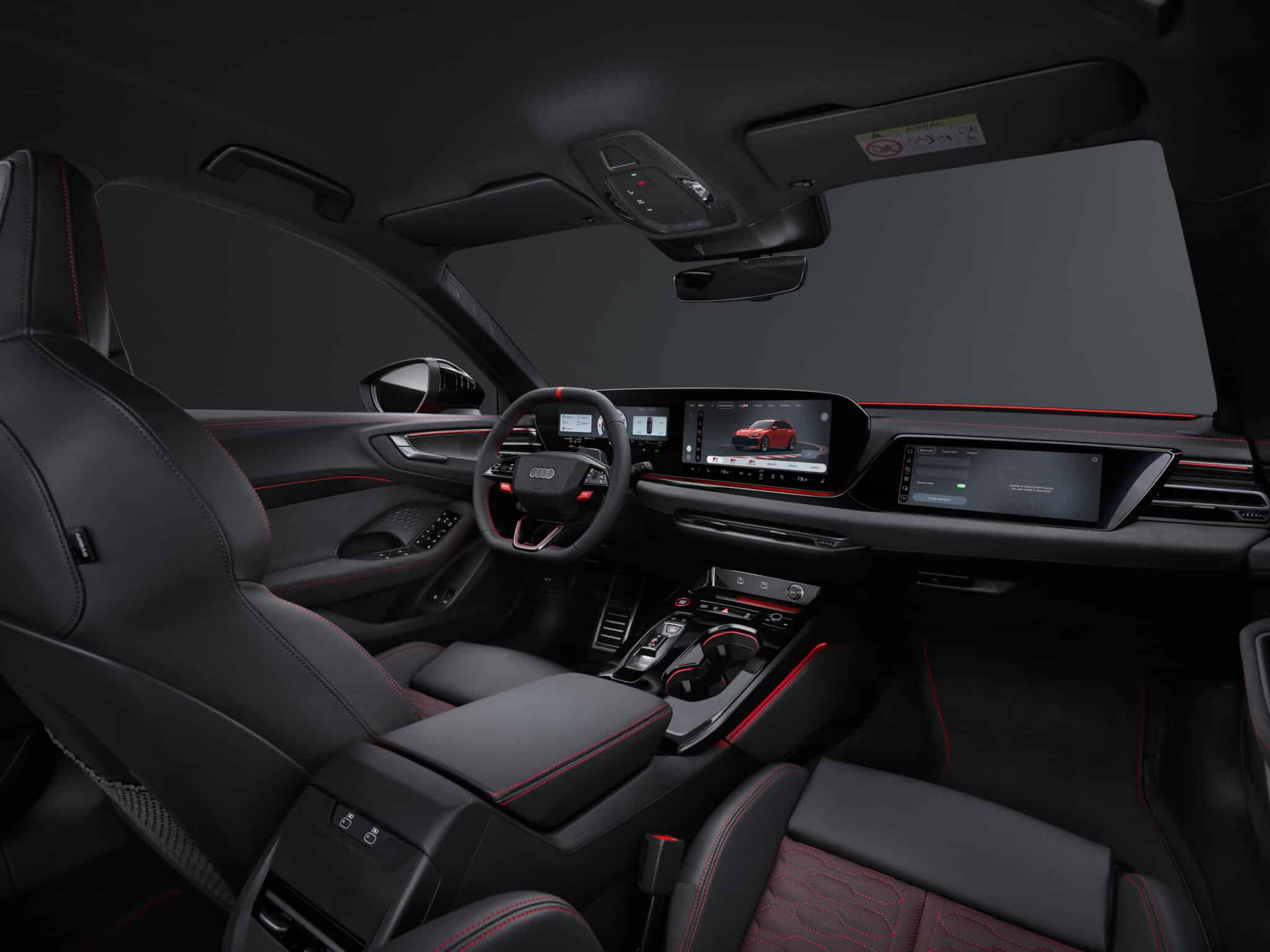
Inside, the cockpit is centred around an 11.9-inch Audi virtual cockpit and a 14.5-inch MMI touch display, with an additional 10.9-inch passenger screen as standard. RS-specific displays show performance data including G-forces, lap times, and drivetrain temperatures.
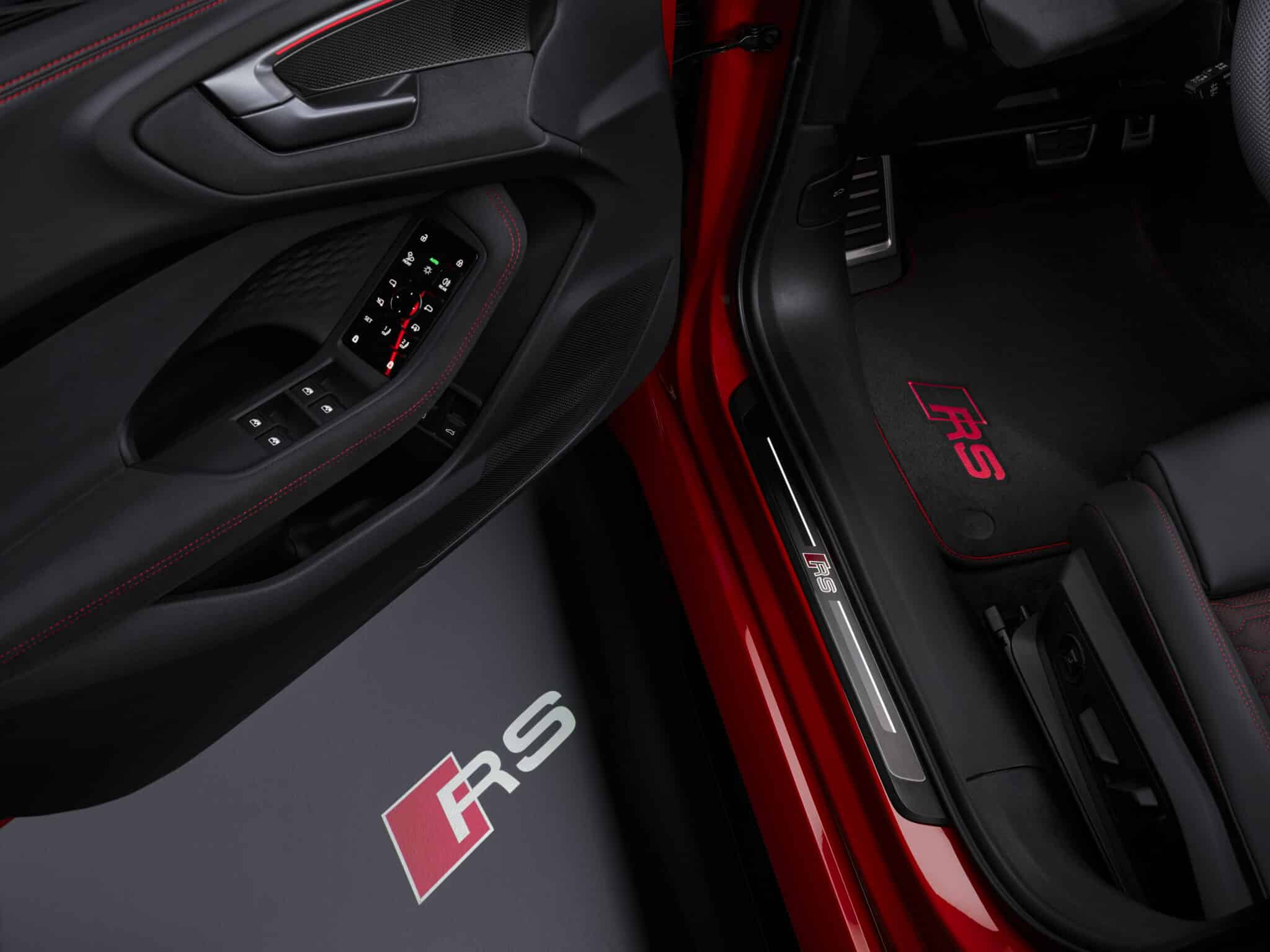
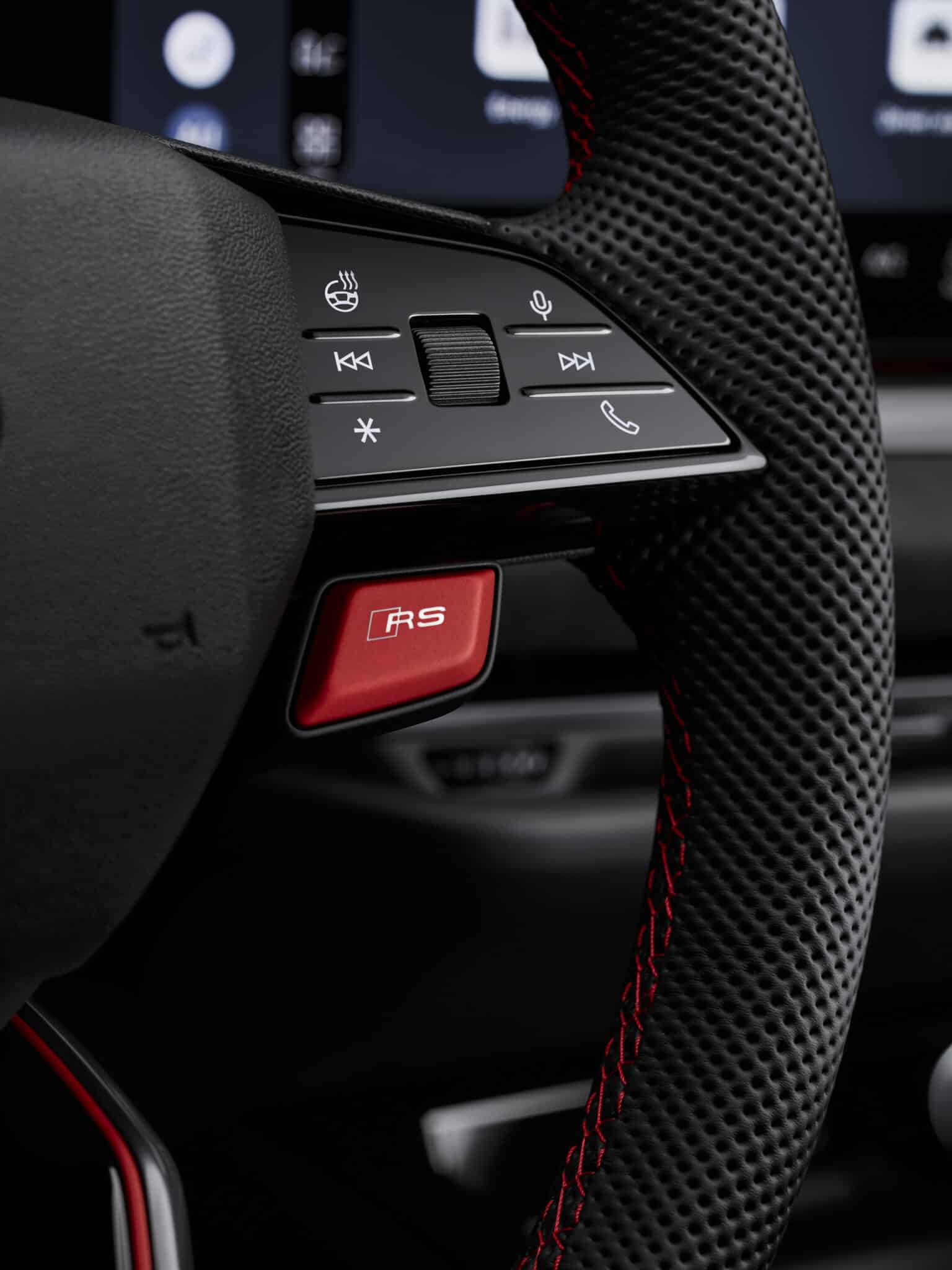
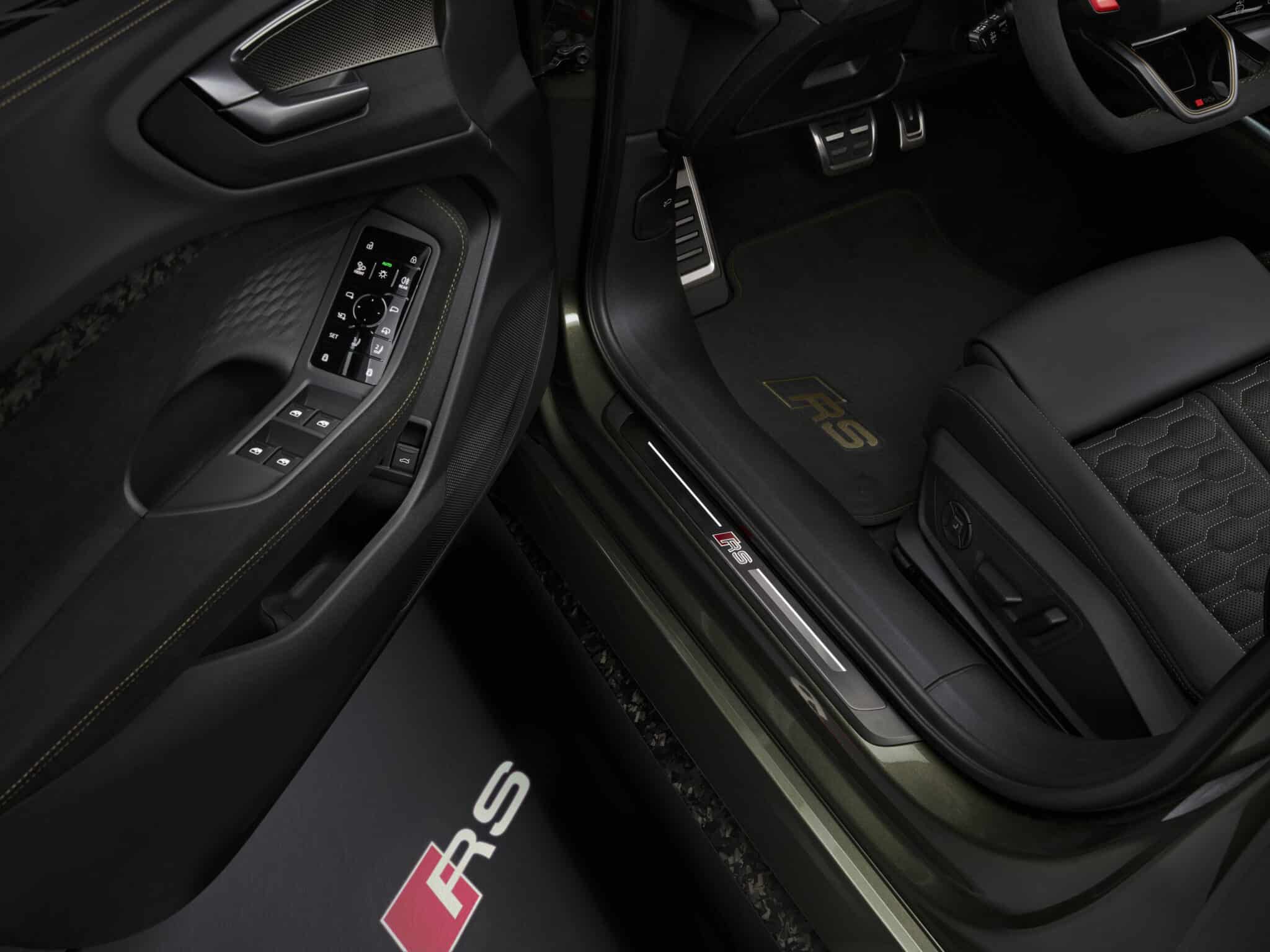
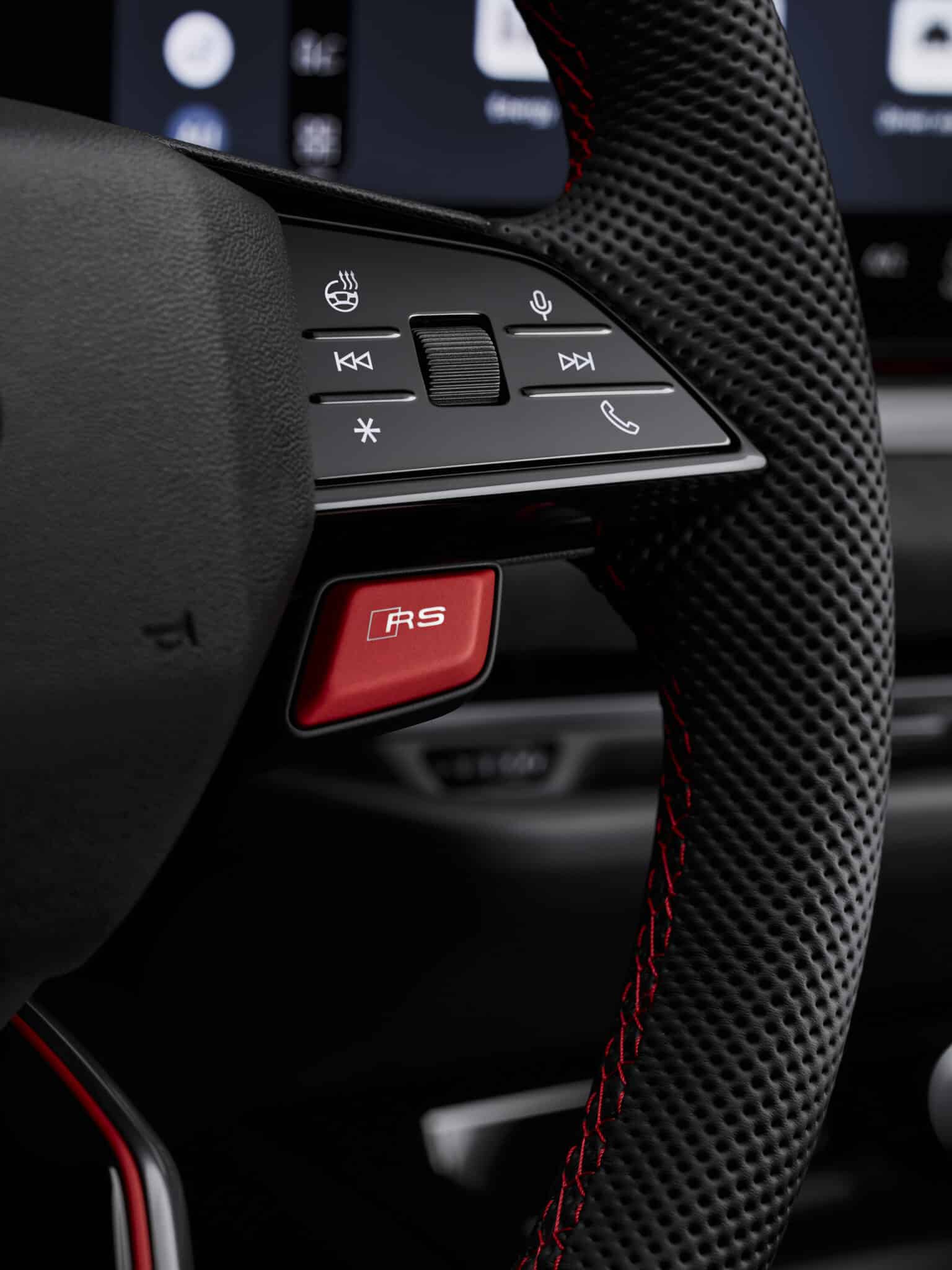
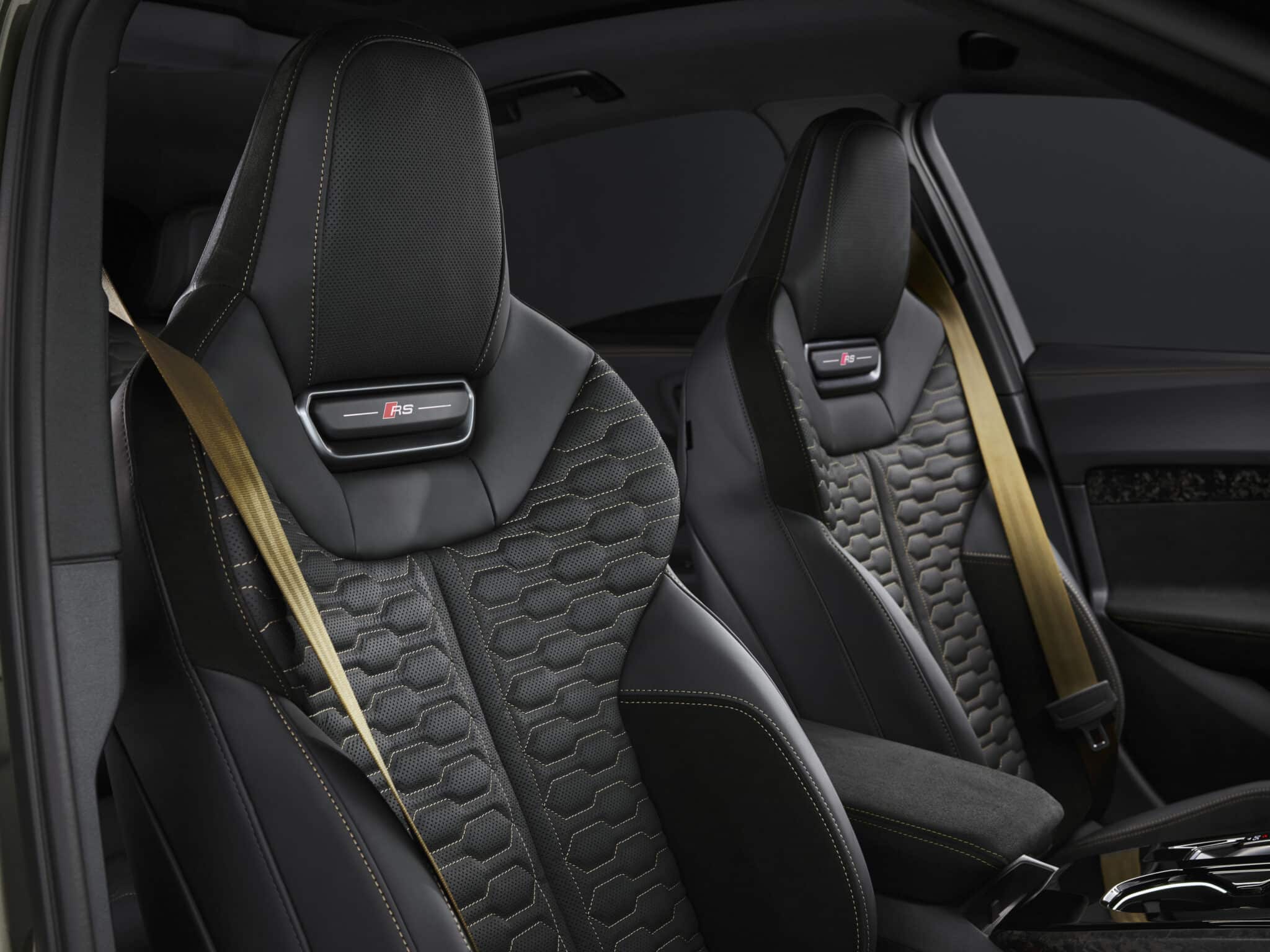
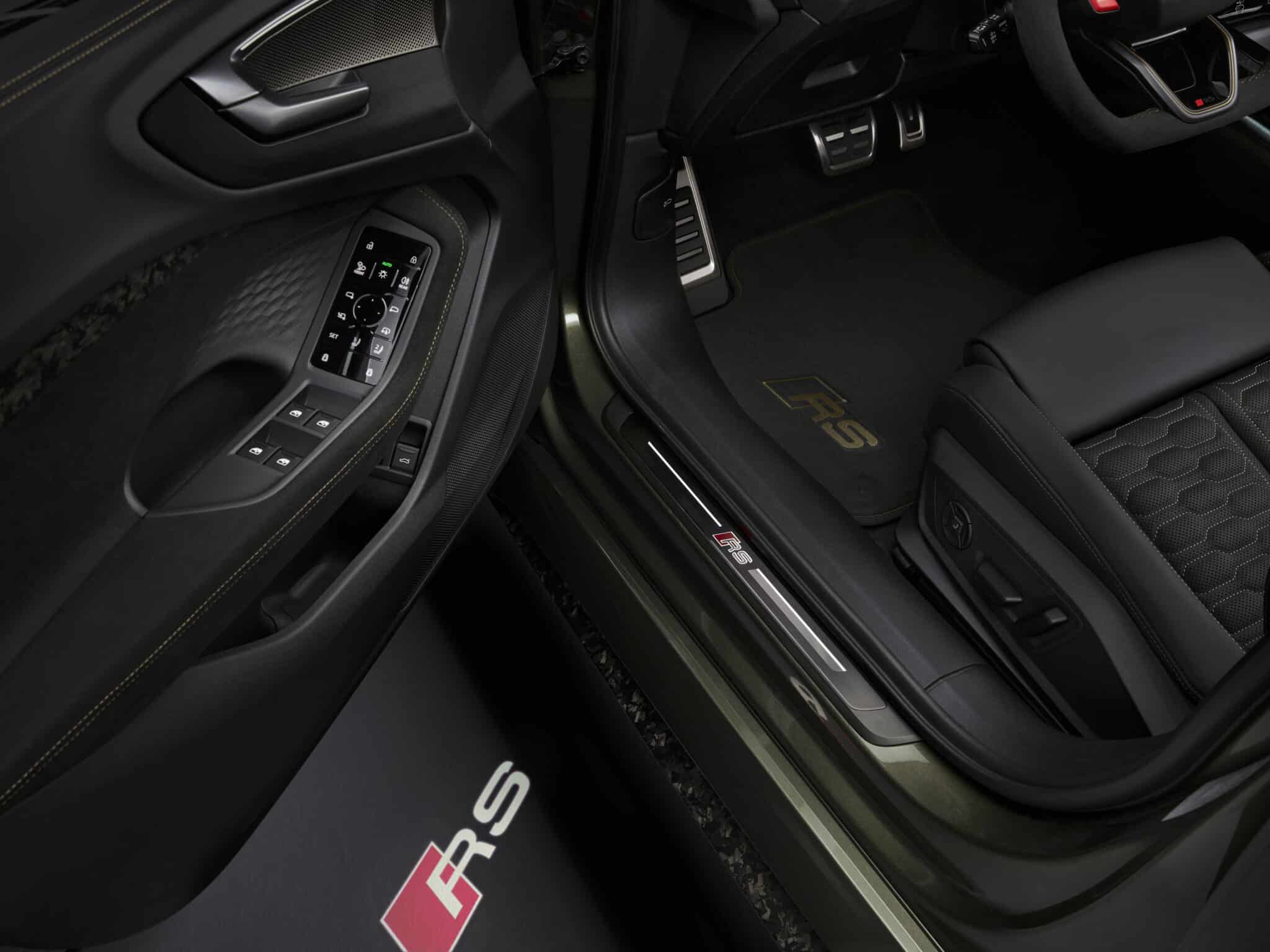
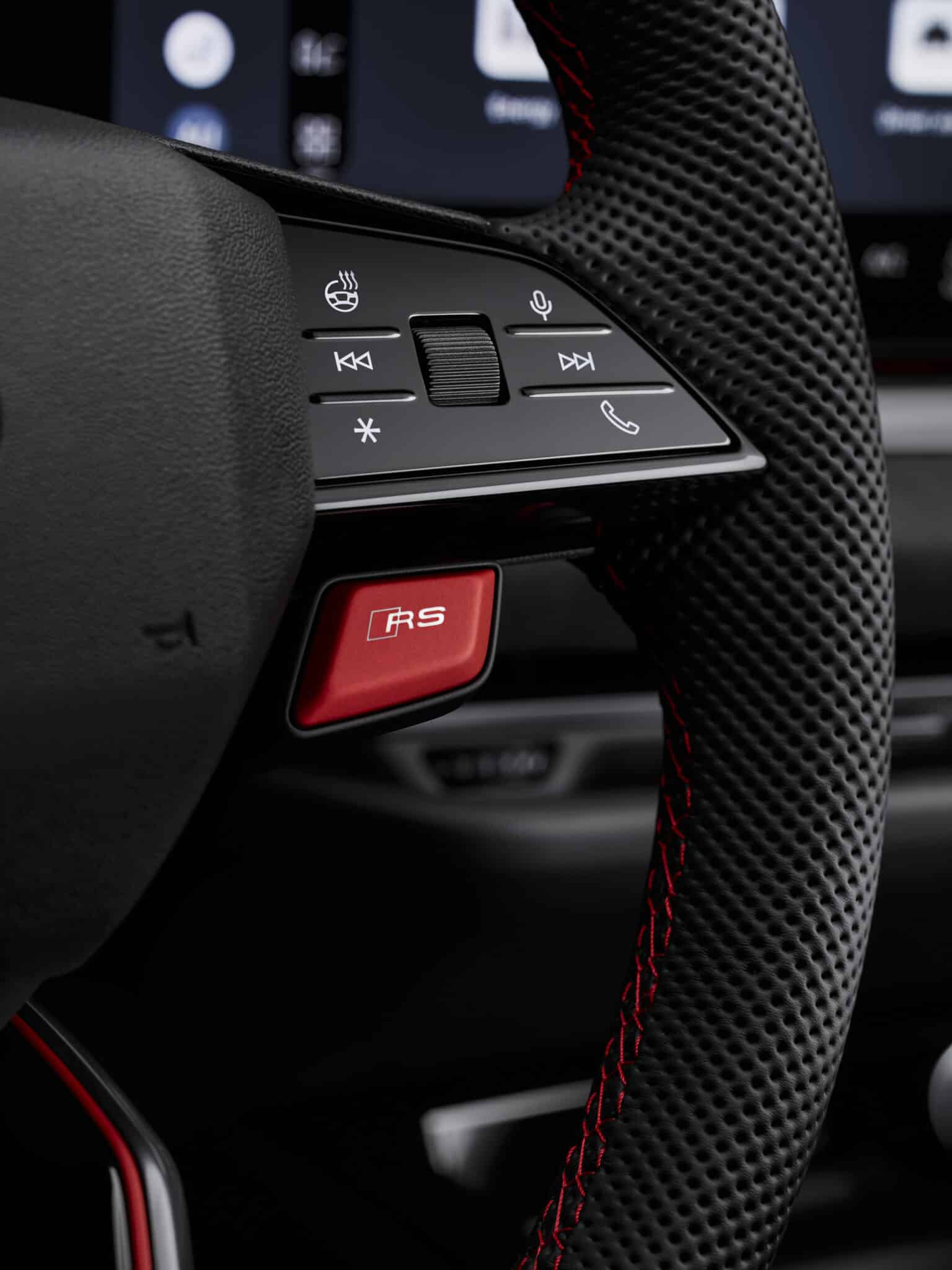
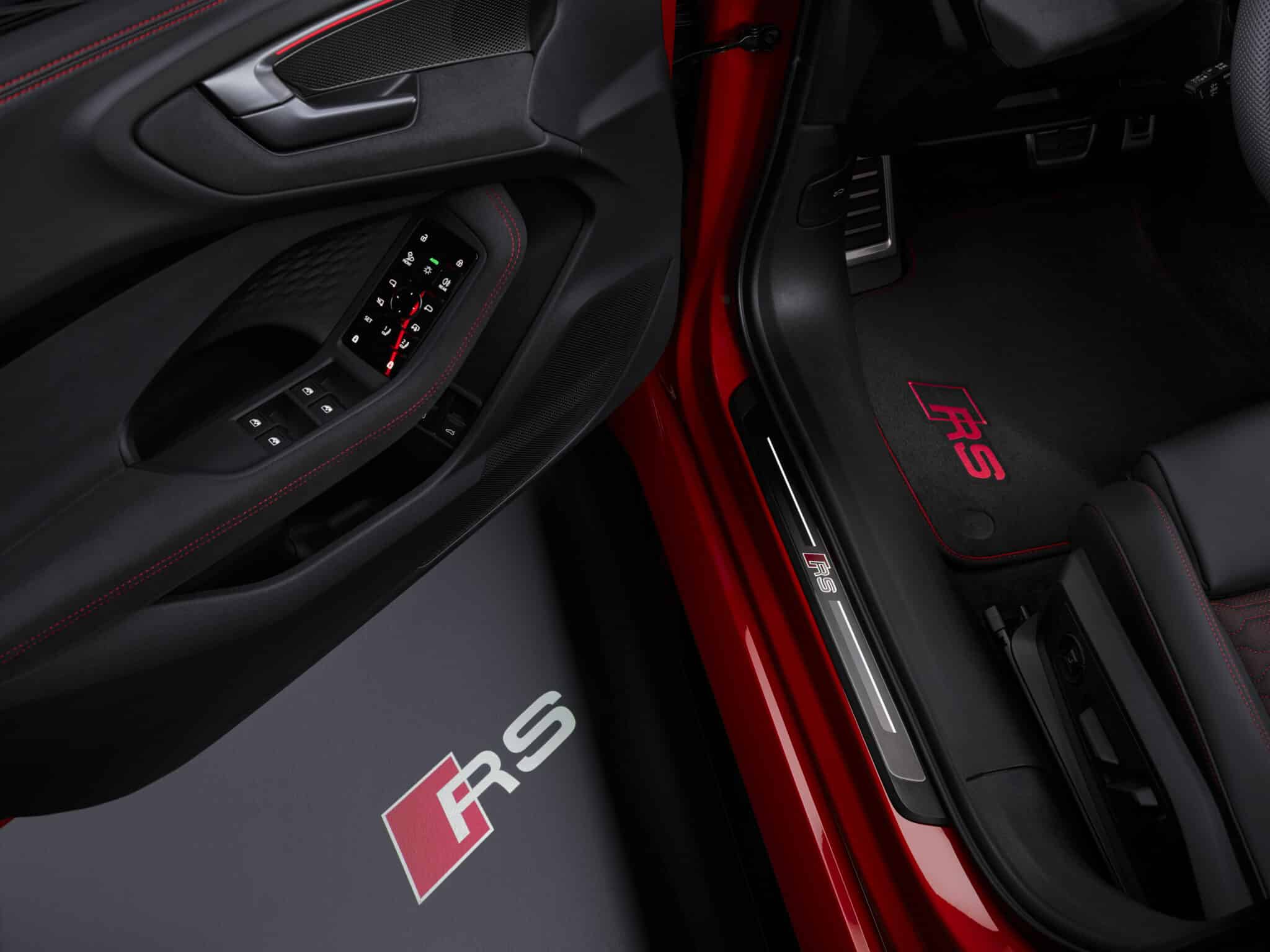
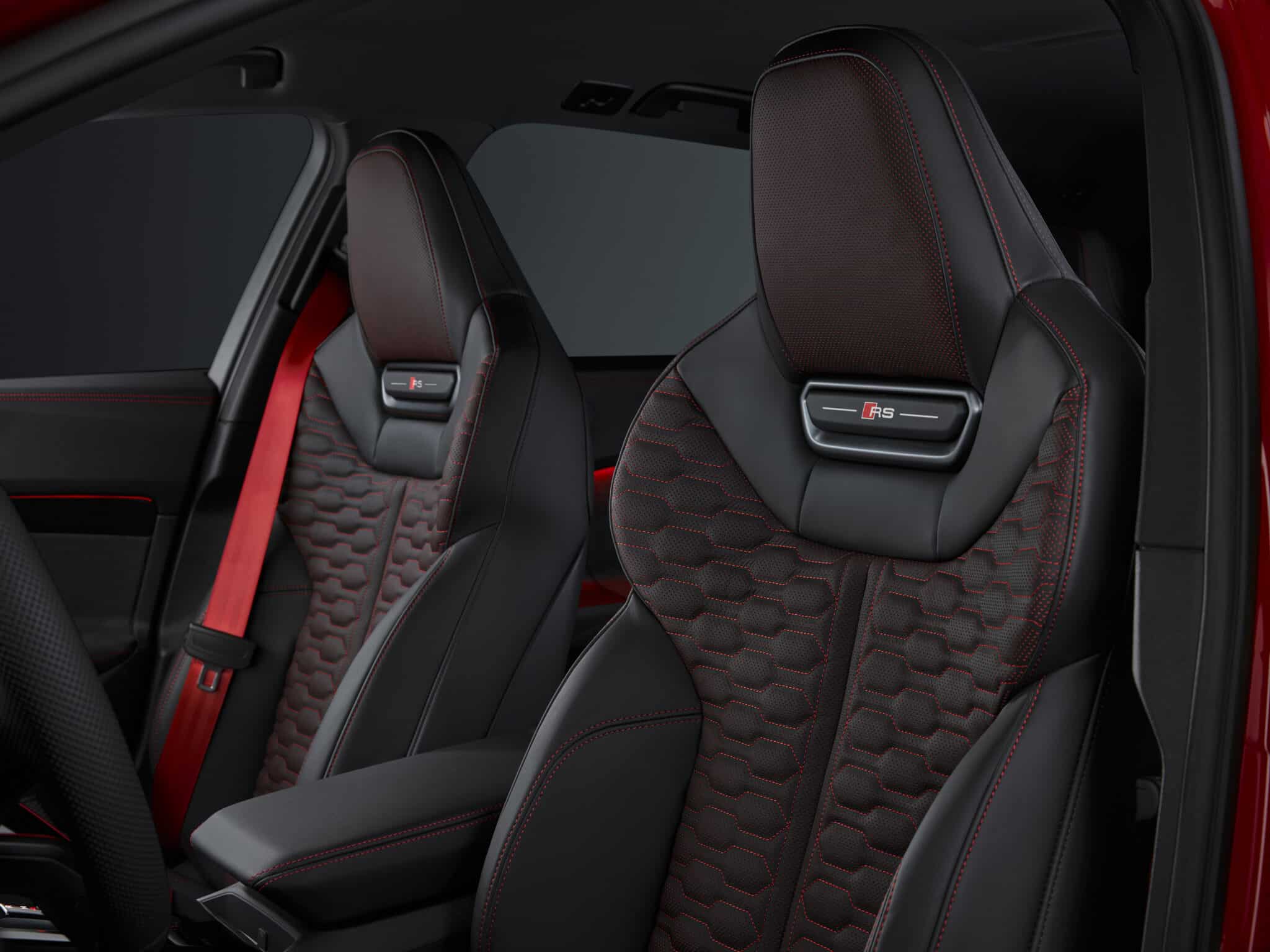
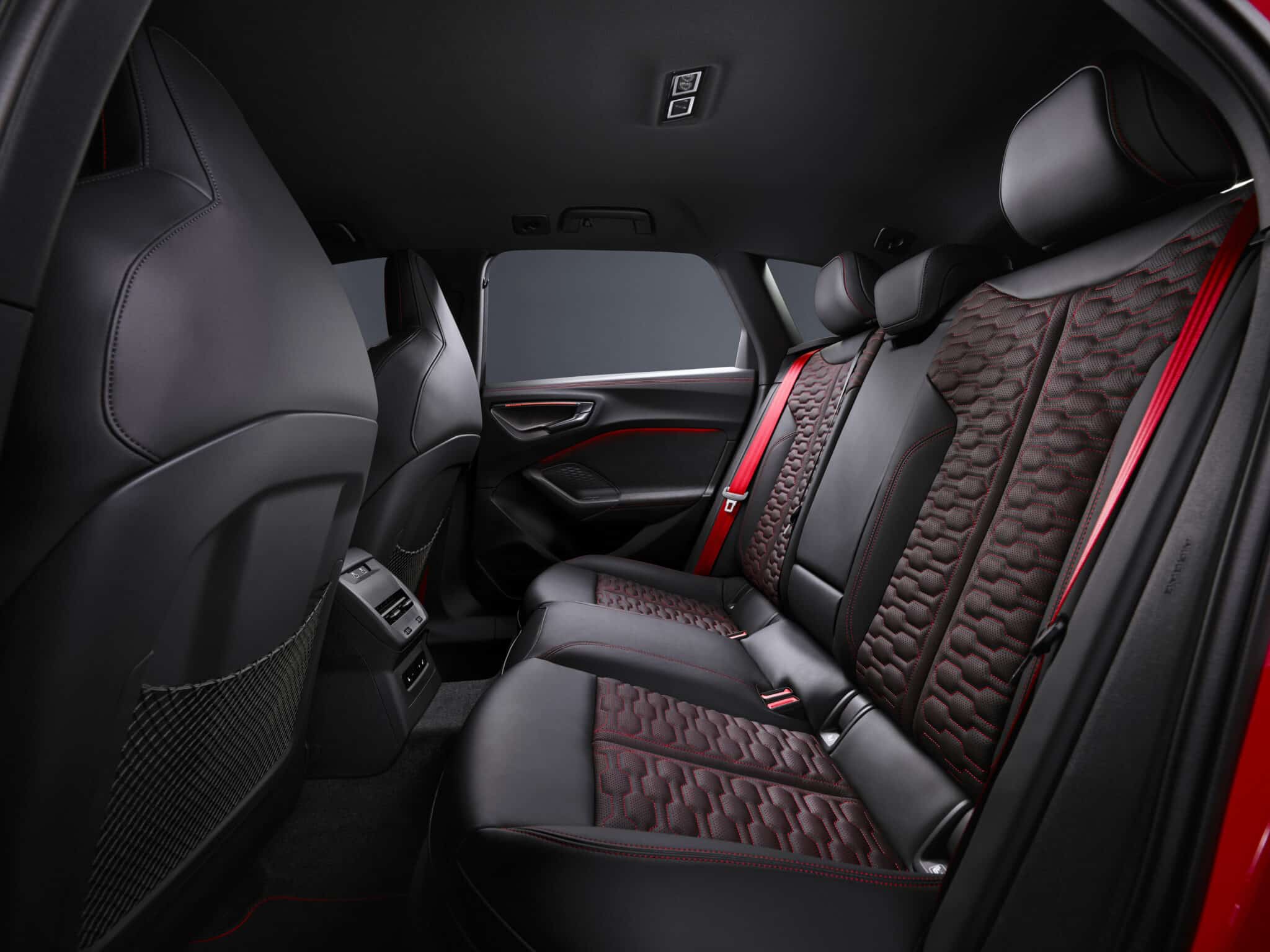
Sport seats plus with honeycomb quilting, a flat-bottom RS steering wheel with integrated satellite controls, and a choice of distinctive interior finishes show off its position at the top of the A5 range.
Drive Modes and Boost on Demand
Drivers can choose between comfort, balanced, dynamic, RS sport, RS torque rear, and RS individual modes.
RS torque rear, making its debut in this car, directs a higher proportion of torque to the outside rear wheel for maximum agility and controlled drifts on closed courses. There is also a boost function, which delivers full system performance for 10 seconds at the press of a button.
Energy recuperation is adjustable in stages via the steering wheel paddles during electric driving, and Hybrid mode allows drivers to set a preferred battery state of charge.
Built in Neckarsulm
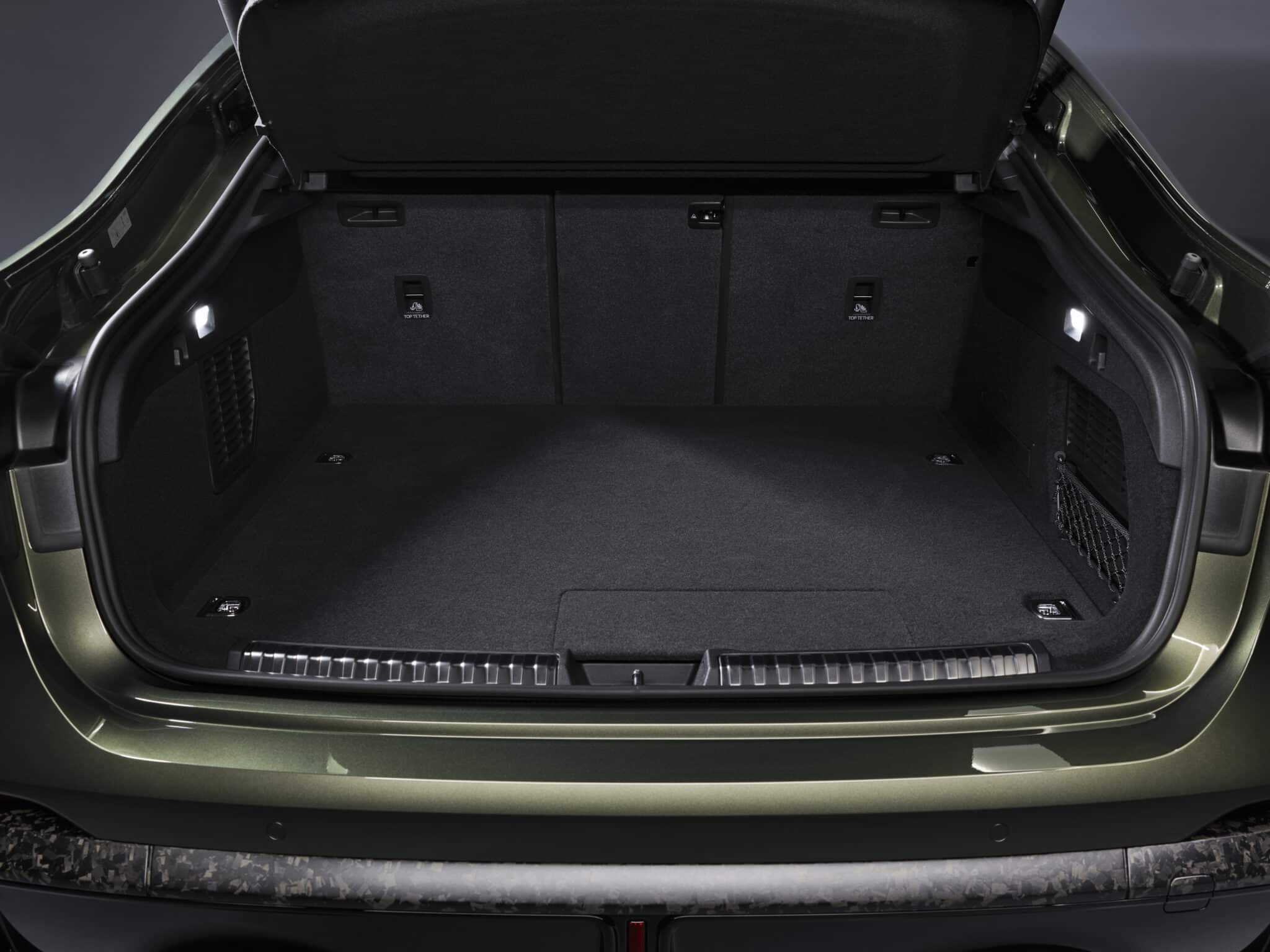
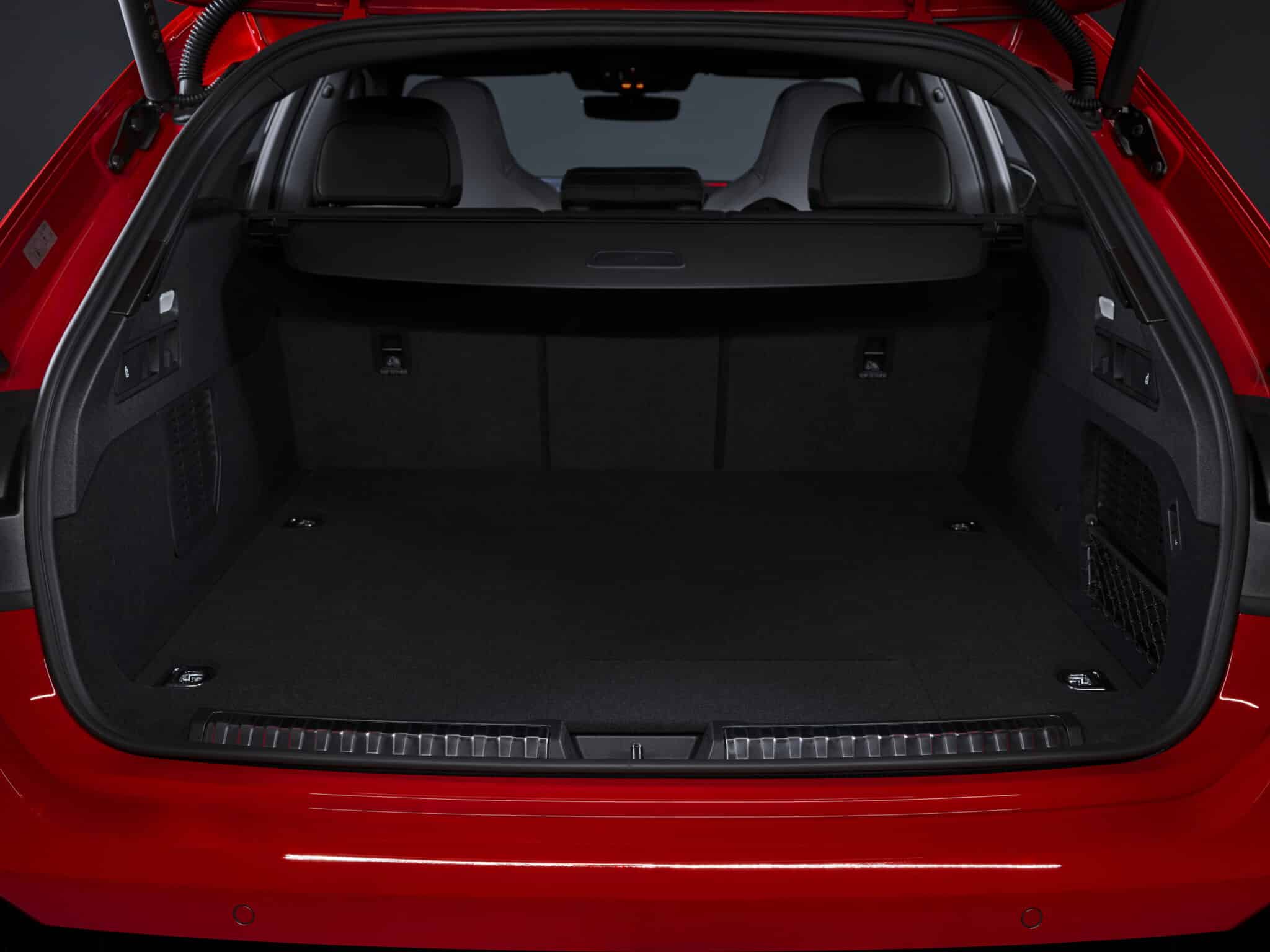
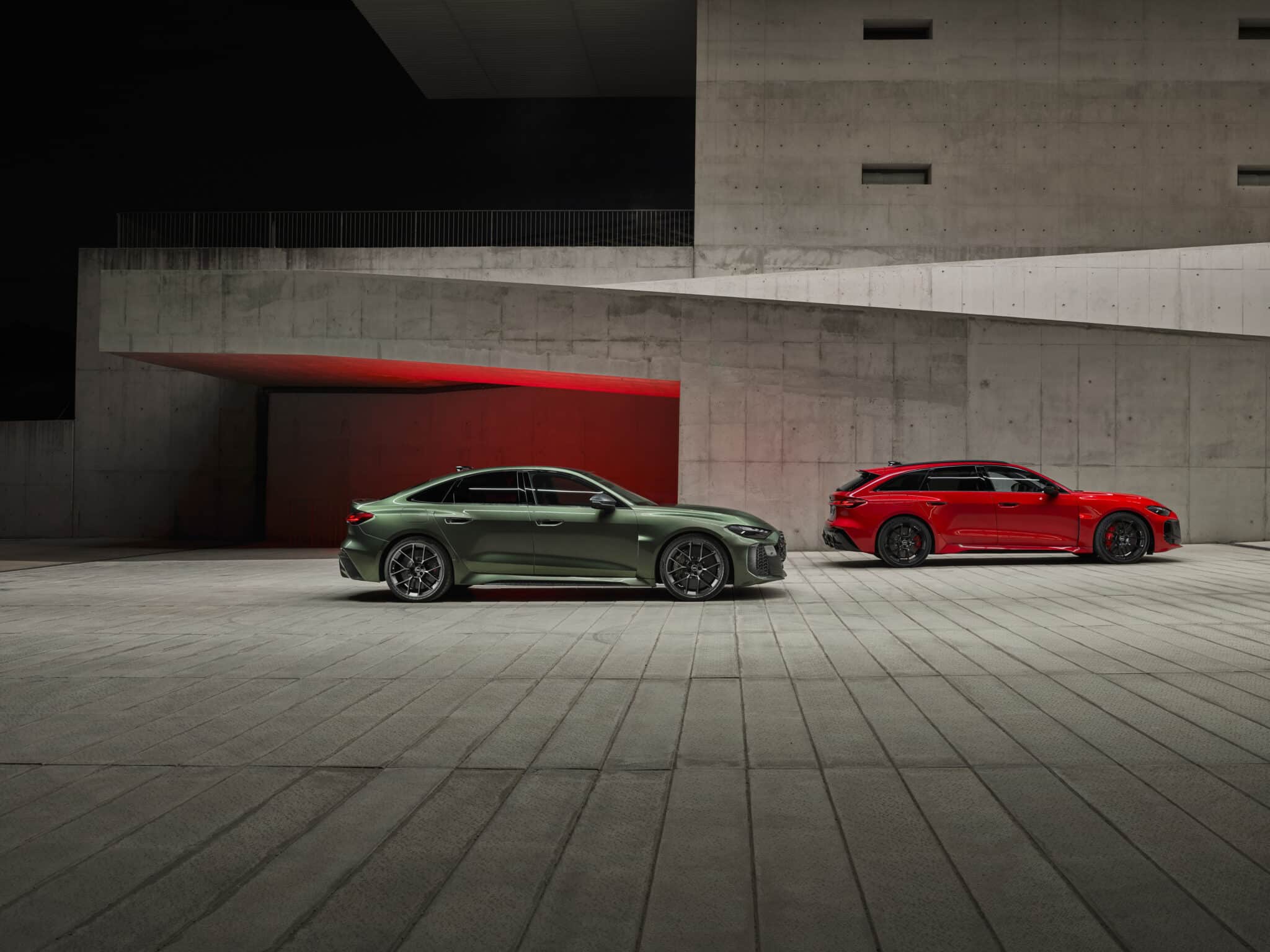
The RS 5 family, Saloon and Avant, will be built in Neckarsulm, Germany. European order books open in the first quarter of 2026, with first deliveries expected in summer 2026. UK sales follow from mid-2026.
Read more automotive industry news
Leave a Reply
You must be logged in to post a comment.