


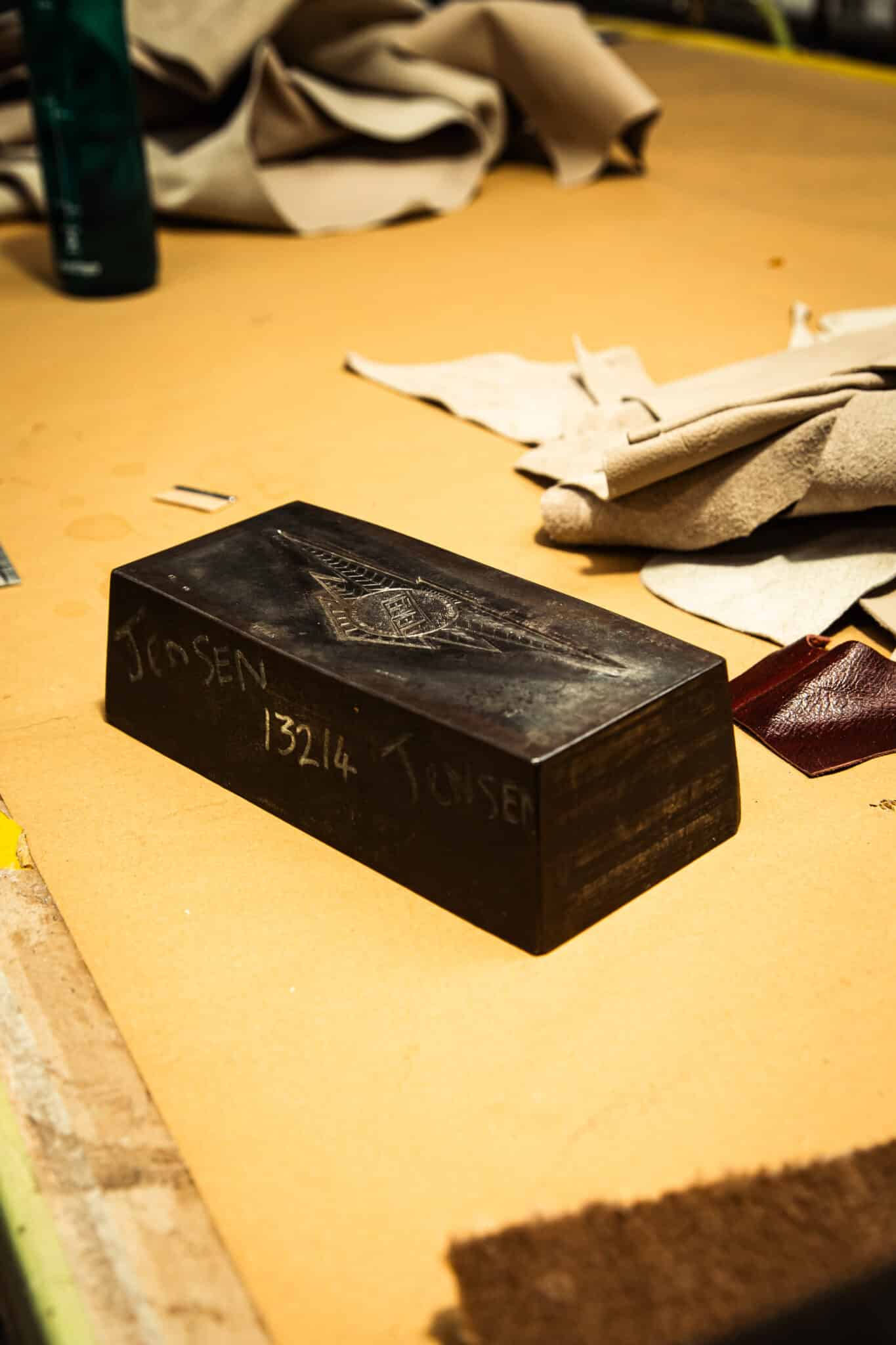
Recently, there’s been a box in Gordon’s office that hasn’t really been given much attention. But when he opened it, and we saw what was inside, we immediately wanted to learn as much as possible about what could be a genuine piece of British automotive manufacturing history.
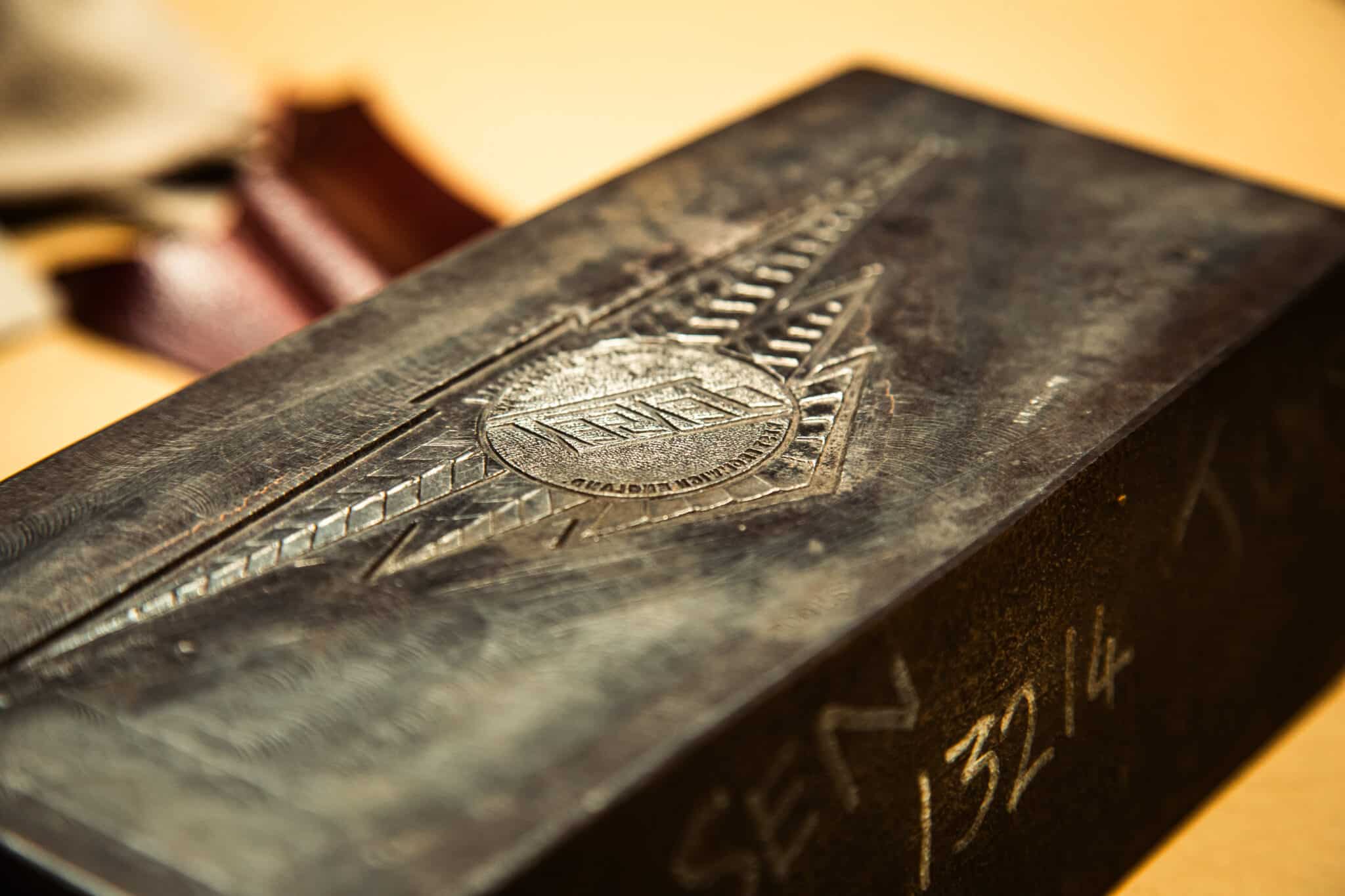
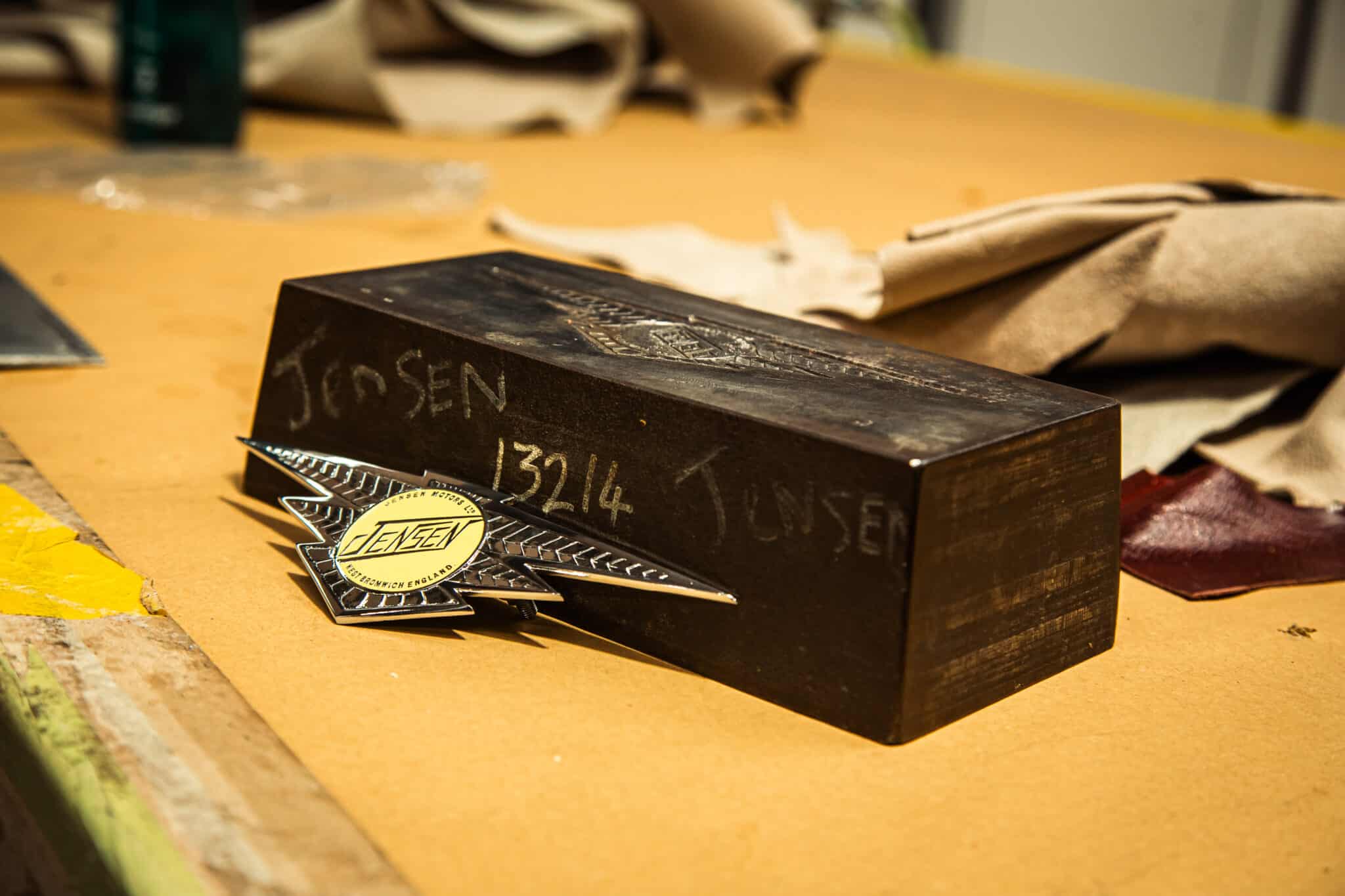
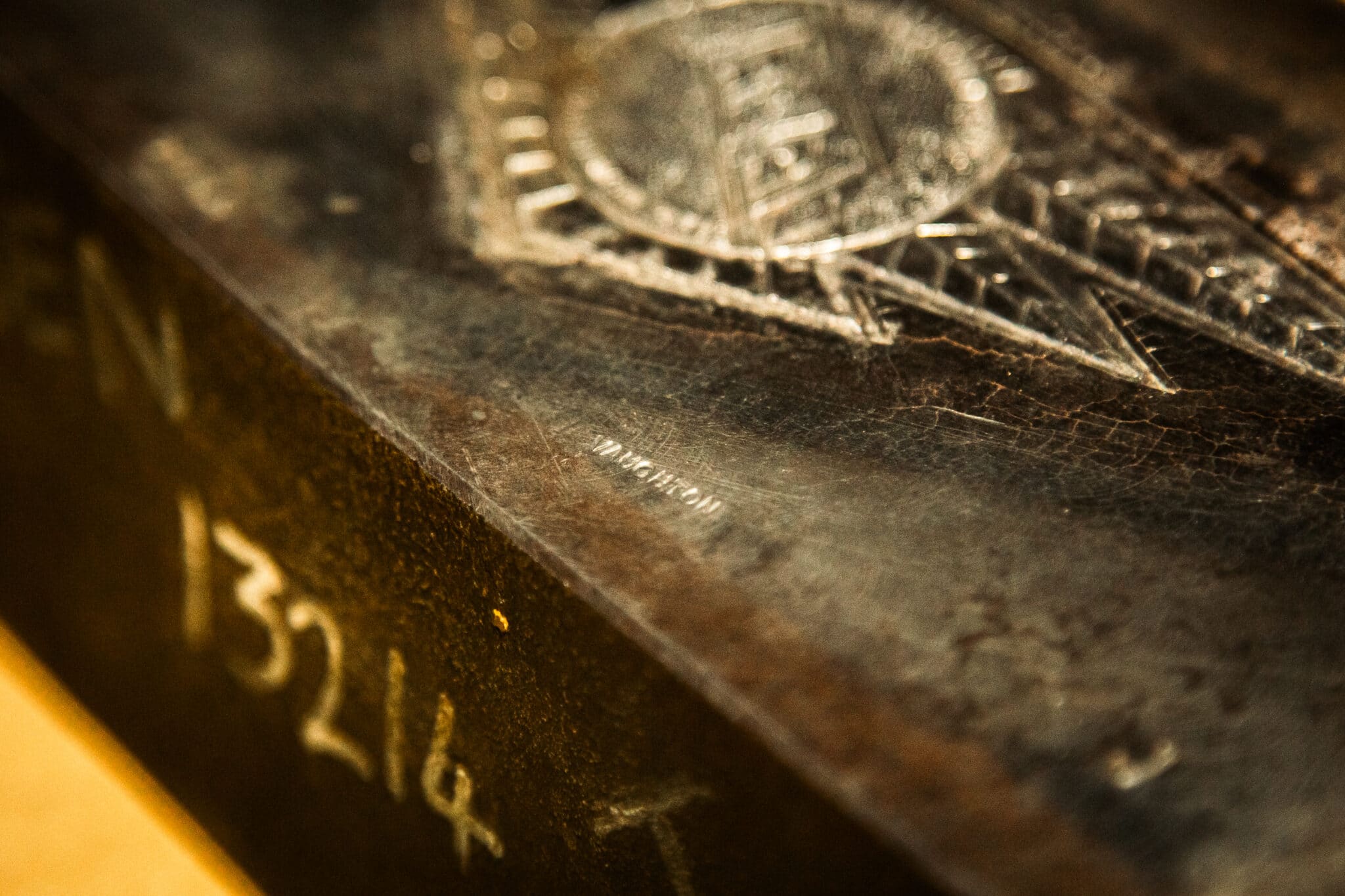
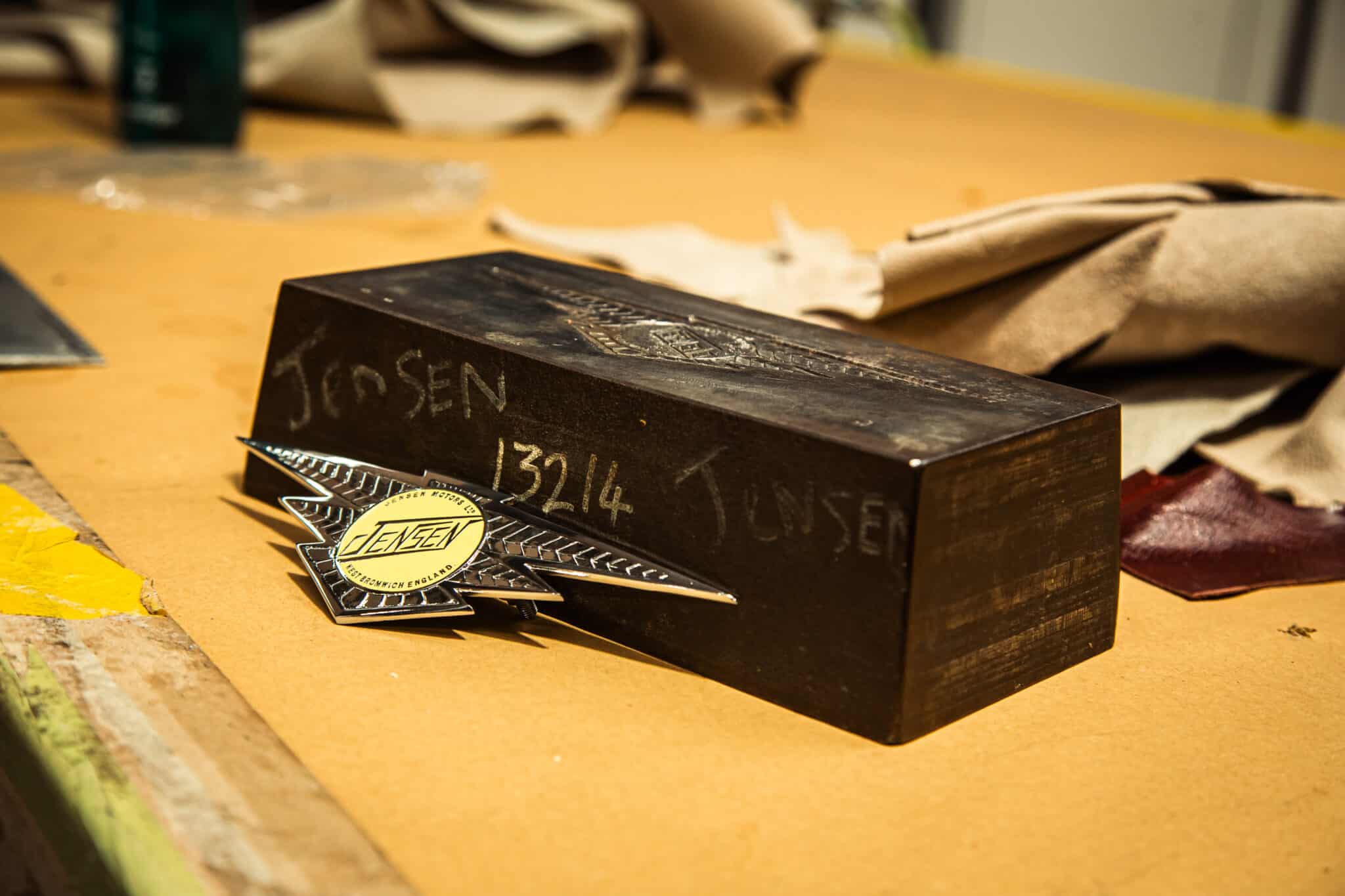
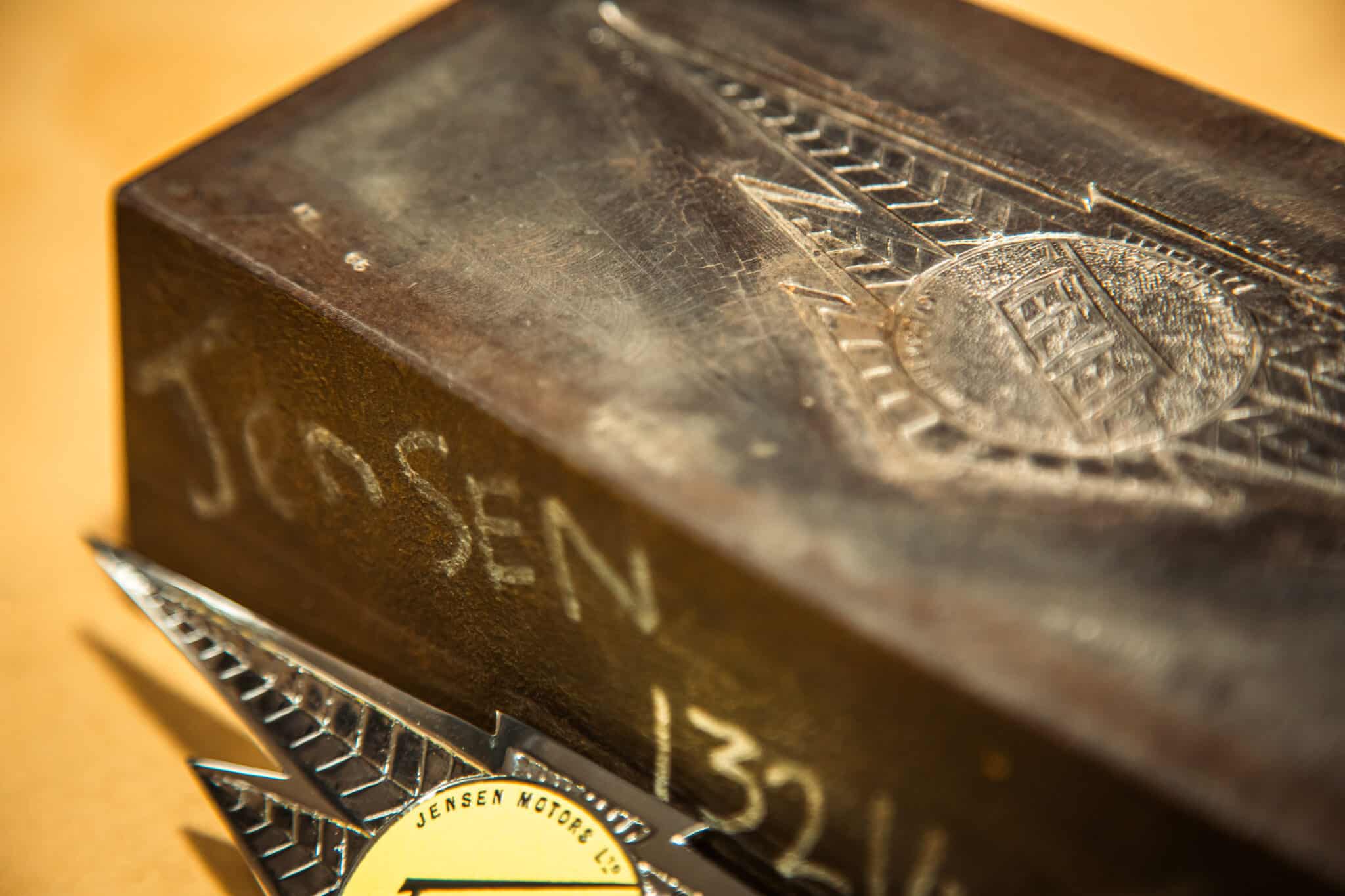
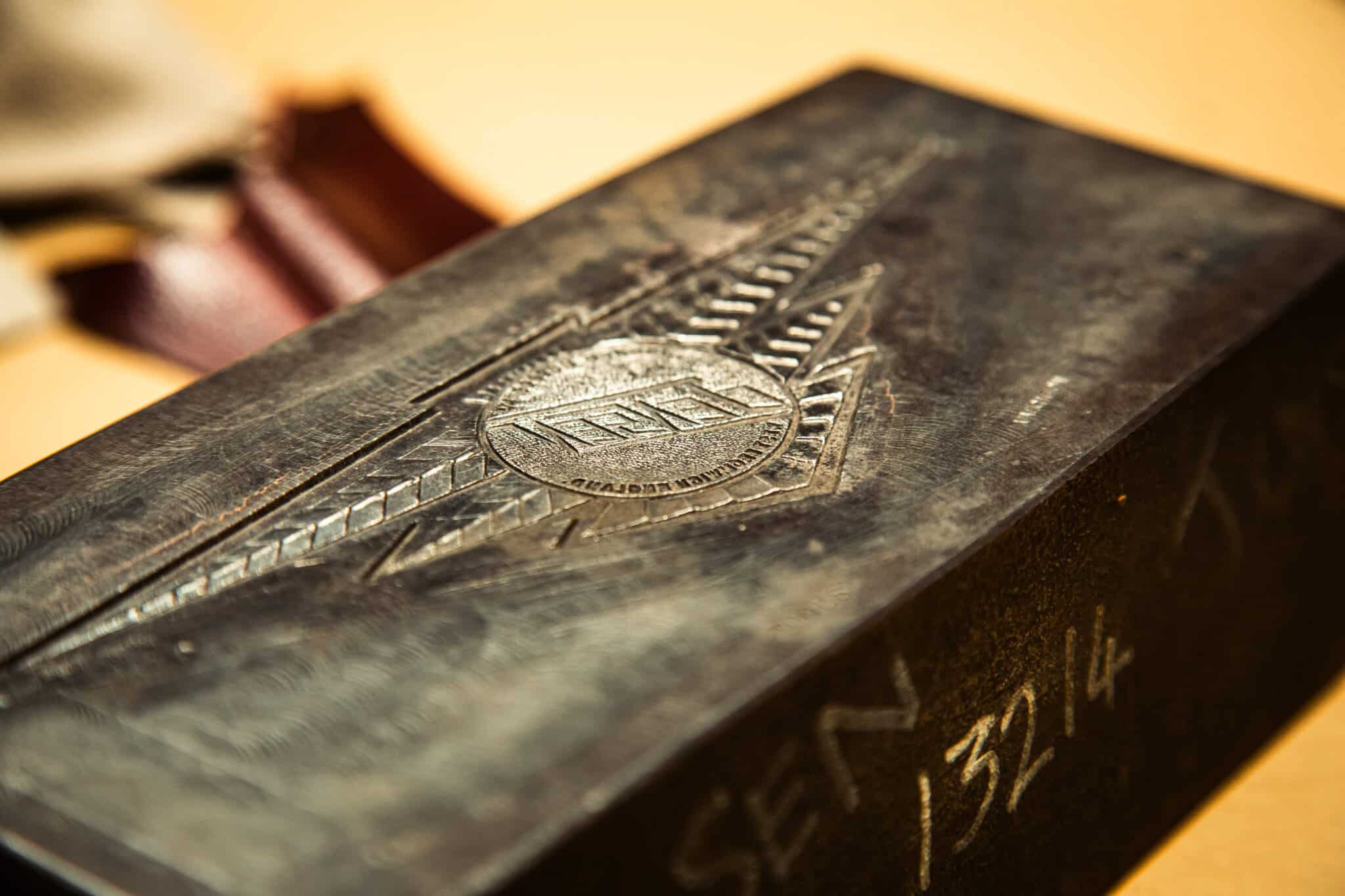
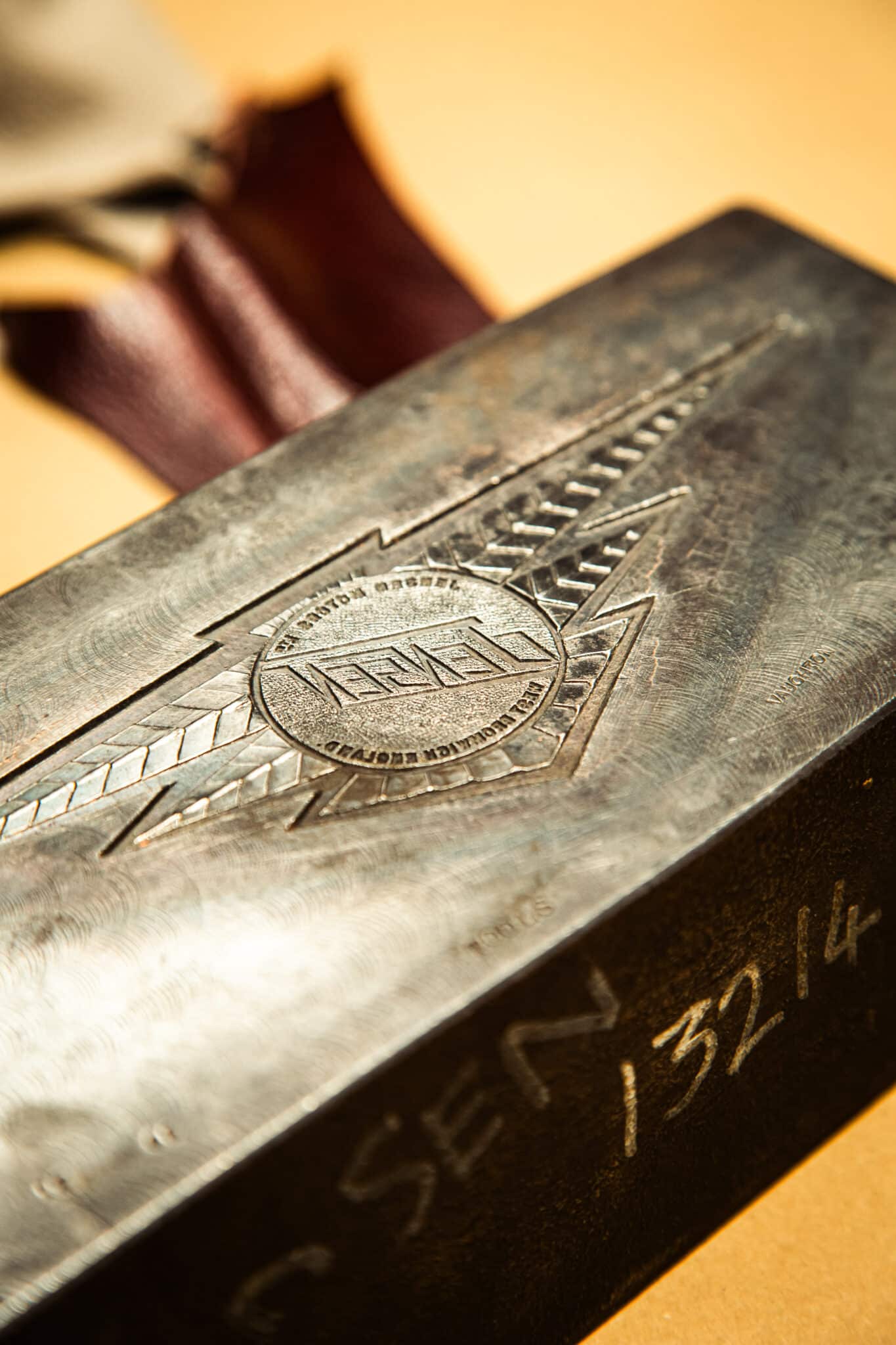
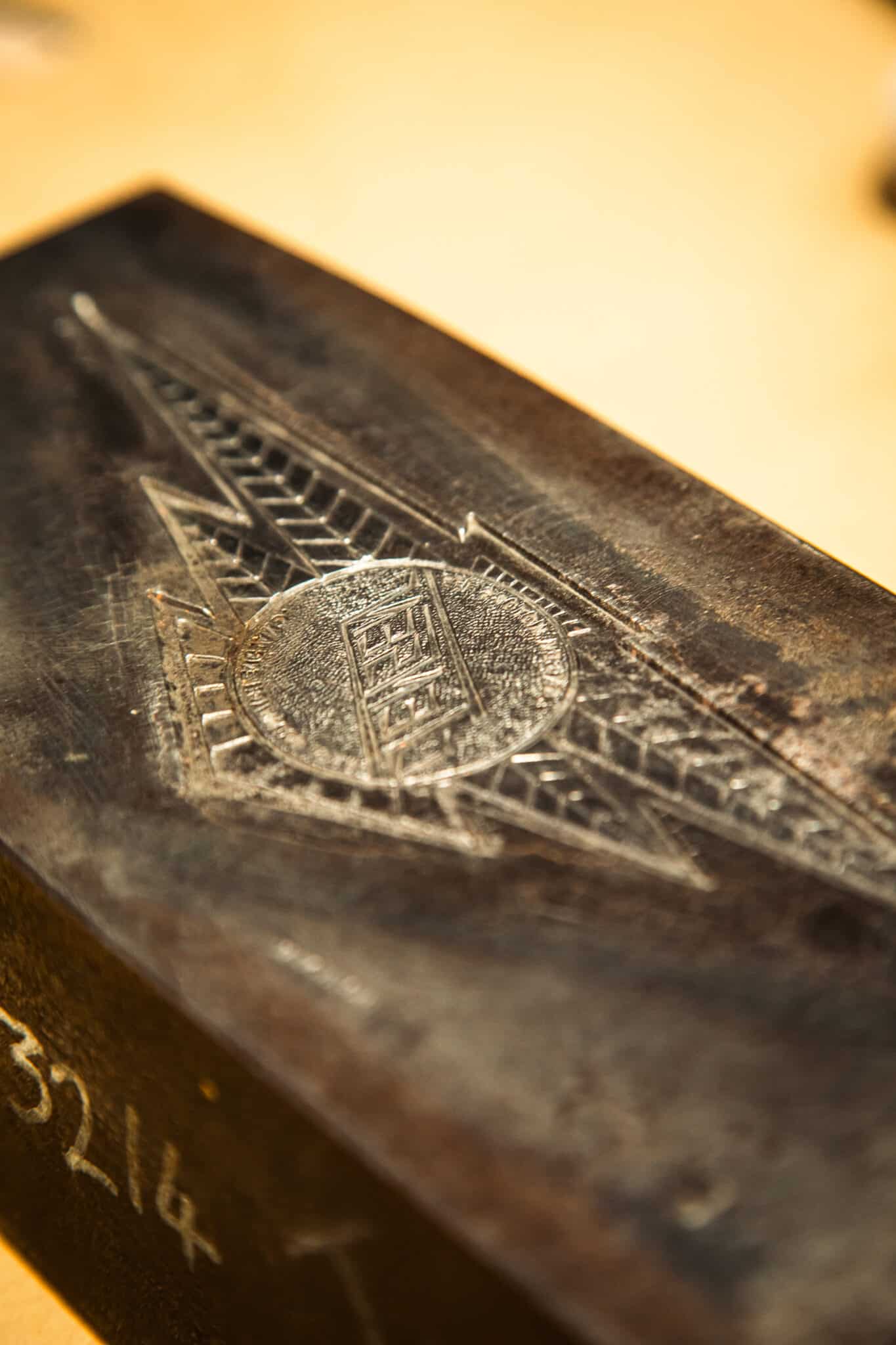
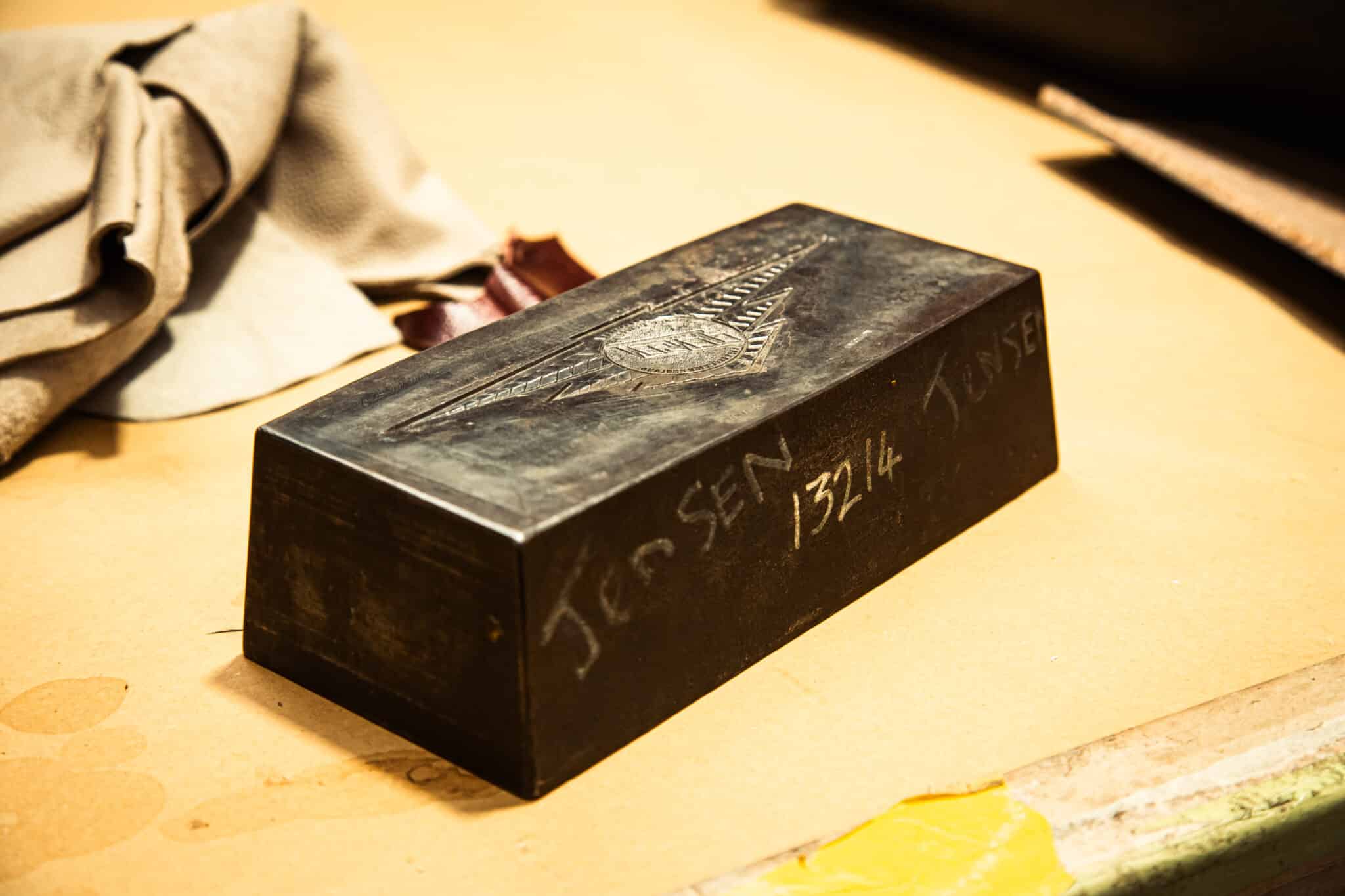
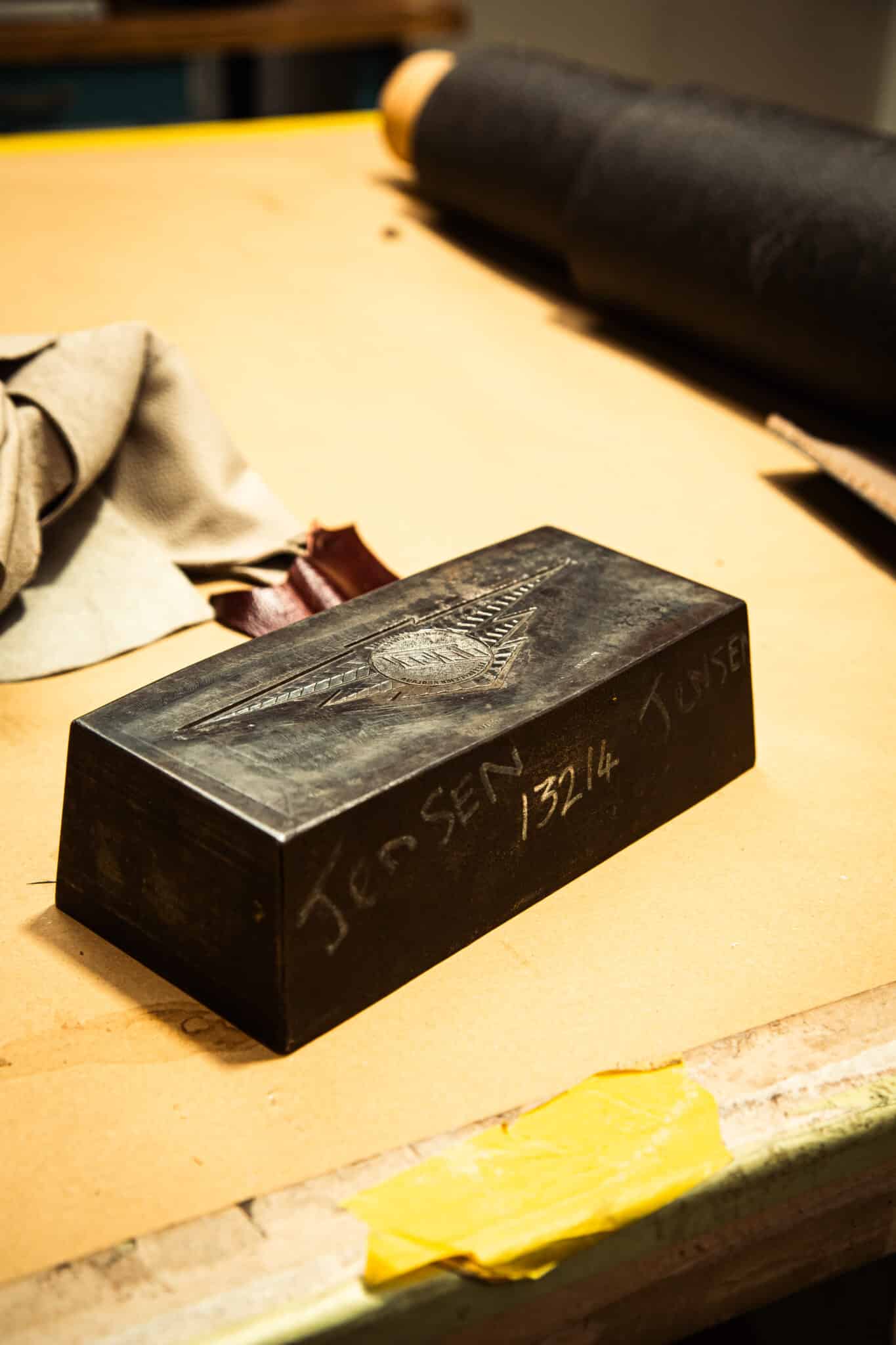
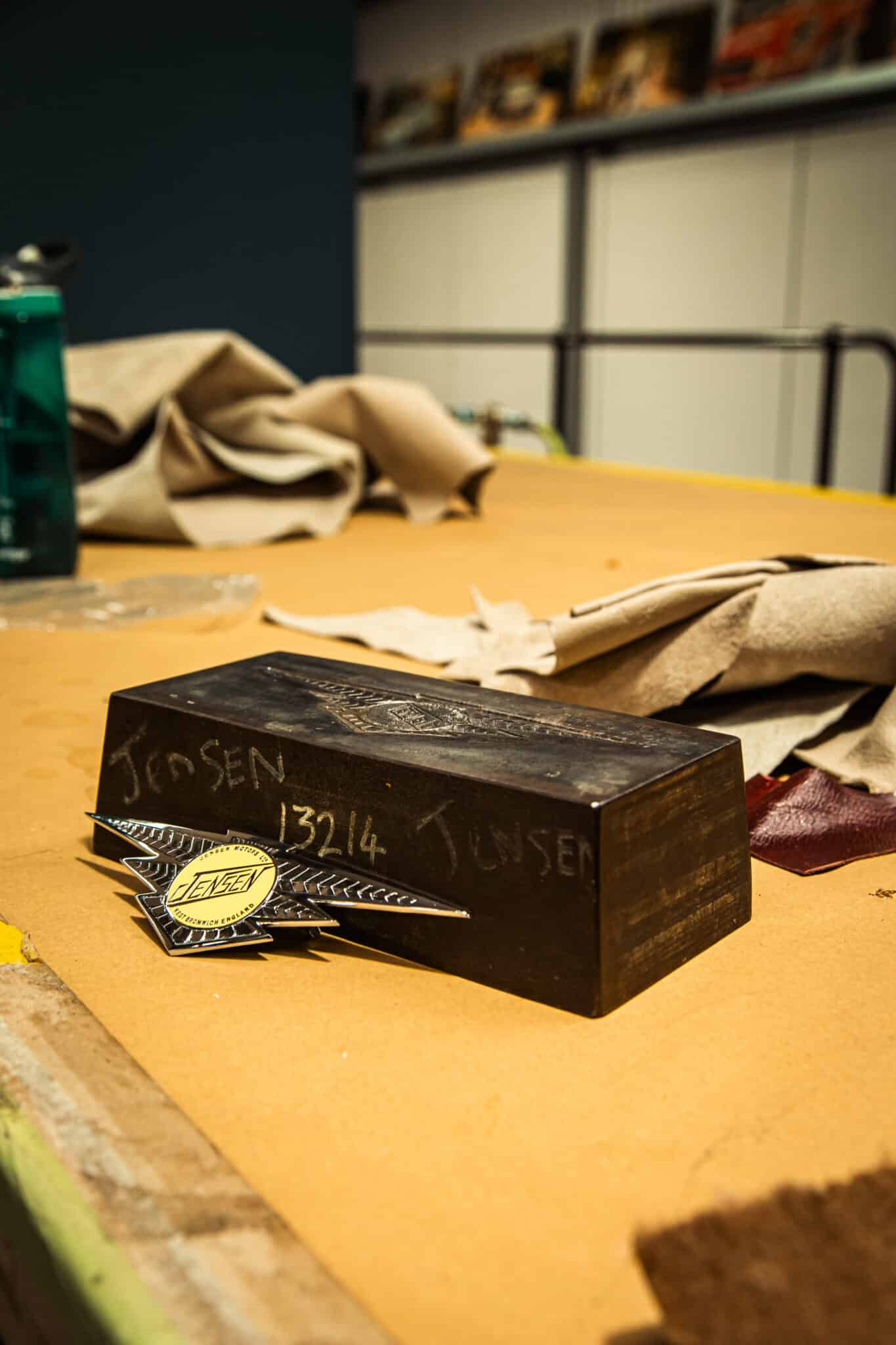
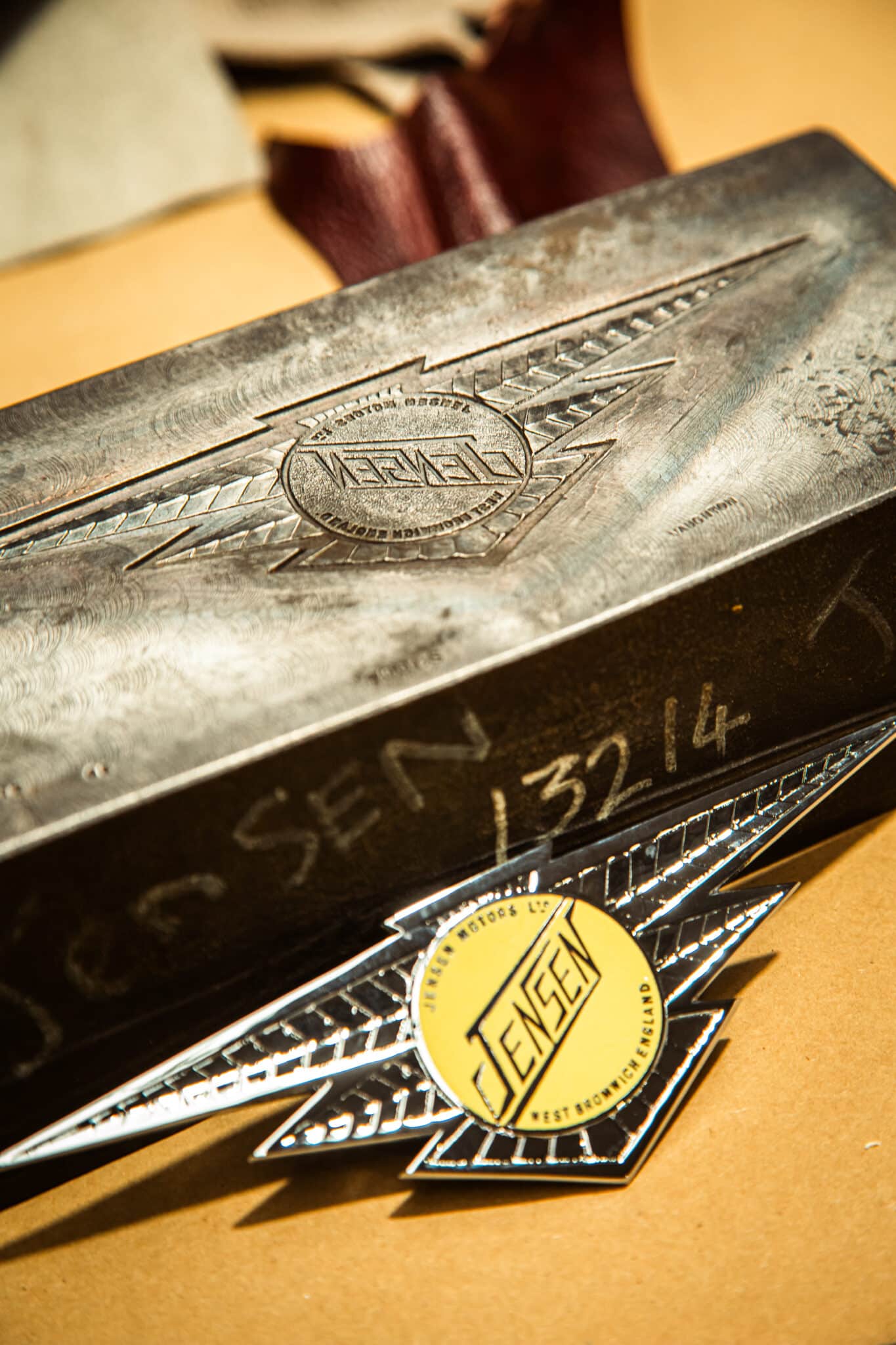
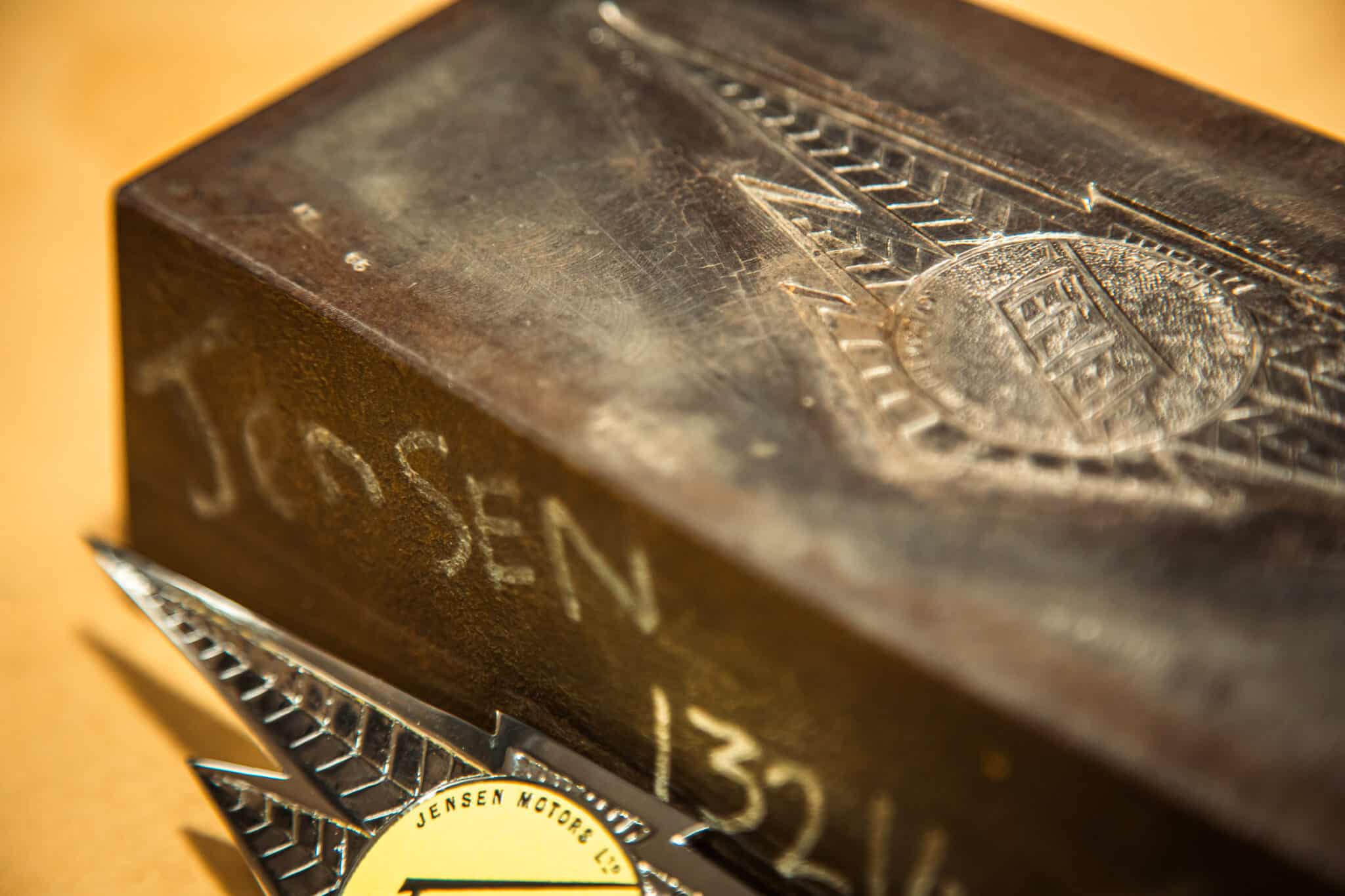
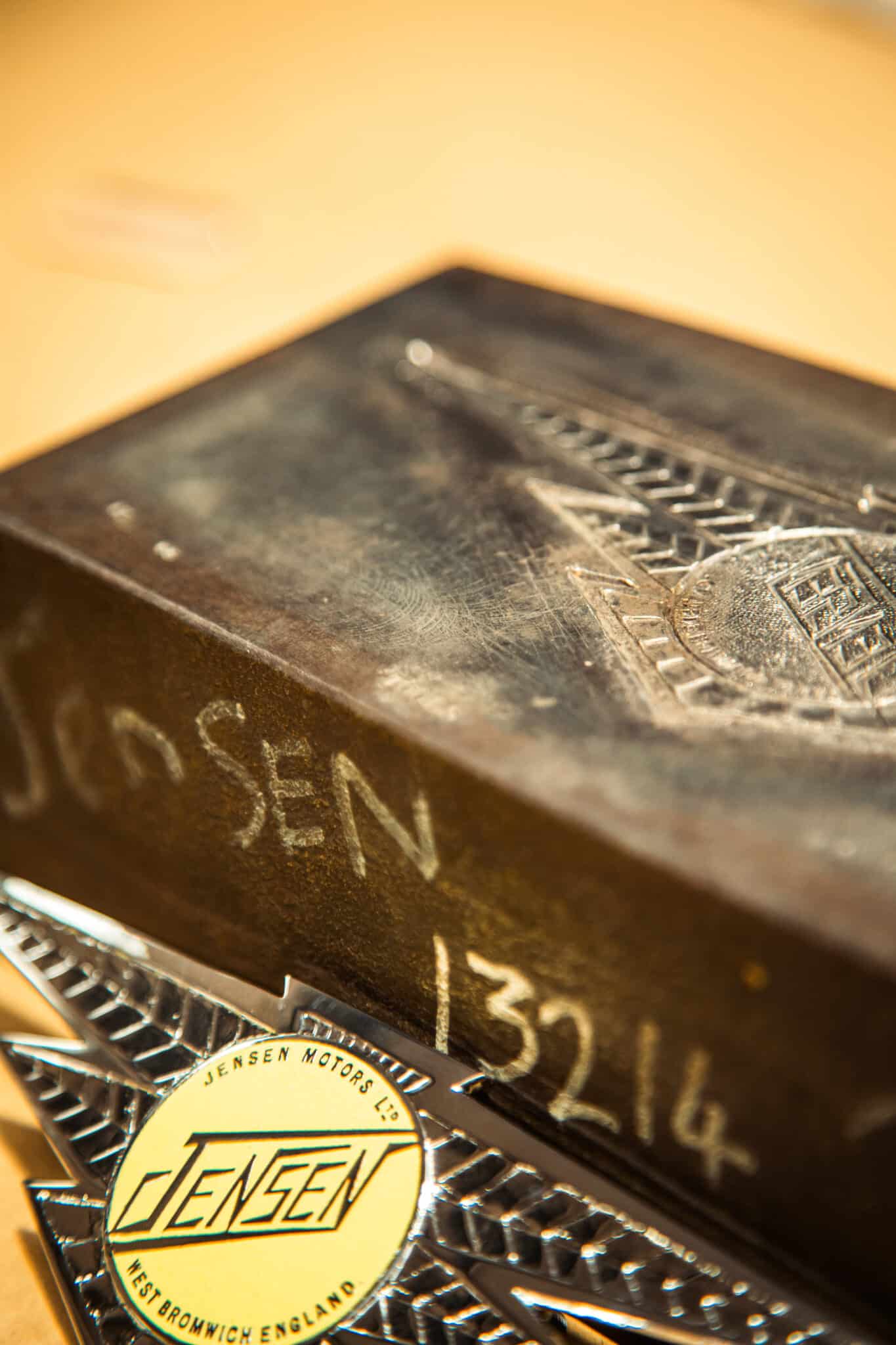
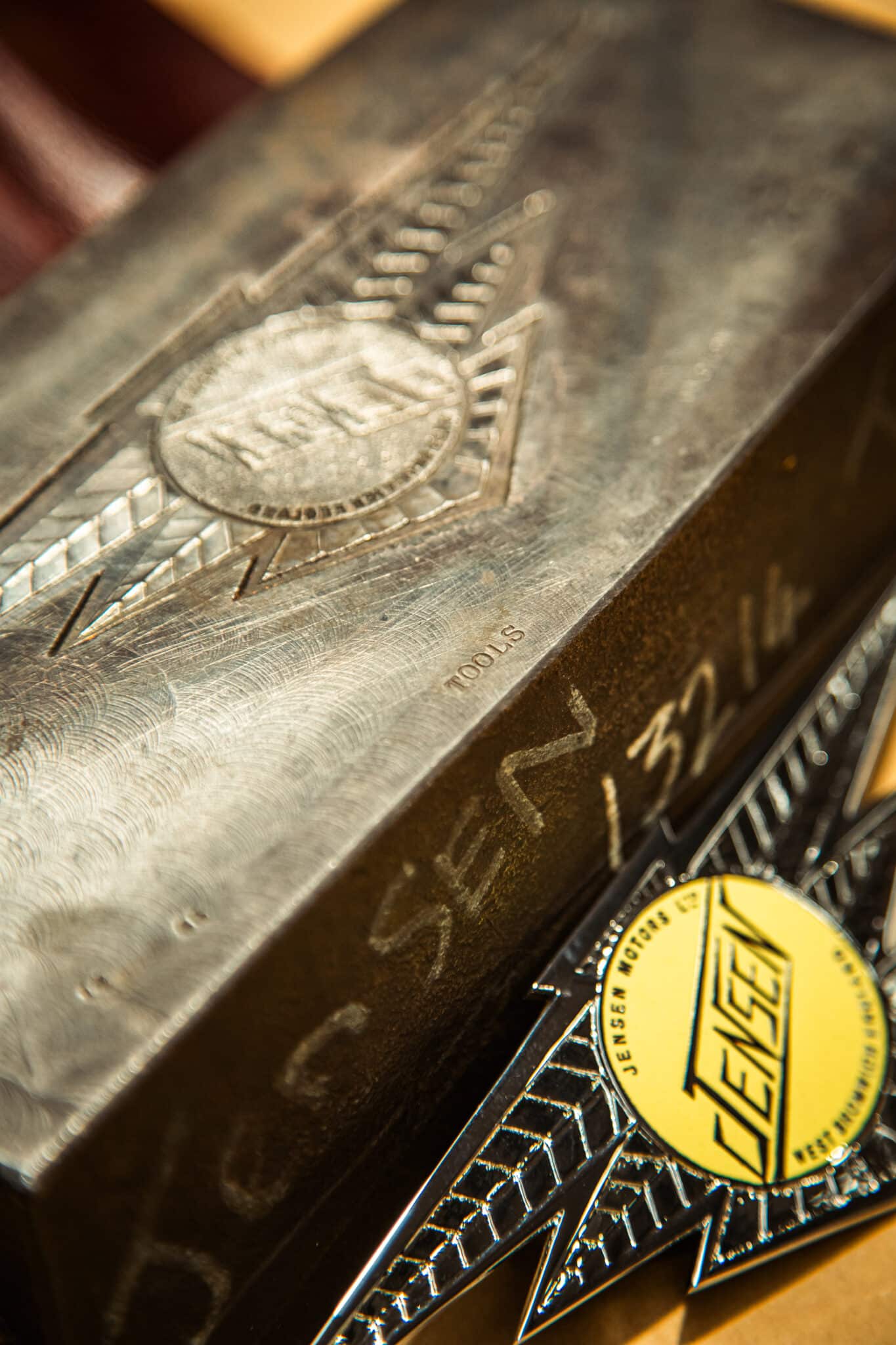
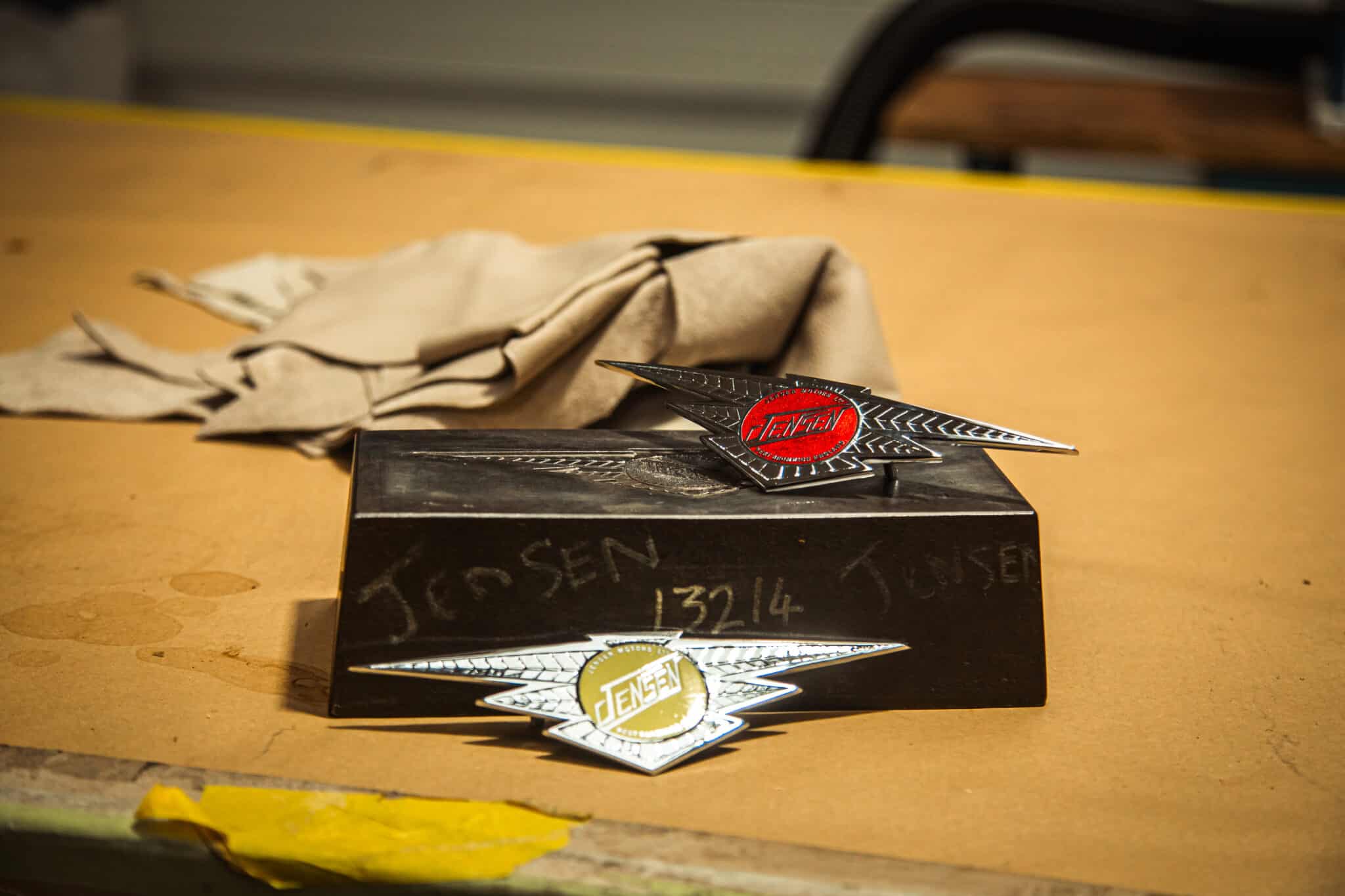
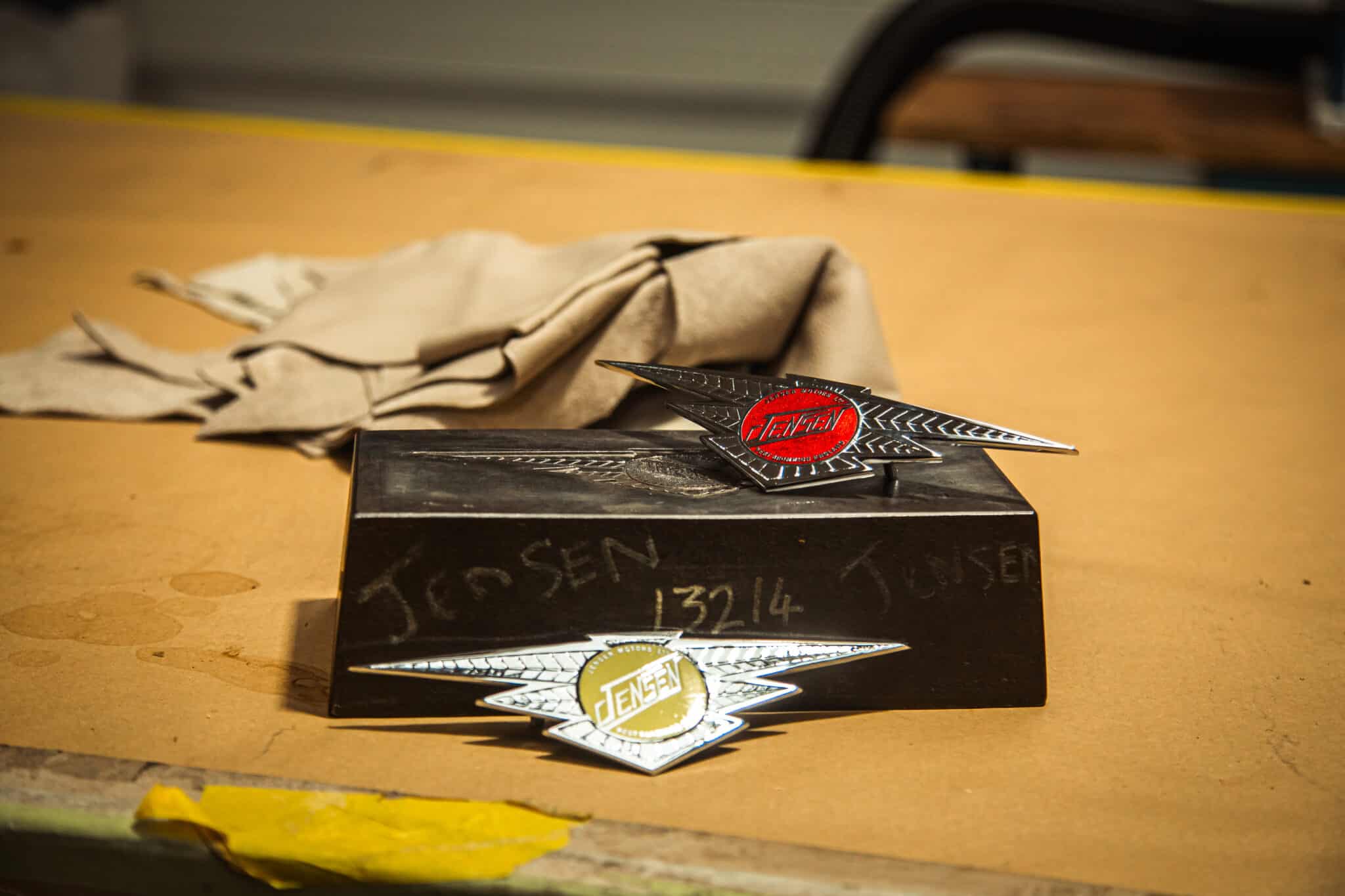
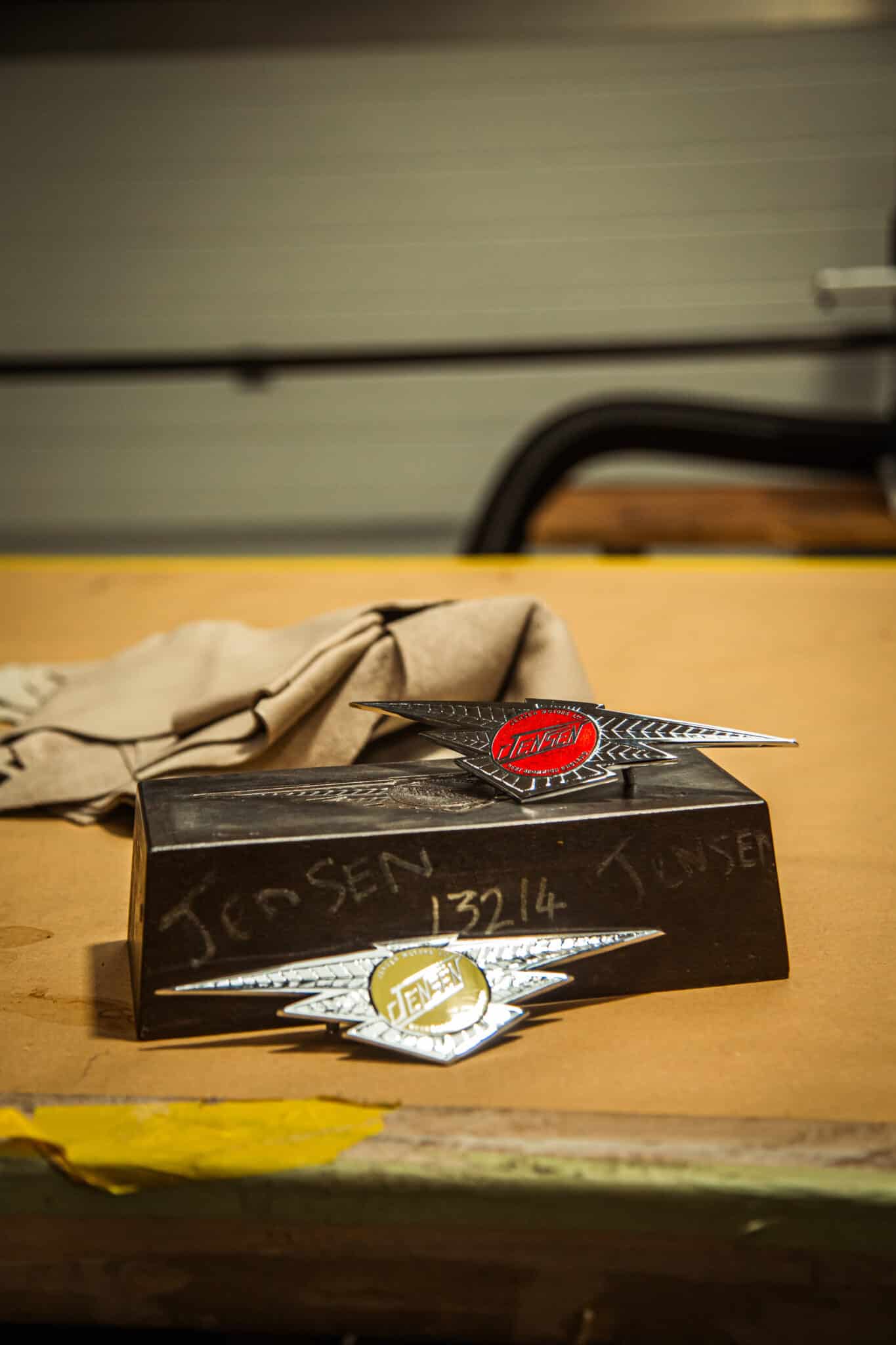
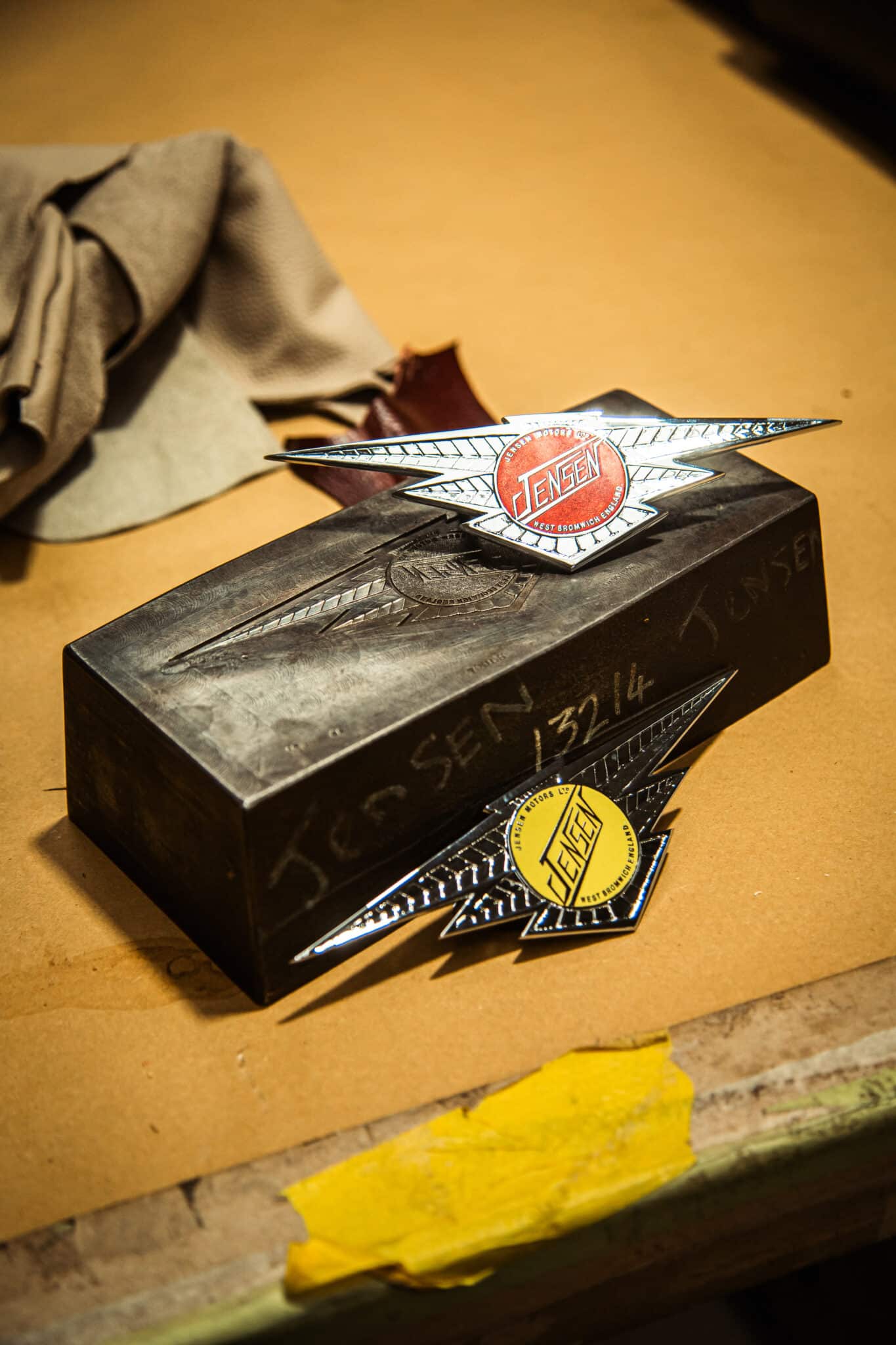
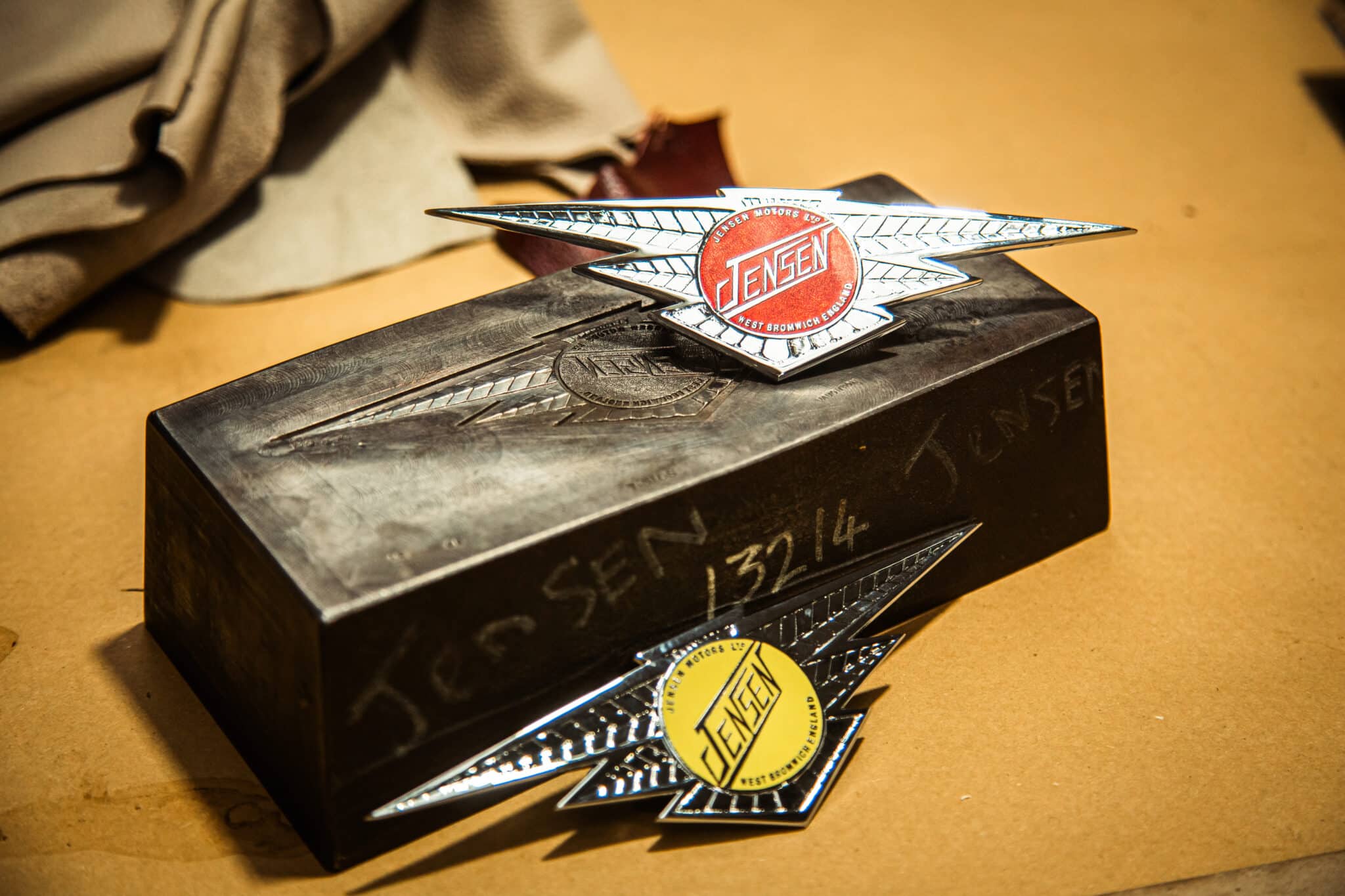
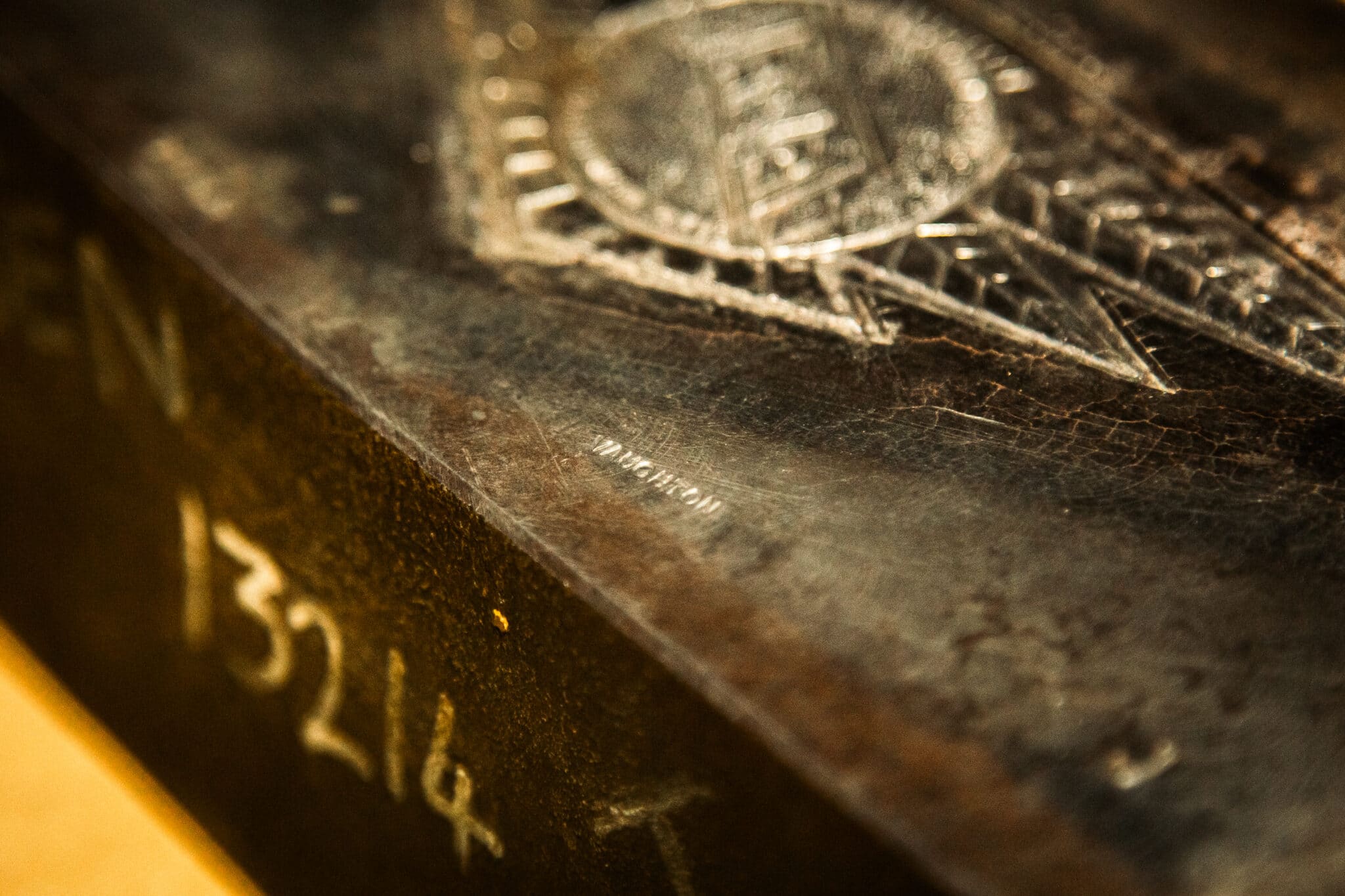
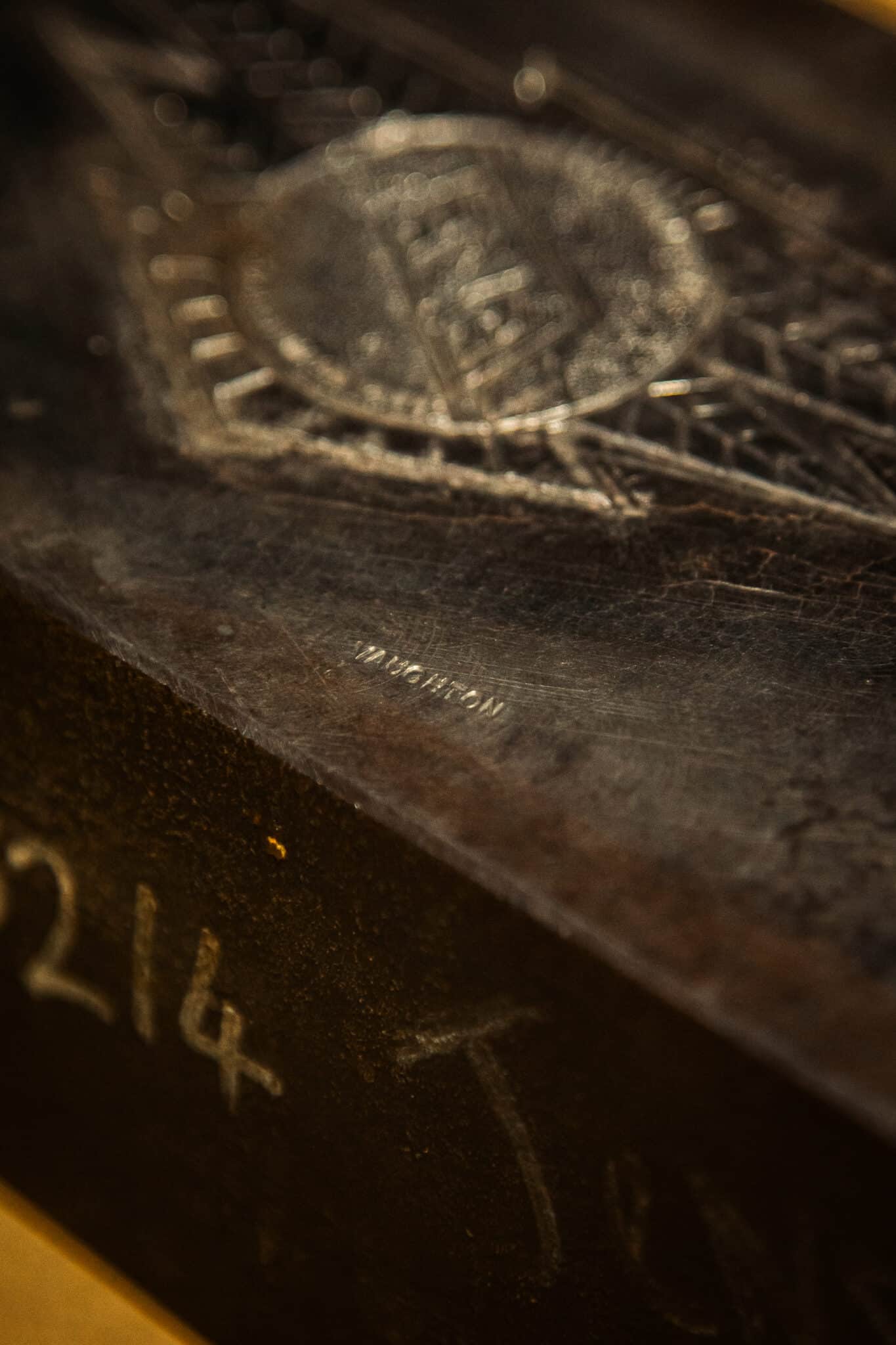
From what we can tell, this appears to be a collection of Jensen badge production tooling manufactured by Vaughton & Sons Ltd of Birmingham, likely produced for Jensen during the 1950s or 1960s. This was one of the most obvious starting points, thanks to a very clear stamp on the hardened steel embossing die, which says “VAUGHTON”.
The Jensen Badge
As Bridge Classic Cars has become specialists in restoring and maintaining Jensen cars, the winged Jensen badge is something the whole team recognises and is a sight that reminds us of the history of British car manufacturing.
Those badges didn’t just appear, though; they had to be made. Jensen Motors, based in West Bromwich, built the cars, but detailed enamel badges and pressed emblems were typically produced by specialist firms, and in mid-20th-century Britain, Birmingham was the hub of that industry.
Vaughton & Sons Ltd were one of the big names in badge and medal manufacturing. They produced everything from civic insignia to automotive emblems. If Jensen needed high-quality pressed and enamelled badges in the 1950s and 60s, companies like Vaughton would have been where they went.
Sadly, very little original supplier tooling from British marques of this era is known to survive. However, this might be exactly that!
A Production Die
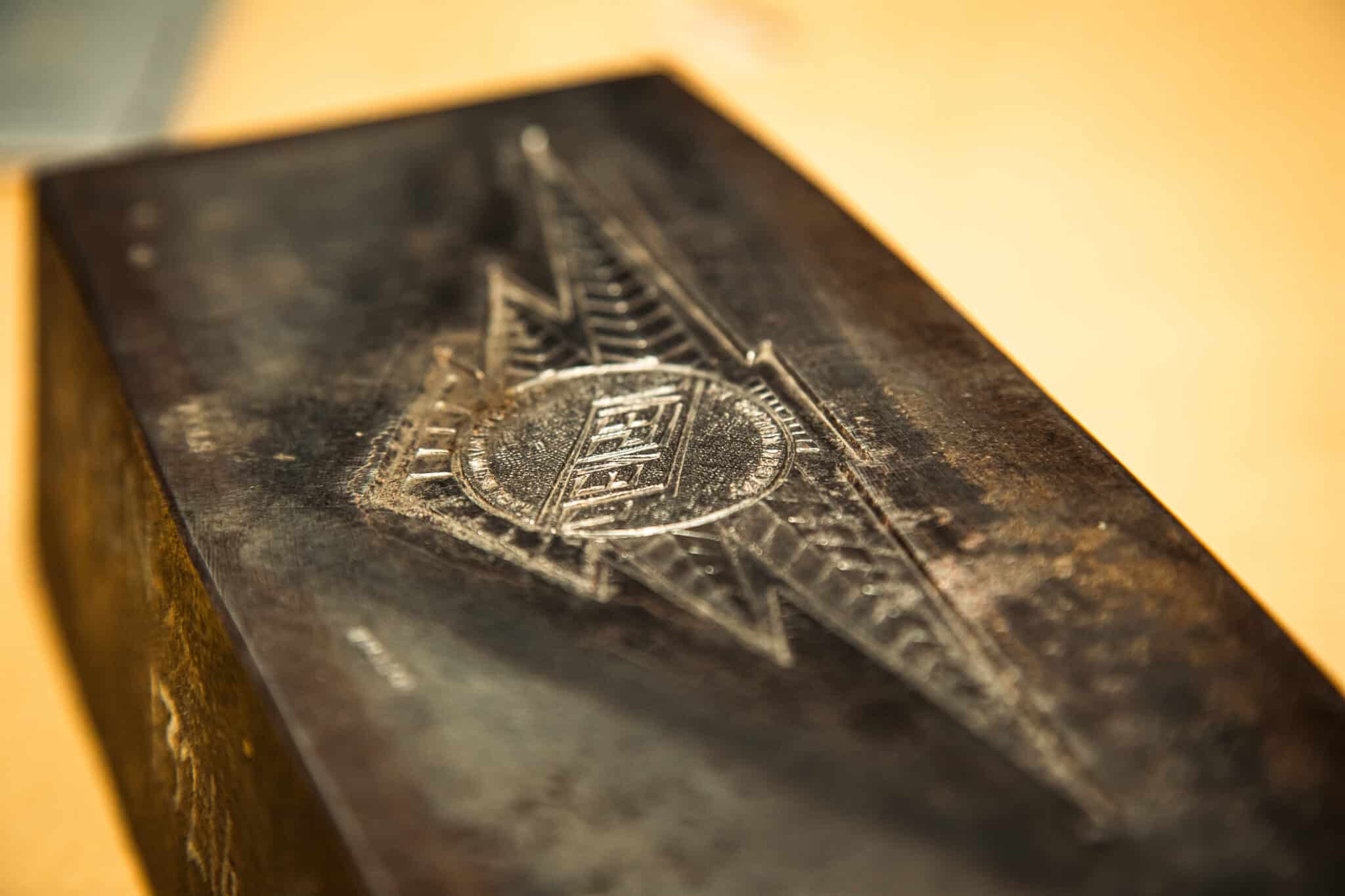
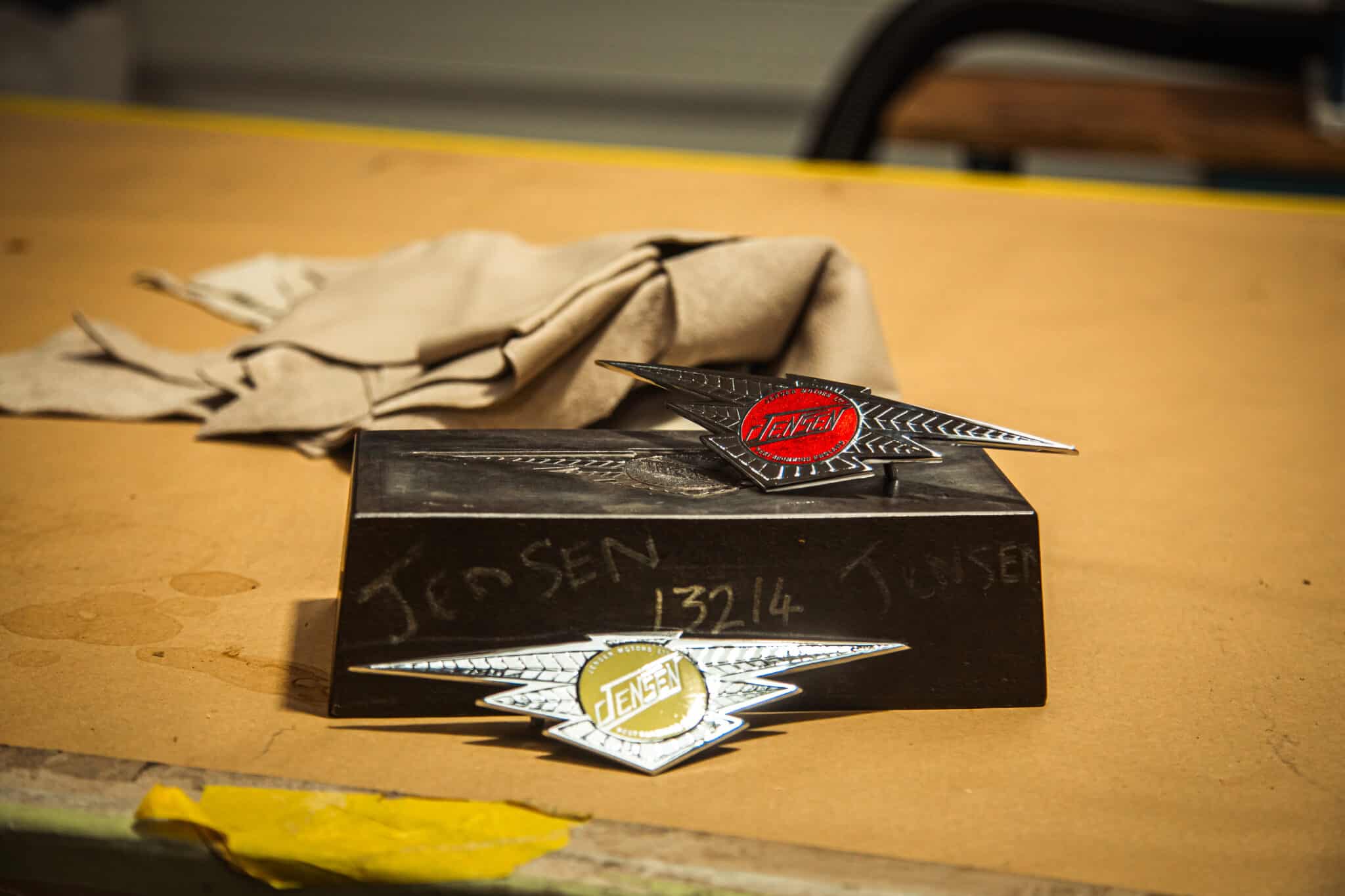
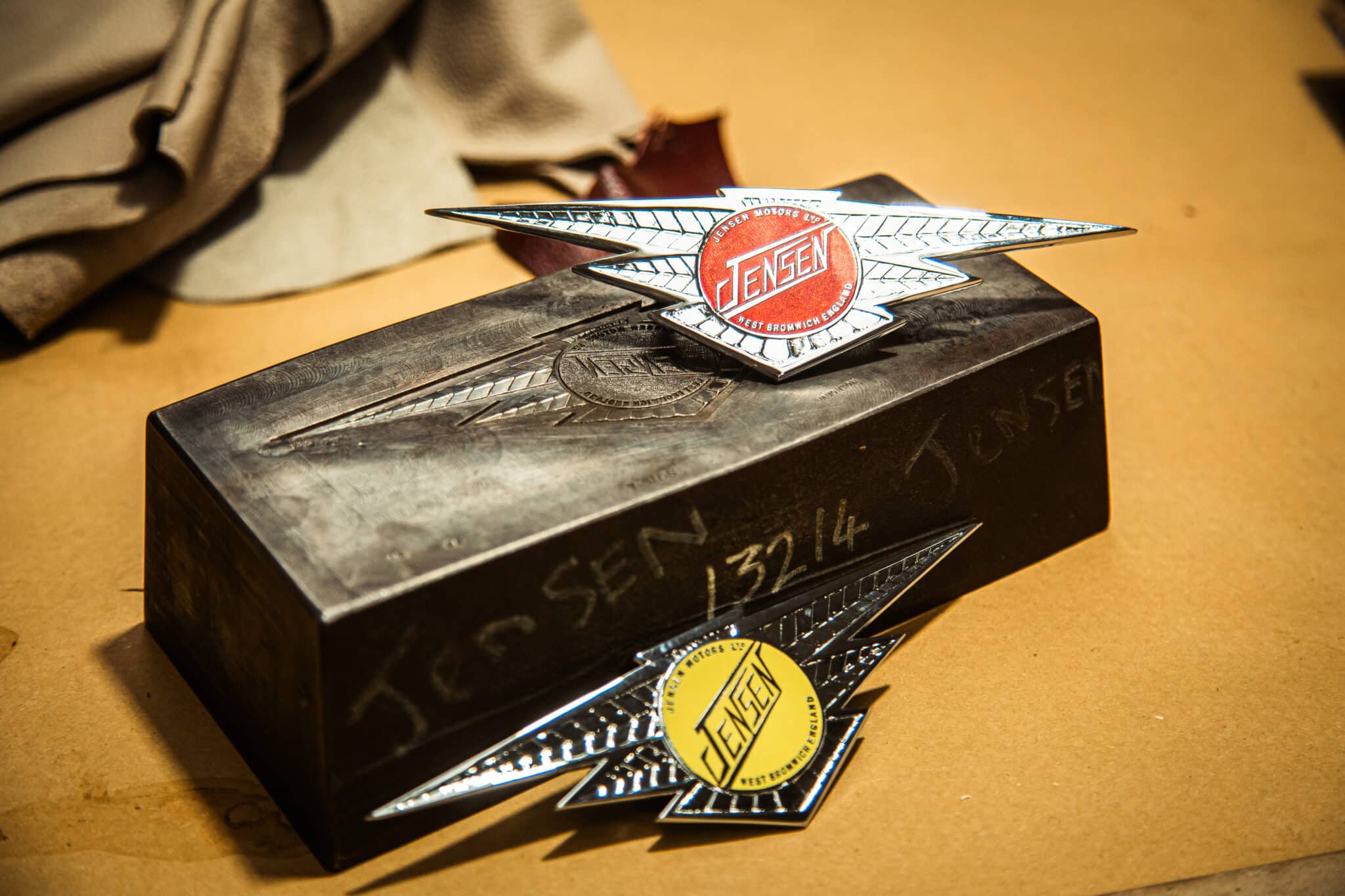
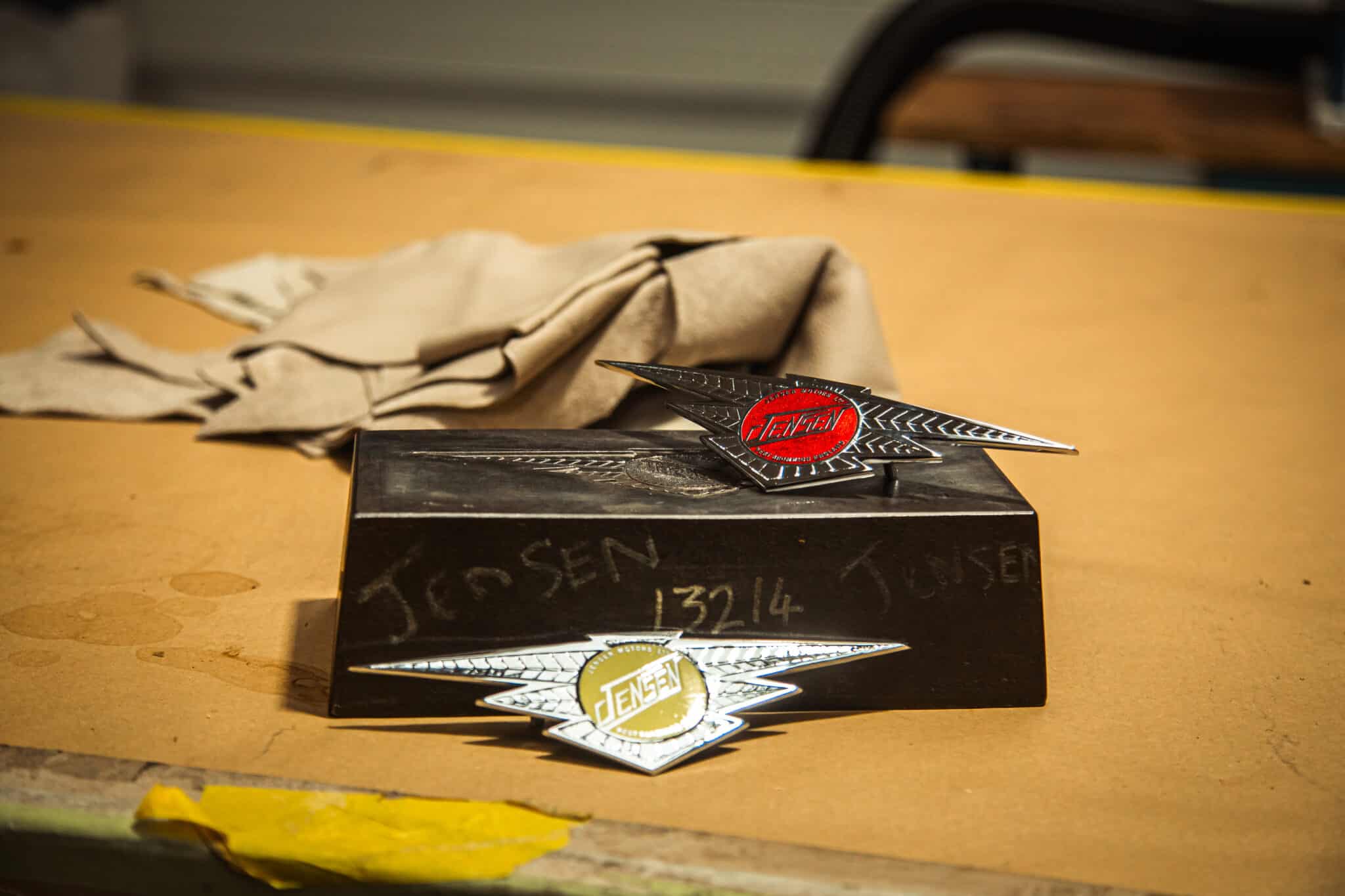
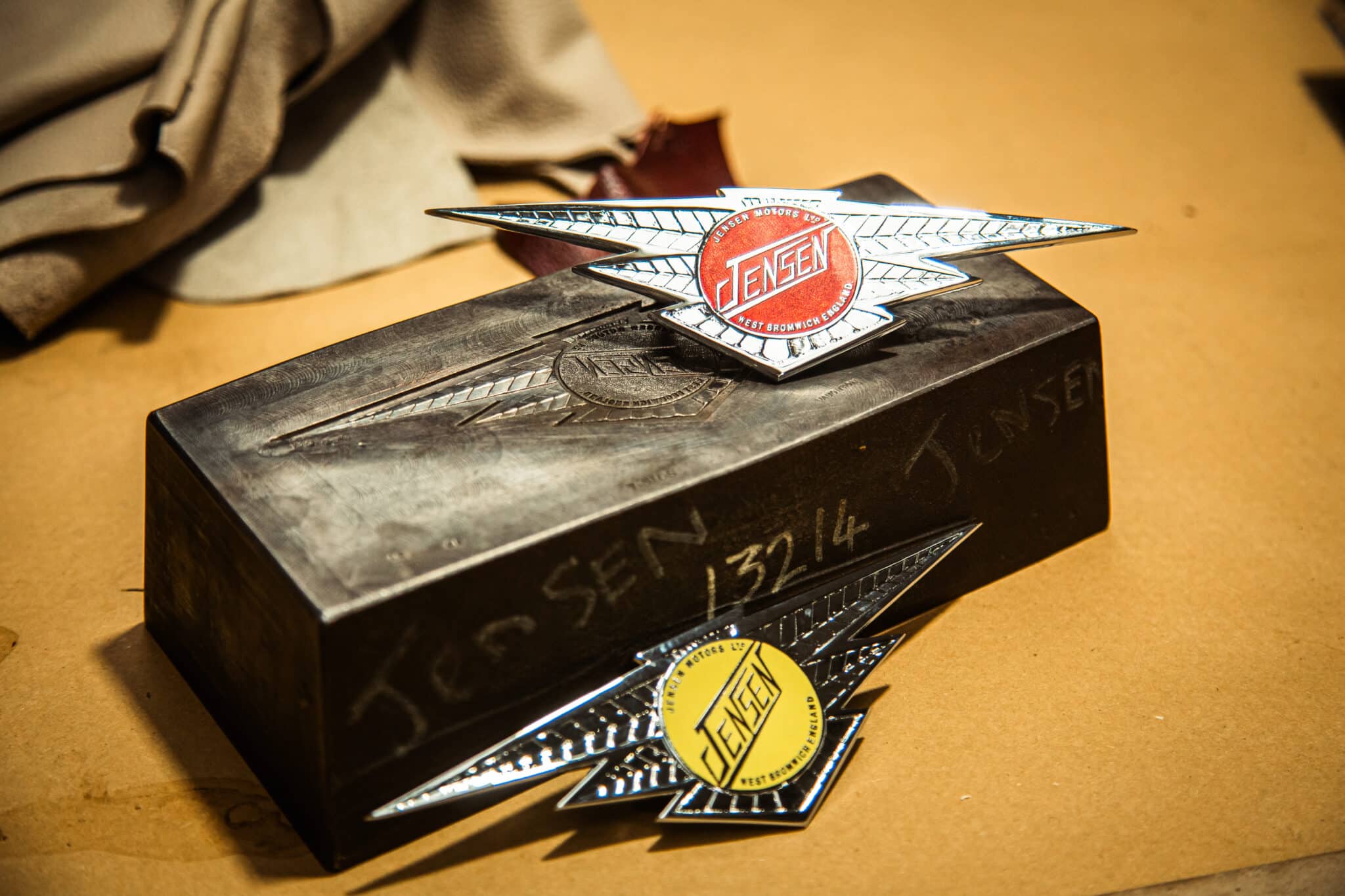
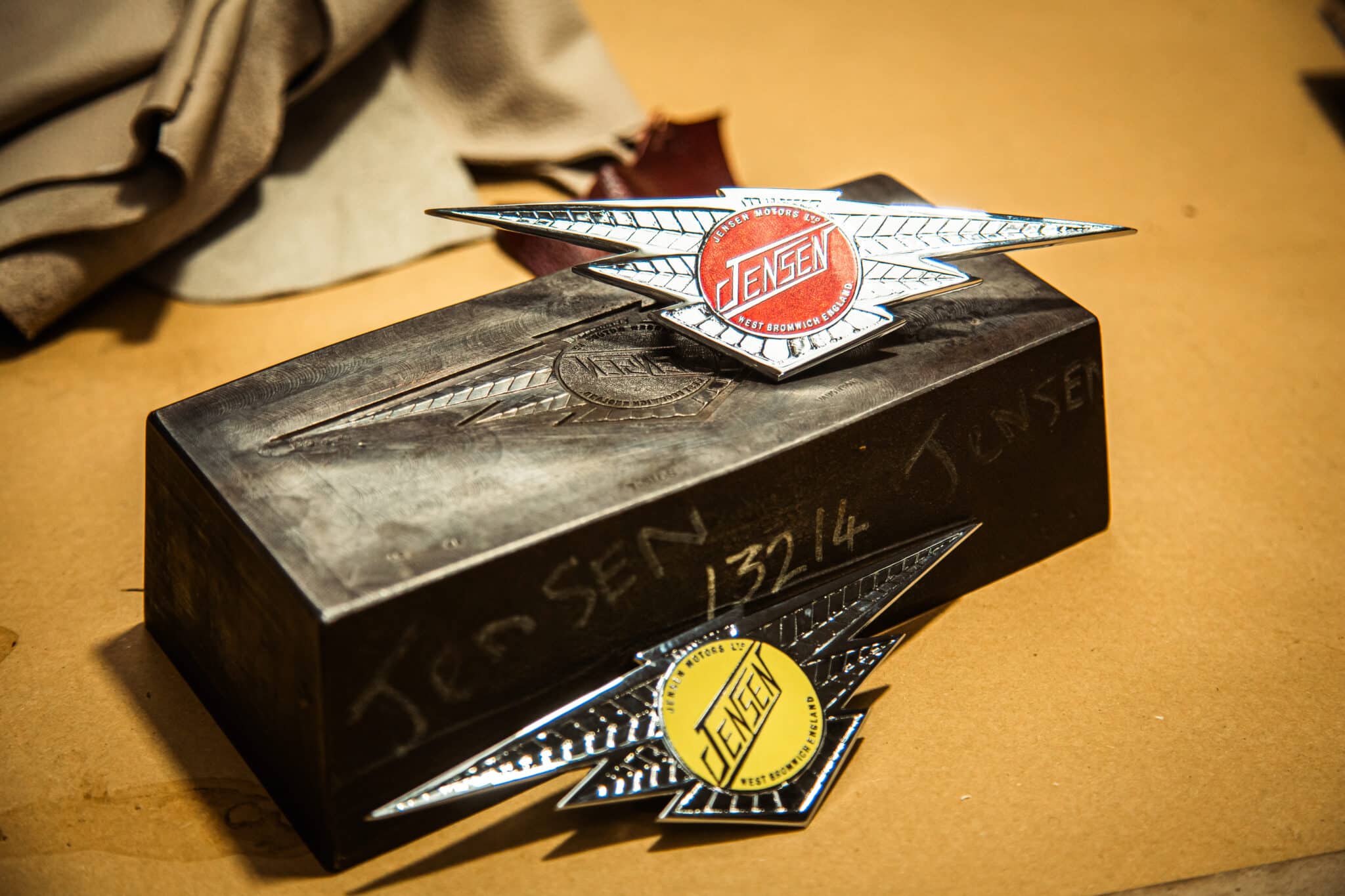
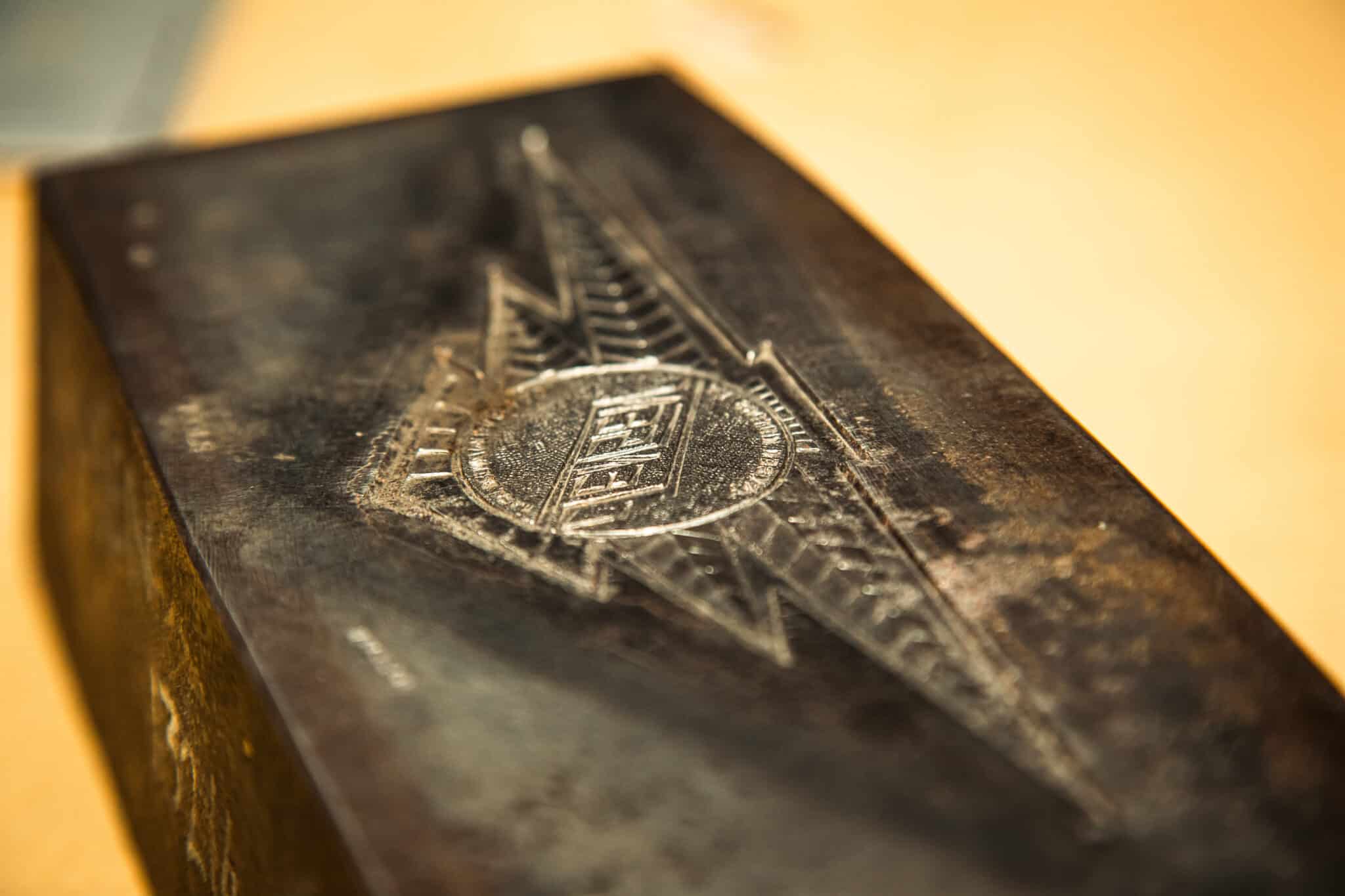
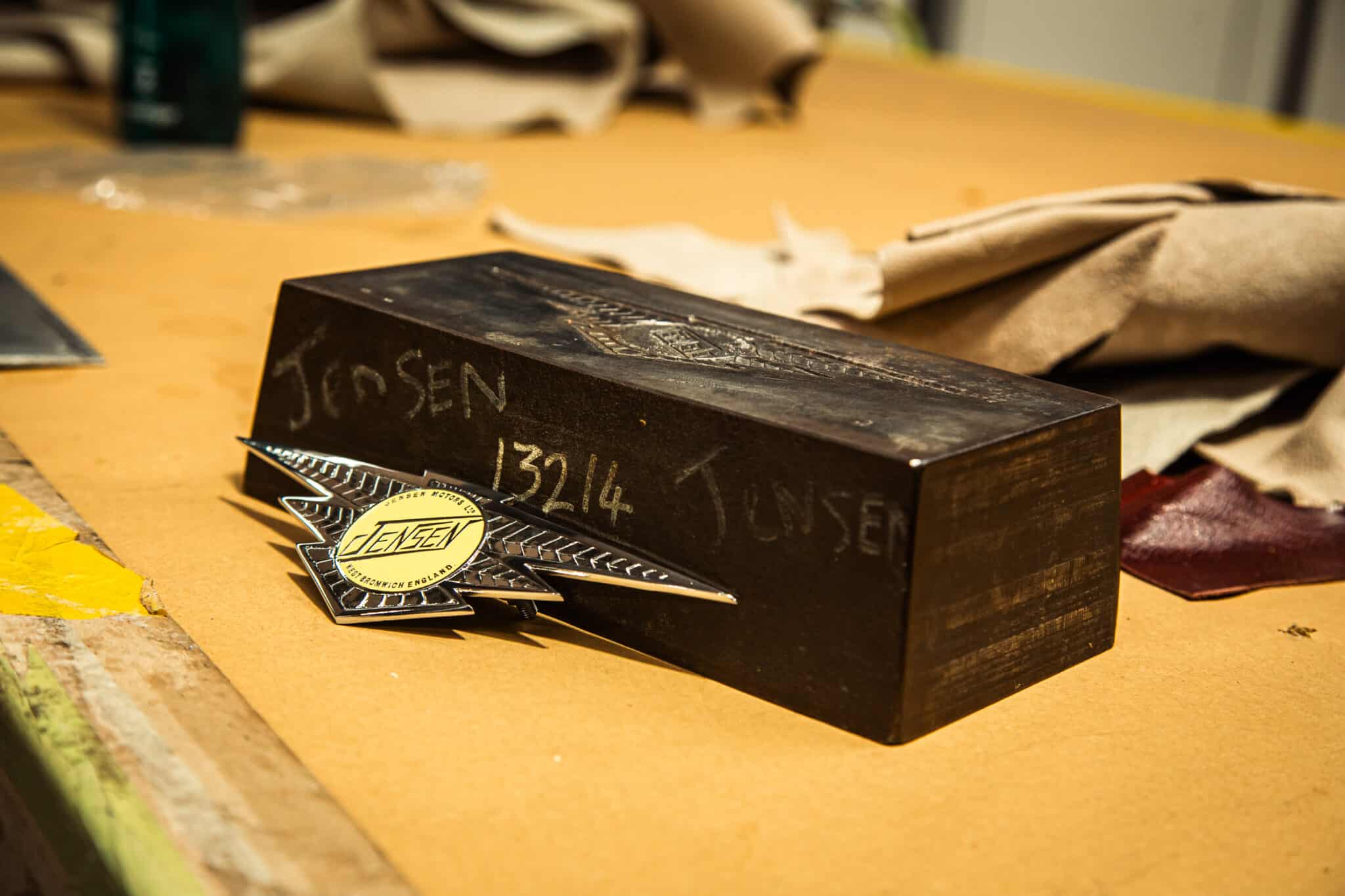
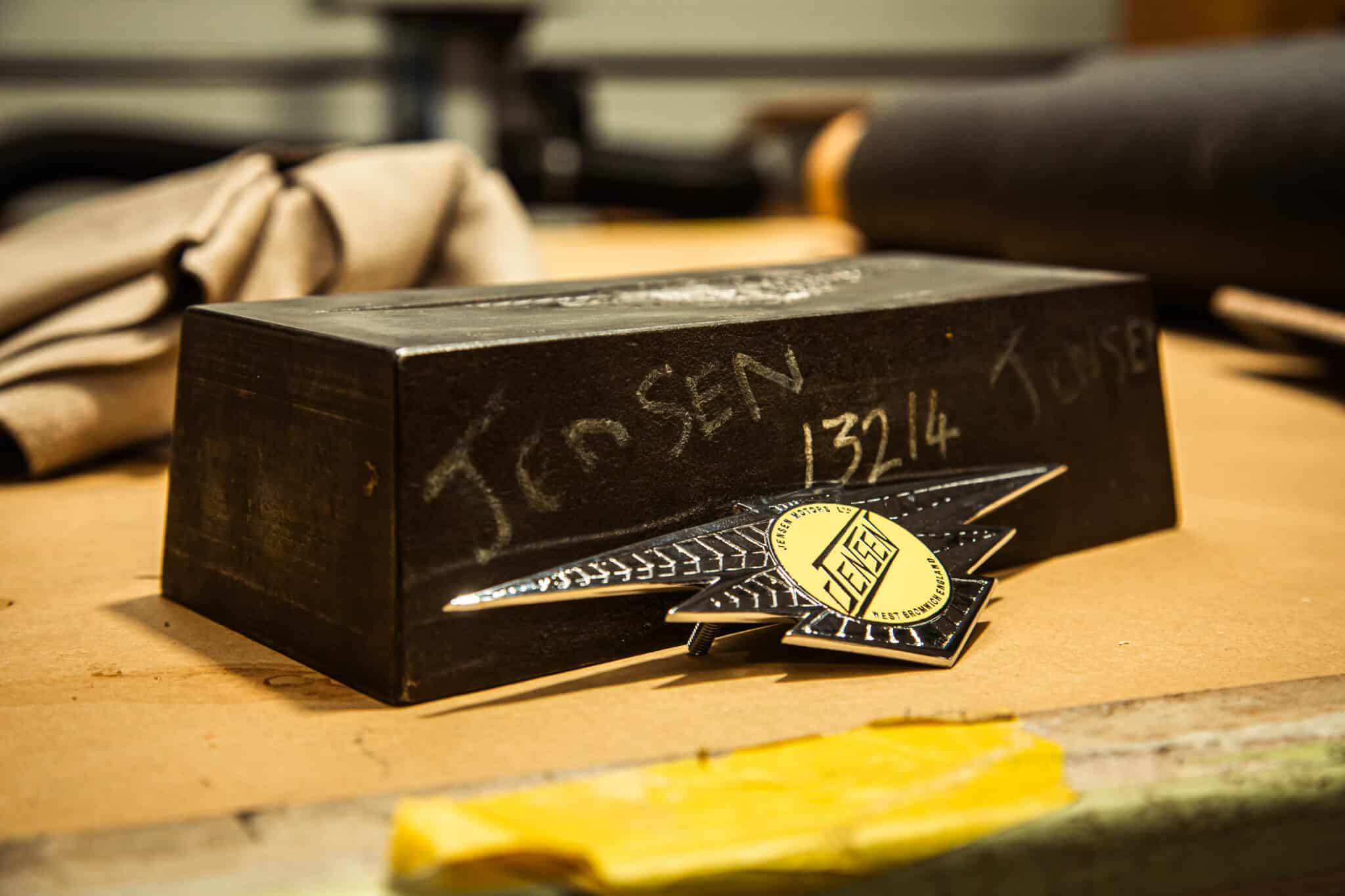
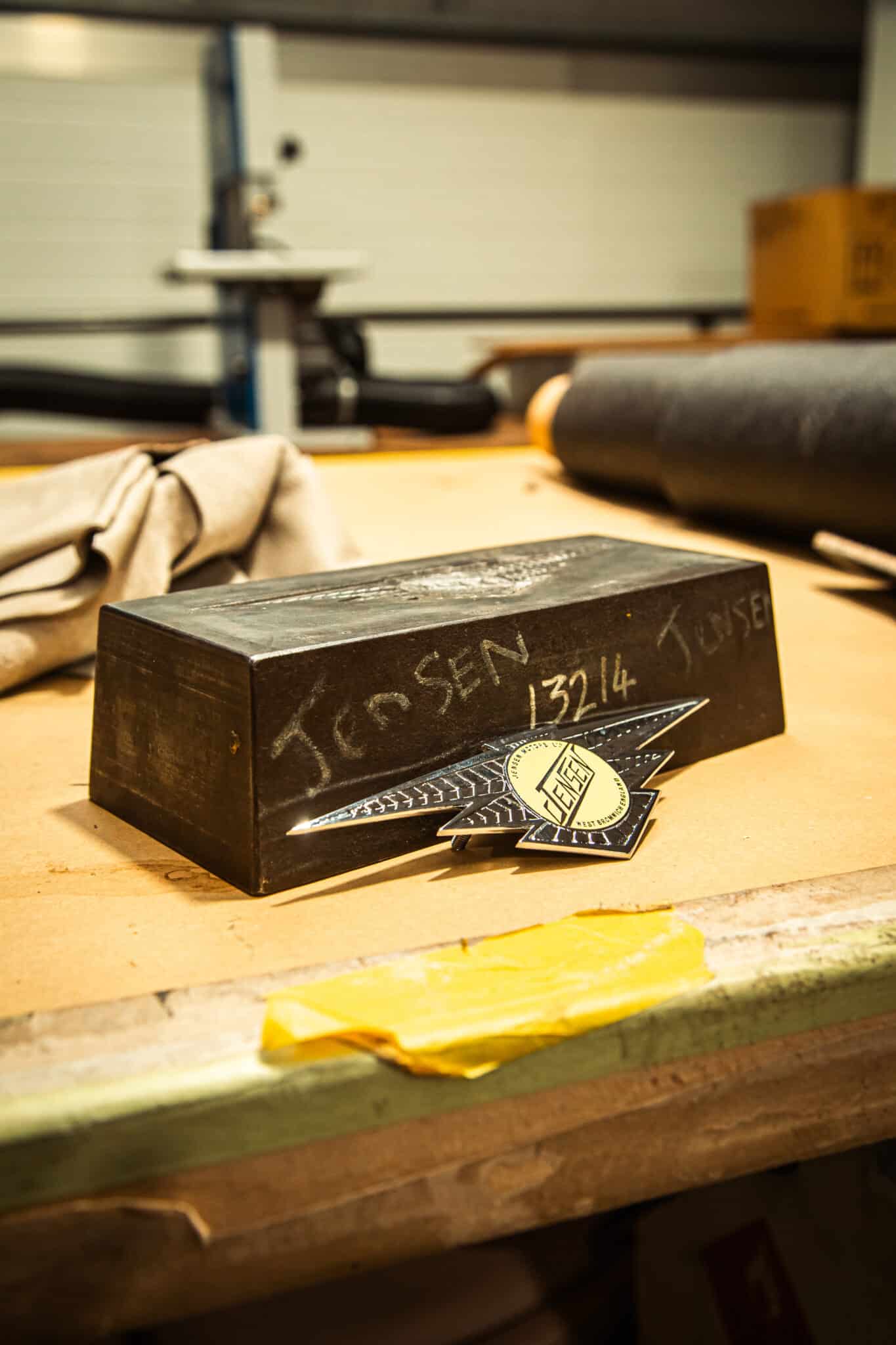
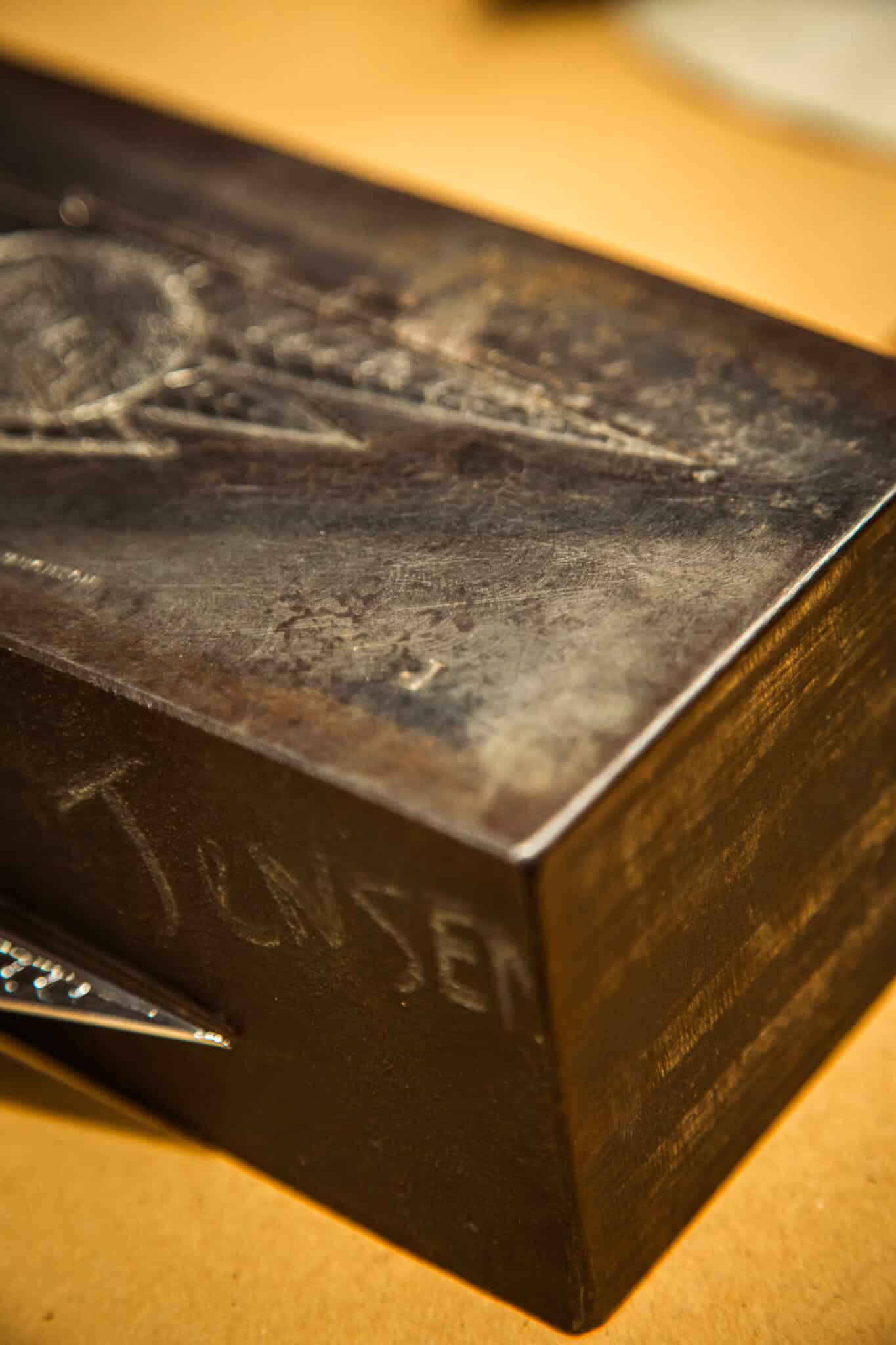
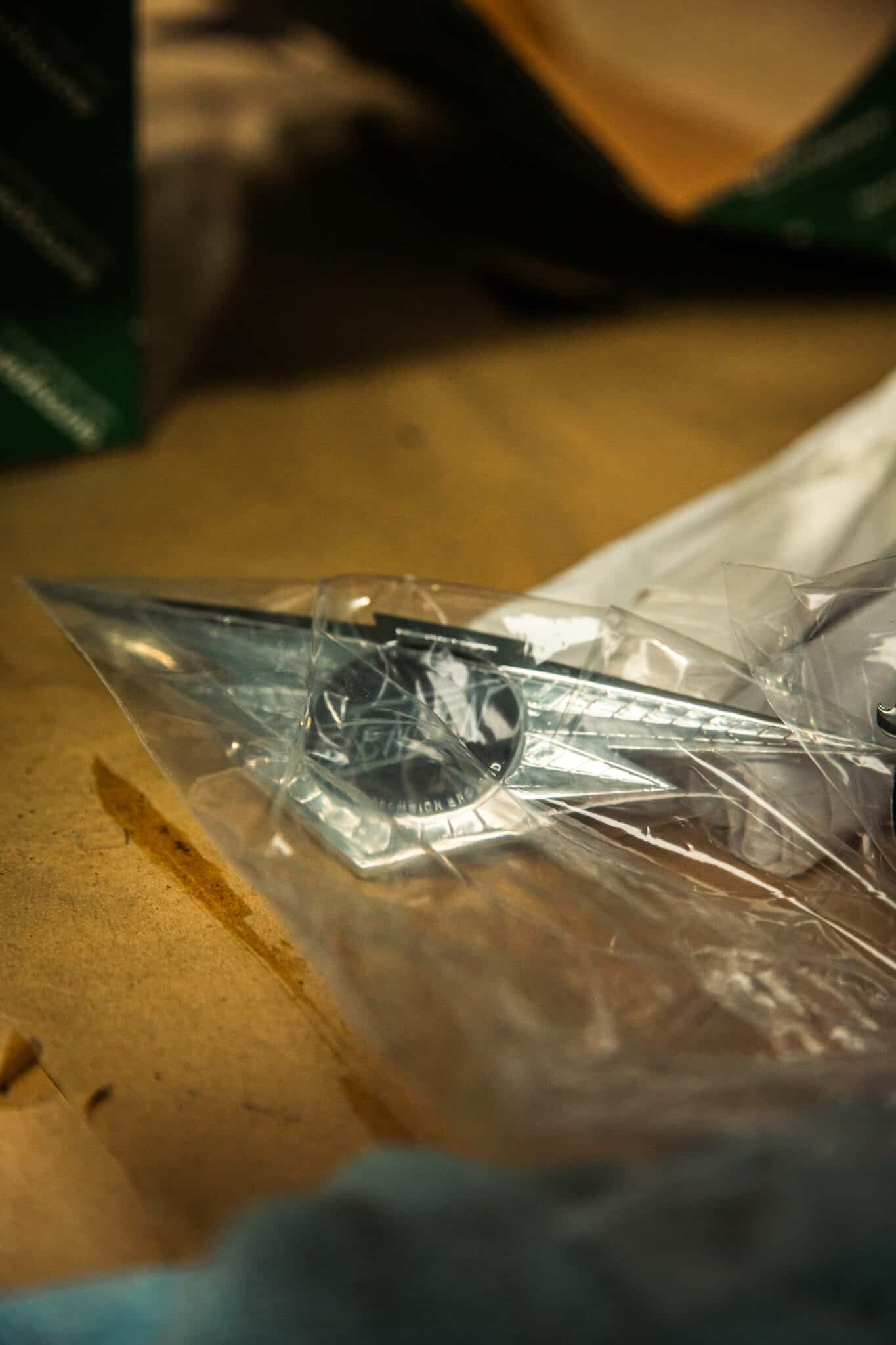
That unassuming box in Gordon’s office contained a large hardened steel embossing die carrying the familiar winged Jensen design. It looks like it isn’t decorative, and it doesn’t appear to be a replica. It is very much a working tool and is the type of tool that would have sat inside a press, stamping the wing emblem into metal blanks.
The face of the die still has the surface grinding marks from when it was machined. It has workshop stamps on it, and it is heavy! It’s too industrial to be decorative, and it has all the visible characteristics that strongly suggest it is a functional production tool rather than a decorative reproduction.
It wasn’t made to be looked at and admired; it was made to be used in the car manufacturing industry. Now, though, after all these years, we’re standing here admiring how special it is.
Jensen 541S
Also in the box with the die were brass master patterns marked “JENSEN 541 S”.
That’s important!
The 541S was produced between 1960 and 1963, an important time for Jensen as the company perfected its grand touring formula before the arrival of the CV8. Finding 541S-specific badge masters in the same collection makes it plausible that at least part of this tooling relates to early 1960s production.
In other words, we’re not just looking at “Jensen-related” material. We’re potentially looking at tooling that helped define the identity of a specific model during a specific era.
More Than Just One Piece
What makes this even more interesting is that it isn’t just a single die.
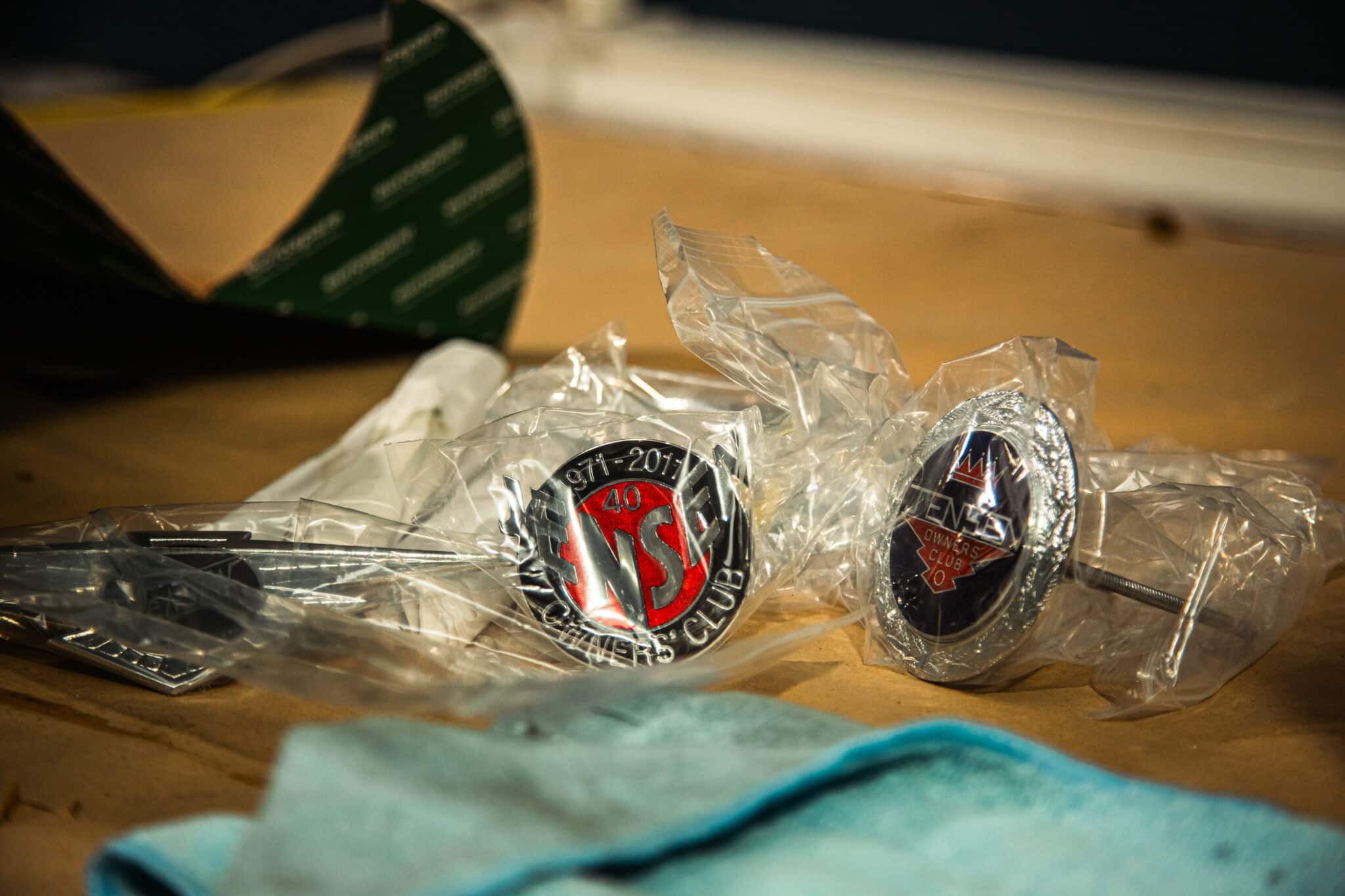
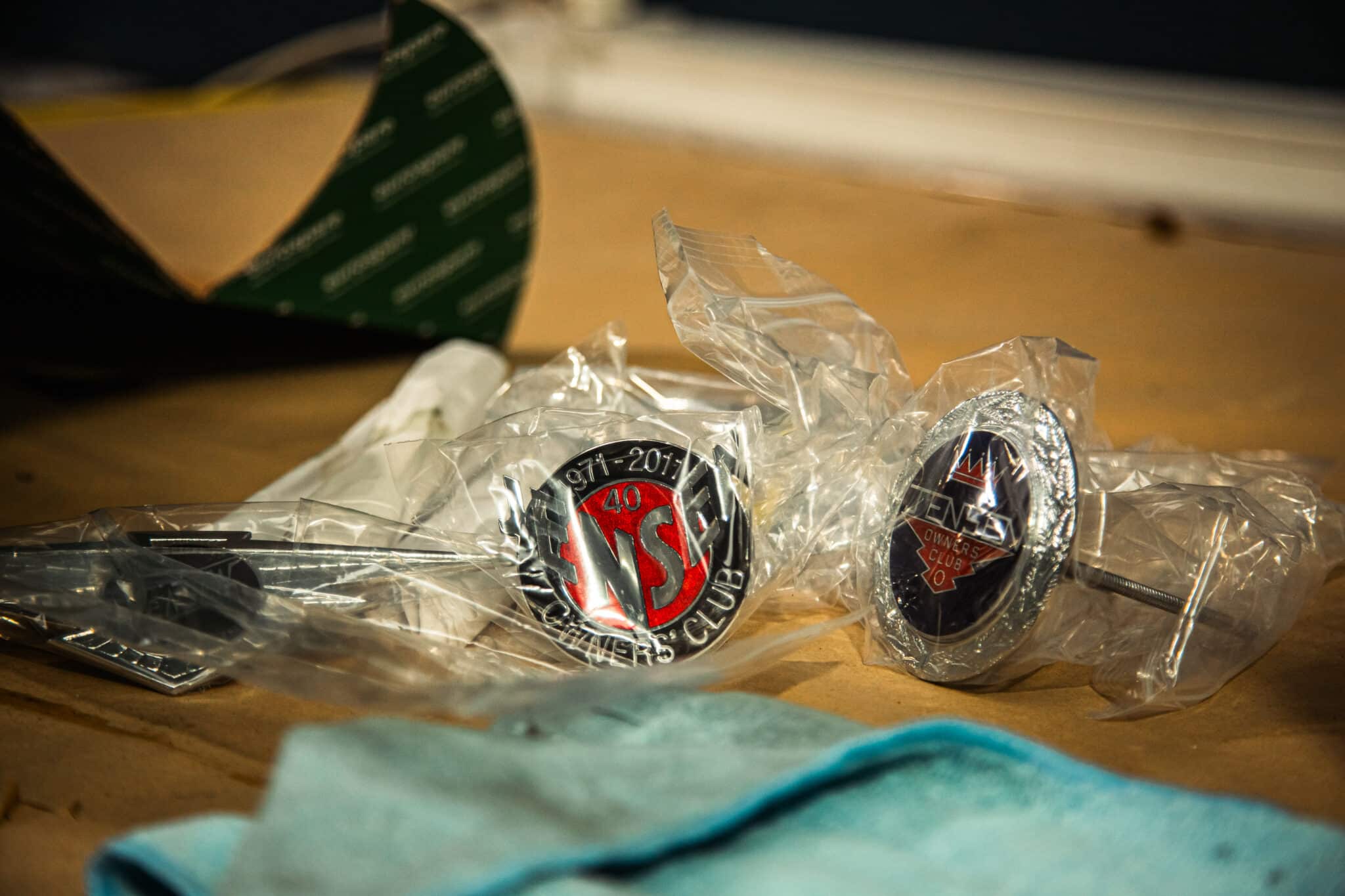
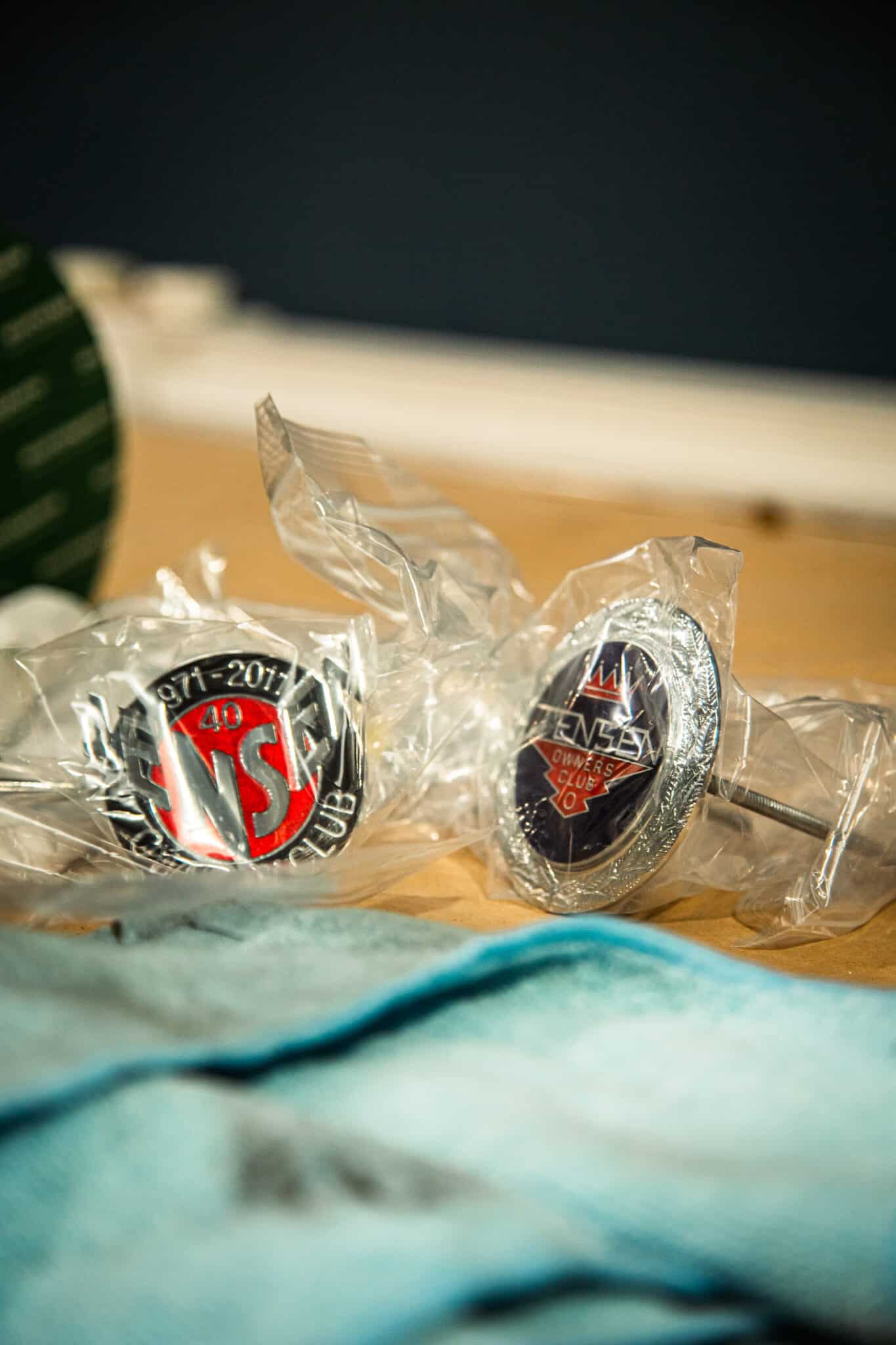
The box contains multiple brass script masters, 541S badge patterns, and finished wing badges in different colour variants.
Taken together, this doesn’t feel like a random collection of old parts. It feels like it was part of a supplier’s tooling collection. Usually, this kind of material would likely have been scrapped when production ended or when workshop space was cleared.
Tooling rarely survives. It’s heavy. It’s industrial. It has scrap value. When factories close, it usually disappears. The survival of supplier tooling from this period is uncommon, making this particularly interesting.
Historically Important
It would be very easy to dismiss this as nothing more than a collection of old metal blocks and brass patterns. The way I look at it, though, is that these pieces are a physical part of a brand’s identity. If you consider that every wing badge fitted to a Jensen 541S and every script fixed to a body panel all started life in tooling like this.
Creating a hardened steel die like this one would have required skilled die-cutters and precision machining. Master patterns were carefully prepared before production tooling was created. This wasn’t casual work; it was highly specialised craftsmanship from our history.
Jensen Motors
Jensen operated from 1934 until 1976, and during its most successful years, it was supported by a very capable West Midlands supply chain. Toolmakers, badge manufacturers, and various other teams were all working together to produce cars that we still admire today.
Vaughton of Birmingham was one of the established badge manufacturers operating within that West Midlands industrial network.
The real value of this collection is more in what it represents than in its physical form. We see rare cars that shouldn’t have survived being brought back to life every day. We see the stories behind each one survive to be told decades later. Surviving original tooling from British automotive suppliers of this era is not commonly encountered, though, let alone still usable.
That’s why we are now in talks with a specialist finisher to assess whether the tooling can be safely used to reproduce those increasingly hard-to-find red and yellow Jensen badges for Jensen owners and enthusiasts.
As a team that has restored more than 20 Jensen cars, we feel very protective of the brand, and this is how we keep it visible for years to come.
Read more automotive industry news
Leave a Reply
You must be logged in to post a comment.