


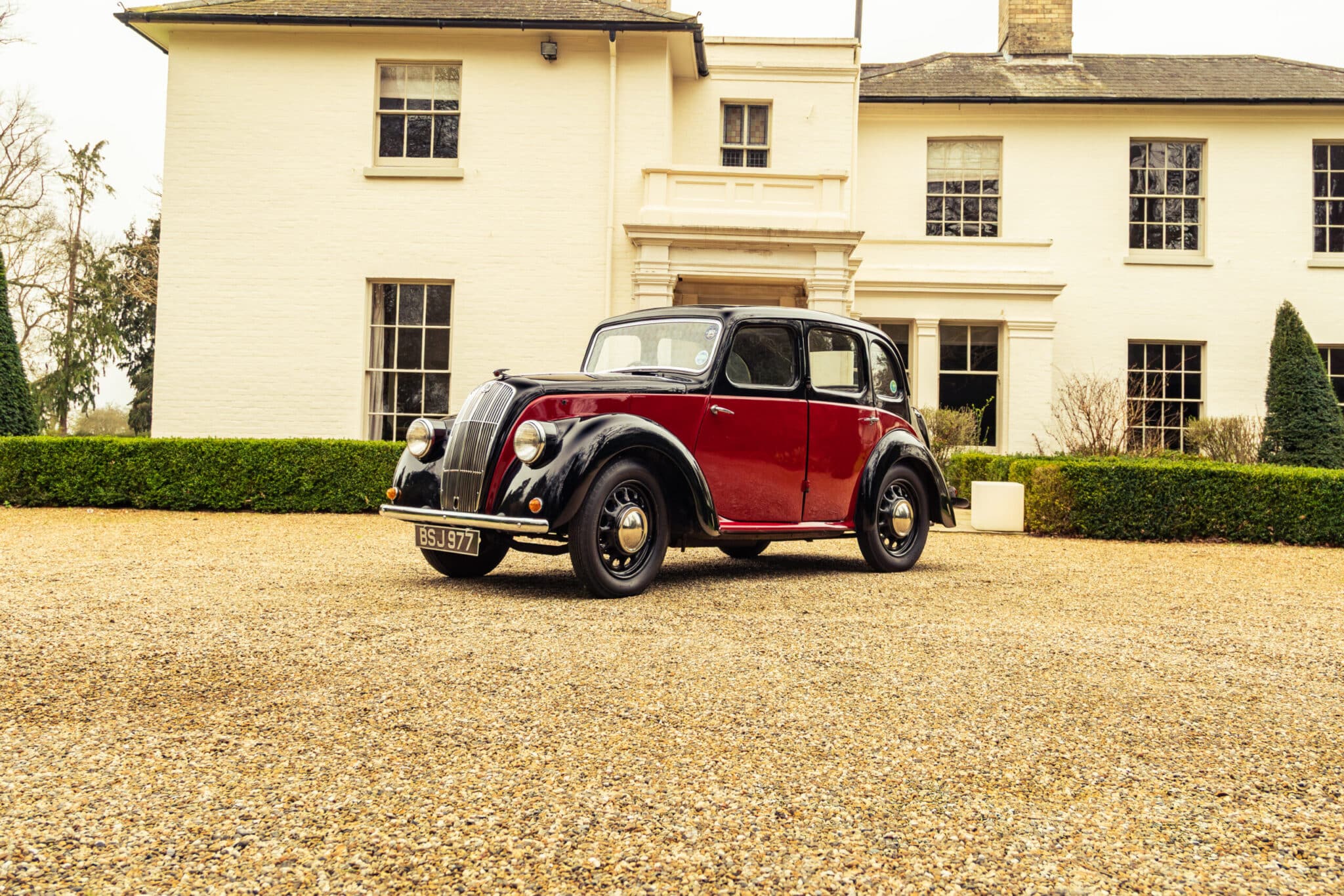
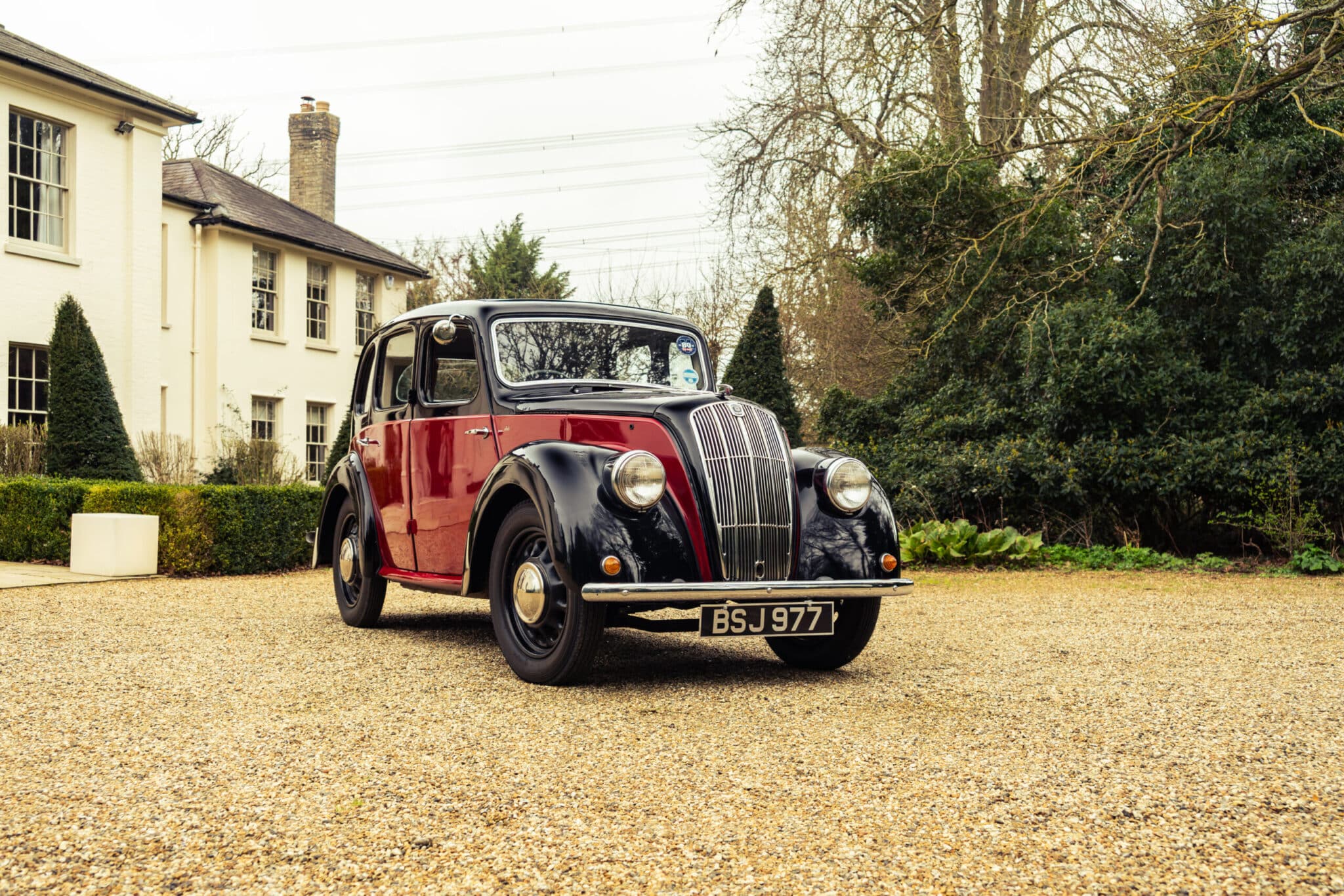
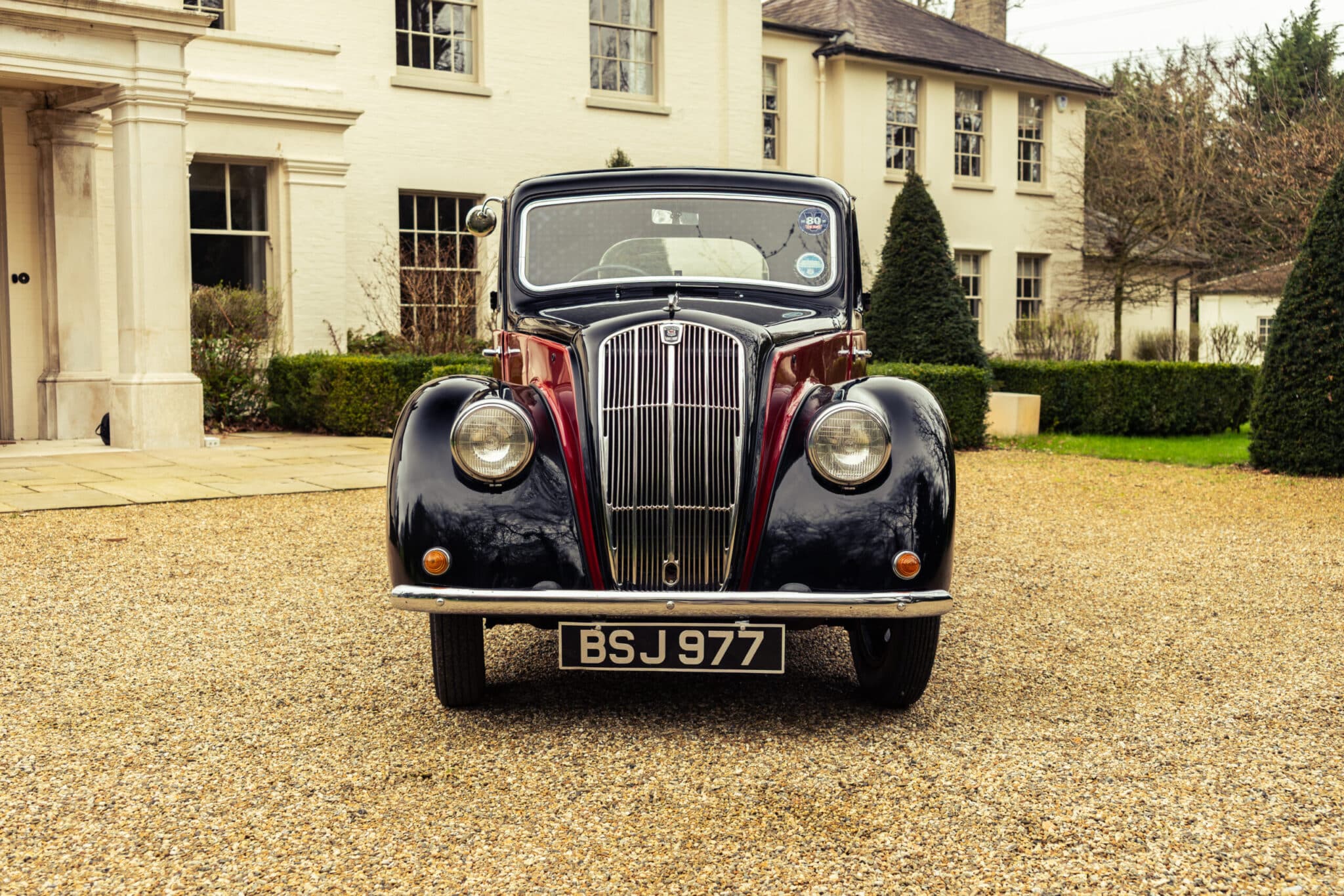
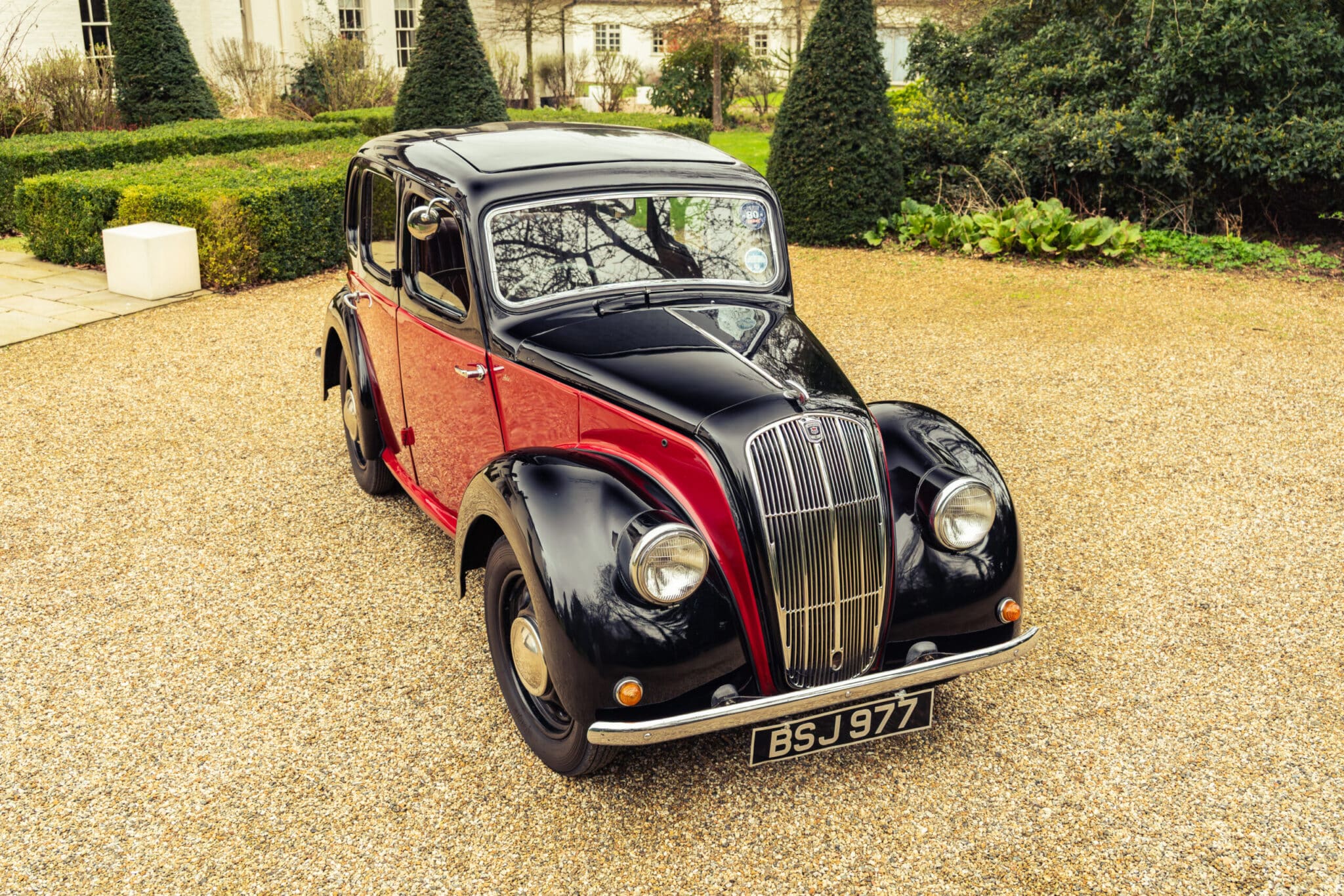
The Morris Eight Series E was one of Britain’s most important small cars of the late 1930s and 1940s, and this specific one is an incredibly well-preserved and highly original post-war survivor.
Built at Morris Motors’ Cowley factory in Oxford, this car can be accurately placed within the late 1946 to early 1947 production period. Series E chassis numbers ran from approximately SE/E1 to around SE/E120000, with post-war production resuming at roughly SE/E45000. This means that this little Morris (SE/E81547) was part of the second major post-war production phase, when the brand was transitioning from wartime manufacturing back to civilian vehicle production.
Identity and Matching Numbers
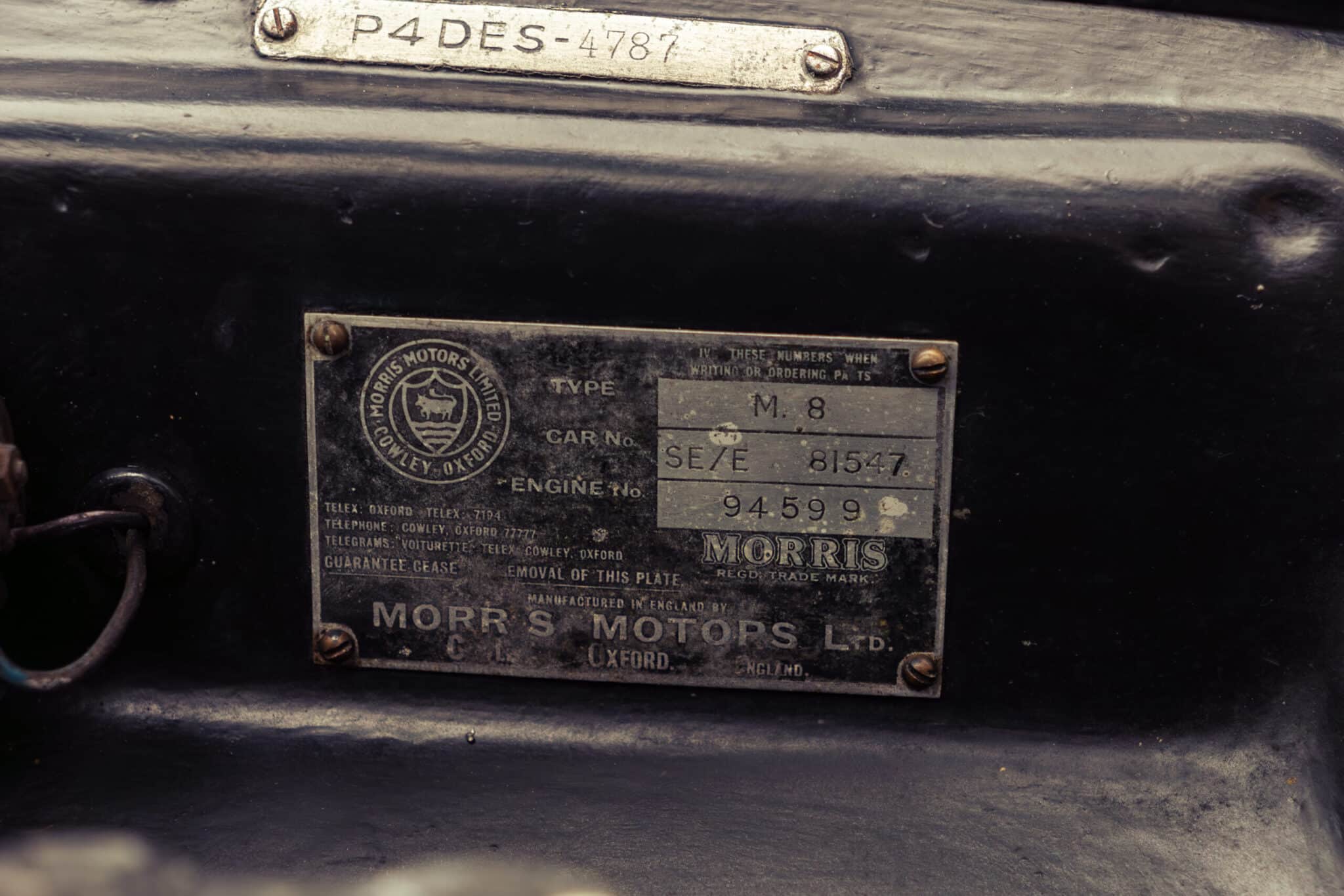
The car’s identification plate reads:
- Type: M.8 (Morris Eight)
- Chassis number: SE/E81547
- Engine number: 94599
That engine number falls within the correct range for Series E production, strongly suggesting that this is a matching-numbers example. Additional body tags, like P4DES-4787, are consistent with factory body identification practices used by Morris at Cowley, so it is highly likely this is mostly original.
Powertrain and Engineering
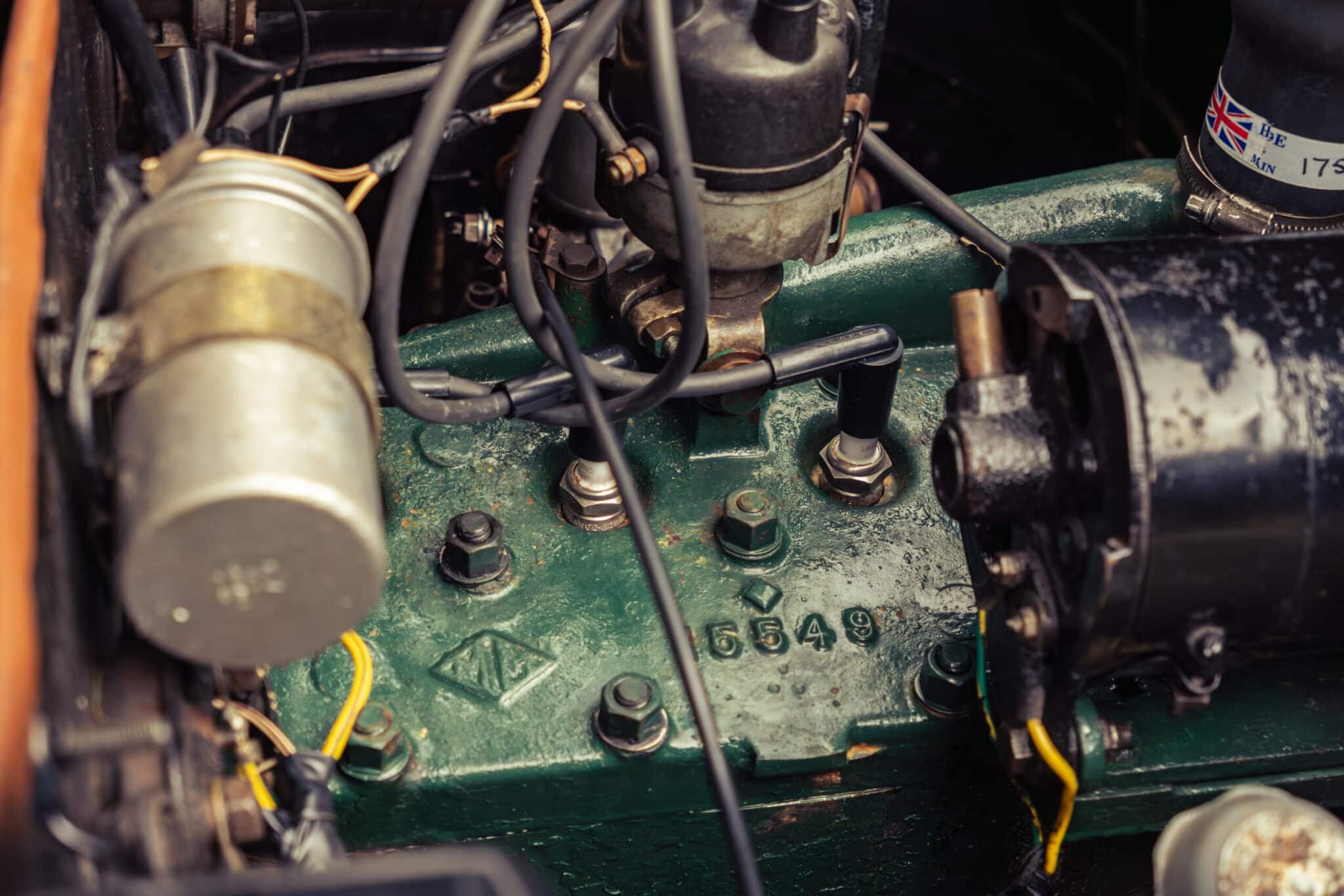
The Morris Eight Series E is powered by a 918cc side-valve (flathead) inline four-cylinder engine. This was a design which was carried over from pre-war development but improved for reliability and ease of maintenance.
Technical specification:
Capacity: 918cc
Configuration: Side-valve inline four-cylinder
Power output: ~23.5 bhp at 4,400 rpm
Carburettor: SU downdraught carburettor
Electrical system: 6-volt
Cooling: Water-cooled
The engine drives the rear wheels through a four-speed manual gearbox, with synchromesh on the upper gears (first gear remains non-synchromesh), and the chassis has a conventional ladder-frame construction
Post-War Production
This car was manufactured during a critical period in British industrial history. Following the end of the Second World War in 1945, Morris Motors rapidly resumed civilian car production. However, early post-war vehicles often incorporated a mixture of newly produced components and pre-war stock, due to ongoing material shortages and supply constraints.
Cars in the SE/E65000 to SE/E90000 range, including this one, are therefore considered transitional post-war vehicles, sometimes featuring parts manufactured before 1940 but assembled into complete cars after 1945.
At the time, the British government strongly encouraged vehicle exports to generate overseas income, meaning domestic-market cars like this one were comparatively limited and form an important part of Britain’s internal economic recovery.
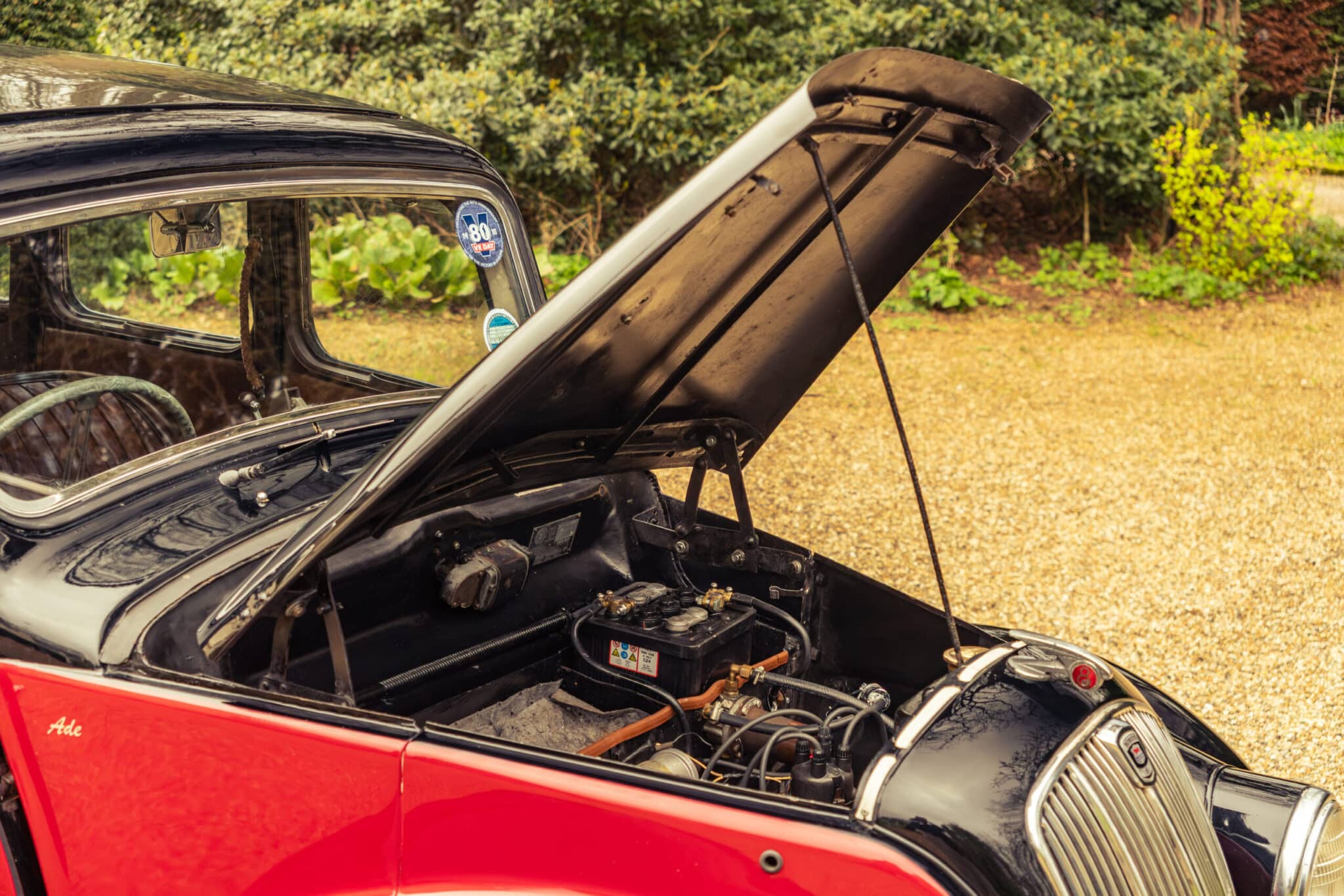
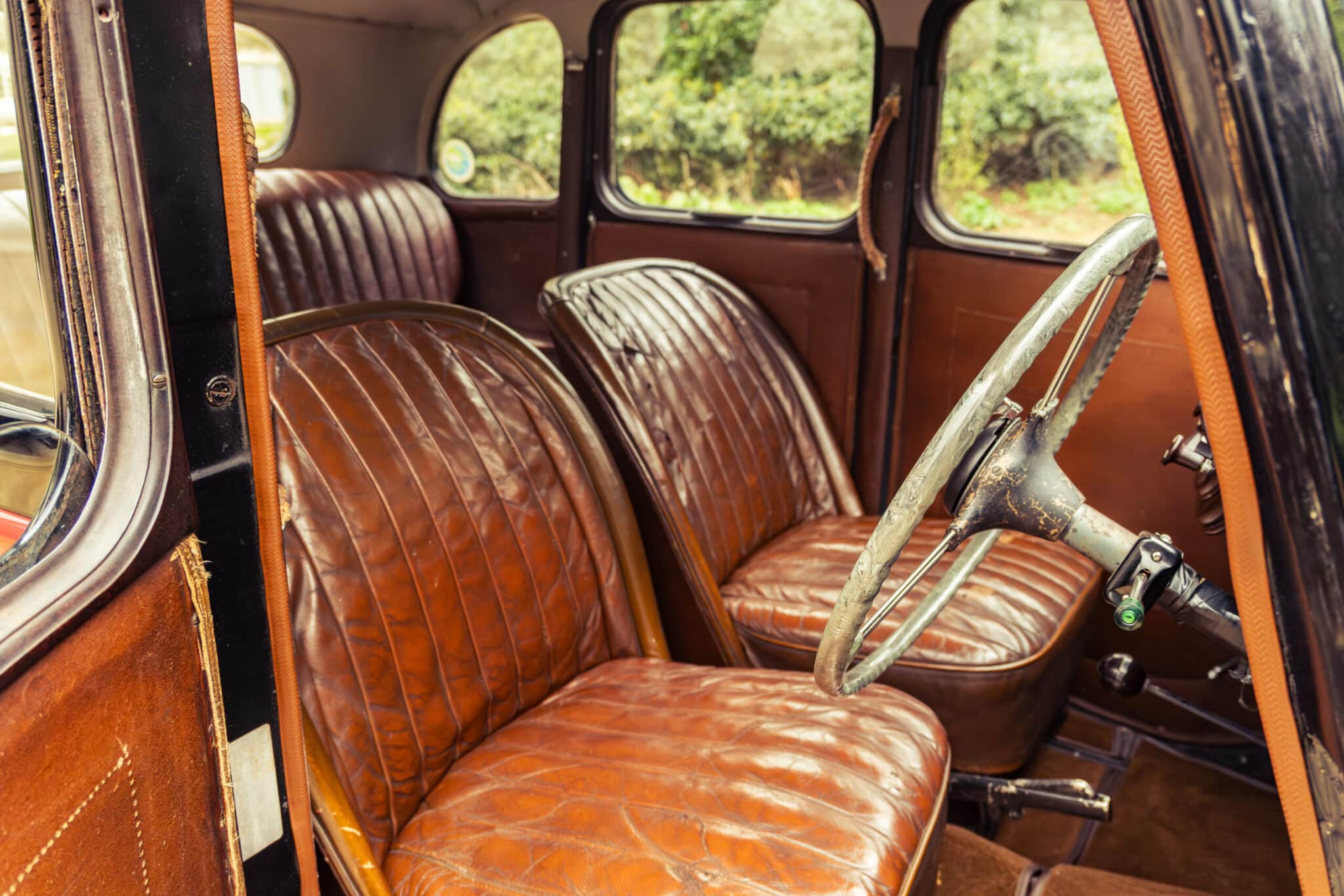
Morris Eight Series E
Around 120,000 Series E units were produced, so the Morris Eight was one of Britain’s most widely used small cars. However, survival rates are relatively low, with an estimated 1,000 examples remaining on UK roads today.
Cars like this one actually played a big part in shaping the future of British car design. Engineering and production experience gained during its development directly influenced later models, like the Morris Minor. That makes cars like this very special!
Leave a Reply
You must be logged in to post a comment.